By the Force of Flavia Rando's Presence
Once a member of the Gay Liberation Front and Radicalesbians, the pathbreaking queer artist and educator continues to stir the pot.

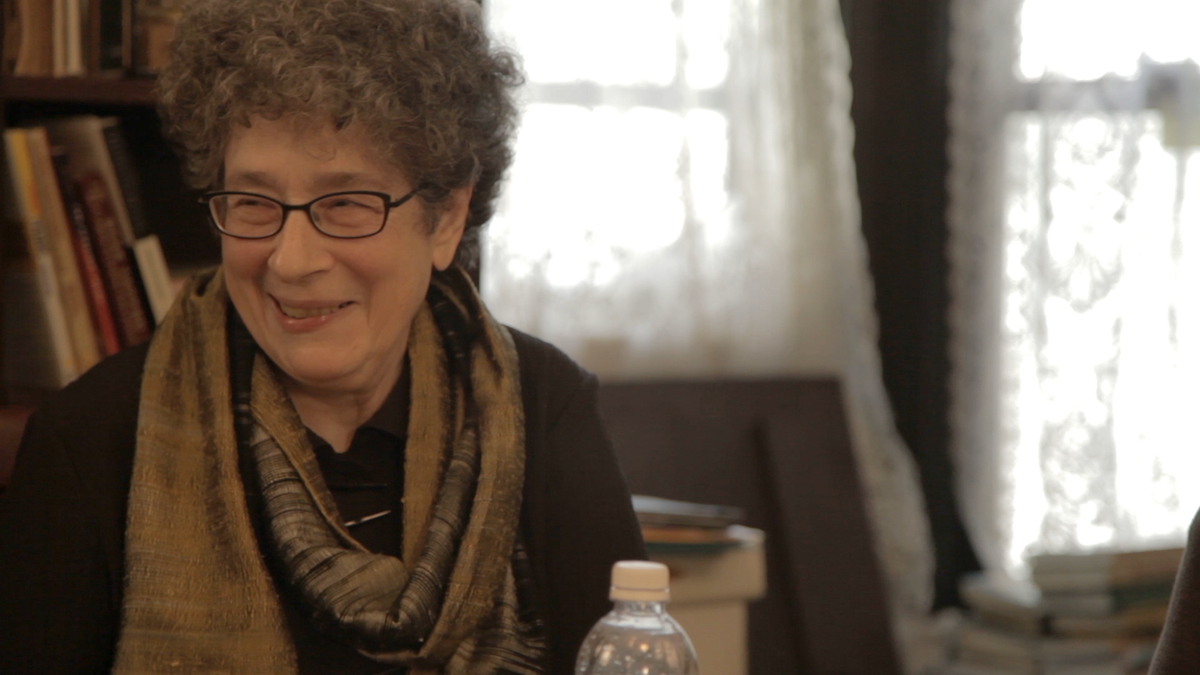
This article is part of Hyperallergic’s 2026 Pride Month series, featuring interviews with queer and trans elder artists throughout June.
Far too many queer elders are not as widely known as they should be, precisely because their queerness, and often their gender, led others to place barriers in their path. And yet, many have carried right along regardless. Flavia Rando is one such person. A Brooklyn native, a child of immigrants, a lesbian who came out in her late teens in 1961, Rando went on to join the Gay Liberation Front and Radicalesbians, found her own photo research business, participate in the first art exhibition to include the word lesbian in the title, and wheat-paste her work and that of other lesbian artists across Midtown. Later on, she would influence thousands in classrooms throughout the New York City area as a professor teaching women’s and gender studies, as well as art history. More recently, she co-curated the exhibition By the Force of Their Presence: Highlights From the Lesbian Herstory Archives, mounted in 2019 at the New York Historical in celebration of the 50th anniversary of the Stonewall Rebellion.
I met Rando when I enrolled in the Lesbian Studies Institute she started at the Lesbian Herstory Archives in fall 2011. She and I have since collaborated on Archives projects and developed a friendship I cherish. We spoke over the phone about her pathway into art-making and politics, her teaching, and some of what she’s learned along the way.
Hyperallergic: When did you start making art?
Flavia Rando: I'd always drawn, I called it scribbling. And it was very easy for me. Language had always been a problem, because I grew up with my parents speaking Sicilian. But I wasn't to learn it, or speak it, because we were going to be American. I understood [Sicilian], but I never spoke it, in deference to my parents’ strongly expressed wishes.
I had one course left over as a high school senior and I took an art course. There was no real context for it in my life, but I took this course and I really enjoyed it. And I remember the teacher encouraged me.
And somehow from that, I leapt to: I'm going to be a studio art major at Brooklyn College. It was a huge leap. Huge. And I had pretty good teachers. I had Ad Reinhardt. I really wanted to continue working with Reinhardt, but somehow I found myself working with Burgoyne Diller, who was really just trying to get his pension.
I think as a woman and as a pretty openly, for that timeframe, let's just say not-heterosexual woman, I was a little disposable in the art department.