Chipping Away at the Facade of Mount Rushmore
In “Biography of a Mountain,” author Matthew Davis deftly weaves together interviews and stories that reveal so much more than a linear narrative of the monument’s history.

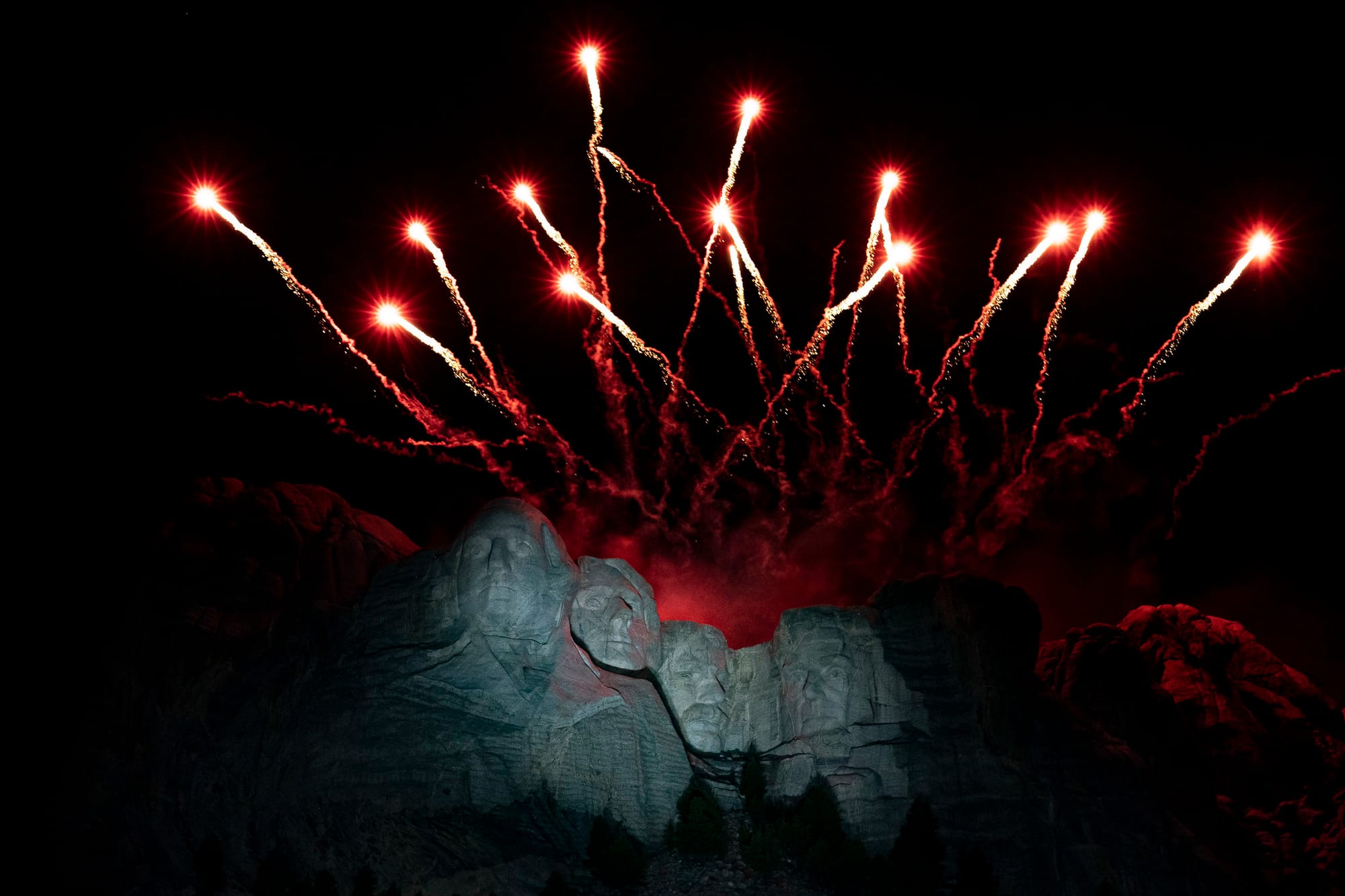
On July 4, 2020, weeks after Minneapolis police murdered George Floyd and many Americans began reconsidering the memorials and monuments that mythologize our national narratives, President Donald Trump gave a speech at Mount Rushmore to ensure its permanence. “This monument will never be desecrated,” he declared. “These heroes will never ever be forgotten, and Mount Rushmore will stand forever as an eternal tribute to our forefathers and to our freedom.”
This moment inspired author Matthew Davis to probe Mount Rushmore’s origins. “If all history is biography,” he writes, “then what can we learn about our country from a biography of a mountain?” Faced with the reality of our country’s existential crisis, mired in the throes of the pandemic and protests that engulfed every major American city, A Biography of a Mountain (2025) is his attempt to understand “the threads of history that the memorial reveals and those that it conceals.”
Over the course of two years, between 2022 and 2024, he traveled to the Black Hills of South Dakota in pursuit of answers. He spoke with Native people and White settlers in the region to capture an expansive portrait of the monument and the space it inhabits, for “it is impossible to separate the land of the Black Hills — and the people who currently live in and have historically claimed the land — from the meanings of the memorial.” This approach offers the primary appeal of the book: Davis reveals that he is uninterested in “the pinpoint accuracy that Western scholarship demands” as a “writer and not a trained historian.” Rather, he is after something more humane, something akin to oral histories. What emerges is a series of stories that, when woven together, reveal so much more than facts and figures.
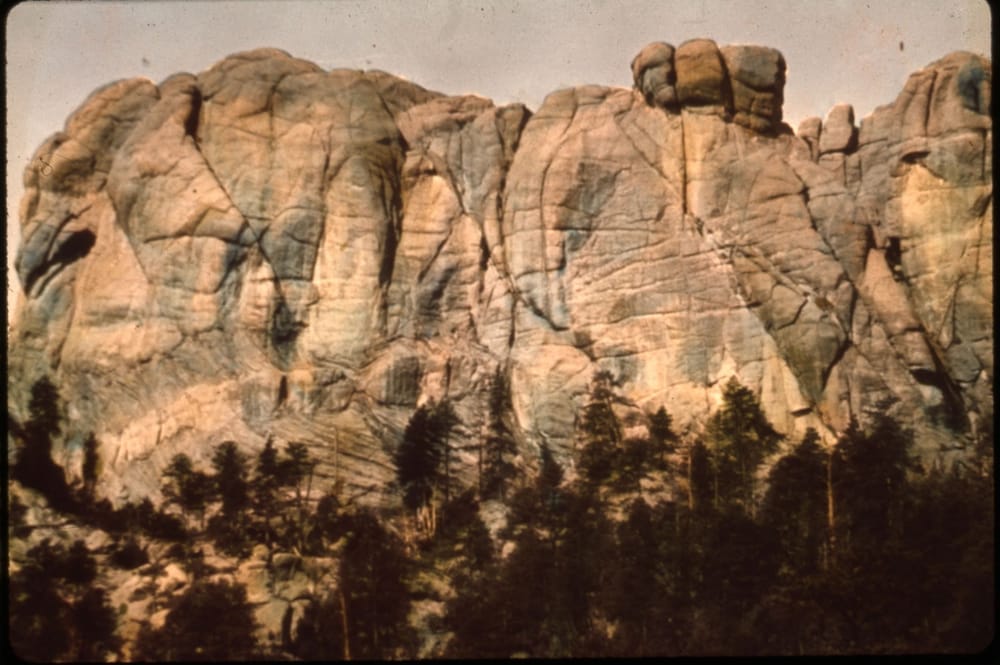
Through interviews and anecdotes, we learn about the Lakota origins in the region, the wars and broken treaties, the White settlers, and the trauma of Native boarding schools, grounded in the perspectives of the Native people who still inhabit the land and fight to shift the narrative around Tȟuŋkášila Šákpe or Six Grandfathers, the original Lakota name of Mount Rushmore.
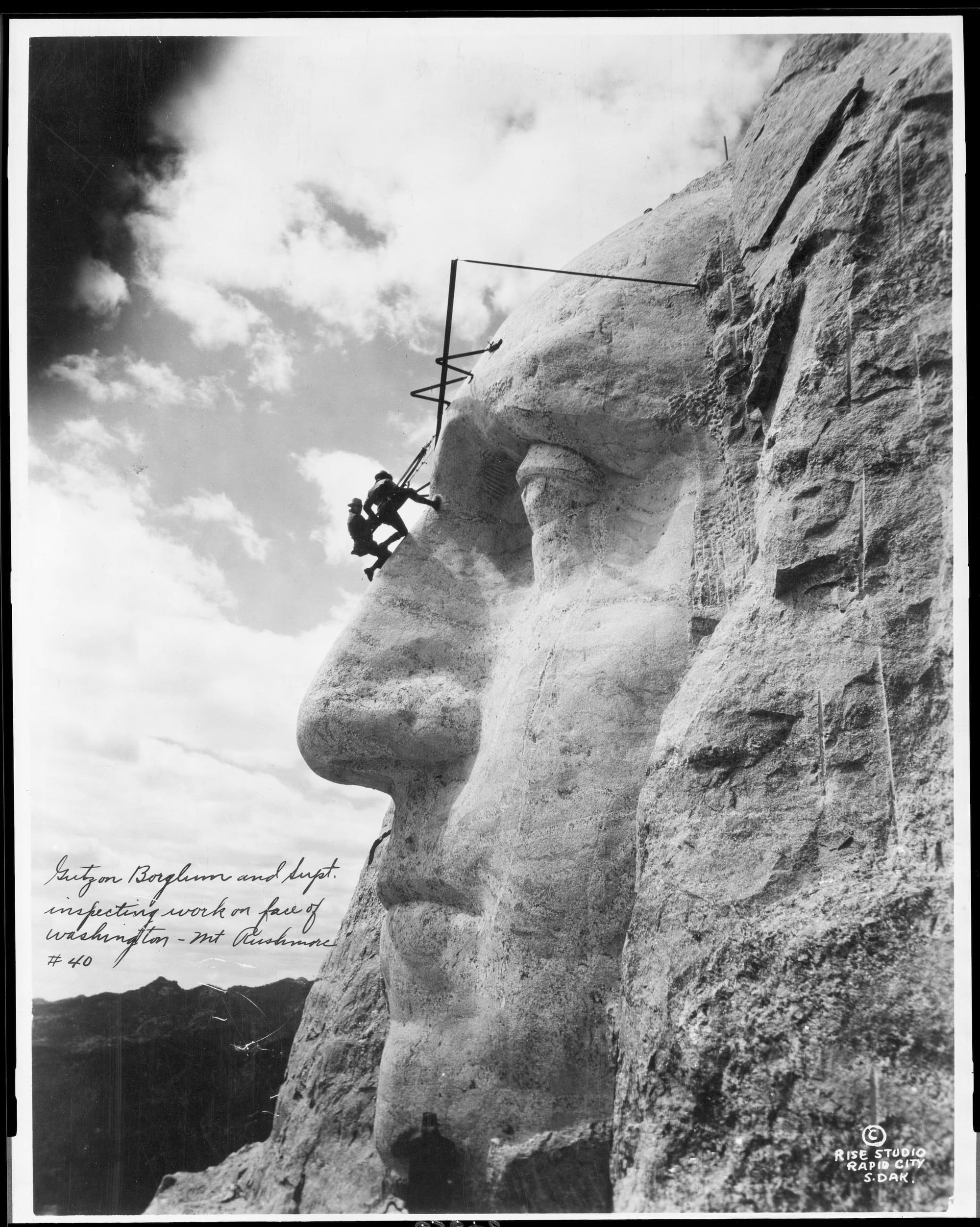
Davis explains that the monument’s principal sculptor, Gutzon Burglom was “anti-Semitic, nativist, and a champion of the Ku Klux Klan” as the initial sculptor of Georgia’s Stone Mountain, the largest Confederate memorial in the world. Although “Mount Rushmore denies any links with the Confederate memorial,” Davis reveals that Burglom was “explicit about how the two memorial worked together,” writing in letters that a “Memorial equal in proportions to the Southern Memorial” was “the most important political thought that has been contributed to the modern government.” Through several starts and stops due to funding issues and scrapped plans for a Hall of Heroes, wherein Burglom envisioned enshiring other notable Americans with busts housed in a cavernous space behind the presidents, the monument was completed in 1941 after 14 years. Burglom died before its completion and his son was tasked with finishing his father’s vision.
The experience isn’t bogged down by staid historical documents, though there are plenty of references to primary documents, court cases, and correspondence. Instead, the prose has a literary quality that deftly incorporates memoir, poetry, fiction, television, and film to construct scenes that illuminate the complexity of the monument’s origins and all the parties involved.
There is the story of Amy Sazue and her efforts as the executive director of the Remembering the Children Memorial, which honors the children who died at the Rapid City Indian Boarding School, their graves left unmarked for years. There is the story of Marnie Herrmann, the president of the Mount Rushmore Society Board, who proudly and openly embraces her lineage as a descendant of one of the first White families to settle in the region. There is the story of Robin Borglum Carter, Gutzon Burglom’s granddaughter, who organized the Borglum papers and who unironically told Davis that her grandfather was “sincerely interested in making America great again and in seeing things progress and seeing things get better.” There is the story of Nick Tilsen (Ogala Lakota), a member of the NDN Collective and primary protest organizer at Trump’s Fourth of July speech in 2020.
The story that resonates with me most is that of Gerard Baker (Mandan/Hidatsa), who became the first Native superintendent of Mount Rushmore in 2004 after he had formerly served as superintendent for the Little Bighorn Battlefield National Monument and the Lewis and Clark National Historic Trail. In each role, he centered the Native experience in American history to counter what most visitors expect.
“Most people want to come to a national park and leave with that warm, fuzzy feeling with an ice cream cone,” Baker told Davis. “Rushmore can’t do that if you do it the right way. If you do it the right way, people are going to be leaving pissed.” That’s exactly how I felt when I visited in 2018 after having first visited the construction site of the Crazy Horse Memorial, a towering monument rising in the Black Hills that was envisioned as a counterpoint to Mount Rushmore and will be 10 times bigger in scale, featuring the Oglala Lakota leader astride a steed. Like Davis, I too had visited the region to write a book about white supremacy in art and public space. When I spoke with the chief interpreter at Rushmore, my pointed questions inspired her to offhandedly offer me a job, saying that I was just the type of person that the memorial needed — which is to say, Black, curious, and articulate. Learning about Baker’s aims confirmed that she was right.
Davis rightly defines the Lakota land theft as genocide, but he doesn’t intrude with his biases. He lets the stories write themselves, inevitably arriving at a truth that remains uncomfortable: “Though [the presidents] accomplished so much, and though the ideals they represent are powerful, perhaps they shouldn’t be expressed here, on this mountain, in this land, and in this way.”
As we embark on celebrations honoring the 250th year of our country’s founding while Immigration and Customs Enforcement agents roam our cities like masked bandits looking to kill American citizens, detain children, and deport our neighbors, it’s fitting that Davis closes his book with a naturalization ceremony held at Mount Rushmore on Flag Day in 2023. The presiding judge, Jeffery Viken, a White man from South Dakota, had conducted dozens of ceremonies in the past, and this would be his last before retirement. Assembled before him were 200 people who represented 53 countries. In his opening words, he offered a history lesson, one that might seem surprising to hear at an American naturalization ceremony: “Not all of us here are immigrants. This continent and what is now the United States was filled with people of rich culture. Self-sustaining, self-sufficient, brave, courageous. And what was said about this land is true.” He went on to detail the scope of the massacres, wars, and broken treaties before proclaiming, “These are the Indigenous people of the United States. All the rest are immigrants … We all have our stories. And I invite you today, all of you who have immigrant roots, to reflect on the courage of the people who came here … We ask you to please, new citizens, share with us your songs, your wisdom, your dance, your culture, your talents. Because that is the strength of America.”