Dean Millien’s Aluminum-Foil Animal World
A highlight of “Greater New York” at MoMA PS1, the artist’s remarkable sculptures made from the humble household material continue a practice he began as a child in Brooklyn.

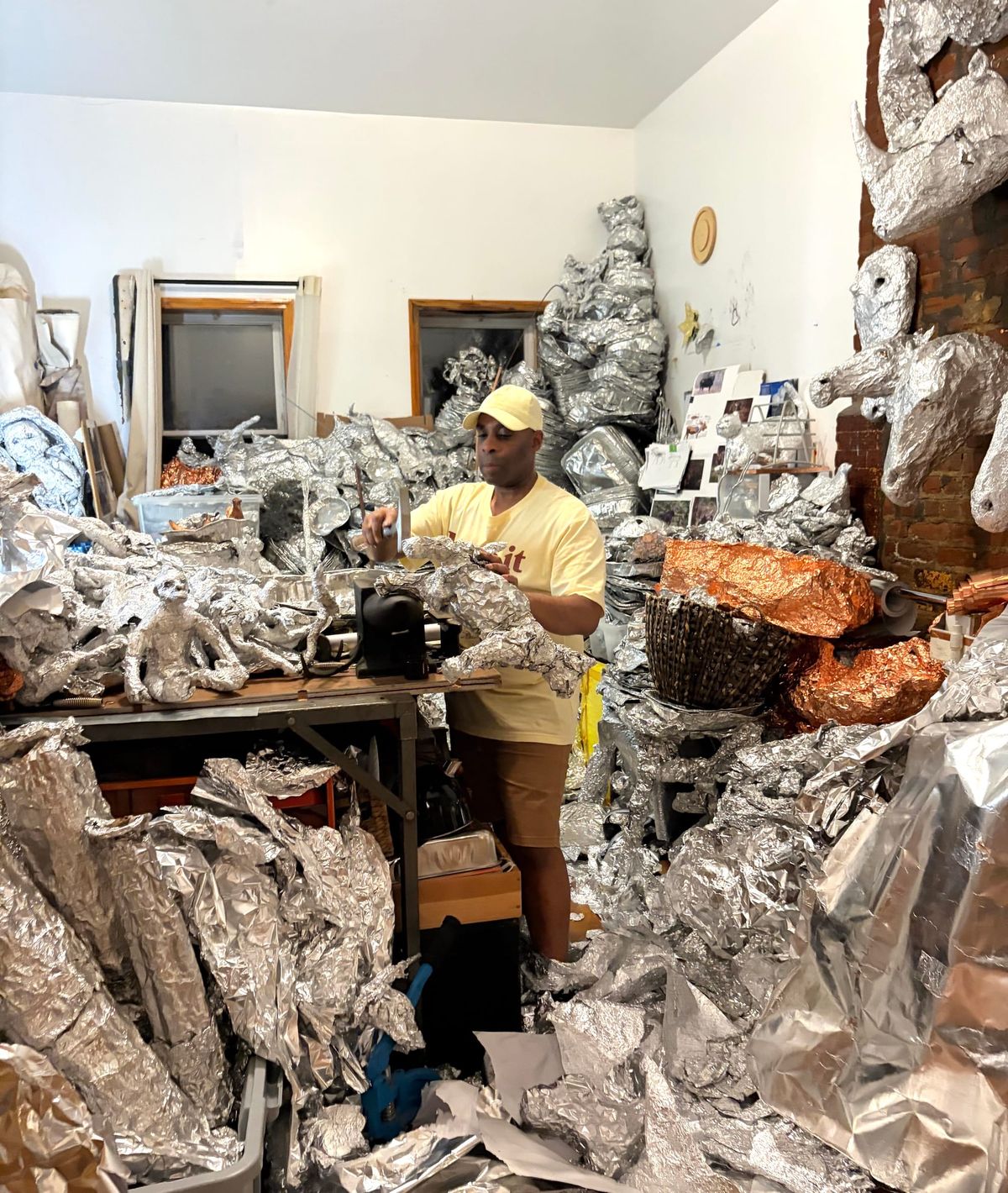
Entering Dean Millien’s high-ceilinged Bushwick studio, I found the artist watching a Marcel Duchamp interview on his laptop, surrounded by a menagerie of his aluminum foil animal sculptures. When I asked him why, he told me about his recent visit to Duchamp’s current retrospective at the Museum of Modern Art. “Seeing his work helps my mind,” he said. “Great artists give me an idea of where I should go. I always trust myself as an artist, but I like to see how others have grown in the past.”
While Millien’s background as a self-taught artist might differ from that of figures like Duchamp, his recent inclusion in MoMA PS1’s Greater New York is proof that the need to make art exists beyond the walls of the commercial art world. Still, what struck me in meeting Millien was his lack of interest in posturing. He’s driven by an urge to keep elevating his practice, taking in influences from art history while sticking with his instincts. Having grown up with a developmental disability, he has spent time working with the city’s ecosystem of organizations supporting artists with disabilities.
“My background doesn’t make me feel ostracized or anything,” he commented. “I always had intuition, a good feeling about what I liked and what I wanted.”
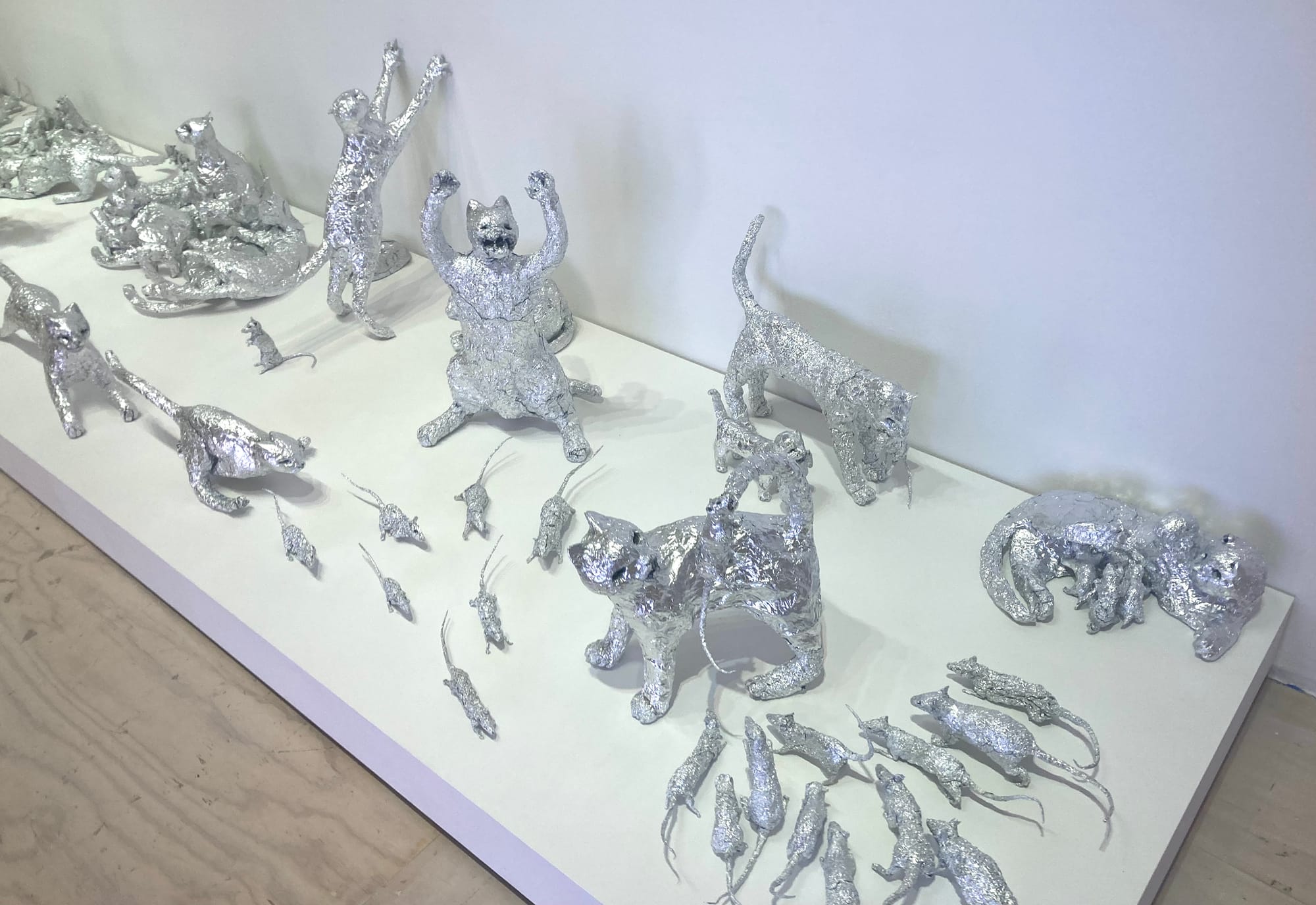
The artist was born in Brooklyn in 1972 to Haitian immigrants who settled in Ditmas Park. Millien’s core memories from his childhood center around toys and television: “My young mind was strictly focused on that. I was around art, and I just didn't know it.” This obsession was compounded when his father, in a moment of frustration, discarded all of Millien's toys. This early loss became a critical part of his creative development. He began making his own toys, initially out of scrap materials like sponges and paper. Eventually, he sculpted them out of aluminum foil, his primary material to this day for its durability and availability as a household staple.