Don’t Ask Lari Pittman What His Work Is “About”
The Colombian-American painter discusses his new body of work, the complexity of queerness, and the reprieve of the analog.

This article is part of Hyperallergic’s 2026 Pride Month series, featuring interviews with queer and trans elder artists throughout June.
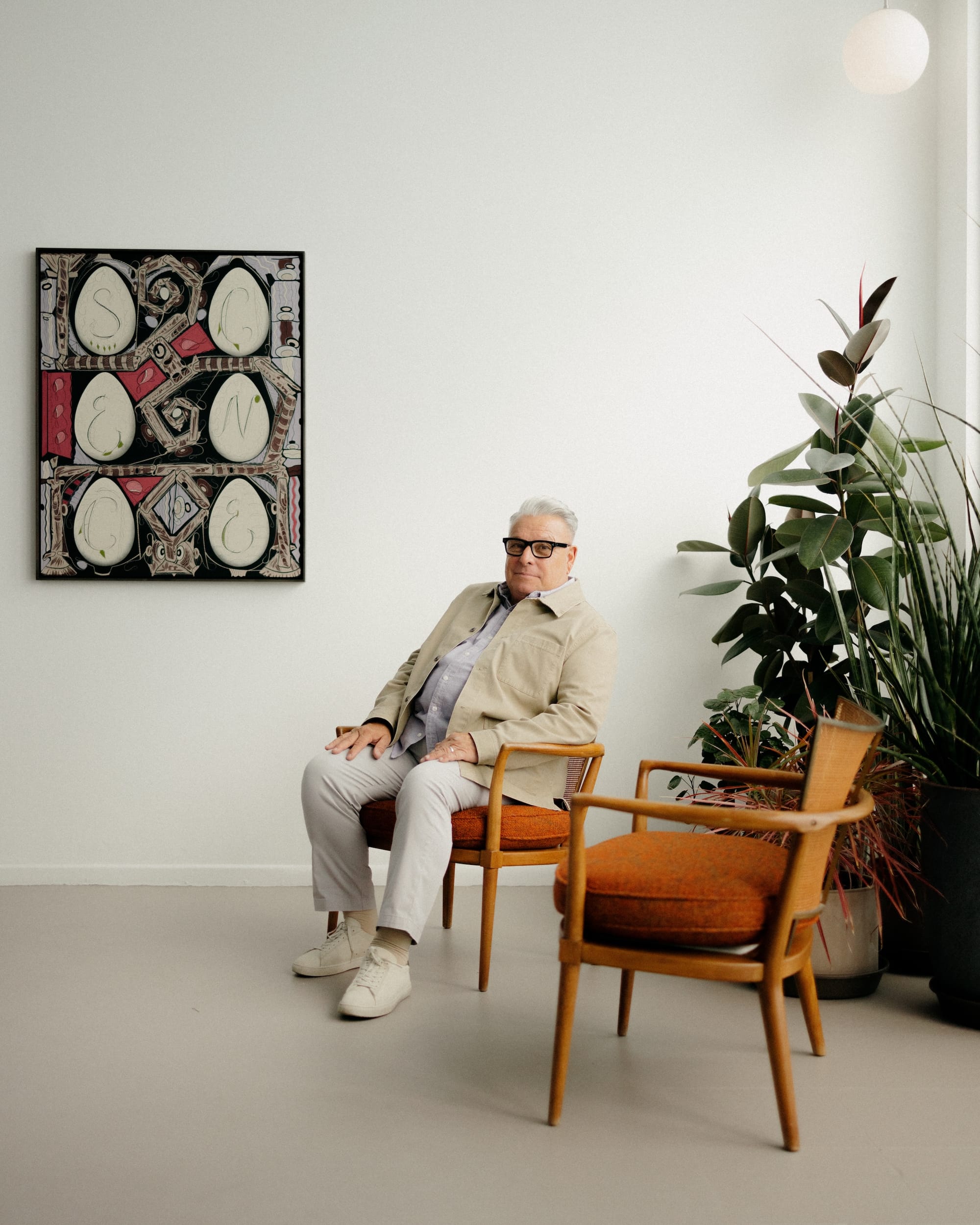
Lari Pittman’s captivatingly cacophonous paintings juxtapose myriad forms of visual culture, from design, decoration, and typography to cartoons, architecture, and high art. Behind his enthralling, maximalist surfaces, he excavates uncomfortable legacies — specifically those of the Americas — through jumbled jungles of text and image that defy easy resolution. The Colombian-American artist has been routinely mining this vein for more than four decades, from early works such as “Plymouth Rock” (1985) and his subversively carnal Needy series of the early 1990s, which confronted the AIDS crisis, to the more recent series Sparkling Cities With Egg Monuments (2022–23), ovoid ripostes to civic phallocentrism. In our conversation, Pittman discusses his new body of work, debuting later this year; the complexity of queerness, and the reprieve of the analog.
Hyperallergic: Can we start with your new work?
Lari Pittman: I have a show that opens up [at Lehmann Maupin gallery] in New York in October titled The Remedy of Analog Space and Time. It's just simply addressing symptoms, but not root causes. It's just a remedy, a topical approach to maybe certain malaises that human beings are suffering for all sorts of reasons. I wouldn't be brave enough to propose a cure.
H: What do you mean by “analog space and time”?
LP: Endlessly languorous, sequential chunks of time that create boredom. Philosophical complexities of irresolvability. All the things that, let's say, late capitalism doesn't always give space to. I'm not saying that analog space and time is all just about staring at flowers, but it provokes certain things that other ideas of space and time are no longer doing. That type of rumination is still based on privilege, more and more. But even people that might not have that privilege, maybe in those 10 minutes before going to bed exhausted from working at a horrible job, might still be able to accomplish a lot in those 10 minutes as well.
H: The analog process is a big part of your work.
LP: Yes, and I still completely work alone … even during COVID, I still would come to the studio every day and keep working. So it's really kind of boring, day in and day out, day in and day out. And I don't say “boring” negatively.
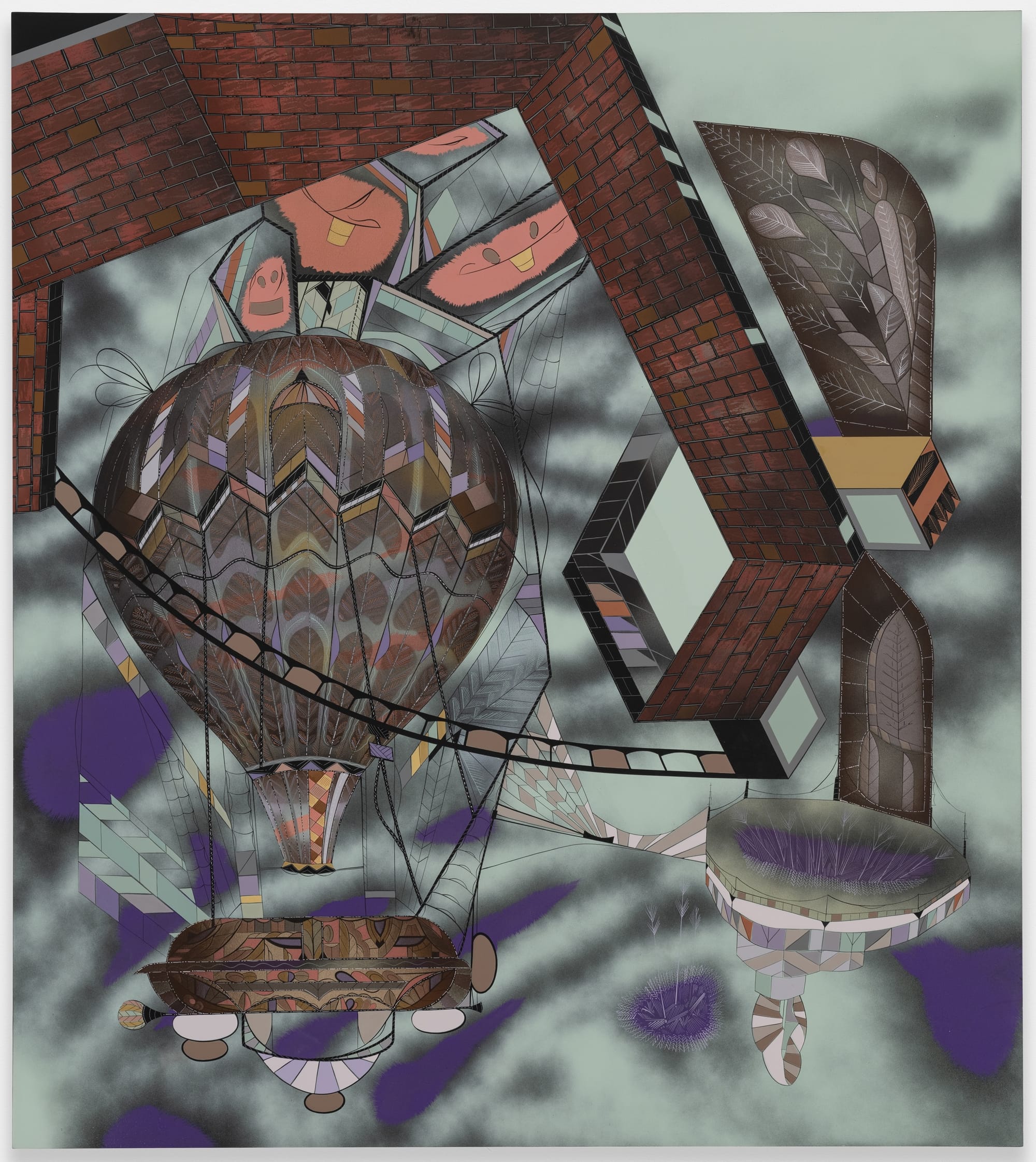
H: You've recently been included in two group shows, at Jessica Silverman in San Francisco and David Zwirner galleries in Los Angeles. How does your work fit into those very different shows?
LP: Since I've been working for such a long time, one of the things that I've been able to deduce from critical analysis and exhibition of the work, is about how, at times, it seems that the work may be hard to contextualize in group situations. It's not ahistorical and it's not outsider art, but it's also not a direct descendant of canonical painting. I'm aware that sometimes the work looks odd in those situations, and maybe conversations do occur if, let's say, the viewer is astute enough and gives it some time … I'm a confident person, but I'm also an insecure person. And so my insecurities come out when it's placed out into the world, simply by repeated examples of how the work performs publicly or critically.
H: If you care about something, insecurity is not unusual.
LP: And is actually a good thing. Usually, when I meet people, especially artists, if I don't sense some insecurity about their work, it's hard to be their friend.