Doris Salcedo on Colombia's Refusal to Forget
“Works of art last much longer than their governments,” she told Hyperallergic in an interview following the far-right president’s removal of works from the National Museum.

Lee esta entrevista en español.
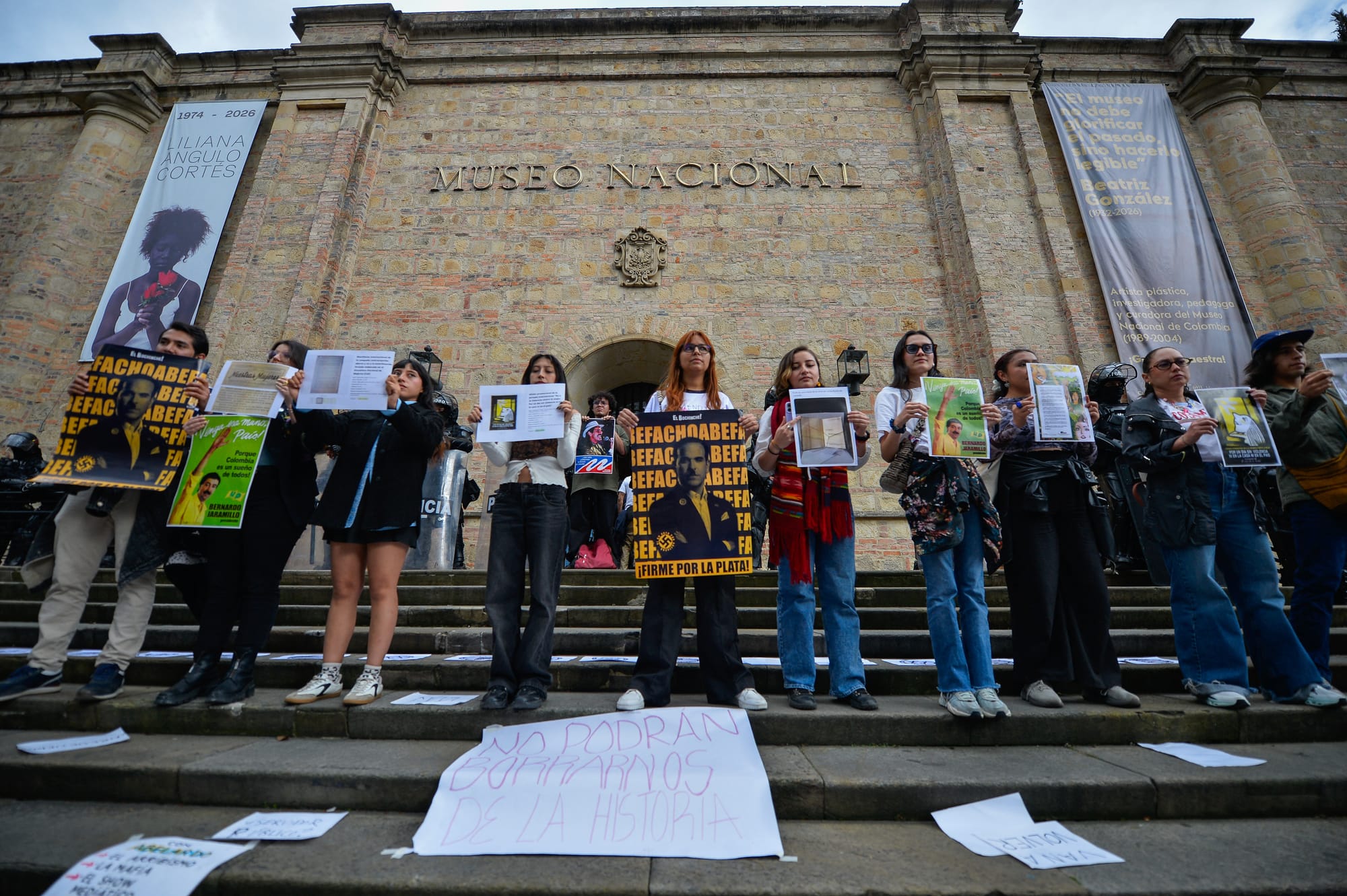
On October 15, dozens of objects were removed from display at the Museo Nacional in Bogotá under the orders of the country’s far-right president, Abelardo De la Espriella. Among them were artworks and materials related to LGBTQ+ and feminist movements; the country's 2016 peace agreement with the Revolutionary Armed Forces of Colombia (FARC); and the campaigns of left-wing leaders Carlos Pizarro and Bernardo Jaramillo Ossa, both assassinated in the 1990s, whom De la Espriella has called “terrorists.” The objects were reinstated within two weeks by a court order, but the incident roiled the nation: Hundreds took to the streets in protest and faced police repression.
In the days that followed, I called Doris Salcedo. The last time we spoke was in 2021, when her installation-space “Fragmentos” in Bogotá — an “anti-monument” marking the end of Colombia's bloody guerrilla war, with a floor made of melted-down FARC weapons shaped by women who suffered assault during the conflict — had been usurped by conservative populist president Iván Duque. Now, in a different but hauntingly resonant context of state-sanctioned erasure, I turned to Salcedo to help make sense of this moment.
The Colombian artist has made a practice of memory. Her deeply poetic works, comprising both intimate sculpture and expansive, site-specific public interventions, exist at the intersection of historical trauma, mourning, and tribute. They conjure the victims of political violence and disappearance not by simply remembering or looking back, but by delicately articulating the contours of their absence.
Salcedo and I spoke ahead of her trip to New York, where she is presenting new works at White Cube gallery on November 13. She shared characteristically elegant reflections on Colombia’s pain, its echoes in the present, and the country's legacy of political art: “They know they are going to be portrayed,” she said, in a pointed reminder to those in power, “and that works of art last much longer than their governments.”
Our conversation, published in both English and the original Spanish below, has been edited and condensed for clarity.
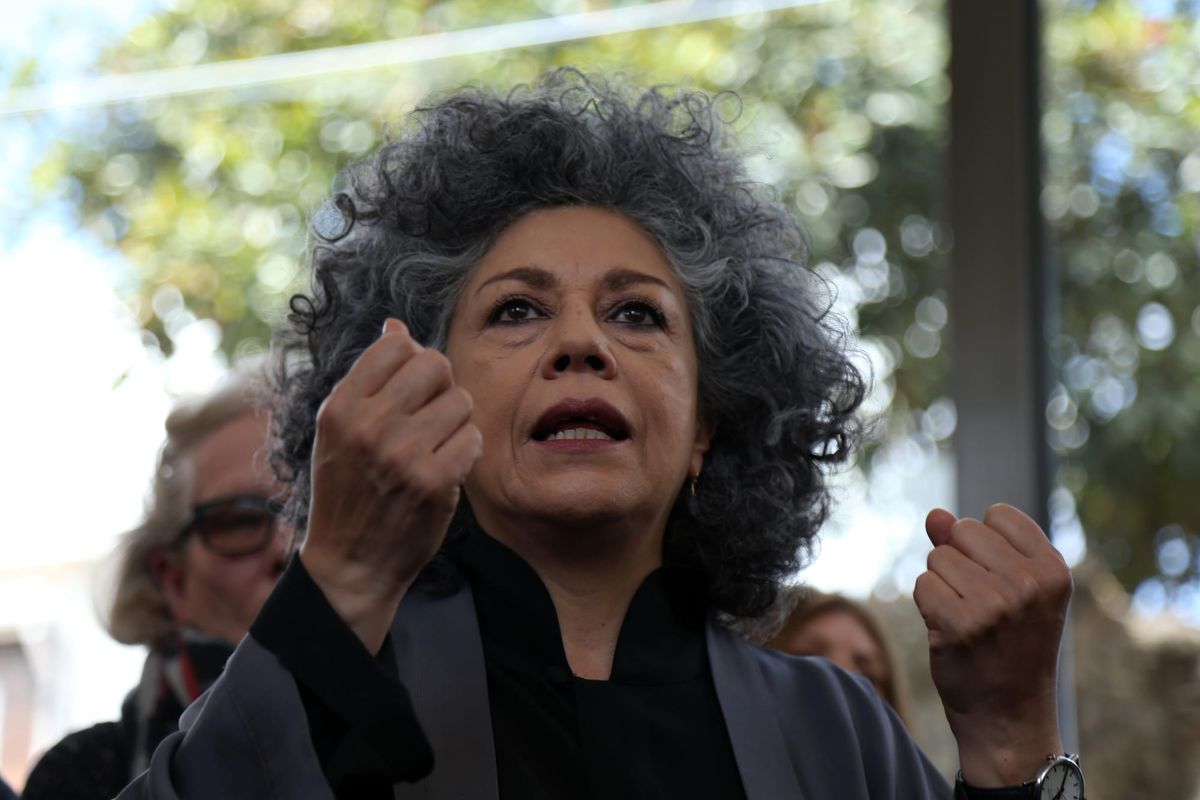
Hyperallergic: Hi, Doris. It’s a pleasure to hear you. You know, when I emailed you, I thought: I can’t believe it’s been five years since we last spoke. And now, writing to you again, in this context ... Is everything okay with you, all things considered?
Doris Salcedo: Yes, what a complex moment. Well, let’s see, it’s very difficult to live under an authoritarian government that moves very quickly. That is, in two months it has destroyed what Trump took two years to destroy. Colombian society reacts in unusual ways. And of all the scandals, of all the consensuses this president has broken, for some reason that is hard to understand, this act of censorship at the Museo Nacional is the one that has been most publicized and the one that has provoked the most widespread anger. That is, a series of extremely serious events has occurred, but society has not mobilized and has not raised its voice. In this case, it has.
H: I was thinking of what’s happening in the United States with Trump and the Smithsonian. Generally speaking, people here haven’t mobilized significantly in response to Trump’s crackdown on museums. But in Latin America, it seems people feel very attacked when governments touch art and culture.
DS: Yes, because it’s censorship. I don’t know if it’s because of the history of repression we carry with us, because we’ve already lived through it, because we already know what it’s like. And maybe because young people feel very threatened. But the reaction has been beautiful, moving, strong. Young professors from different universities took their classes to the steps in front of the museum and taught there, in the street, in front of the museum. This happened on October 15, and since that day, every single day we’ve had people in front of the museum. It’s a very beautiful and very moving thing.
H: How fantastic! That space is being activated in an incredible way, the complete opposite of what the government intended.
DS: It’s a bit curious, because the Museo Nacional was a museum that for quite a few years, not only under this administration but under previous ones, particularly the last one, was very badly run. It had poor leadership, with poor programming, and it was a somewhat lackluster museum. And now, this act of censorship brings it into the light. Seeing those square rectangles, those ghostly rectangles with a little dust, where the paintings have been removed ... those absences become an extremely powerful presence. People have reproduced the paintings and the objects taken out of the collection, and those reproductions are displayed at the museum’s door. That is, this act of censorship gave enormous fertility to the cultural world, which reacted in an intelligent and creative way.