Fred Wilson Reflects Our World in Black and White
The artist confronts us with a colonial shadow of real and manufactured images that reflect our current existence and its distortions.

WALTHAM, Massachusetts — Before visitors even enter the Rose Art Museum’s main gallery to see Fred Wilson’s Reflections, they’ll encounter a black and white canvas depicting a trident, stars, a swan, and a half-circle gear with a machete through it. Wilson’s “The People” (2010), in the museum’s front hallway, sets the stage for what’s to come. The work introduces a shade of black that is deep, smooth, glossy, and seemingly endless — absorbing so much light that the white walls appear dull. Viewers may or may not decide to decode the cryptic iconography. More importantly, “The People” and other works in the survey consider the relationship that black and white have to each other: One is the absence of color, the other is all colors, and together they reinforce each other’s fictions.
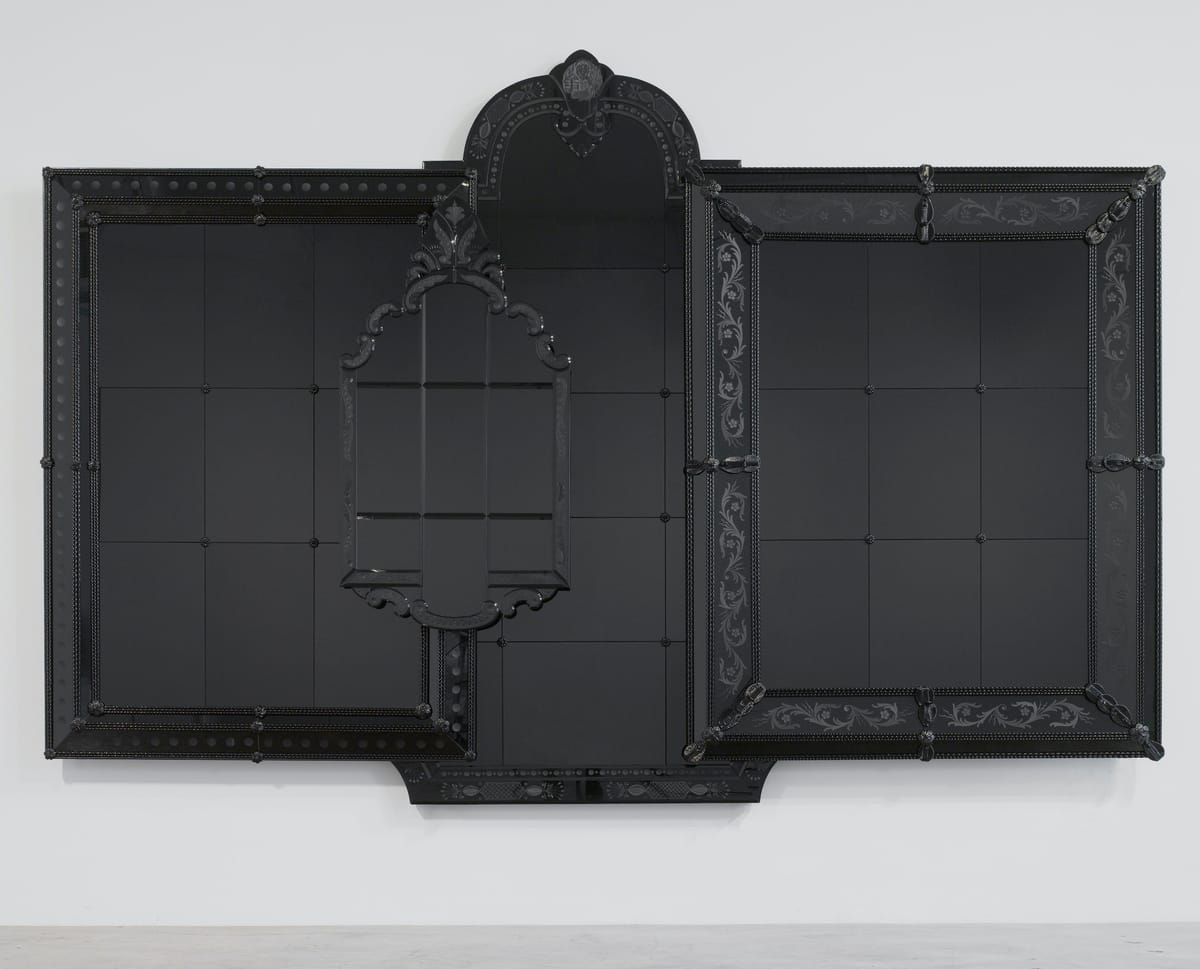
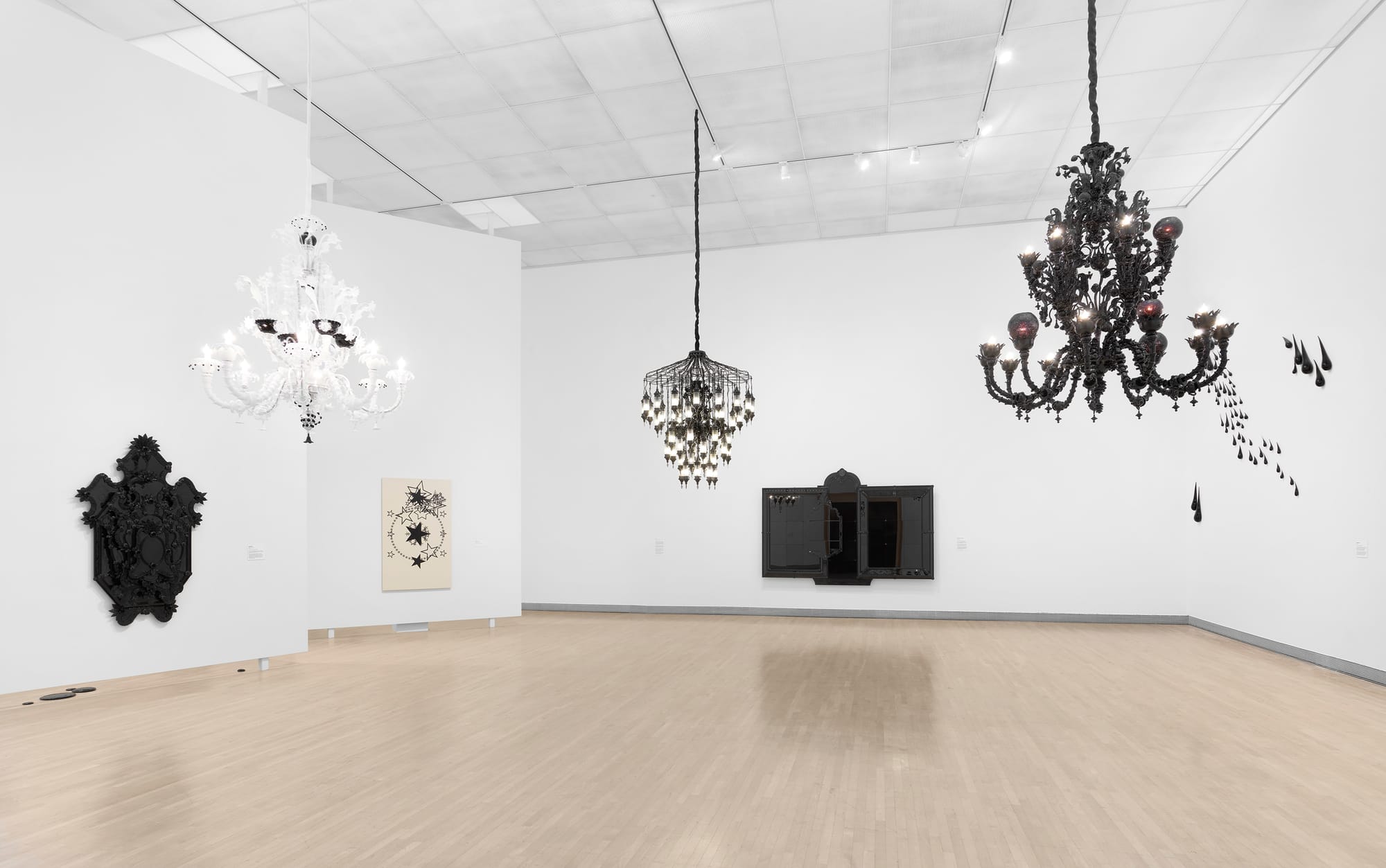
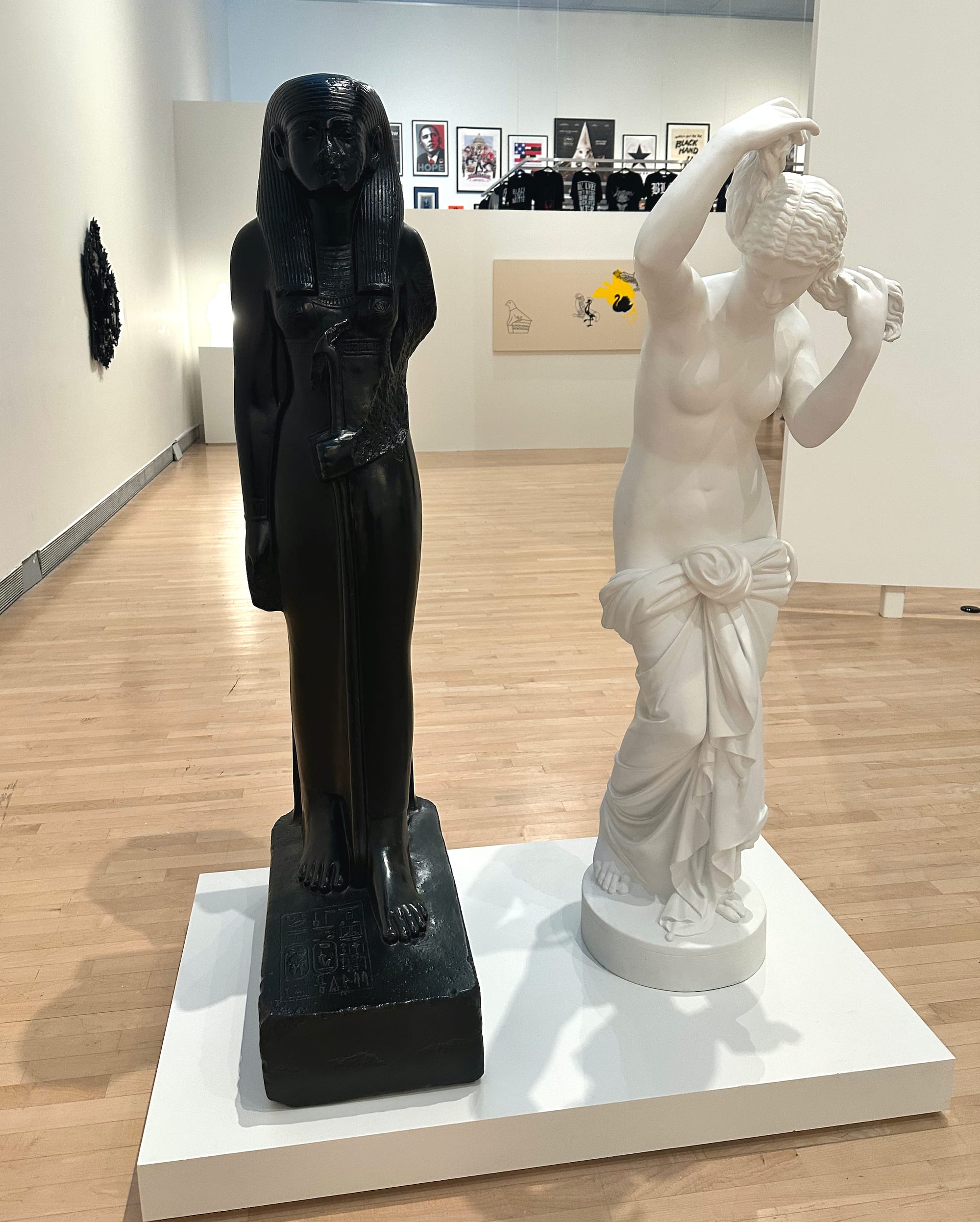
Wilson has explored these themes throughout his career, often through Murano glass, European decorative arts, and caryatids. Three glass chandeliers in the exhibition — “Dramatis Personae” (2022), “Eclipse” (2017), and “No Way But This” (2013) — and two Rococo-style mirrors adorn a wall in the first section, punctuated by black glass droplets. Rococo decorative arts are known for being seductively ornate. For Wilson, the three intricate floret chandeliers, one in black, one in white, and one in both, recall the interracial marriage of Desdemona and Othello in Shakespeare’s Othello. While miscegenation was common in Elizabethan Venice, a cosmopolitan port city, the play homes in on the social tension caused by Othello and Desdemona falling in love. Although most visitors wouldn’t recognize the works as allusions to Othello without reading the labels or titles, the chandeliers serve simultaneously as critiques of the underlying (and overt) racism of Euro-American art and objects through their color palette.
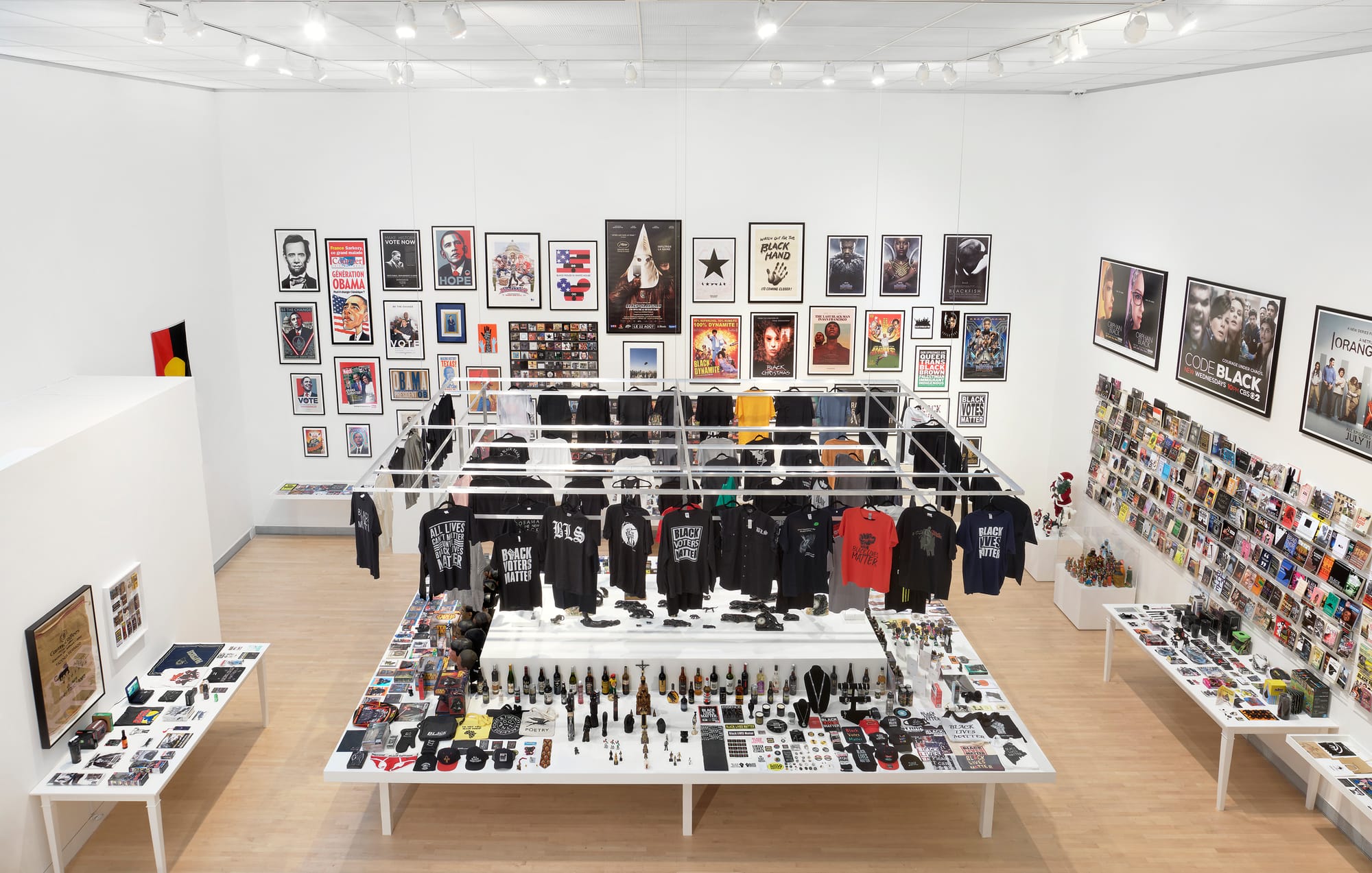
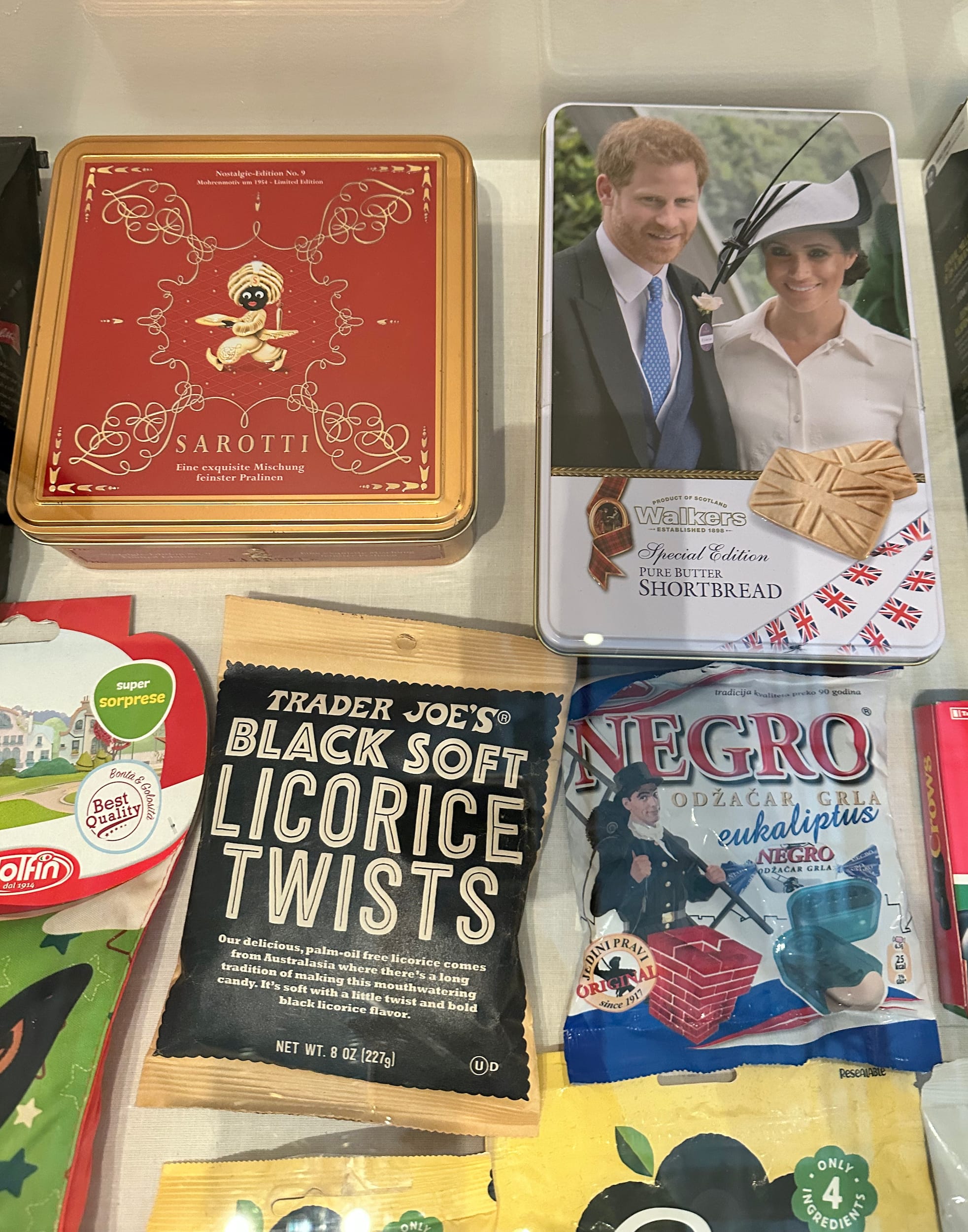
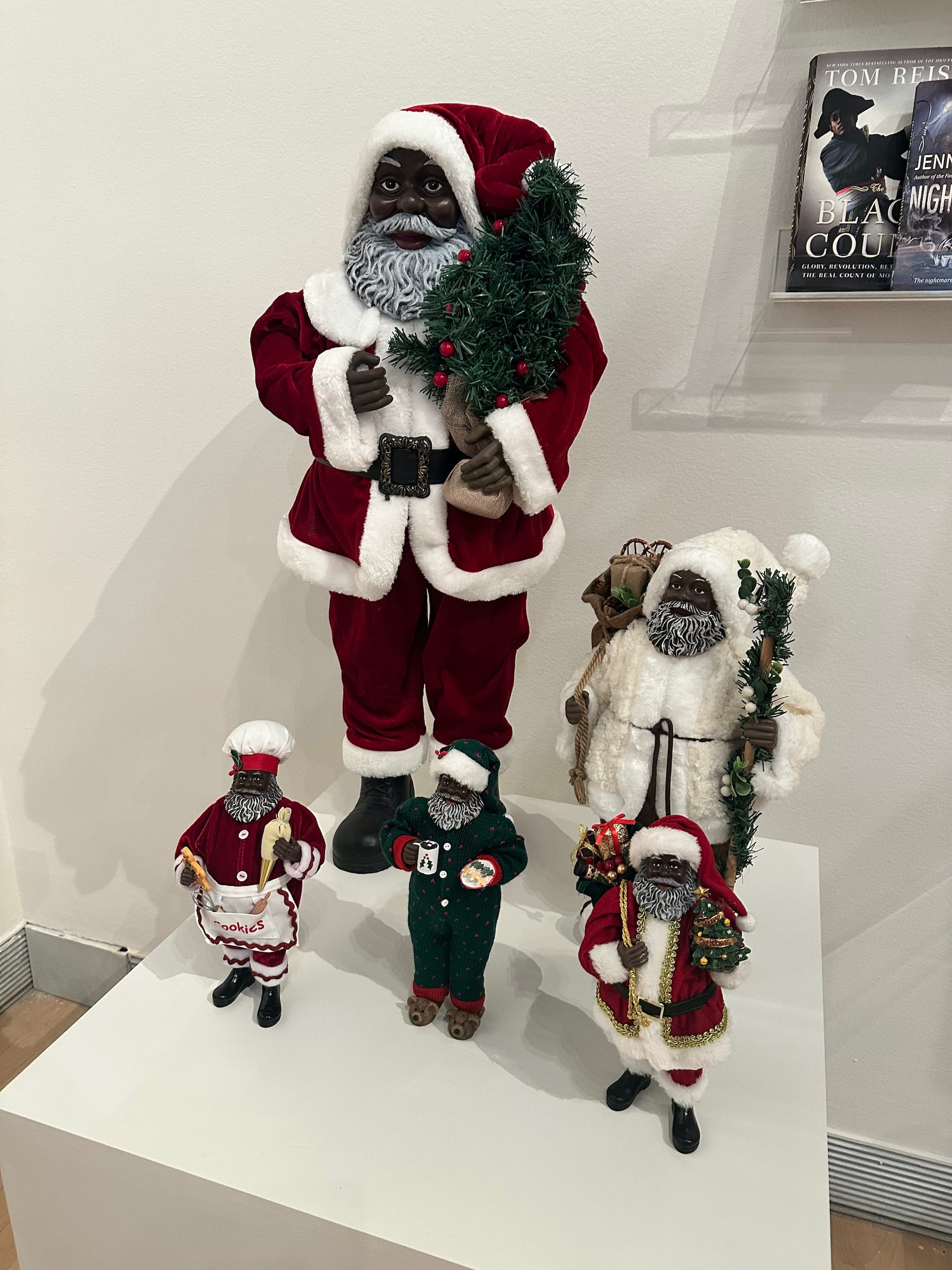
Wilson continues his critique of Western art institutions and museum classification with “North Africa, Europe, the Near East, and the Americas” (2003). This quadriptych depicts deep black figures with white sclera and teeth, who gaze at each other, as if to acknowledge a shared pain. The exhibition’s centerpiece is Black Now!, an installation of 2,500 objects Wilson has collected since 2005 that demands an unflinching gaze. This section pairs items with positive connotations, such as Black Santas or a cookie box depicting Megan Markle and Prince Harry, with negative items like Obama masks, minstrel characters on pralines, and sexual performance tablets. When I visited, I noticed many White viewers lingering in the first section of the exhibition, which is largely nonfigurative and decorative, while breezing through Black Now!'s paraphernalia. In the latter, objects are arranged in altar-like arrangements (i.e., a grouping of candles, liquor, and figurines) and summon uncomfortable minstrel associations. It made me wonder whether the section was intended as celebration or caricature.
Reflections concludes with a series of monochromatic flags of African countries trailing up the staircase, while the Pan-African flag (red, black, and green) sits above the back door like a talisman. This placement, whether intentional or not, holds historical significance for Black Americans due to segregation, as back doors were often their only acceptable entryway. What lingers is the idea of reflection. We are confronted with a colonial shadow of real and manufactured images that reflect our current world and the distortions that we’ve created. Until we truly face the fallout of our collective biases, the mirror will continue to be distorted.
Fred Wilson: Reflections continues at the Rose Art Museum at Brandeis University (415 South Street, Waltham, Massachusetts) through January 4. The exhibition was curated by Gannit Ankori.