Harry Bertoia Gets His Moment
As a sculpture long thought lost resurfaces in Detroit, the artist and designer’s alma mater sets its sights on a major retrospective.

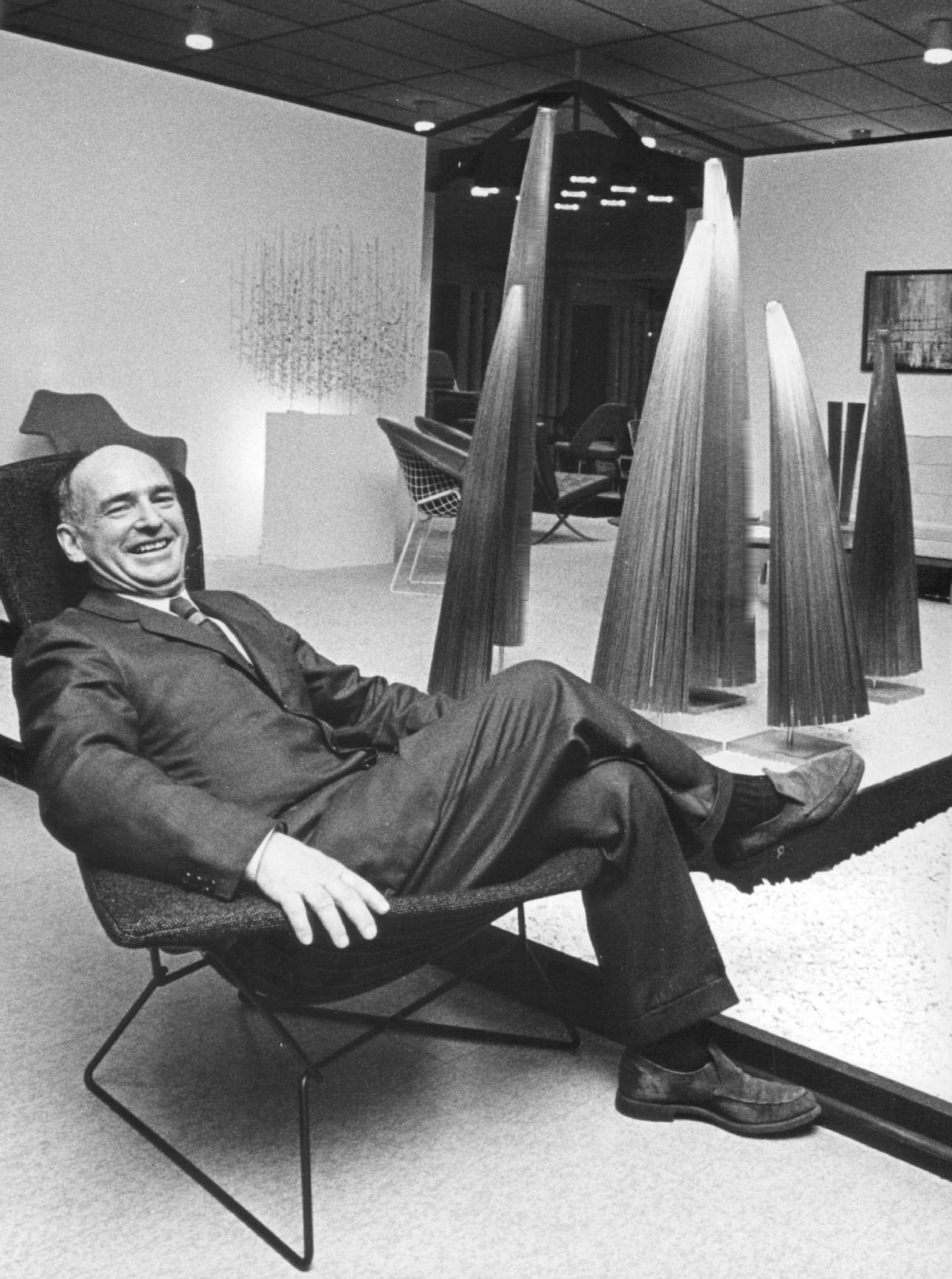
DETROIT — Much of art history is a cycle of creation, fascination, forgetting, and rediscovery. In Detroit, the work of mid-century modern sculptor, designer, and sound artist Harry Bertoia is enjoying a moment of being found once again, both metaphorically and in a very literal sense. As a major sculpture long thought lost resurfaces in the city, the Cranbrook Academy of Art, Bertoia’s alma mater, sets its sights on a retrospective show to mark the 90th anniversary of the artist’s arrival.
In 1970, Detroit’s J.L. Hudson Company, a destination department store founded in 1881 and commonly known as Hudson’s, commissioned an installation by the artist for the Genesee Valley mall in Flint, Michigan. The 26-foot suspended sculpture features two clusters of artfully arranged steel-wire rods coated in melted brass, bronze, and metal alloys. It is evocative and gestural, and seems like the kind of thing that would be difficult to lose track of.
When the Genesee Valley Mall closed down for renovation in 1980, however, the Bertoia sculpture was moved, first into Northland Mall in Southfield, Michigan, then out of public view. Decades later, it was presumed a casualty of that building's demolition. It came as a happy surprise to members of the Southfield Arts Commission to discover the piece languishing among the debris in the basement of the former mall during an inspection in 2017. The City of Southfield purchased the artwork and began the extensive process of restoring it following damage caused by decades of neglect.
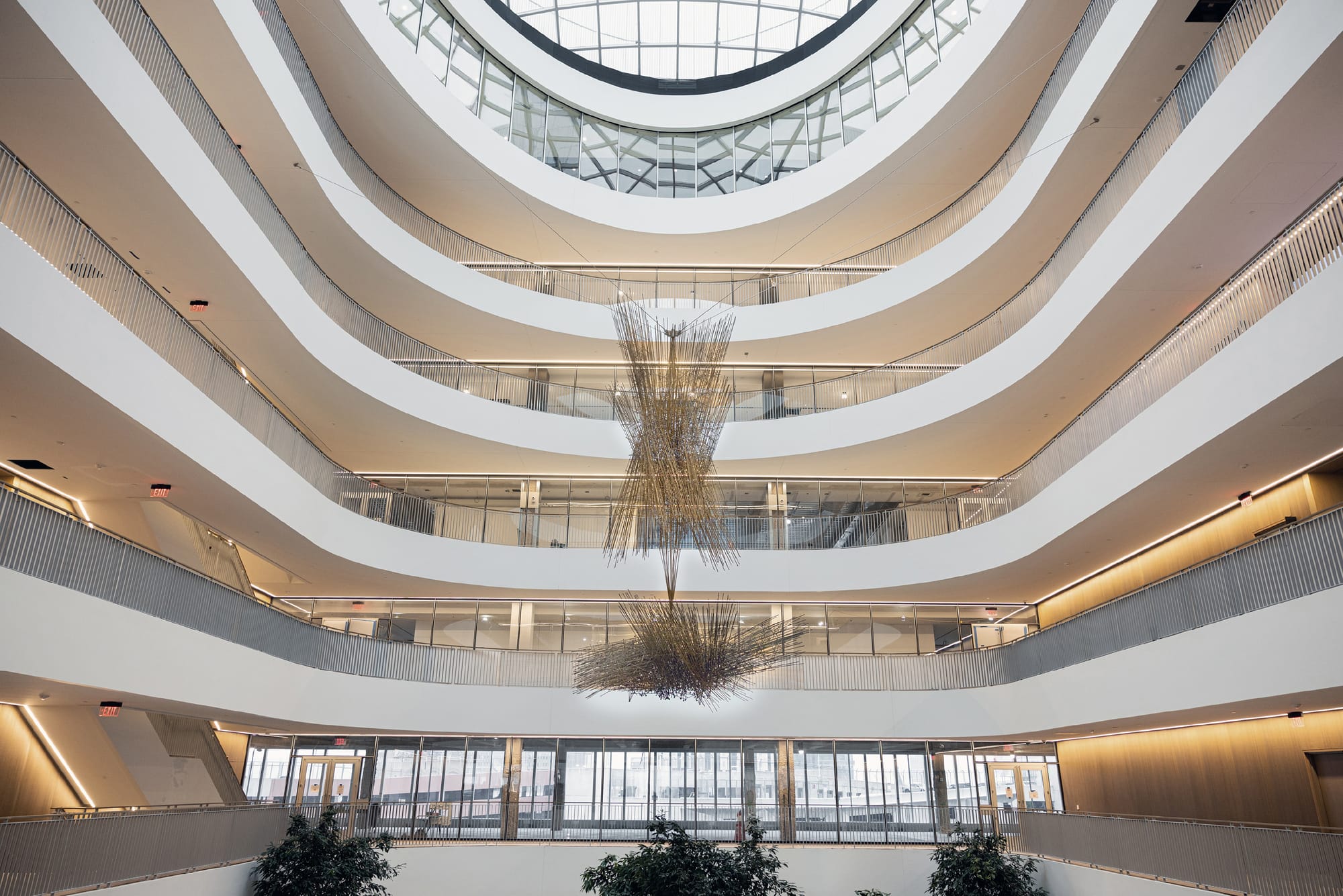
General Motors (GM) has a long relationship with Bertoia and others in his Mid-Mod cohort. In 1948, architect and fellow Cranbrook student Eero Saarinen was chosen to design the automotive manufacturer’s Global Technical Center in Warren, Michigan, as his first solo commission. Saarinen, whose father, Eliel, designed many of the iconic Arts and Crafts buildings on Cranbrook’s campus, including the Saarinen House, employed a number of his fellow students in the outfitting of the GM Technical Center — but Bertoia’s contribution was especially monumental, both in the field of industrial design as well as his own career. “Untitled Wall Screen,” a 36-foot-long, 10-foot-tall screen that balances rectangular steel plates coated in molten brass and bronze within a light-filtering gridwork of vertical steel rods, has been on view at the building since 1955. Already host to such a significant piece of the sculptor’s work, it seemed fitting that GM would return to Bertoia as a potential feature of its new global headquarters within the Hudson’s building in downtown Detroit. Easier said than done, as the sculpture’s installation required creating a five-story-tall opening in the side of the building and using a series of chain falls and cranes to hang the piece.

The overall construction project has been a massive, multi-year effort to recreate a new version of the legendary department store in the approximate footprint of the original Hudson’s building, which was demolished in 1998 amid the prolonged nadir of Detroit’s languishing downtown.
“We're absolutely delighted to see it hung once again, and they did a great job with that skylight above it,” said Celia Bertoia, the artist’s daughter and director and founder of the Harry Bertoia Foundation, in an interview with Hyperallergic. She acknowledged that she has not yet seen the work installed in person — in fact, it’s been difficult to find anyone who has actually viewed the artwork, as it is hung in a section of the GM headquarters accessible only to office workers.
Hyperallergic made it as far as the adjoining tower, mostly comprised of conference halls and seemingly empty but for a couple hanging out on a couch, who turned out to be caterers. Asked about a Bertoia sculpture, one of them responded: “Oh, the gold stick thing?” The work turned out to be on display in the employees-only area, requiring a badge or an escort, neither of which GM was willing to provide at any point.
However, rabid Bertoia fans can rest assured that his renewed local visibility is not limited to a single, exclusive location. The Cranbrook Art Museum has announced a huge Bertoia retrospective currently in the offing, set to open in June 2027.
“Bertoia is an artist whose pioneering work in a variety of media seems to have come full circle again,” Andrew Blauvelt, the museum’s director, told Hyperallergic in an interview about the forthcoming show.
“Certainly, the ‘discovery’ of the piece now at the new Hudson’s building in Detroit telegraphs this moment,” Blauvelt said. “His work with sound in art was so pioneering that it seems only appropriate now to revisit that body of work in today’s context of blurring the boundaries between media and disciplines.”
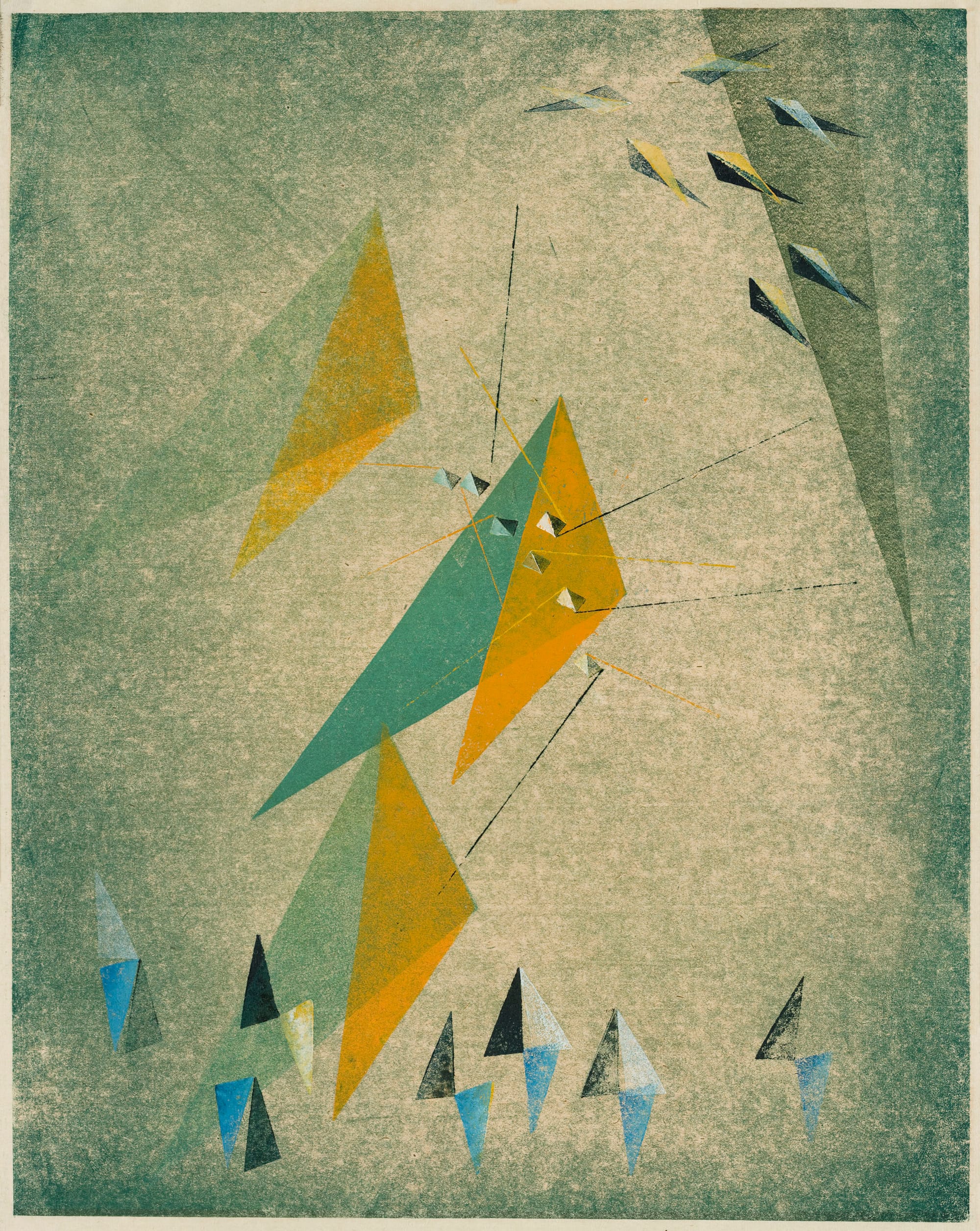
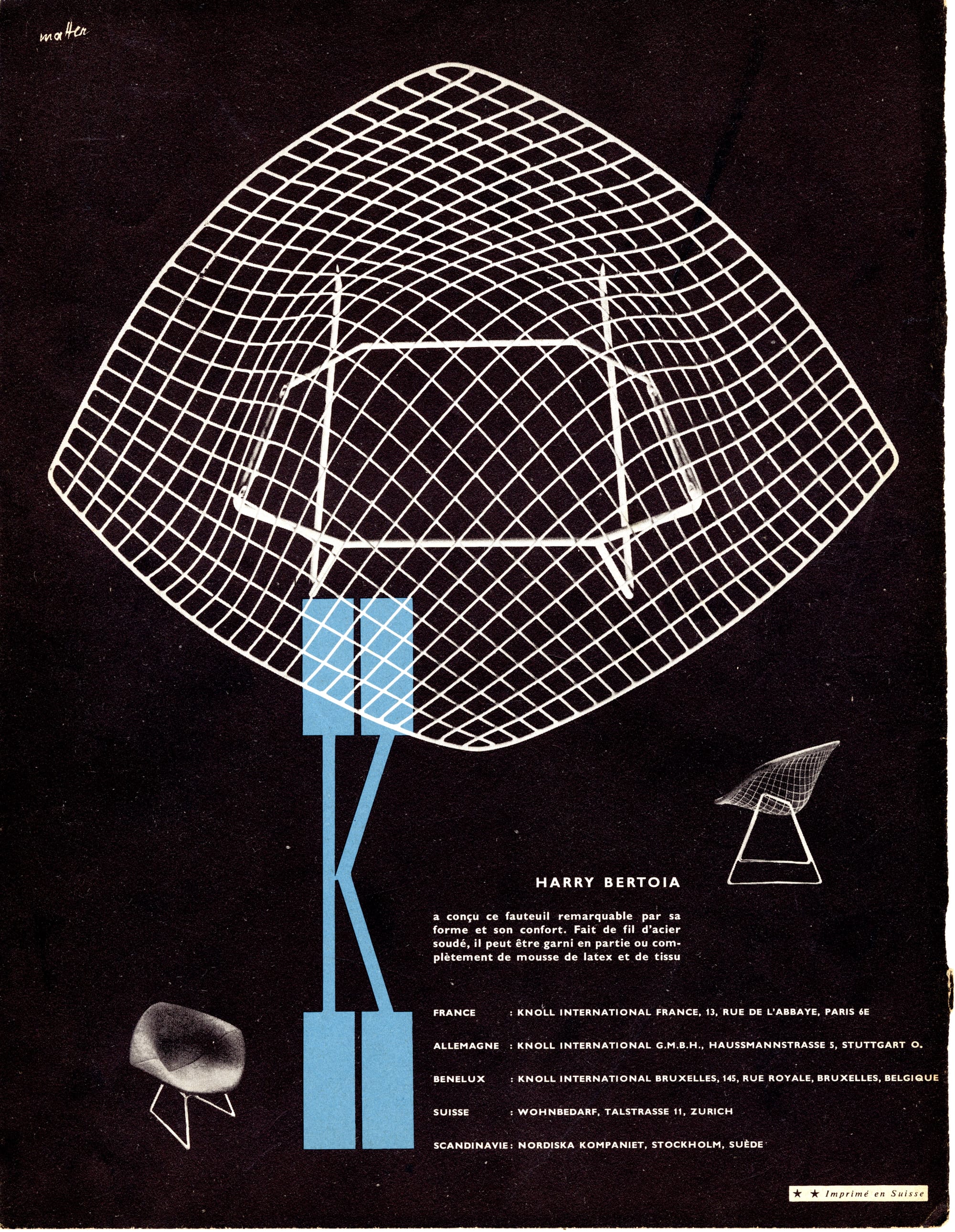
Bertoia arrived at the Cranbrook campus in 1937, studying with and alongside mid-century titans like Saarinen, Charles and Ray Eames, and Florence Knoll and going on to become a metalsmithing and printmaking instructor at the art academy. Harry Bertoia: A Homecoming will feature more than 100 works by the artist, drawn largely from the Cranbrook Art Museum’s extensive permanent holdings, recently enhanced by a November 2023 gift of 10 sculptures from the collection of Joseph S. Sample and Miriam T. Sample.
“In true Cranbrook fashion, Bertoia was a polymath, making prints, jewelry, sculpture, and furniture,” added Blauvelt. “We envision this project as a kind of spiritual return of the artist to Cranbrook — the place where it all began.”
As Detroit’s city motto asserts, Speramus Meliora; Resurget Cineribus — “We hope for better things; it shall rise from the ashes.” The phrase was coined by Father Gabriel Richard in 1805, following a massive fire that destroyed a huge portion of the city, and has become a kind of core identity for Detroit, which has found itself burning and rising more than once over the intervening 200 years. Now, Bertoia’s long-lost sculpture has experienced its own phoenix-like ascent. And thanks to Bertoia’s habit of leaving his works untitled, we are free to interpret the sculpture — should we ever be able to see it in person — as a symbol of that rebirth, if we like.
“My father was a very spiritual man, and he really felt that the viewers are as important as the creator, and each person who looks at a piece of art has a different life experience, different memories, and it's going to mean something different to each individual,” said Celia Bertoia. “So he didn't title things, and often he didn't sign them, either, thinking that his creativity came from a divine source, and why should he put one man's name on it?”