How a Basket Empire Wove the Myth of America
As Longaberger's iconic headquarters sit empty, the baskets survive as artifacts of a national identity that commodified craft and packaged settler colonialism as heritage.

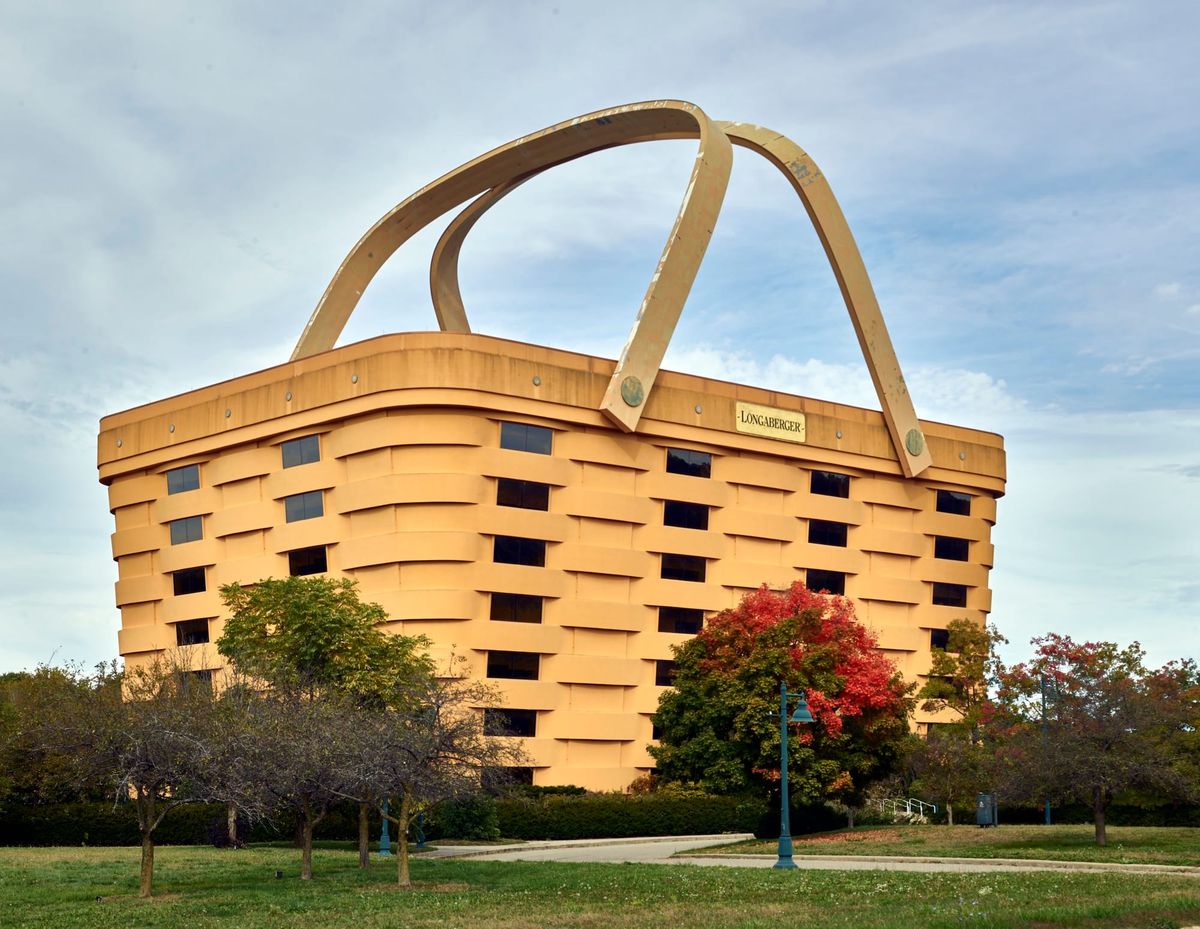
The Longaberger Company was once a billion-dollar basket-weaving empire, employing over 8,000 people at its peak. Its headquarters in Newark, Ohio, was built in 1997 in the shape of a giant basket, complete with two enormous handles arching over a glass atrium ceiling. But after declining sales, the company filed for bankruptcy in 2018. The iconic Basket Building, which has sat empty for years, is now for sale.
Ryan Miller, a photographer who worked at Longaberger in 2014, witnessed the company’s descent into financial instability. “After countless late and missed payments, I learned they were struggling to pay many of their contractors, myself included,” Miller told me. “That glass ceiling? Well, it turns out that the handles would gather moisture and ice pretty frequently in the winter and when it broke free, it had only one place to come crashing down. Eventually, they didn't even bother to get it repaired, and I vaguely remember some tarp and tape holding it together during my final days there.”