How Korean Paper Became War Collateral
Every sheet of Korean hanji I make carries the same question: What does it mean to preserve a tradition without flattening the people who created it?


This article is part of a series focusing on underrepresented craft histories, researched and written by the 2025 Craft Archive Fellows, and organized in collaboration with the Center for Craft.
There are words that sit comfortably in the mouth.
Kozo is not one of them.
Every time I hear it used as the universal shorthand within East Asian papermaking, something in me tightens. Not because the word is incorrect. Not because Japanese papermaking is undeserving of admiration. I use the word myself. I teach it in workshops and have spent years working with the fibers, histories, and technologies associated with Japanese papermaking. My unease comes from somewhere more difficult to articulate. It comes from the growing realization that a field increasingly committed to the language of decolonization remains surprisingly comfortable with certain forms of historical amnesia.
I convinced myself this reaction was personal. Perhaps I was reading too much into a word. Perhaps this discomfort belonged solely to me, a Korean-American papermaker carrying family histories and cultural inheritances that others did not share. Then, I began paying attention.
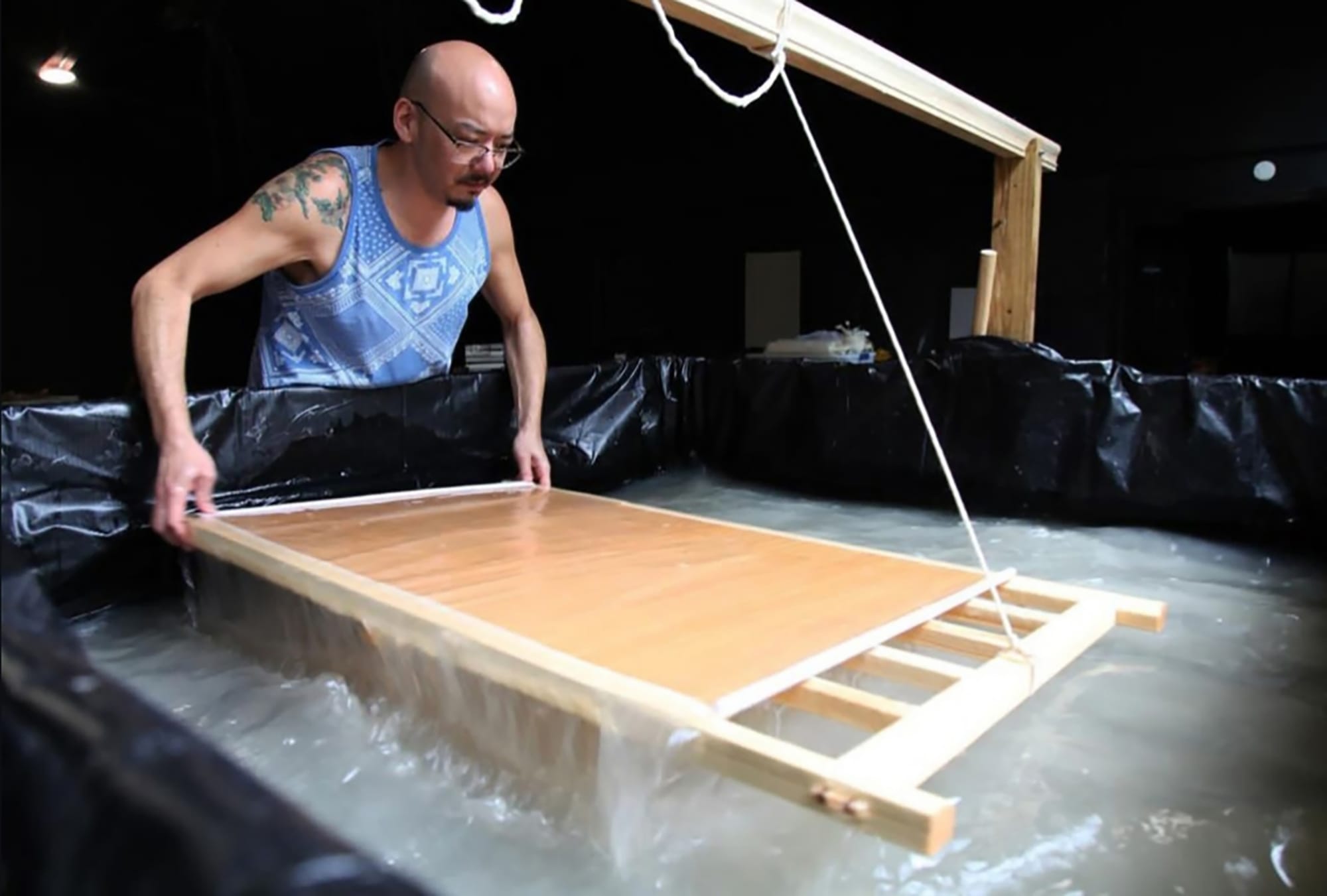
I tuned in to workshop descriptions, artist statements, conference presentations, residency announcements, and educational materials. I could not stop seeing "kozo" appear not simply as a Japanese term or fiber source, but increasingly as a category through which East Asian papermaking itself became legible. I asked myself, “When did one tradition become responsible for speaking on behalf of all the others?”
The answer cannot be separated from history.
For many Americans, Japanese occupation remains a distant historical event. For many Koreans, it remains a living inheritance. Between 1910 and 1945, the Korean language was suppressed, Korean names were replaced, and Korean cultural traditions subordinated to imperial authority. This was not merely a political project; it was a cultural one. Language became one of the ways empire reorganized identity itself.