How Photography Helped Build the Atomic Bomb
A group of intergenerational artists, collectively known as Slow War Against the Nuclear State, investigates the afterlife of nuclear politics in a haunting, timely exhibition

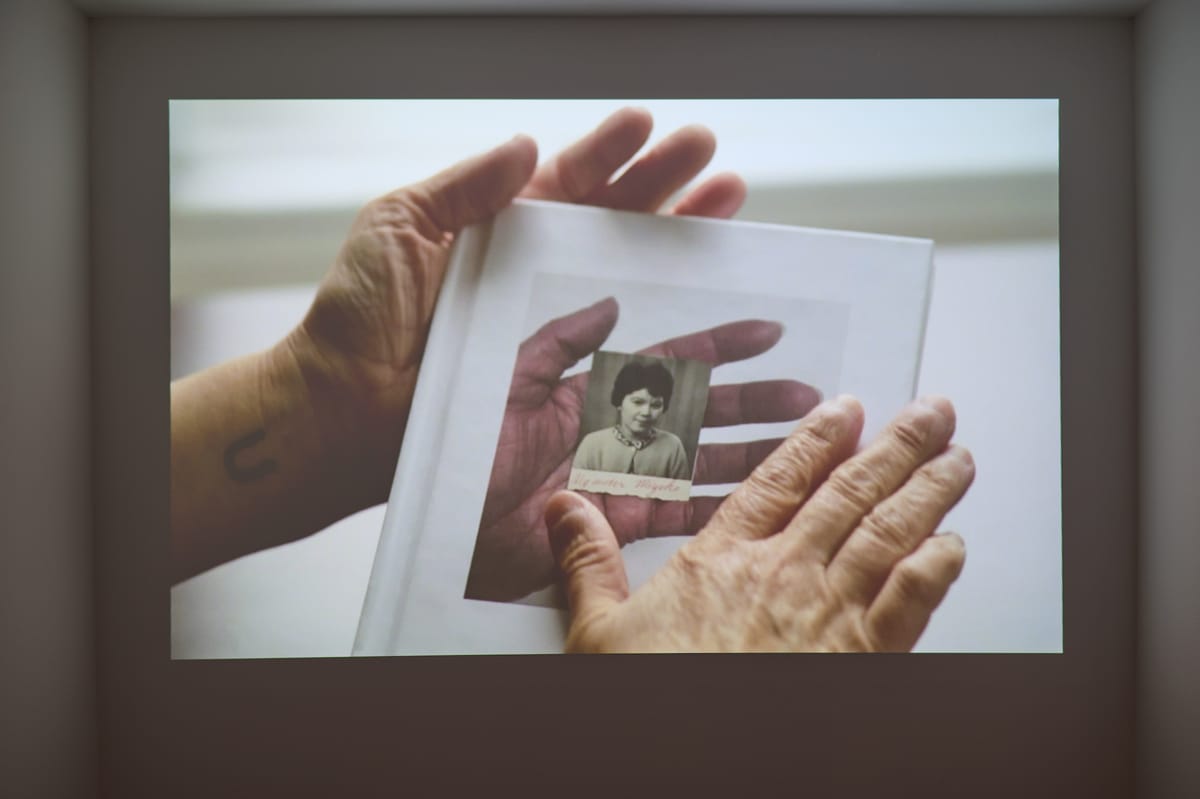
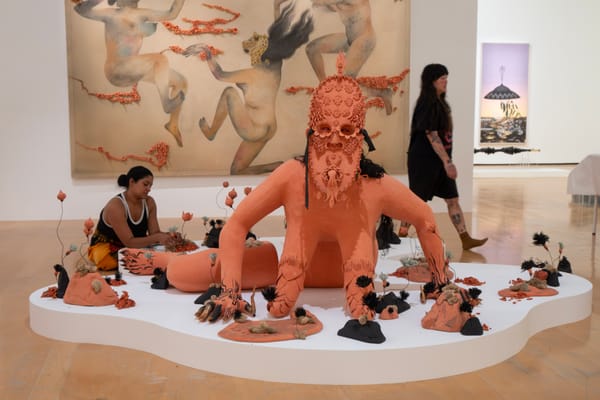
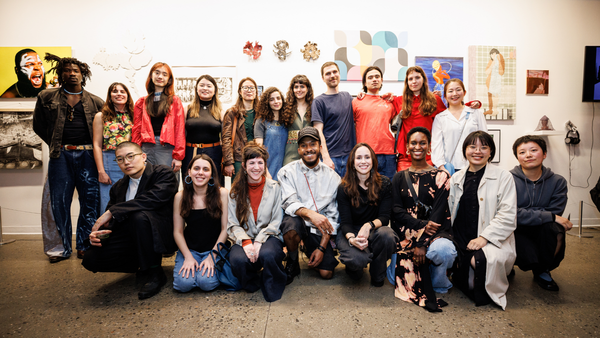
CLAREMONT, Calif. — The feminist collective Slow War Against the Nuclear State — better known as SWANS — formed in a moment of serendipity and epiphany. In 2022, Los Angeles-based feminist artist Nancy Buchanan decided to throw a dinner party to discuss the politics of the nuclear state, and the group hasn’t stopped meeting since. Three SWANS members grew up with fathers who were deeply involved in the production of atomic weapons, while two had parents who were anti-war and anti-nuclear activists. All seven are both artists and academics, collectively spanning three generations. At Pitzer College Art Galleries, Atomic Dragons includes contributions from each member, focusing on photography’s role in nuclear weapons development and the human cost of nuclear disasters.
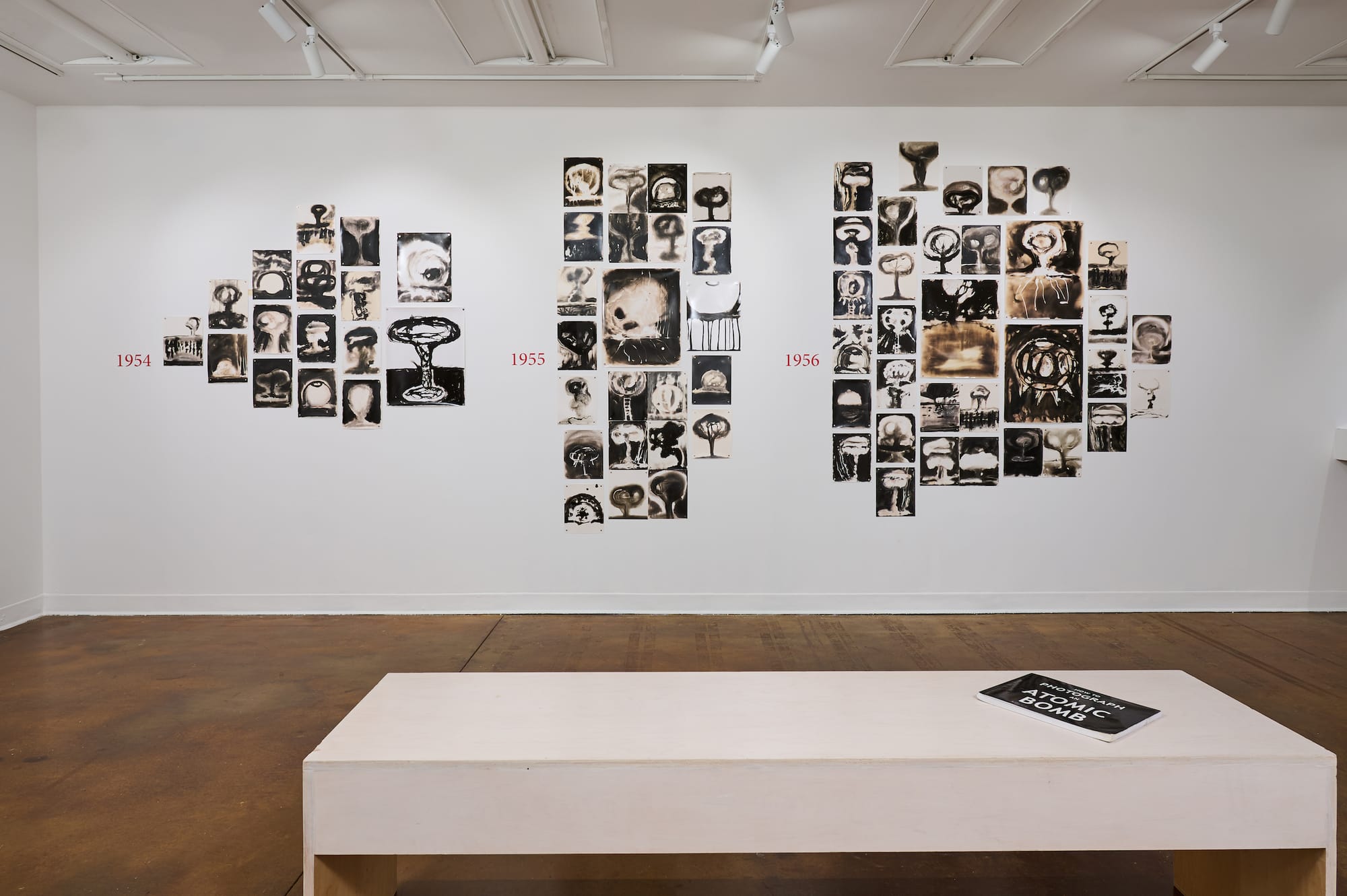
The exhibition draws its life force from a collective ability to engage with the many-headed hydra of nuclear politics, including spectacle, remembrance, and survival. Experimental photography maintains a strong presence throughout the show, with particular attention to how the photographic process and industry (namely, Eastman Kodak) are implicated in the United States government’s testing and production of the first atomic bomb by designing special cameras capable of capturing the instant of explosion. elin o’Hara slavick’s “Hiroshima Flowers” and “Lingering Radiation” (both 2008) render actual artifacts of nuclear disaster in cyanotype and autoradiograph (silver gelatin contact print of exposed x-ray paper), respectively. Her haunting, hallucinatory apparitions are fixed not on the moment of impact or nuclear disaster, but on the persistence of the toxic aftermath when she made these works over 60 years later.
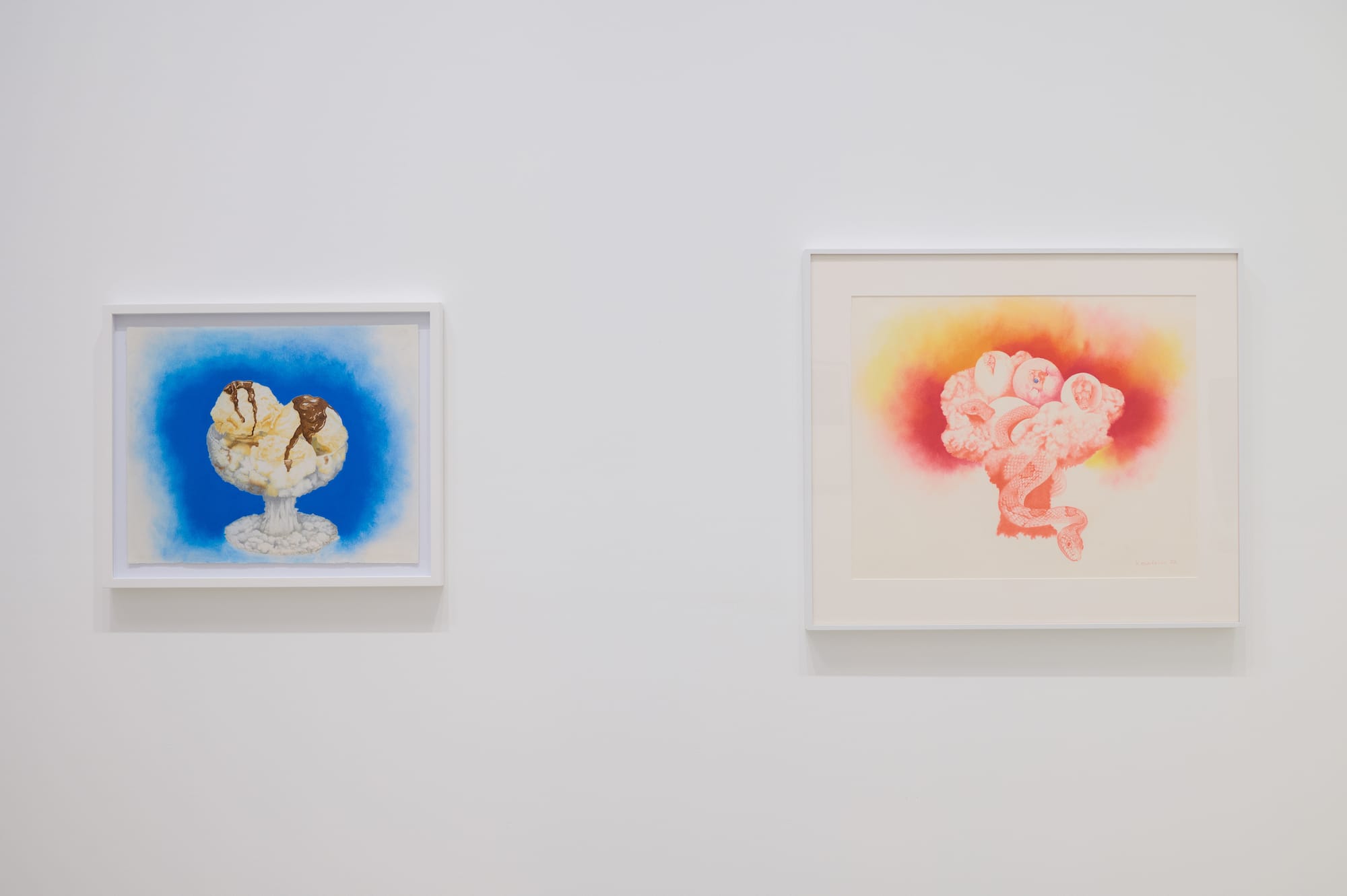
Elsewhere, SWANS members explore the fundamental premises that might constitute a nuclear conscience — the fear-driven race to develop nuclear technology, implications for scientists and other contributors, and nuclear technology’s appetite for global politics. Sheila Pinkel’s “Nuclear Questions” (1985) breaks down what’s at stake in a nuclear world: “Are we afraid of one another? Is fear our gross national product? Can we make the world safe enough so that we can once again dream?” Buchanan takes the ultimate nuclear spectacle, the mushroom cloud, and uses it as a visual idiom for the Cold War by embedding within its toxic plumes the likes of Ronald Reagan, a nest of snakes, and a temptingly overloaded ice cream sundae.
Atomic Dragons concludes in a second room, where the artists staged archival objects in vitrines, such as o’Hara slavick’s irradiated objects collected from exclusion zones. On the back wall hangs a certificate awarded by the War Department to the father of SWANS member Judith Dancoff, preprinted with the date the United States dropped the first atomic bomb on Hiroshima: August 6, 1945. The letter thanks him for his work, calling it “essential to the production of the Atomic Bomb."
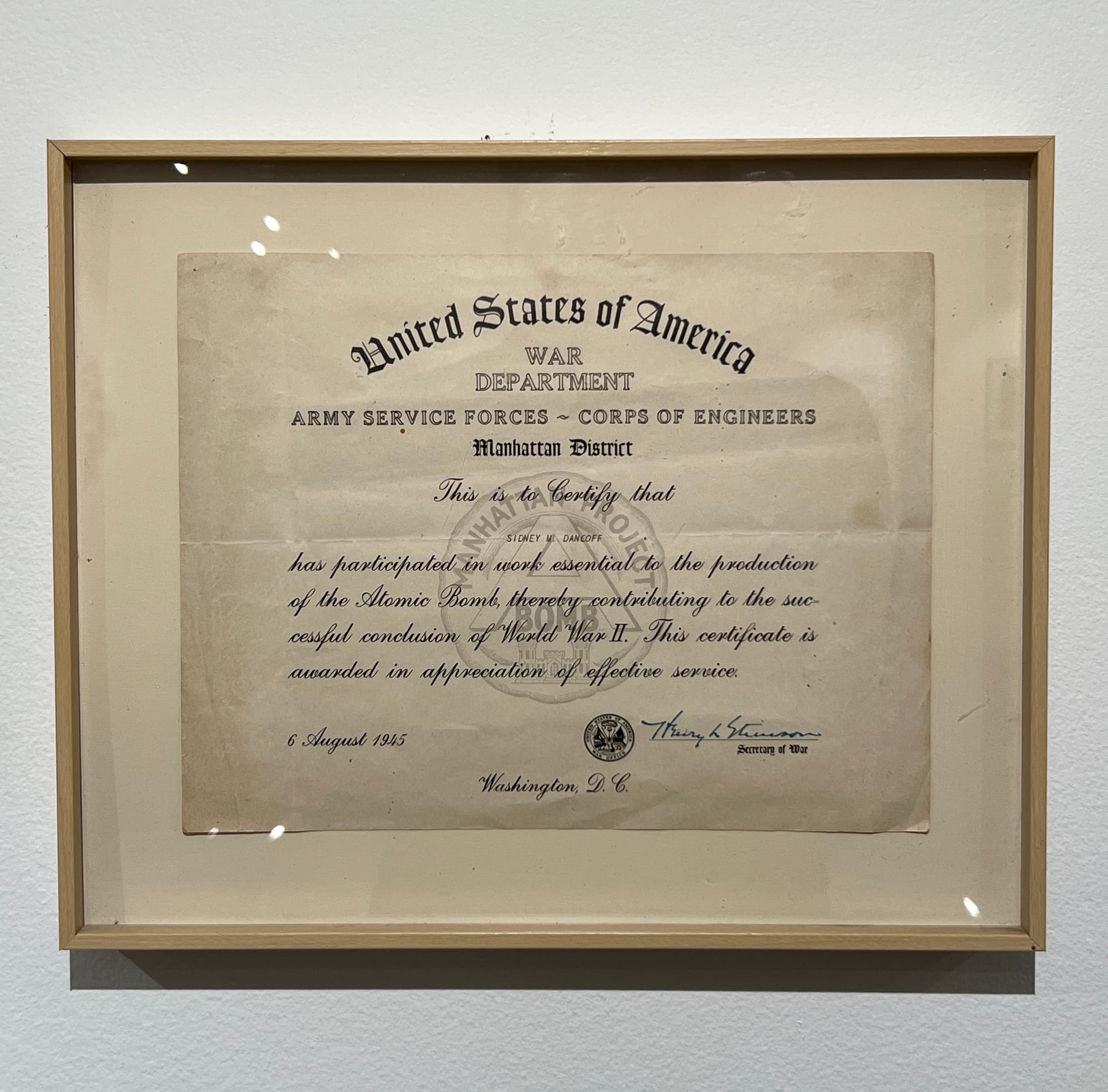
This haunting final frame calls to mind the revival of the “Department of War” moniker by Donald Trump — and, more urgently, the fact that the United States and Israel attacked Iran just three weeks into the show’s run, citing a fear of the regime developing a nuclear weapon. Their strikes have killed almost 3,000 people and displaced some 4 million people across Iran and Lebanon, all in less than one month.
The timely show is a feat of curation that balances both the intimately personal and the political. This accomplishment should be credited to both the artists and the curator, who provide a rich context for today’s nuclear politics and will host conversations during a symposium on April 4, the exhibition’s closing day. Atomic Dragons insists that, as the churn of nuclear war and imperialism continues, so must the Slow War Against the Nuclear State — and so too must the dinner parties.
Atomic Dragons continues at Pitzer College Art Galleries (1050 North Mills Avenue, Claremont, California) through April 4. The exhibition was curated by Emily Butts, director of Curatorial Affairs at Pitzer College.