Inside a Black Panther Family Album
Kathleen and Eldridge Cleaver’s family album depicts aspirational homemaking in diaspora, capturing the tension between rest and motion as they navigated exile with their children.

Editor's Note: The following text has been excerpted with permission and adapted from When Home Is a Photograph: Blackness and Belonging in the World by Leigh Raiford, published by Duke University Press on April 14 and available online and in bookstores. Text Copyright Duke University Press, 2026.
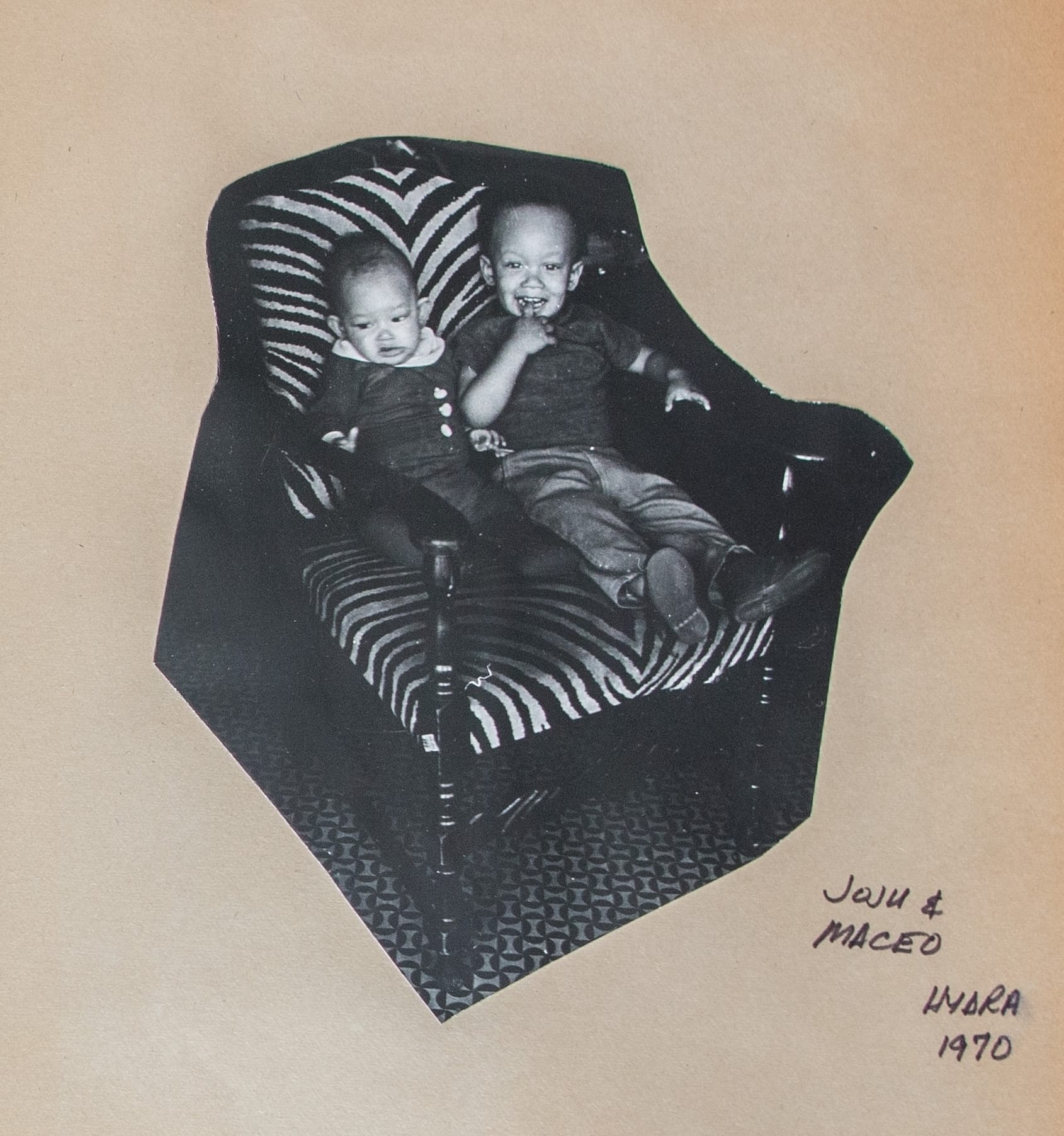
This photograph by Jeffrey Blankfort is one of the few images in which Maceo and Joju Cleaver appear alone together as siblings, without one or both of their parents, Black Panther Party (BPP) leaders Eldridge Cleaver and Kathleen Neal Cleaver. They are nestled into a single chair side by side, their arms touching. Even so, there is room to spare, which gives a greater view of the chair.
I turn to the chair’s very cute occupants in a moment. First, let’s talk about the chair itself. A relatively straightforward piece of furniture, this carver chair (an early American design) sports a seat and back upholstered in zebra print fabric. According to Kathleen, this chair was one of her favorites and featured prominently in the San Francisco home she shared with Eldridge from 1967 until she left to join him in Algiers. It was one of many “African-themed” items in their house: animal prints, carved masks, shields, and spears. The zebra print is reminiscent of course of the iconic image of BPP Minister of Defense Huey P. Newton, a photograph staged by Eldridge Cleaver in May 1967. Keenly aware of the power of image and of personality, Cleaver felt it necessary to orchestrate a publicity photograph of Newton as the Party was gaining national and international attention after its takeover of the California Capitol Building only a few days before this photograph was made. I described in my first book, Imprisoned in a Luminous Glare (2013), how, through its visual dramaturgy, the photograph captured and clarified many of the ambiguities and competing strains of “Black Power” that had adhered around the discourse. The African artifacts — the spears, the shields, the zebra skin rug — symbolized cultural nationalism, a philosophy defined by a glorified African past and the unifying force of a monolithic Black culture.
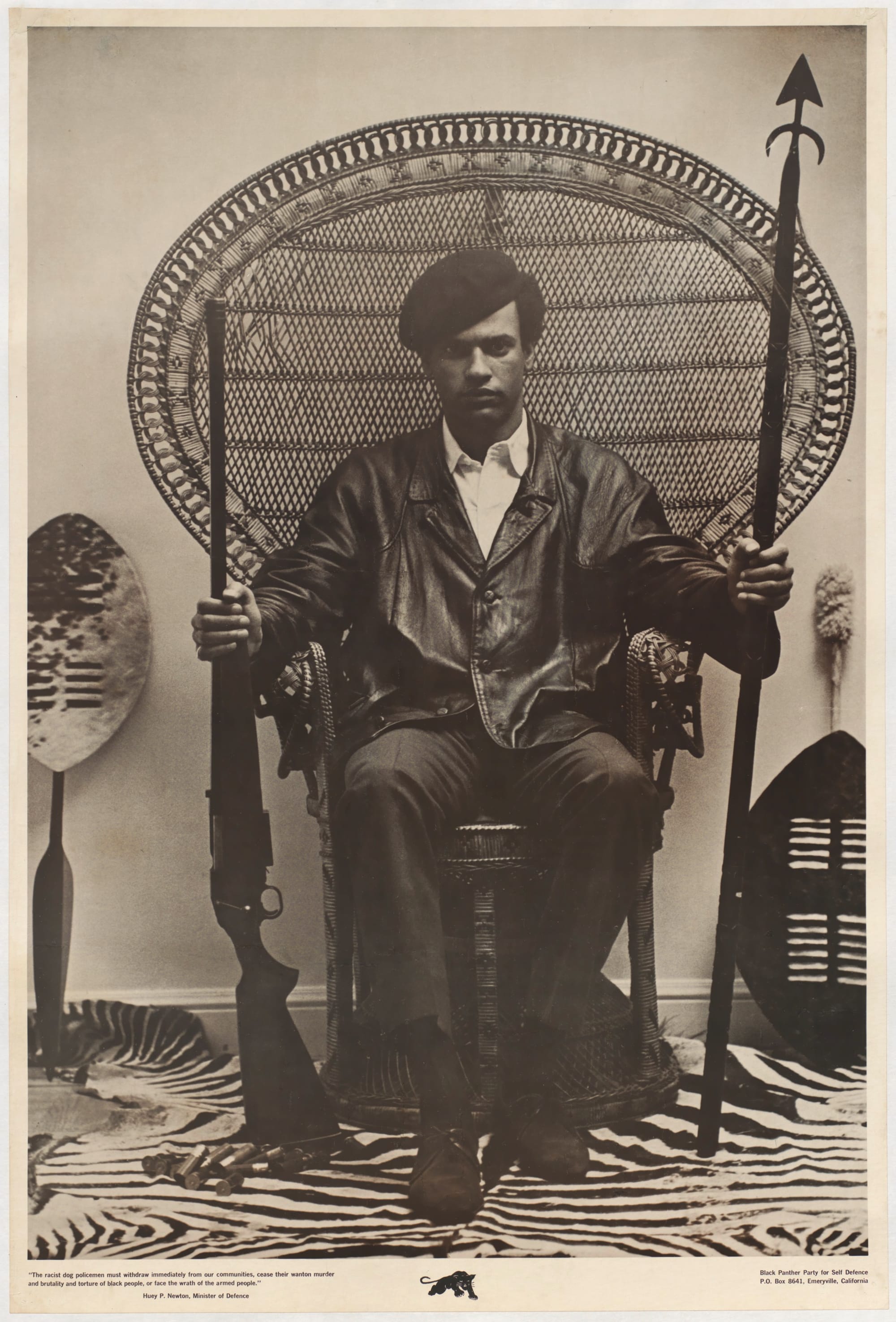
Knowing, however, that those “artifacts,” or replicas, as was more likely, came from the Cleavers’ home encourages us to think more carefully about how quotidian objects become powerful conduits of diasporic connectivity. In her essay “Back to Africa: The Evolution of the International Section of the Black Panther Party (1969 – 1972),” Cleaver wrote of the significance of such connection, specifically in the context of a trip in 1972 to Congo-Brazzaville of a Panther delegation, a group yearning to be hailed as family by their African hosts: “The desire to return to Africa was always a powerful undercurrent in the Afro-American experience. The hunger to see the land where their ancestors were captured and brought as slaves to America remained ever present among Blacks struggling to express their identity in a White-dominated world.” The possession of diasporic resources, to use Jacqueline Nassy Brown’s term, in one’s living space can offer a sense of movement and mobility, an expression of connection across space and time, especially in a condition of immobility and stasis. The spears, shields, and masks were items that one admired as art and lived with. But the chair, a place of rest and momentary settling down, was something to be lived in.
The centrality of the chair has implications for how we read the photography of Black liberation writ large. Tina Campt is instructive here. Following Kevin Quashie, Campt urges us to consider quiet “as a modality that surrounds and infuses sound with impact and affect” and “the quotidian as a practice rather than an act/ion,” as hermeneutics capacious enough, acute enough to track refusal and not just resistance, stasis and not just mobility. In doing so, we are able to “rethink foundational approaches to diaspora studies."
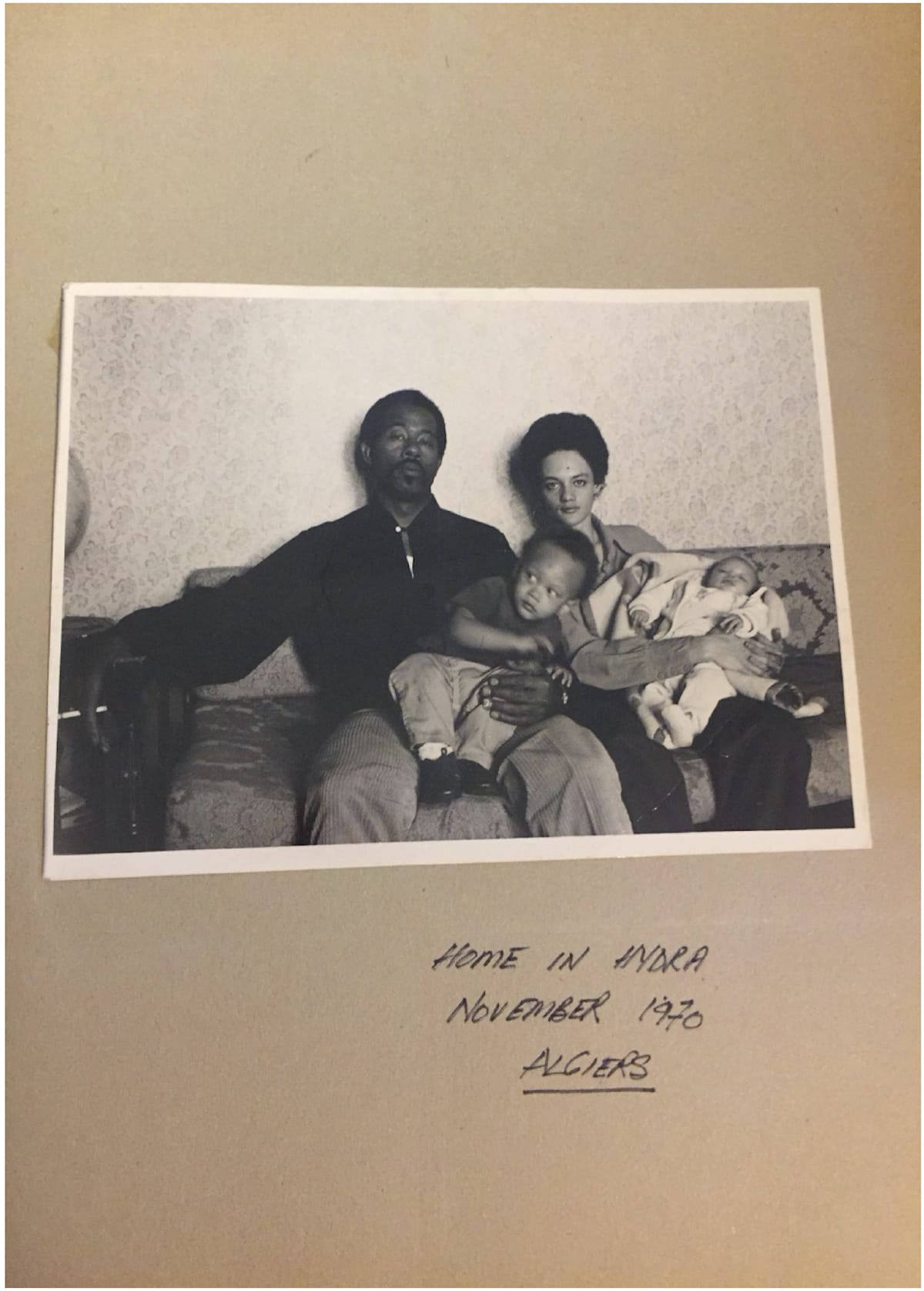
On one hand, we can read this photograph and the album overall for a certain confirmation of these foundational approaches; that would mean considering the photograph for its visualization of the forced mobility of some of the most iconic figures of the Black radical tradition. But the album also offers a depiction of homemaking that is itself a kind of aspiration to the quiet and stillness of the domestic quotidian and the tension between rest and motion. Taken together we are forced to contend with how, in Campt’s words again, “the black quotidian [functions] as a signature idiom of diaspora culture and black futurity” for even those who are the most recognizable, most vocal, and most resistant figures in our political culture.
Kathleen loved this chair so much that she had it shipped from San Francisco to Algiers. According to Kathleen, this photograph of Maceo and Joju in the zebra print chair was made the day the shipment arrived from the States and into their second home in Algiers, in the suburban area of Hydra. They were unpacking the boxes, and Kathleen placed the children in her favorite chair. The chair, we might say, is as much a subject of this photograph as the children.
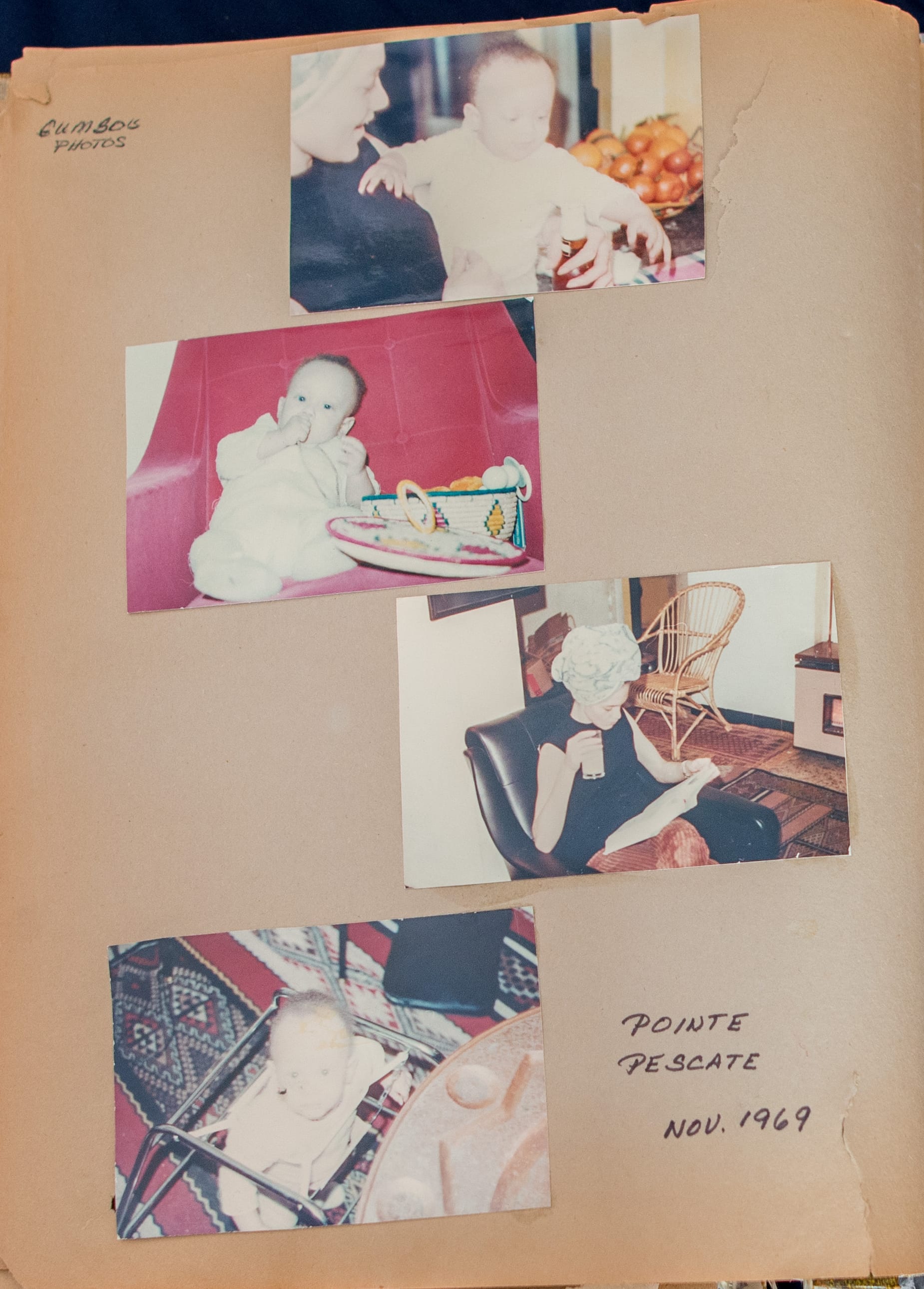
For the subject-citizen who lives under conditions of uncertainty and hostility, home is always in motion, necessarily has to be here and elsewhere; home is respite and retreat that necessarily has to be mobile. Kathleen was no stranger to making a home internationally. She’d witnessed her parents, her mother especially, settle the family into living quarters in India, the Philippines, Liberia, and Sierra Leone. This upbringing as ambassadors (agents?) of the Cold War United States was of course a far cry from living in exile as an enemy of the United States. But one commonality for Kathleen was the need to create a familiar environment amid persistent newness.
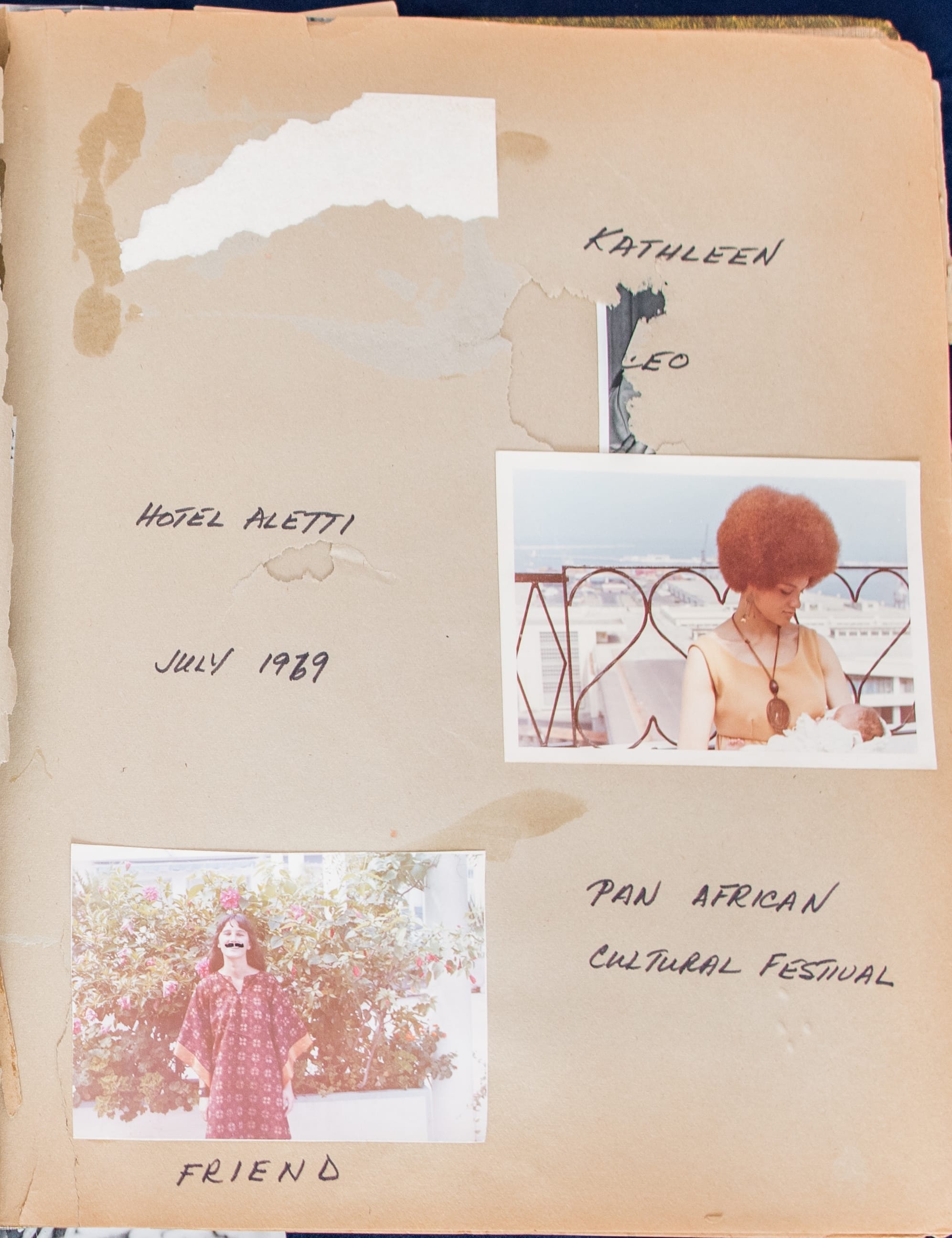
This proved no easy task. Although Kathleen writes that the Panthers were thrilled to be in Africa because of the place the continent held in their political and cultural imaginaries, the reality of living in exile, and the complexities of Algeria in particular, made their experience a difficult one. Of the 30 Panthers living in Algiers at the height of the International Section, only Kathleen spoke French, and no one spoke Arabic. None were able to comprehend the complex political situation or the histories that bound and divided Algeria’s various ethnic, tribal, and religious groups. And for the women, as Kathleen remembered during an interview with me in 2018, “we came with our big hair and our big hoop earrings and our short skirts,” styles deeply iconic and celebrated in the United States but largely in transgression of expectations for modest female dress in Islamic Algeria. The exuberance for Black liberation that brought the Panther contingent to Africa was dampened by their ignorance of Algeria.
Returning to the photograph, we can see a kind of complicated color story at work in which the zebra print competes with the typical Islamic tile pattern of the floor. In the home she loved and protected in San Francisco, the chair was meant to invoke an “Africanness,” a diasporic resource that imagined and thus forged a (one-sided) connection to an elsewhere beyond Babylon, a diaspora desire iterated through a material object. Now, in real Africa — real, complicated Africa — the chair was a symbol of home and what had been left behind. The photograph’s elevations depict an imagined Africa sitting atop a real one, an idea that hovers above solid ground. Ideas of home are here nested within each other. And each supports her children.