James Cahill’s Character Study of the Art World
“The Violet Hour” is a dreamy chronicle of fame, greed, and ambition, full of cartoonish personalities you’ve likely had the misfortune of encountering firsthand.

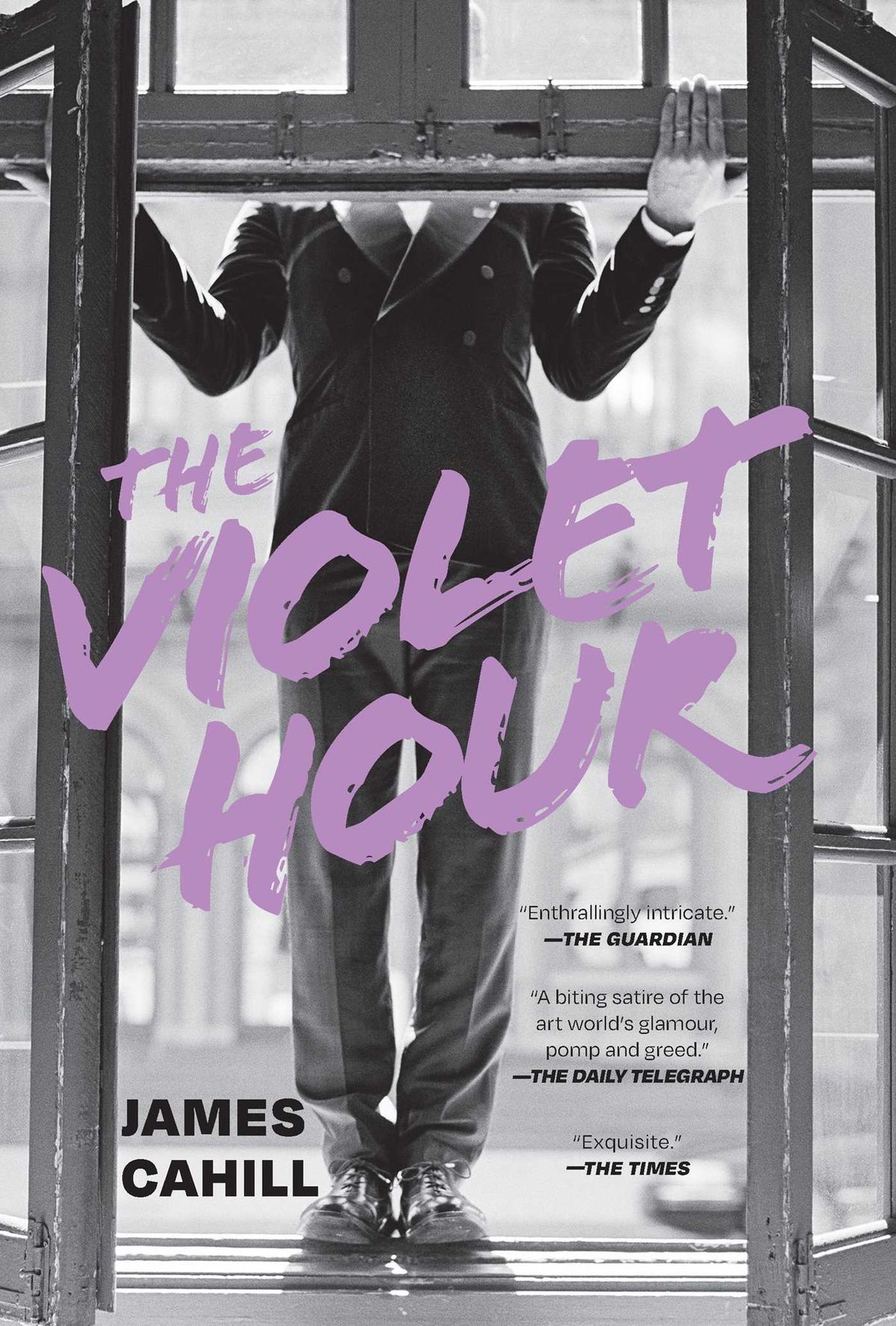
Is there anything the art world loves more than a game of insider baseball? If you read James Cahill’s novel The Violet Hour (2025), it would be hard to conclude otherwise. In this dreamy chronicle of fame, greed, and ambition, the stage is set for a glittering cast of characters who come off as cartoonish, even unrealistic — unless you’ve had the misfortune of encountering these types firsthand.
The story’s beginning is cinematic. First, we witness the mysterious death of an ingénue gallery assistant. But before we can investigate, Cahill sweeps us away to the penthouse of an ultra-luxury skyscraper abutting Central Park. It’s occupied by elderly real estate tycoon and mega-collector Leo J. Goffman, a cartoon villain who is the most compelling character in the whole book — unequivocally evil, but crafted with care. Nearing the end of his life and alone but for the housekeeper he verbally abuses, he fixates on art and money and schemes to use both to cement his legacy. (To understand just how prevalent this is in the art world, please refer to any of this publication’s recent reporting.)
Goffman is particularly invested in the mysterious artist Thomas Haller, an abstract painter hailed as the heir to Mark Rothko. He vanished from the scene after his solo show at the Whitney Museum of American Art, ditching his longtime gallerist and high-tailing it out of New York. When Goffman spies an ad in Artforum for Haller’s first exhibition in six years, he is consumed with desire for the painting in the magazine. And off we go, departing from what seemed like a promising thriller into what is ultimately an extended character study.
From New York to Europe and back again (and again, and again), The Violet Hour takes the reader on a satirical journey that probes art-world archetypes and the vaulted forums in which they play their games. We spend time with Lorna Bedford, Haller’s ex-gallerist and former art school bestie, and her partner, the intolerable Justine, a judgmental millennial pop-academic and vessel for the thoughtcrimes of the “Woke Left.” A description of the cover of Justine’s book, a DSA twist on Confucian philosophy with a sprinkling of girlboss, made me laugh, as did several of the inventions and flourishes Cahill employs to build his universe.
As a writer, Cahill nails these acidic little winks but loses steam when plumbing the depths of his characters. Much of the story is told from Haller’s perspective, which is so insular and inscrutable that, despite engaging in some ostensibly exciting behavior, he’s just not that interesting to read about. The muddled commentary about class politics, social media, and representation is similarly unsatisfying.
Yet Cahill’s passion for art is endearing as he pumps his pages with generous descriptions of artworks and their histories. At its core, The Violet Hour is a wry industry tale about the machinations of the art market and its players that could only have been written by someone who truly loves the scene, warts and all.
The Violet Hour (2025) by James Cahill is published by Pegasus Books and available online and through independent booksellers.