Jeff Koons’s Reflective Sculptures Mirror the One Percent
When I picture where Koons’s sculptures belong, I think about Trump’s plan for a 90,000-square-foot ballroom, and the art collectors who funded it.

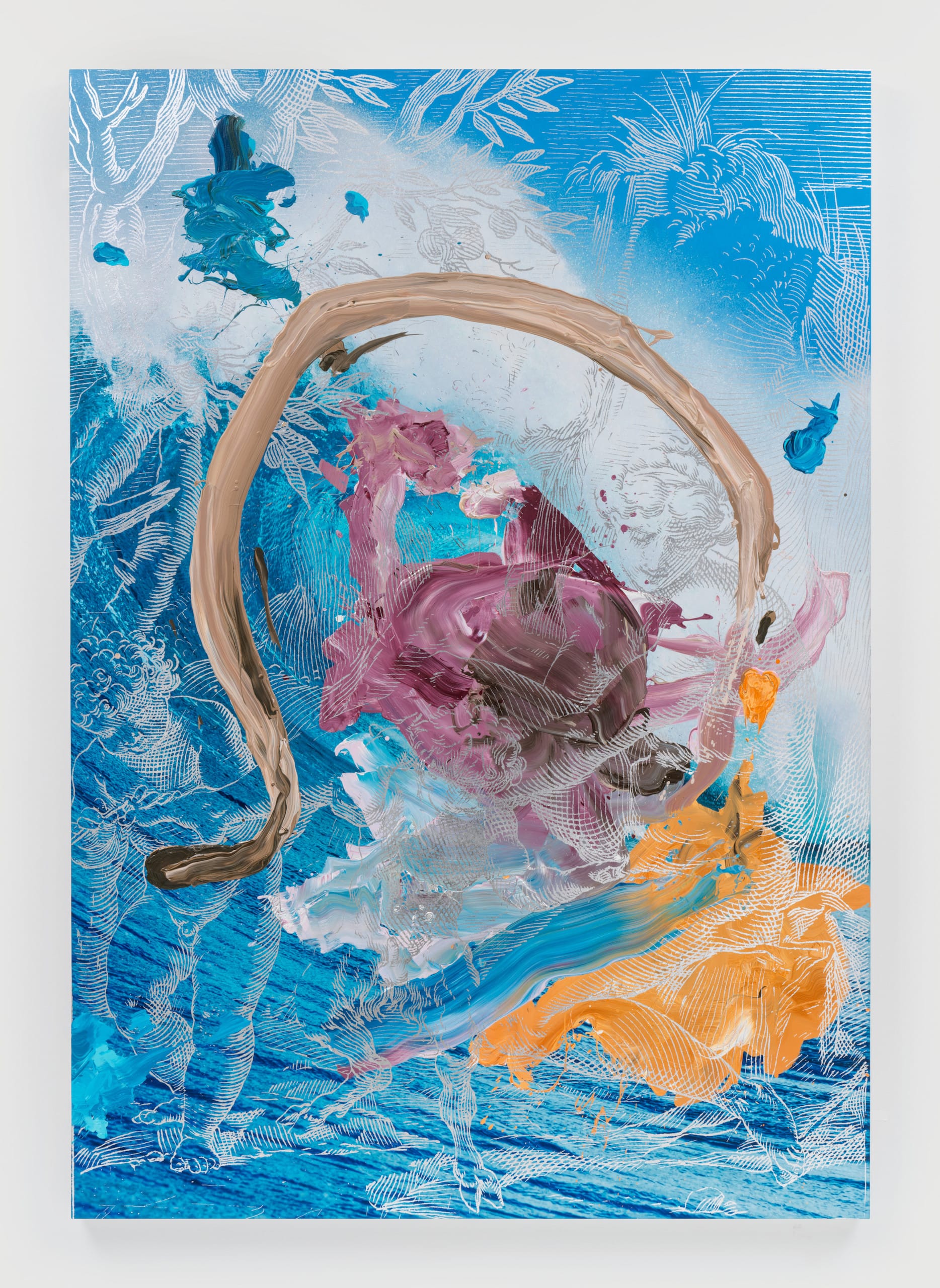
Jeff Koons is a hit-or-miss artist whose sculptures always give viewers something to talk about. The same isn’t true of his paintings, none of which have ever become memorable because there is nothing particularly arresting about them. This doesn’t mean that painting is dead, just that his are.
A lot of the discourse around his sculptures gets unnecessarily heated, with (often White) critics arguing over whether or not they critique capitalism or celebrate consumerism, which seems beside the point when fabricating one of his “Balloon Dogs” costs more money than the majority of Americans make in a year. Then there are the hilarious narratives circling his work, such as Arthur Jafa's deadpan, tongue-in-cheek assertion in a 2020 New Yorker article that Koons is “a very light-skinned Black guy passing for white,” and that the floating basketballs in his Equilibrium series are “testicles, connoting everything from castration to Black sexual prowess.” With Koons’s sculptures, it is hard not to think that his art exists in one world and the writing about it in another.
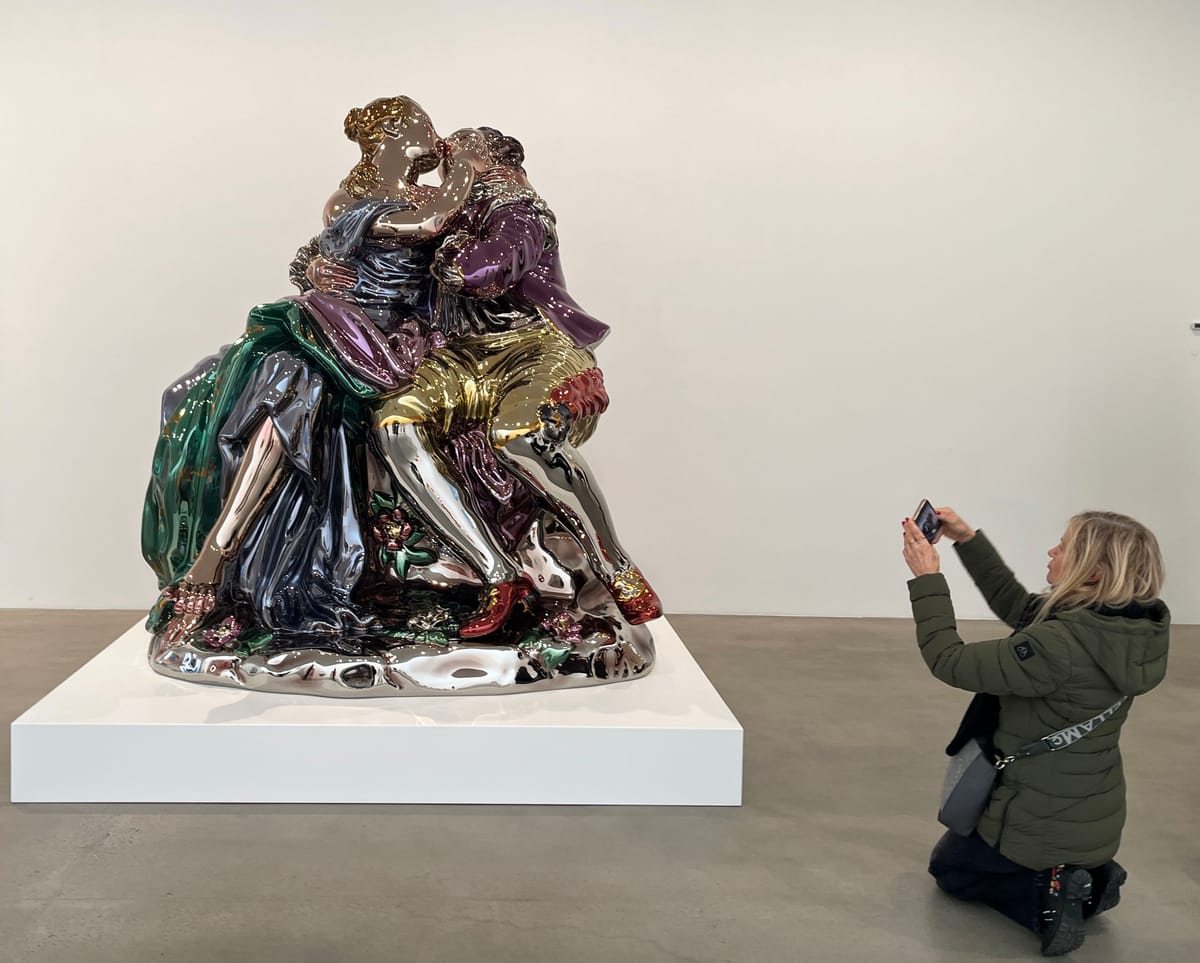
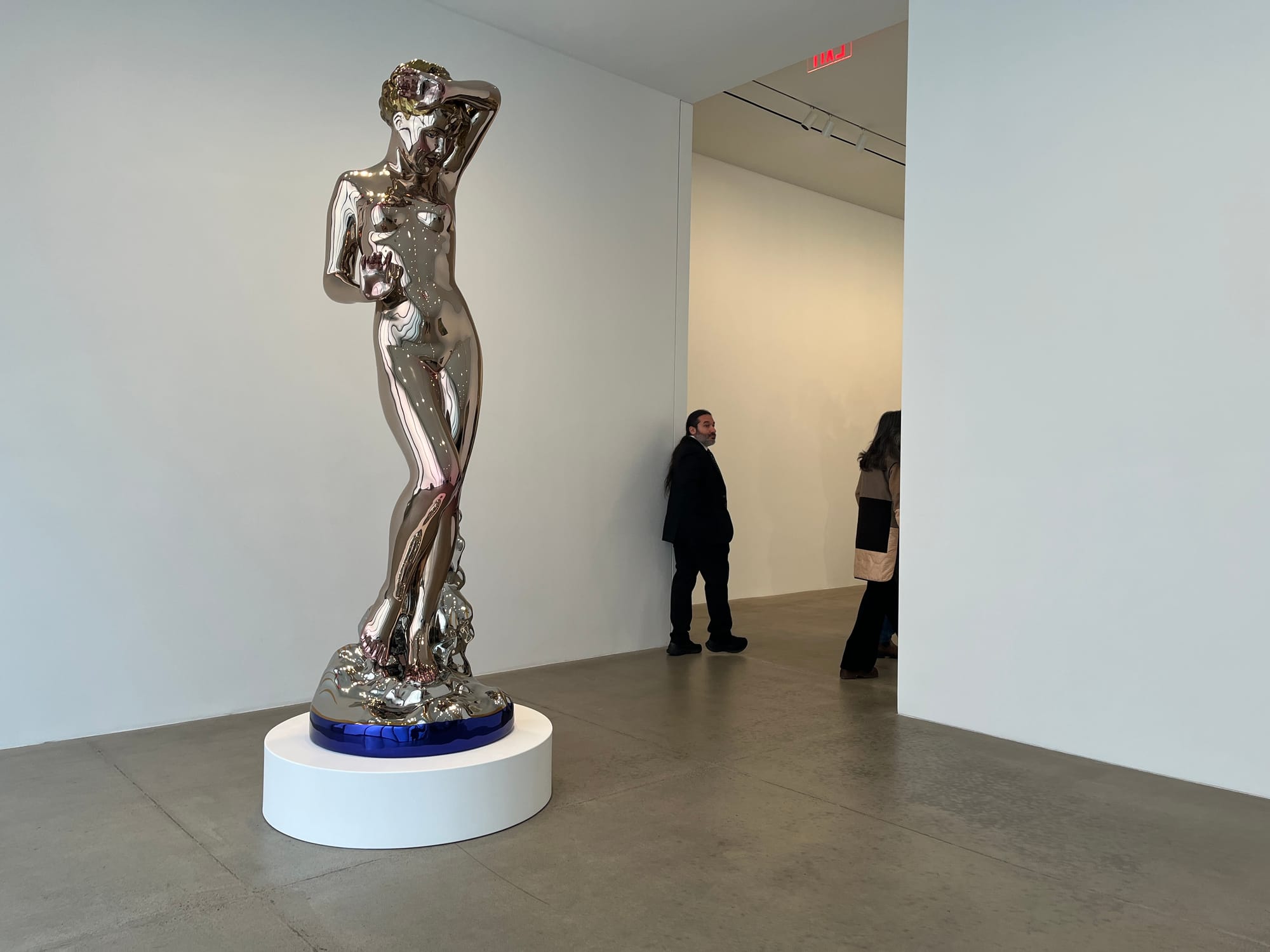
It was with this split in mind that I visited his latest exhibition, Jeff Koons: Porcelain Series at Gagosian Gallery. I knew from the gallery press release that one of my experiences would be seeing myself both reflected and distorted in the mirror-polished stainless steel surface with a transparent color coating. The sculptures depict curvaceous figures, such as “Aphrodite” (2016–21), “Three Graces” (2016–22), and “Kissing Lovers” (2016–25). The press release notes: “The objects’ surfaces fuse their sensorial allure with symbolic potential. The finish affirms the viewer, making them a participant in the artwork and highlighting the works’ stylistic and conceptual interplay of past, present, and future.”
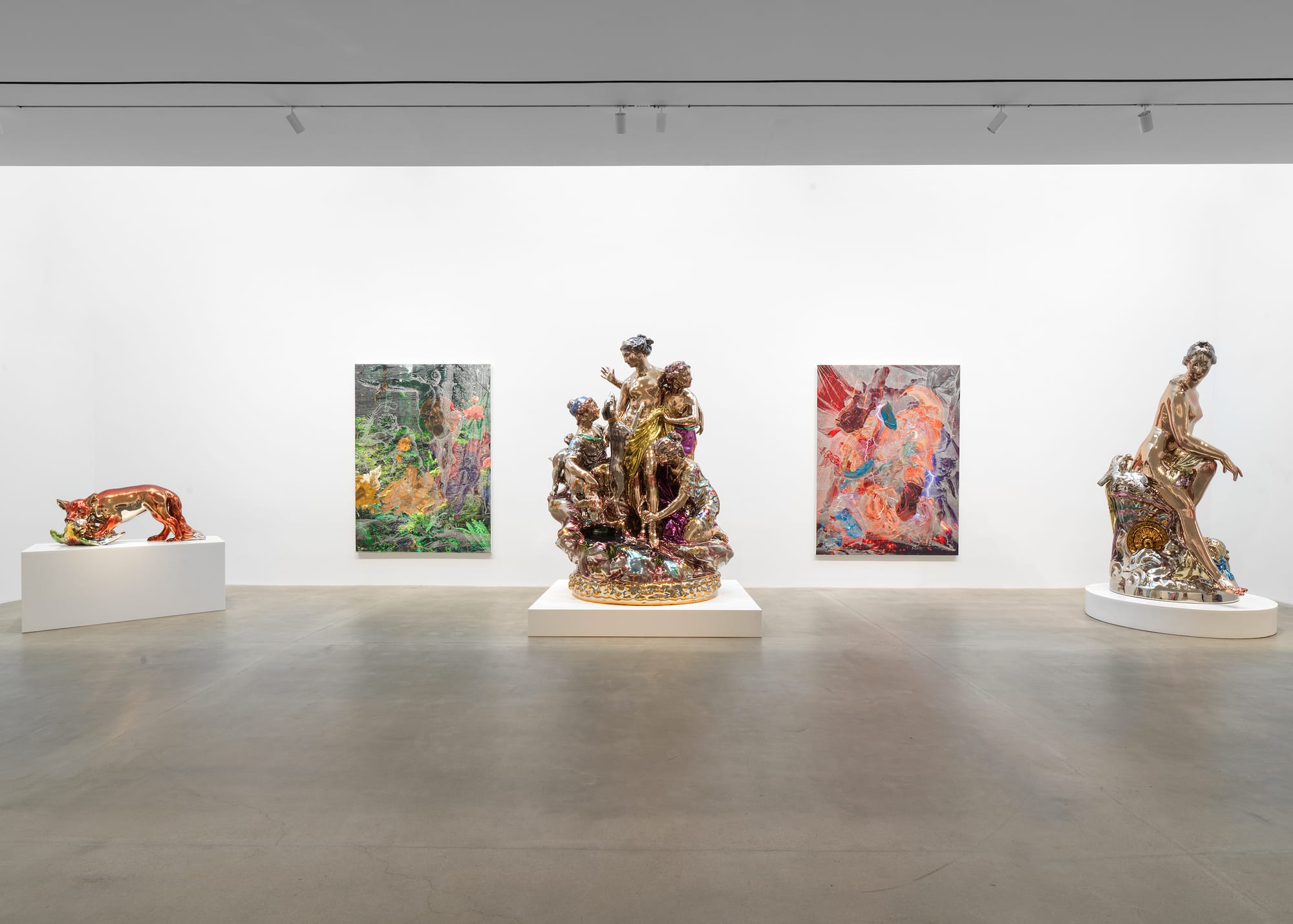
There is something mildly interesting about seeing a distorted, miniaturized version of yourself reflected in a shiny surface that you realize is a shapely arm or a furless fox. It is like looking into a funhouse mirror at a carnival or standing in front of Anish Kapoor’s bean-shaped “Cloud Gate” in Chicago’s Millennium Park and taking a selfie. Once is enough, though. A stainless steel hubcap will distort you if that is your thing, but seeing yourself this way is apt to make you forget what you are looking at, as everything falls away, so its uncanny effects are fleeting.
We also learn that his grandparents had porcelain figures. In an interview with Joachim Pissaro that appeared in The Brooklyn Rail, he tells Pissaro that the inspiration for many of his sculptures are original 18th-century Meissen porcelains, which are rare collectibles for the über wealthy. I was not surprised to hear him say:
When I was a kid, I would play with them and I would be so excited. It was titillation, really. And the excitement that comes from this, that excitement is equal to any experience anybody else could have, even looking at a Michelangelo. You can’t really define how one is of more value, because as a young child you don’t know those hierarchies, but you do feel excitement, stimulation.
Koons’s belief that his childlike excitement is equal to anybody else’s, even when looking at a Michelangelo, because hierarchies aren’t yet learned, speaks to his utter lack of self-reflection. This is another cliché example of universalist thinking, in presuming insight into the emotions and hierarchies of others. This still persists, especially if you are a White American.
One of the many points about which Koons opines when analyzing his balloons is how these works are a model of the individual:
I’ve always liked the dialogue of internal being, and its exchange with the external world. And if we think about the skin as a kind of membrane, or interface — that’s something my balloon works emphasize, that interface between the interior and the exterior.
Since the works he’s referring to have a sensitive, reflective, metallic skin and a hollow body (it is literally empty inside), it seems to me that this shiny, distorting surface, which we also find in the recent porcelain works, is not mirroring the selfie-takers as much as those who identify with Koons’s aesthetics, and believe his work is an important contribution to art history and culture.
When I try to picture where Koons’s sculptures belong and to and about whom they are speaking, I think about President Trump’s plan for a gaudy 90,000-square-foot ballroom for 1,000 guests, which was funded by private donations. The donors, many of whom are major art collectors, contributed millions to Trump’s compulsion to spend other people’s money for his causes. Some of the collectors include Warren Stephens, Ken Griffin, Paul Singer, Larry Fink, Charles and Helen Schwab, and John H. Tyson, who is also chairman of the board at the Crystal Bridges Museum of American Art in Bentonville, Arkansas. They and other billionaires will be invited to the ballroom once it is completed; Koons’s sculptures would look right at home in it. Perhaps one of these philanthropists will buy one of the three editions of “Aphrodites” for the lobby of a yet-to-be-built five-star hotel in another "everybody wins” gentrification scheme.
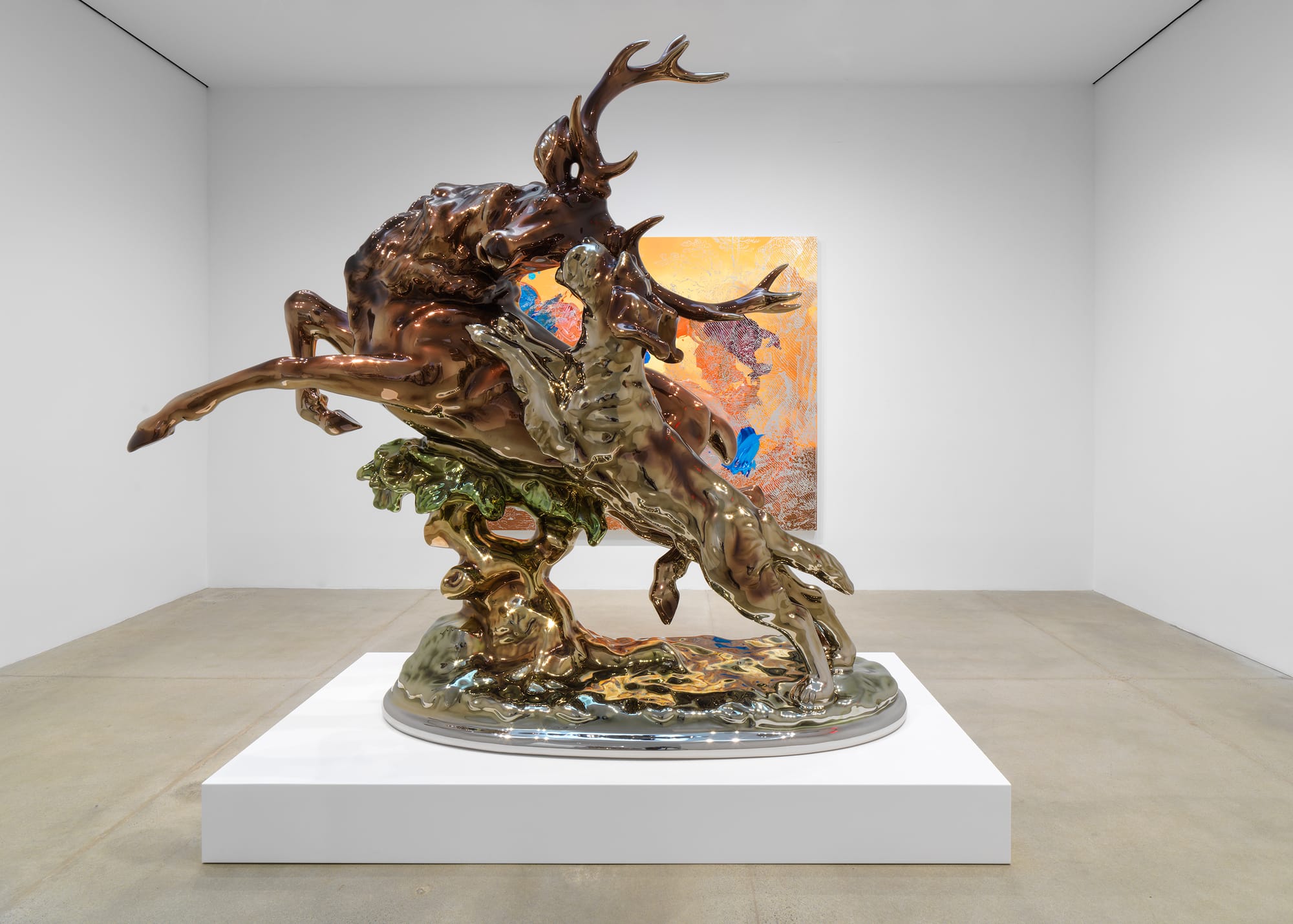
Jeff Koons: Porcelain Series continues at Gagosian (541 West 24th Street, Chelsea, Manhattan) through February 28. The exhibition was organized by the gallery.