LA Artists Honor Dolores Huerta’s Defiant Spirit
In honor of the labor leader’s 96th birthday, over 30 Los Angeles artists pay homage to her lifelong fight for the rights and dignity of everyday people.

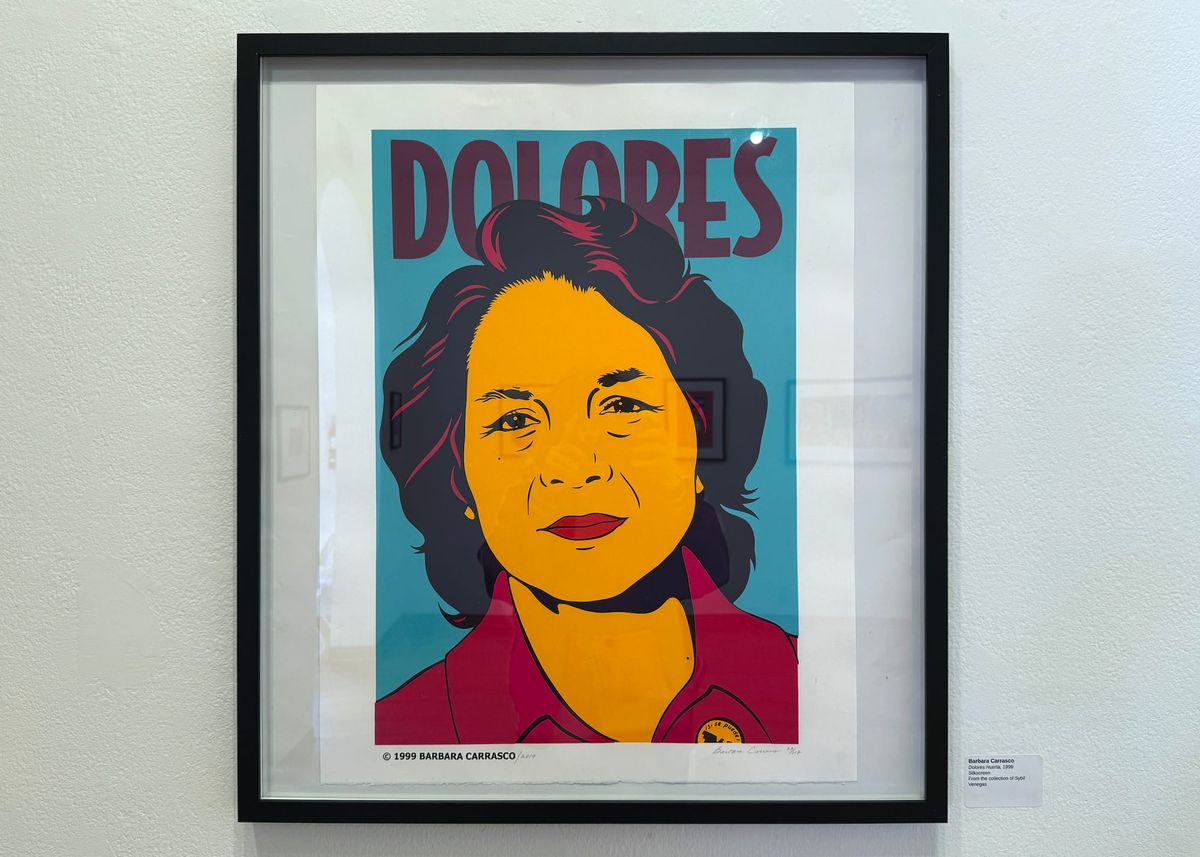
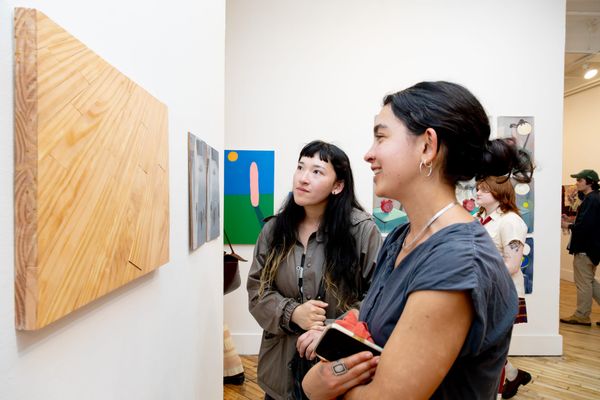
LOS ANGELES — Activist Dolores Huerta, who helped establish the United Farm Workers (UFW) in the 1960s, turns 96 years old this week. To celebrate, the Chicano cultural center Plaza de la Raza mounted the exhibition DOLORES to mark the labor leader’s ongoing legacy.
On March 18, the day before the show opened, the New York Times published a report that included accusations that UFW co-founder Cesar Chavez sexually abused Huerta and two girls during his time in the movement. The painful revelation has led to a swift reckoning, with Chavez’s name and likeness disappearing from civic life. Already, muralists have painted over his face, California has rechristened a holiday in his honor as “Farmworkers Day,” and some have called for the roughly six-mile (~9.7-kilometer) road in East Los Angeles bearing his name to be renamed “Dolores Huerta Avenue.”
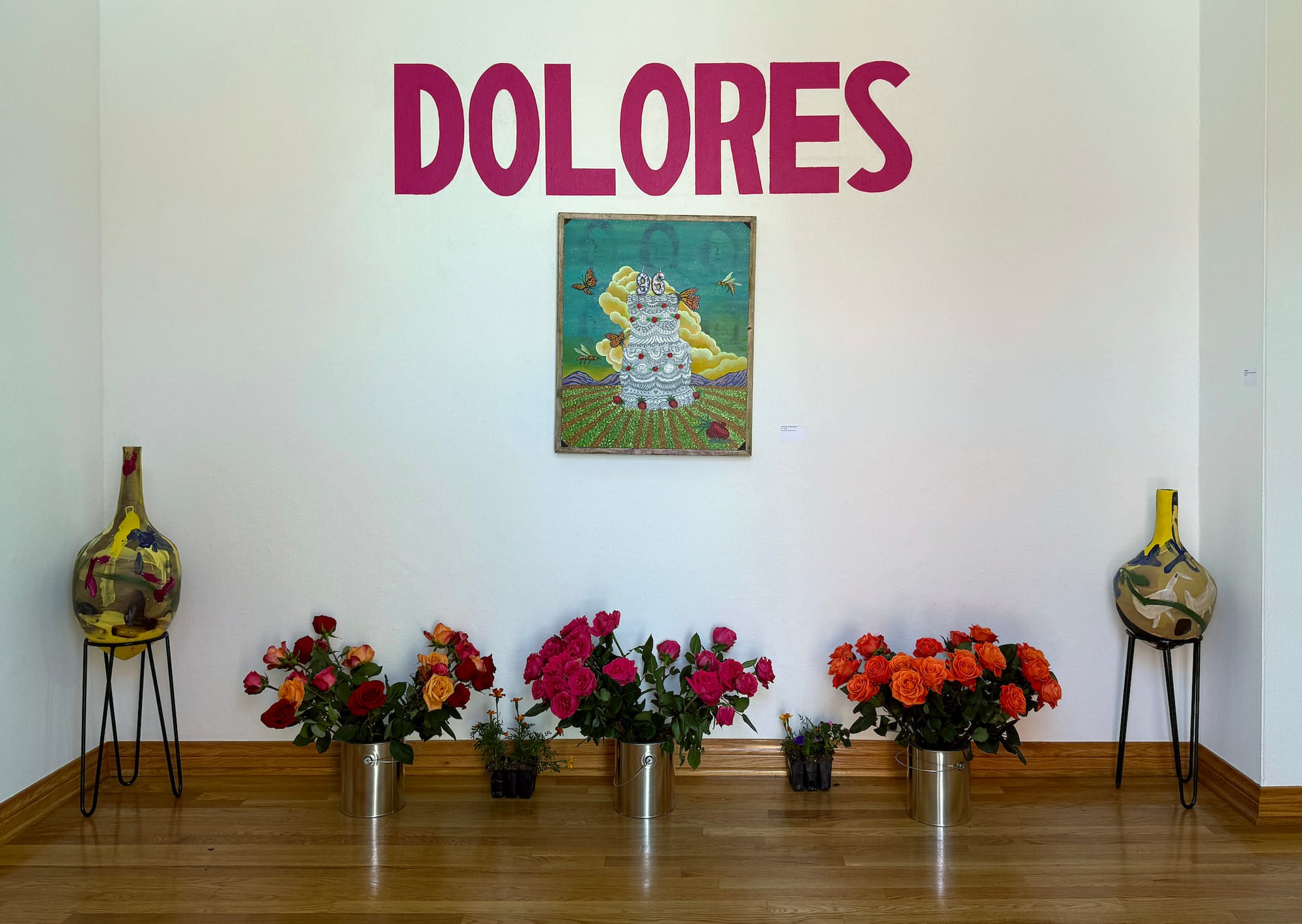
DOLORES proves that the UFW’s story doesn’t need Chavez as its main character. The exhibition extols Huerta’s achievements by showcasing her likeness, which has been captured in screenprinting, photography, video, collage, painting, and other mixed media. Barbara Carrasco, whose own monumental “L.A. History: A Mexican Perspective” (1981) is an icon of Chicano muralism, has a vibrant 1999 silkscreen print of Huerta wearing a pin with the UFW’s Aztec eagle logo. The bird, which also appears on Mexico’s national flag, represents courage, dignity, and pride for Chicano and Latinx culture. Another ink drawing, “Dolores, From the New Americans Series for ACLU Tx” (2025) by Vincent Valdez, shows the labor activist at her current age. Her stern, defiant gaze meets something outside of the frame, another challenge she has not yet tackled.
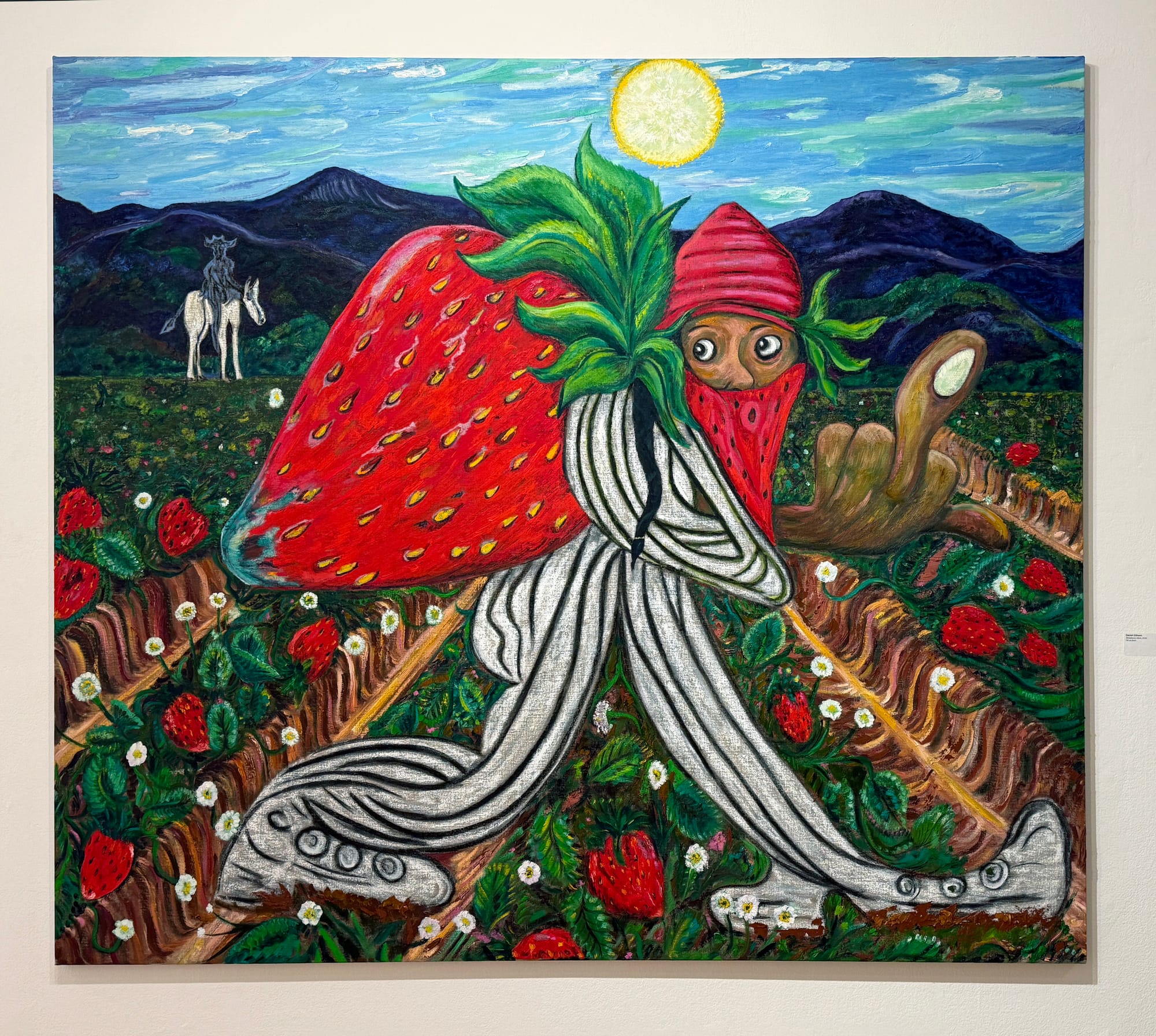
The exhibition doesn’t just include portraits. Many artworks focus on migrant workers, the produce they harvest, and contemporary Chicanx and Latinx culture. Some pieces herald backbreaking work, such as a post-impressionist-style painting by Jean Cornwell, “Earth Mothers” (2016). Others express a defiance of authority, like Daniel Gibson’s “Strawberry Mom” (2026) in which a laborer flips off her boss while hauling an enormous strawberry. Produce, too, is venerated. Arthur Carrillo’s quiet paintings of vegetables, “Maiz II” (2026) and “La Santa Trinidad and Things Picked” (2026), could be offerings to ancestors. They depict the Three Sisters of agriculture — corn, beans, and squash — which hold spiritual significance in several Indigenous cultures. His work is complemented by Paige Emery’s bright blue, abstracted scene of a harvest, “Medicine of the Land, Tended by Hands of Remembrance” (2026), which itself feels ritualistic.
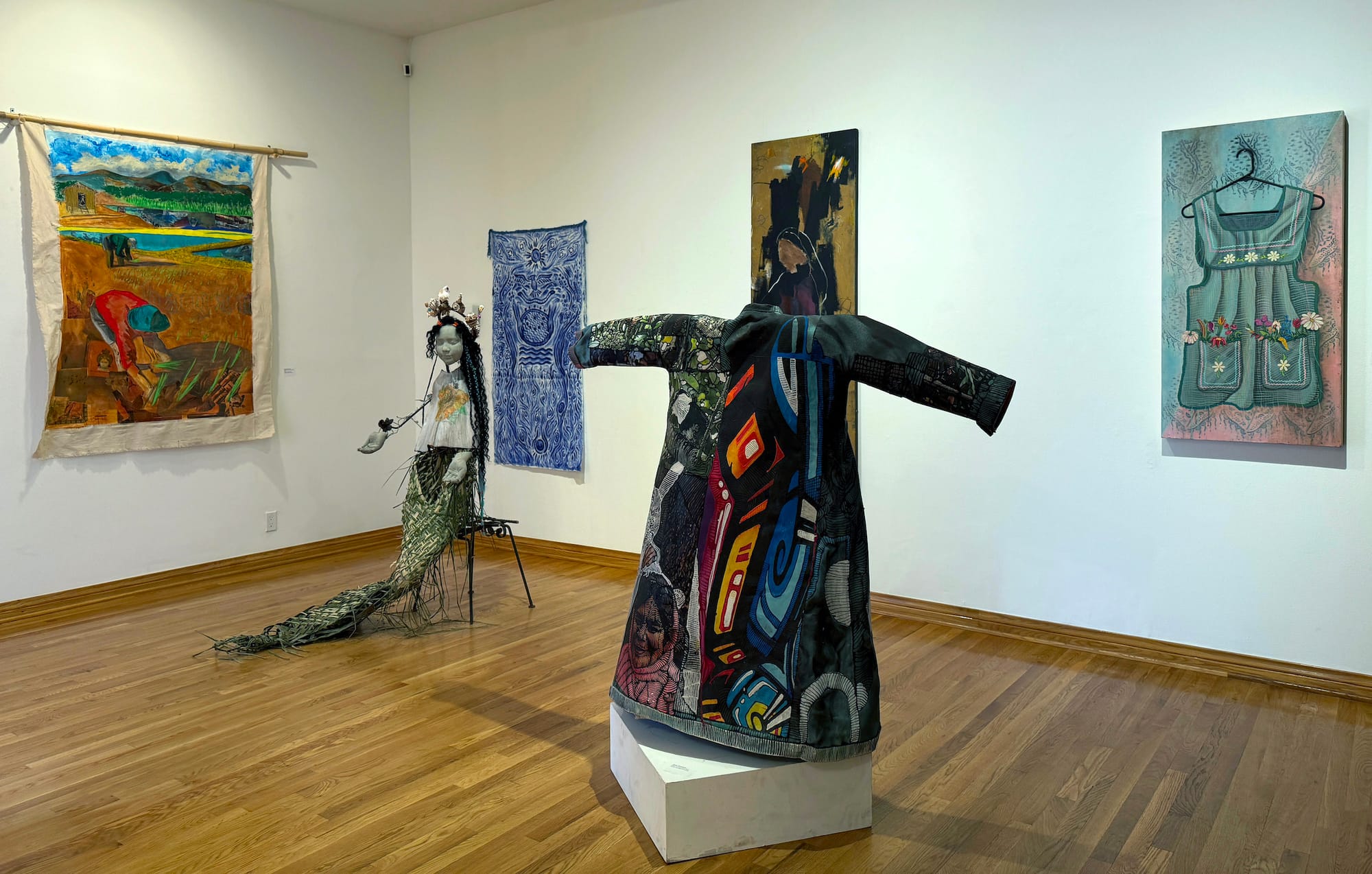
Some of the most moving work in DOLORES, in line with Huerta’s own emphasis on everyday people in the farmworker movement rather than demagogues, includes a few pieces that simply depict daily life for the average Angeleno. The omnipresent paleta vendor pushes his popsicle cart across Jonah Elijah’s “Paletero Man” (2025), through a flood in Nao Bustamante’s “Paletero” (2025), and into the background of Yreina Cervántez’s “Preliminary Drawing of La Ofrenda Mural” (1989).
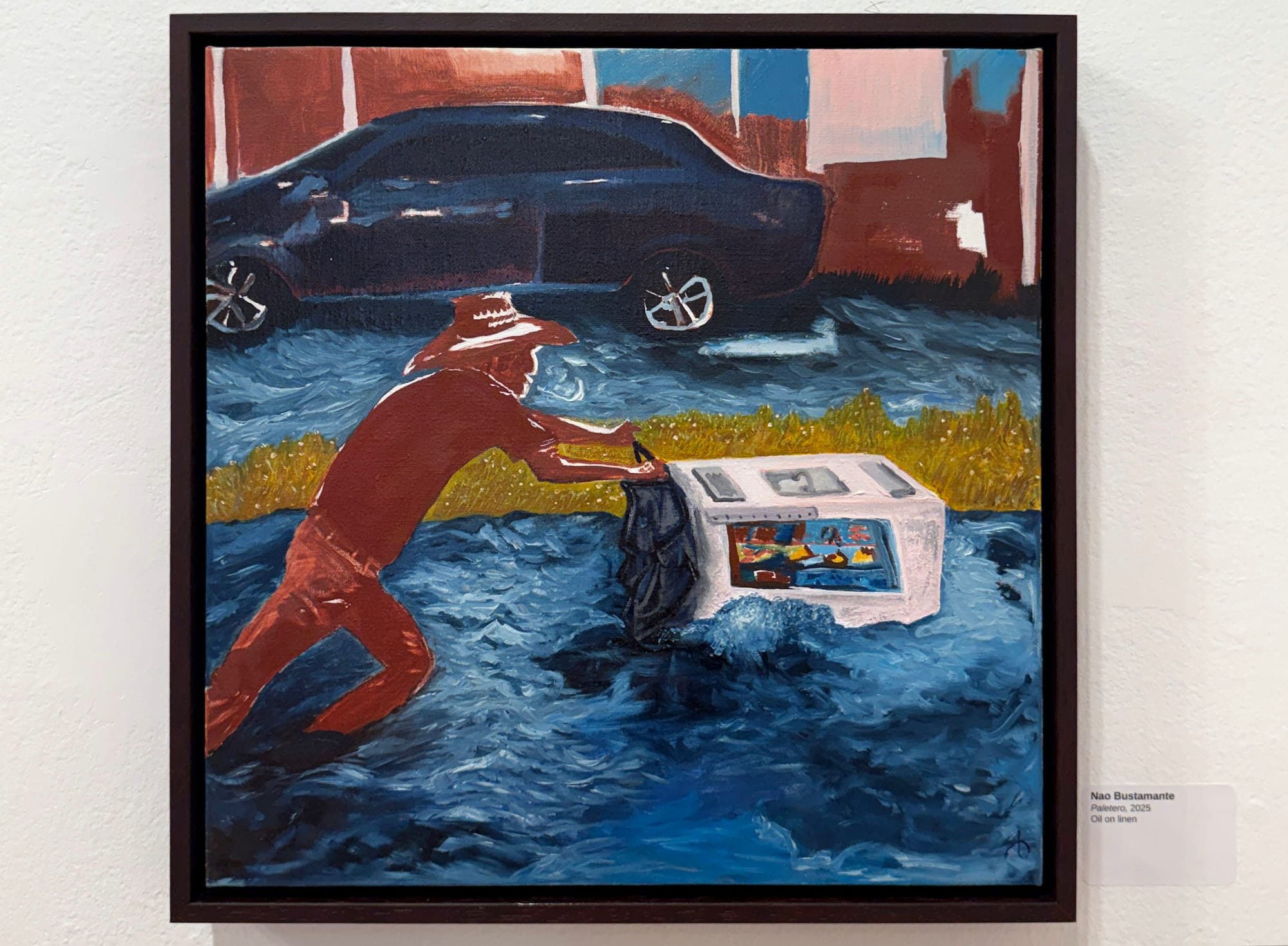
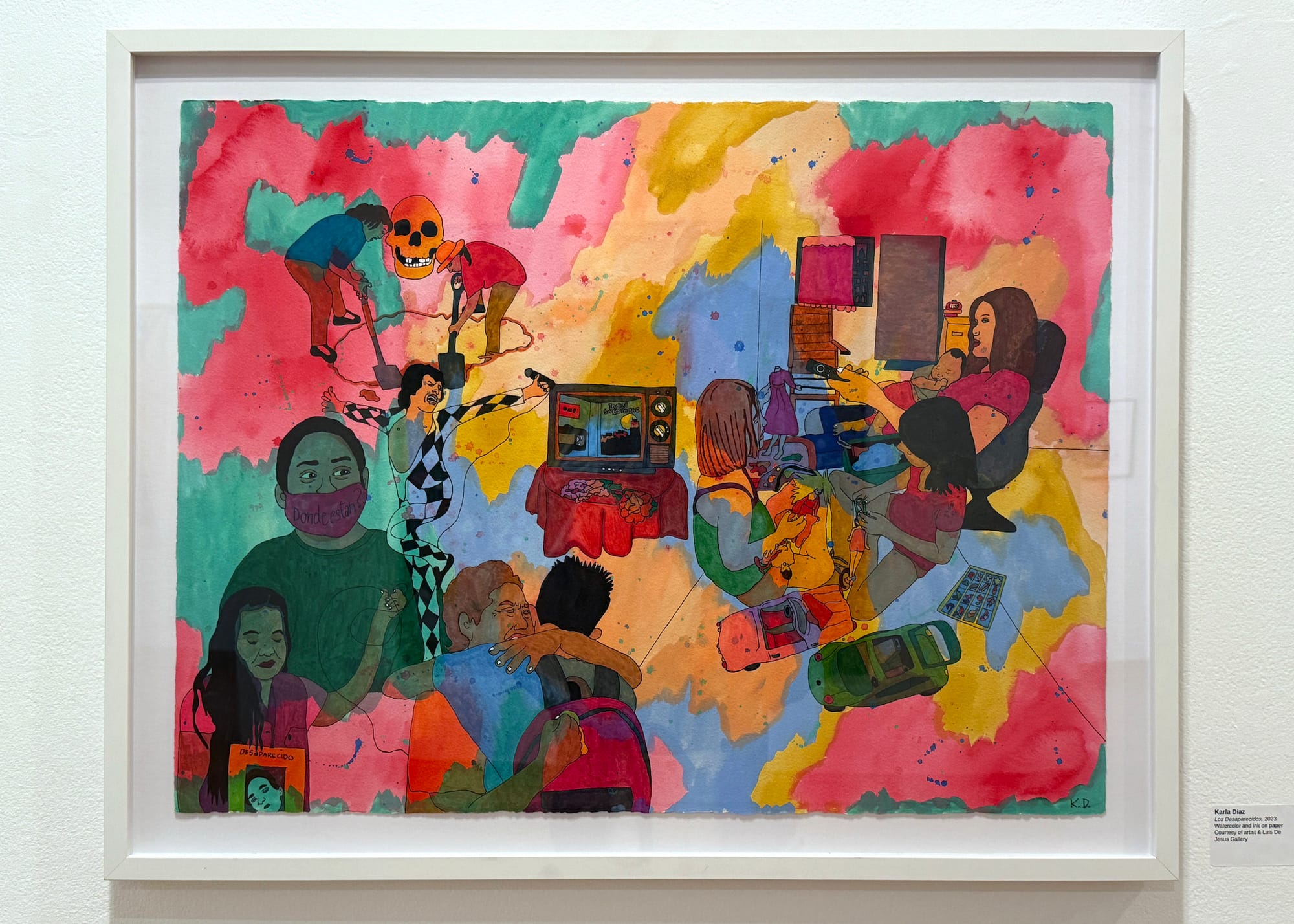
The paletero’s business traces its lineage to the UFW’s fight for better pay, hours, and healthcare. While Huerta has dedicated her life to farmworkers’ hard-won contracts, DOLORES follows its ripples into more subtle victories — the right to watch TV, play with dolls, and send children to school, as depicted in Karla Diaz’s “Los Desaparecidos” (2023). But, as Diaz’s work also warns, daily life often comes with the looming threat of deportation.
Since beginning his second term, Trump and his administration have aggressively ramped up Immigration and Customs Enforcement activity. In Los Angeles, where arrests tripled between 2024 to 2025, thousands of protesters have fought back with Huerta’s ethos of collective advocacy as an essential guiding light.
DOLORES continues at the Plaza de la Raza Boathouse Gallery (3540 North Mission Road, Lincoln Park, Los Angeles) through April 12. The exhibition was curated by Glenna Avila and Harley Cortez.