LA’s Lucas Museum Displays “Narrative Art” for the Few, Not the People
Friction, dissonance, and multiplicity are overall avoided in favor of superficial unity and a flattening of difference at George Lucas and Mellody Hobson's new institution.

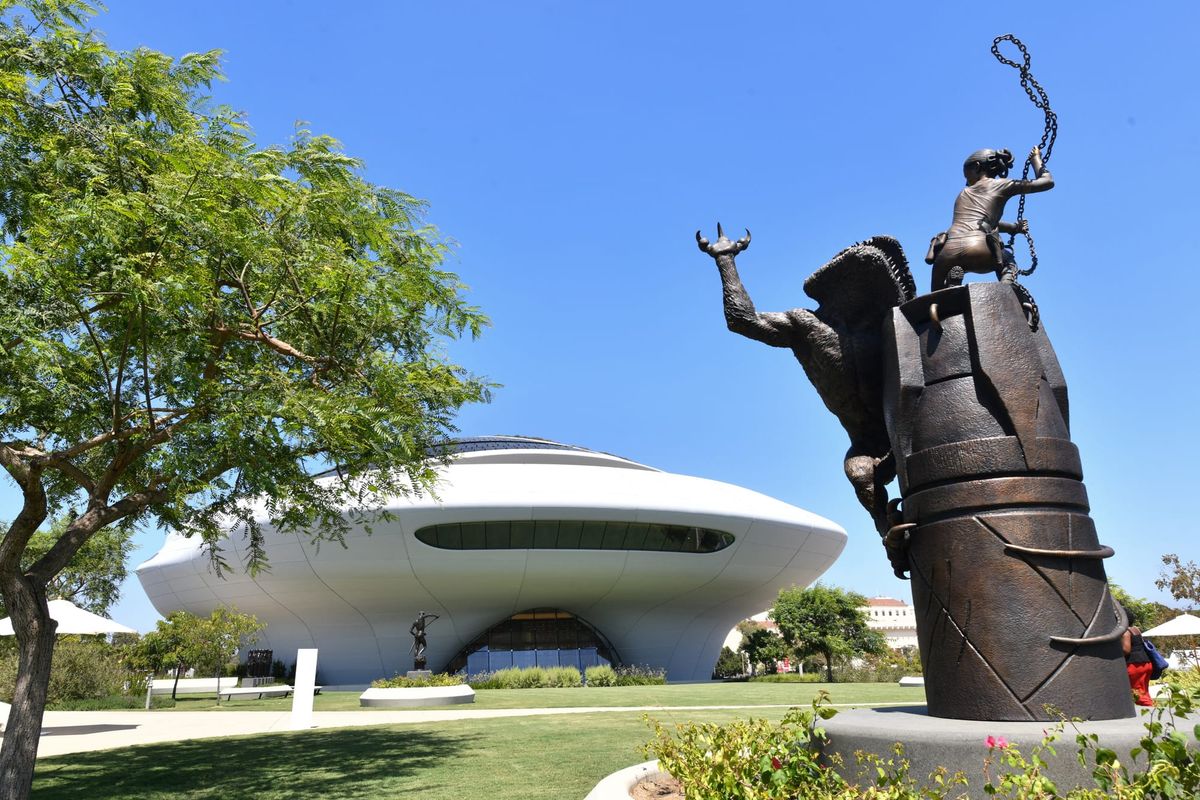
LOS ANGELES — After nearly two decades of planning and construction, a spate of layoffs, and staffing controversies, the Lucas Museum of Narrative Art will open its doors to the public later this month in South Los Angeles’s Exposition Park. This week, members of the press were invited to tour the new institution and get a taste of the random and facile smorgasbord of art that awaits visitors.
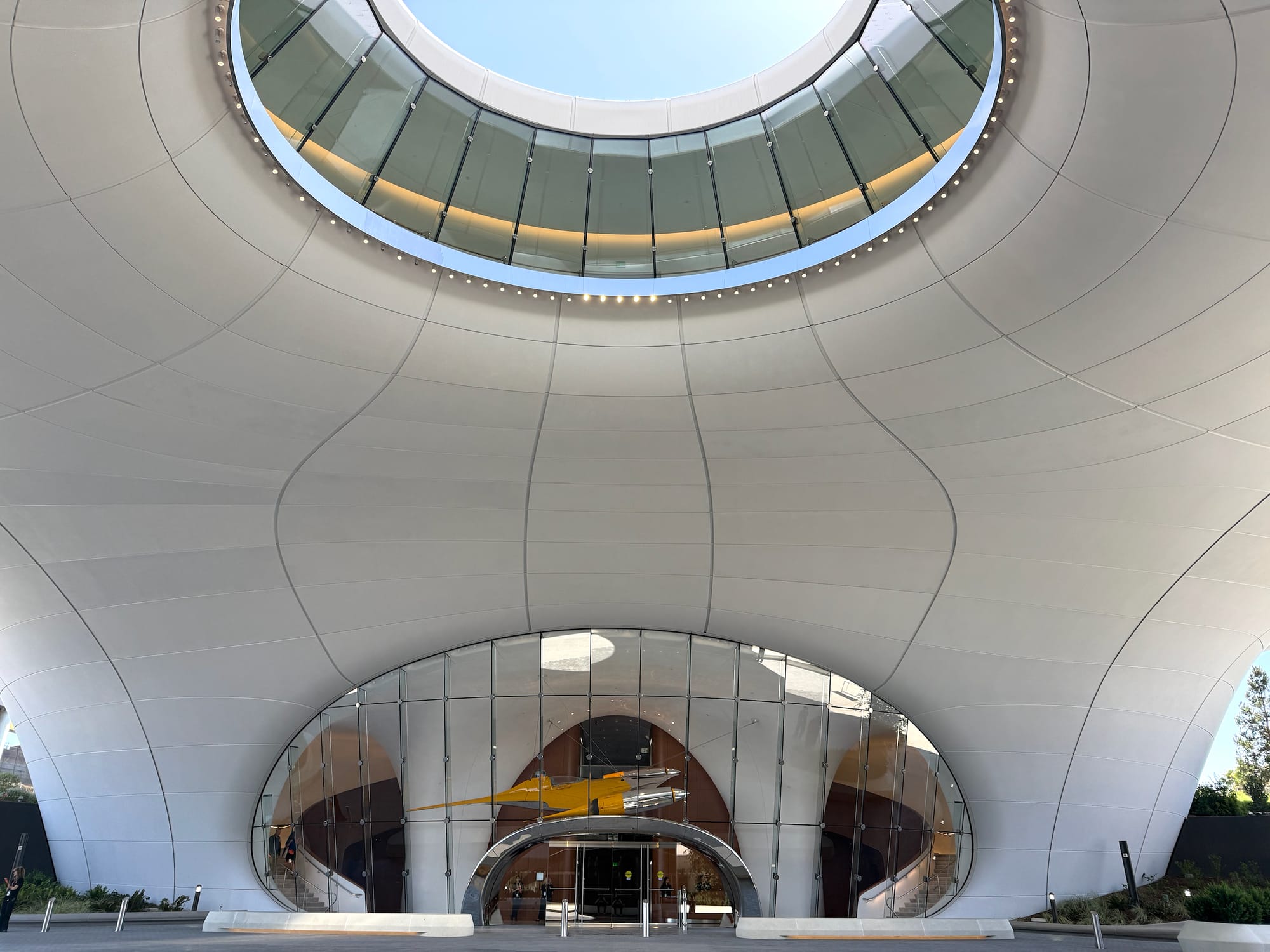
Founded by filmmaker George Lucas and his wife Mellody Hobson, co-CEO of Ariel Investments, the reportedly $1 billion building designed by Ma Yansong/MAD Architects houses their collection of 40,000 works representing what they call “visual storytelling.” These include illustrations, history paintings, comic art, films, murals, and other genres that “have not always received the respect they deserve,” as press materials explain. The five-story, undulating, spaceship-like structure sits on an 11-acre campus of rolling green hills designed by Mia Lehrer of Los Angeles’s Studio-MLA, who also designed the building’s green roof.
“For thousands of years, that was the only way you could tell a story, with pictures,” Lucas said during a press preview on Wednesday, September 2 (seemingly disregarding traditions of oral histories or song). “Pictures and stories are very powerful. Put them together, and those two elements make a society.”
“Narrative Art creates groups of people with common belief systems, which allows them to work together and not kill each other,” he continued, as if to finally resolve the question of what Narrative Art is, exactly, a query that has surrounded the museum for years.
Ironically, there is very little narrative at all in the Museum of Narrative Art, at least curatorially. The collection is spread throughout 100,000 square feet of gallery space, divided into 30 or so thematic galleries — Adventure, Romance, Motherhood, Civic Life, Science Fiction, Comics, Sports, and others — with a few dedicated to individuals such as famed fantasy artist Frank Frazetta, American regionalist Thomas Hart Benton, and Norman Rockwell, whose specific brand of folksy Americana can be felt throughout. Artworks are displayed free of context or even any wall text aside from shiny, metal letters announcing each section. The thematic arrangement mashes together artworks of different styles and eras, linked by the flimsiest of threads, as if to say “Look, we’re all the same: we play sports, we work, we raise children!”, with little interest in exploring the specific cultural or social conditions from which they emerged.