Magdalena Abakanowicz Sculpted the Collective Body
Her organic sculptures convey a quiet power, the faceless anonymity of multitudes transformed into a collective oneness.

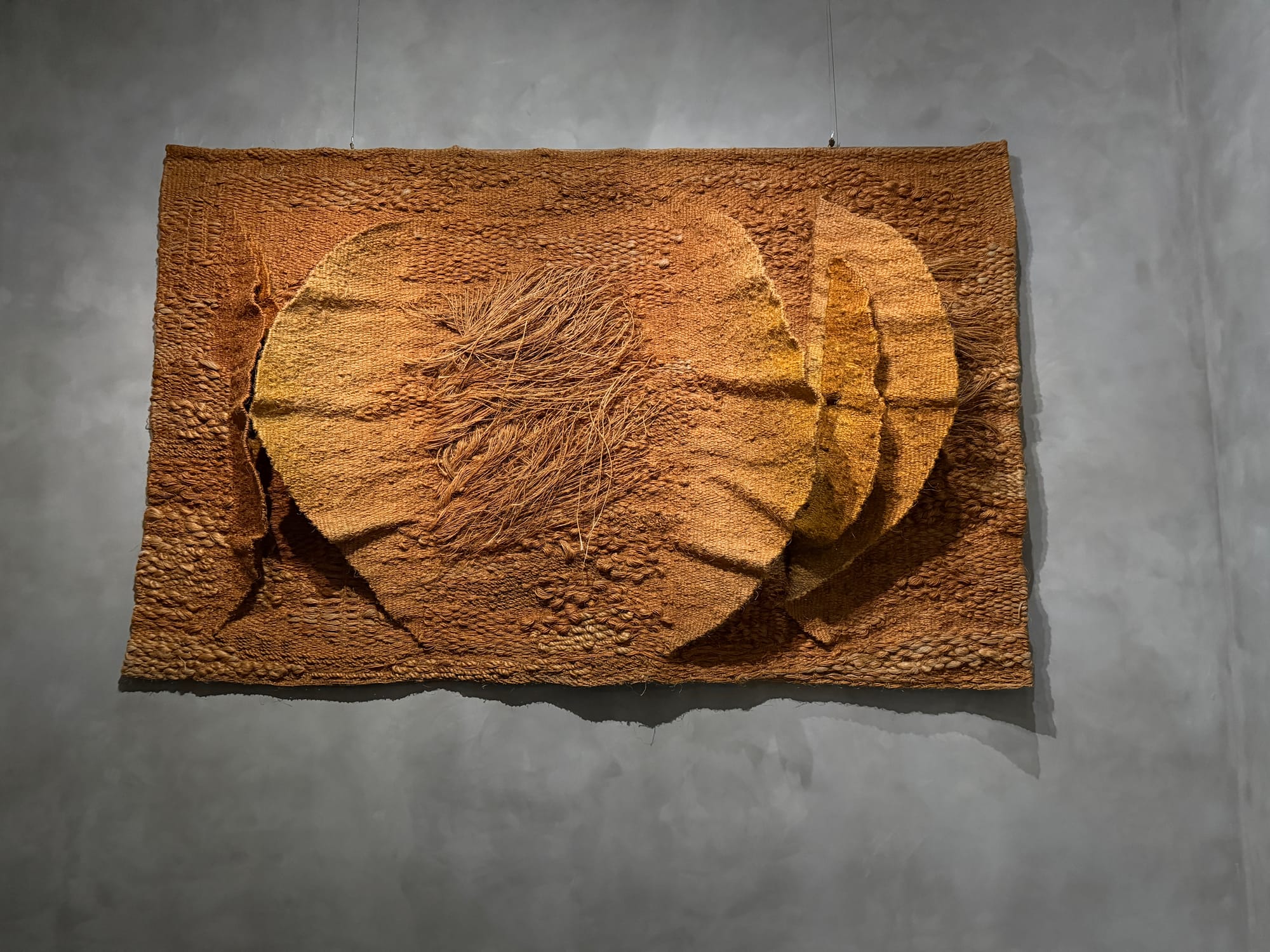
PARIS — “The organicity of the human body we’re born inside of is encoded in us,” the Polish artist Magdalena Abakanowicz once said in an interview. This concept of our organic nature as the source of elemental knowledge, at once direct and mysterious, permeates the textural abstractions exhibited in her survey Magdalena Abakanowicz: The Thread of Existence at Musée Bourdelle.
Around 80 of Abakanowicz’s works are on view in Paris, spanning large textiles, sculptures, and drawings, dating from the 1960s through the early aughts. At the time, they were censored in Communist Poland as too formalist. Nevertheless, her renown grew. She was included in the 1960s Lausanne Tapestry Biennials and won the Grand Prix at the 1965 São Paulo Biennial; and, in 1980, she represented Poland at the Venice Biennale.
She belonged to the Eastern European arts vanguard, alongside figures in Poland such as Tadeusz Kantor and Jerzy Grotowski, whose mysticism opposed the socialist ideology seeking to submit the collective body to industrial productivity. The artists saw the body as imbued with spiritual vitality instead, unbowed to the idea of progress imposed on it by industrialized modernity.
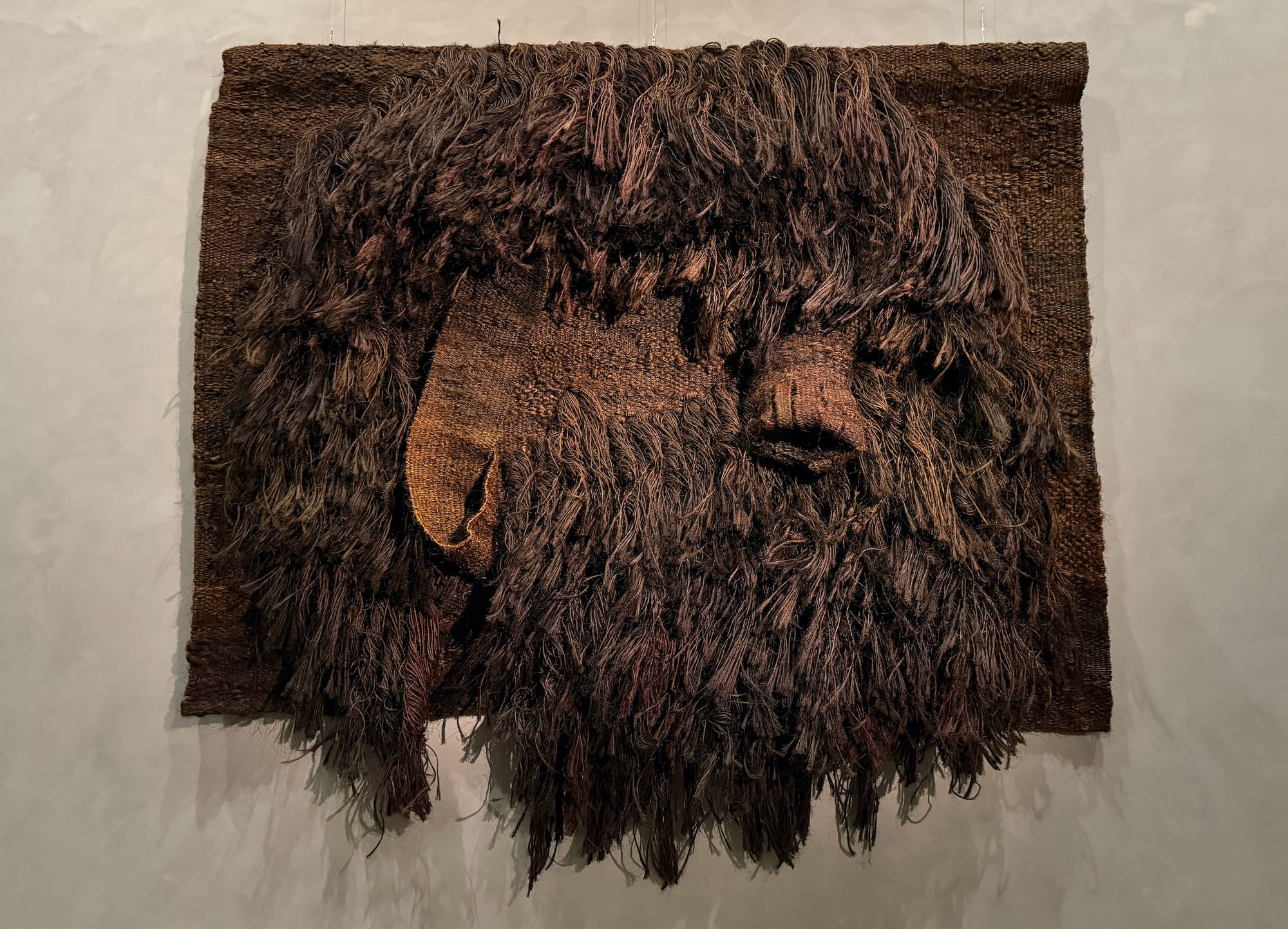
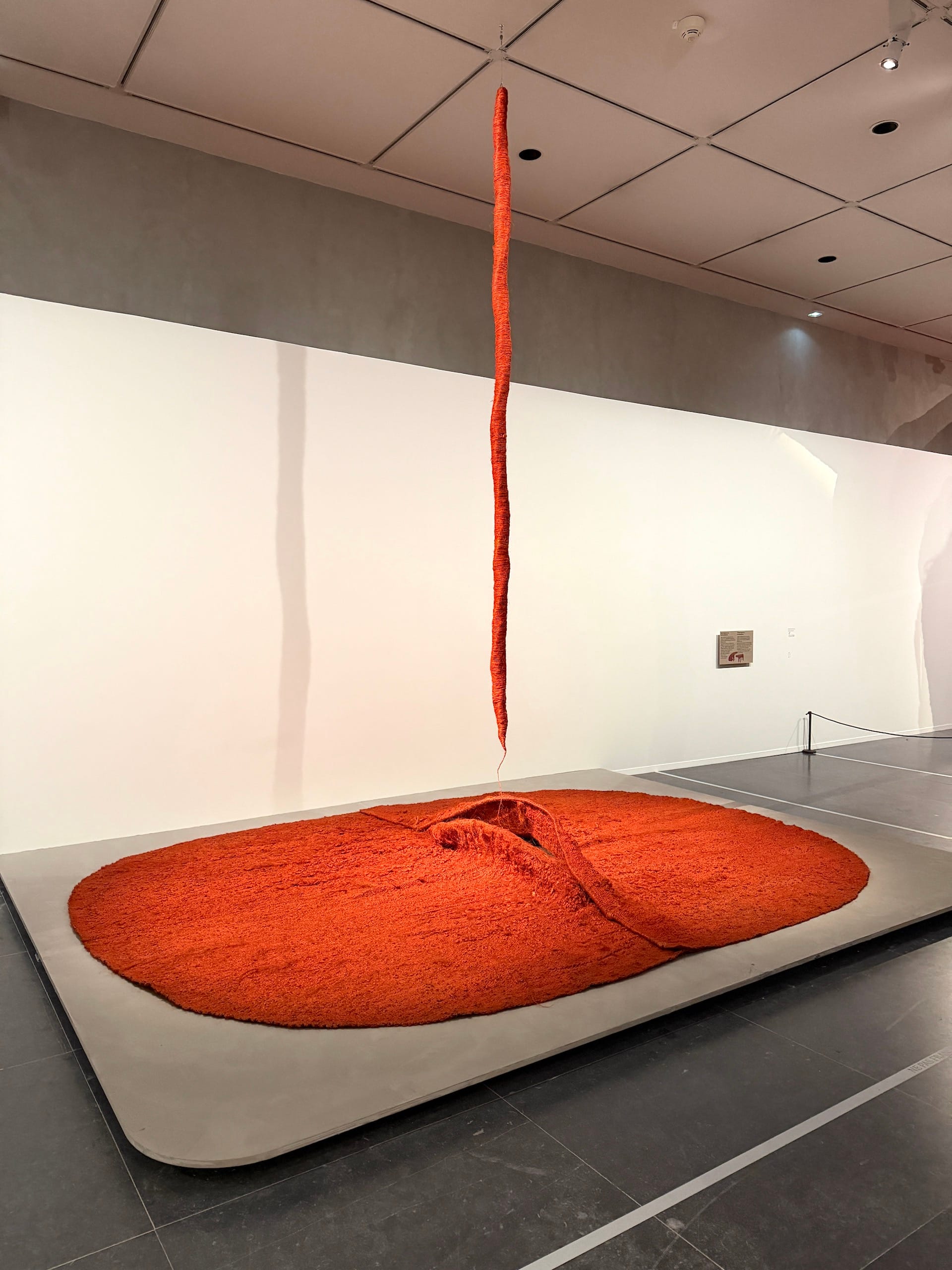
Her sculptures, or “abakans,” as she nicknamed them, bring to mind decorative gobelins seen in Polish homes (my grandmother made her own). Yet unlike the humble domestic adornments, the giant abakans at Bourdelle convey earthiness, and eroticism through their natural fibers and basic shapes. Take “Abakan Orange” (1971): Its fiery color evokes plasmic hotness, while the raised middle of the flat oval sisal base resembles vulvar labia, encasing a slit mound beneath a long stalactite-like weave hanging from the ceiling.
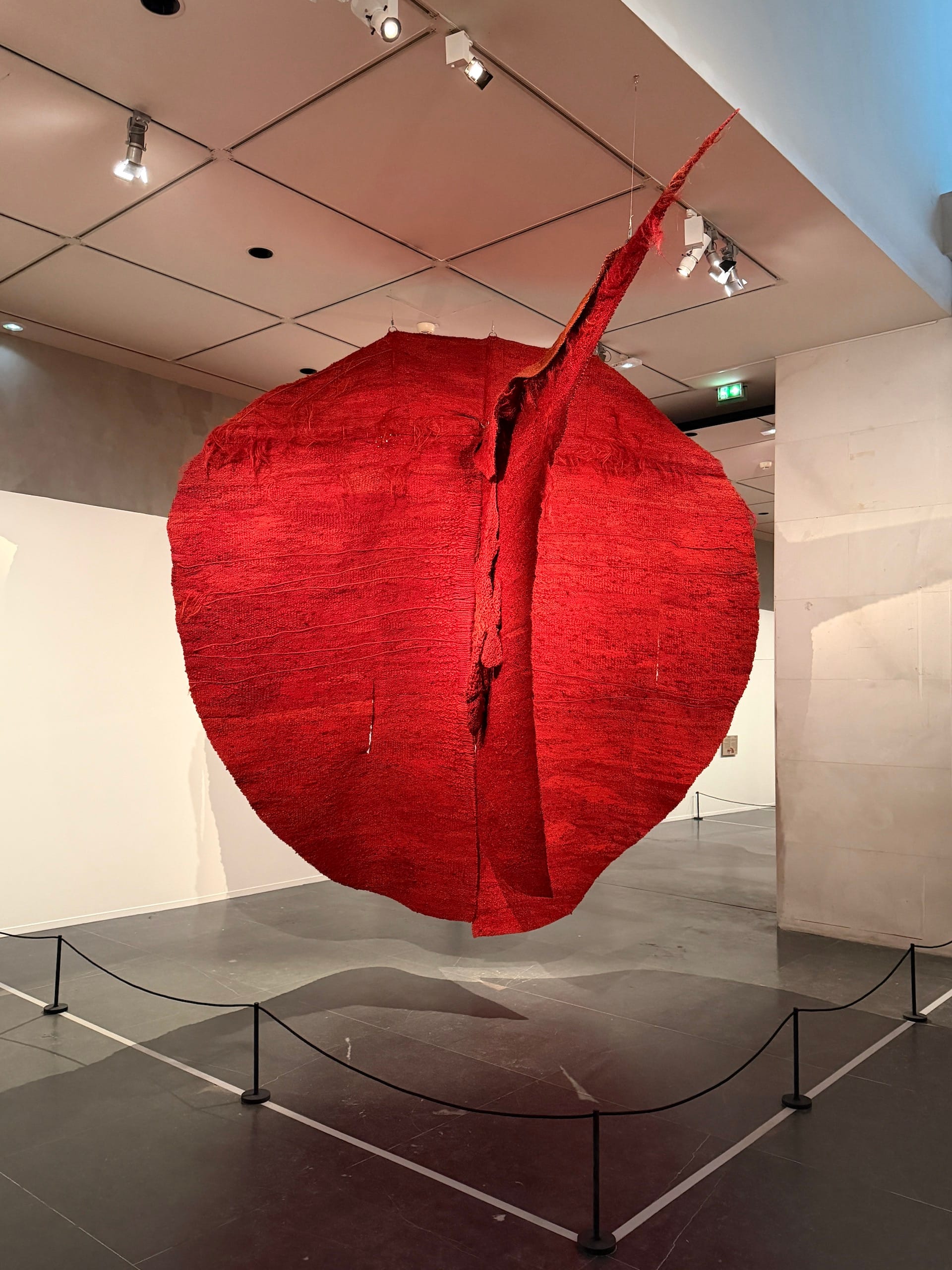
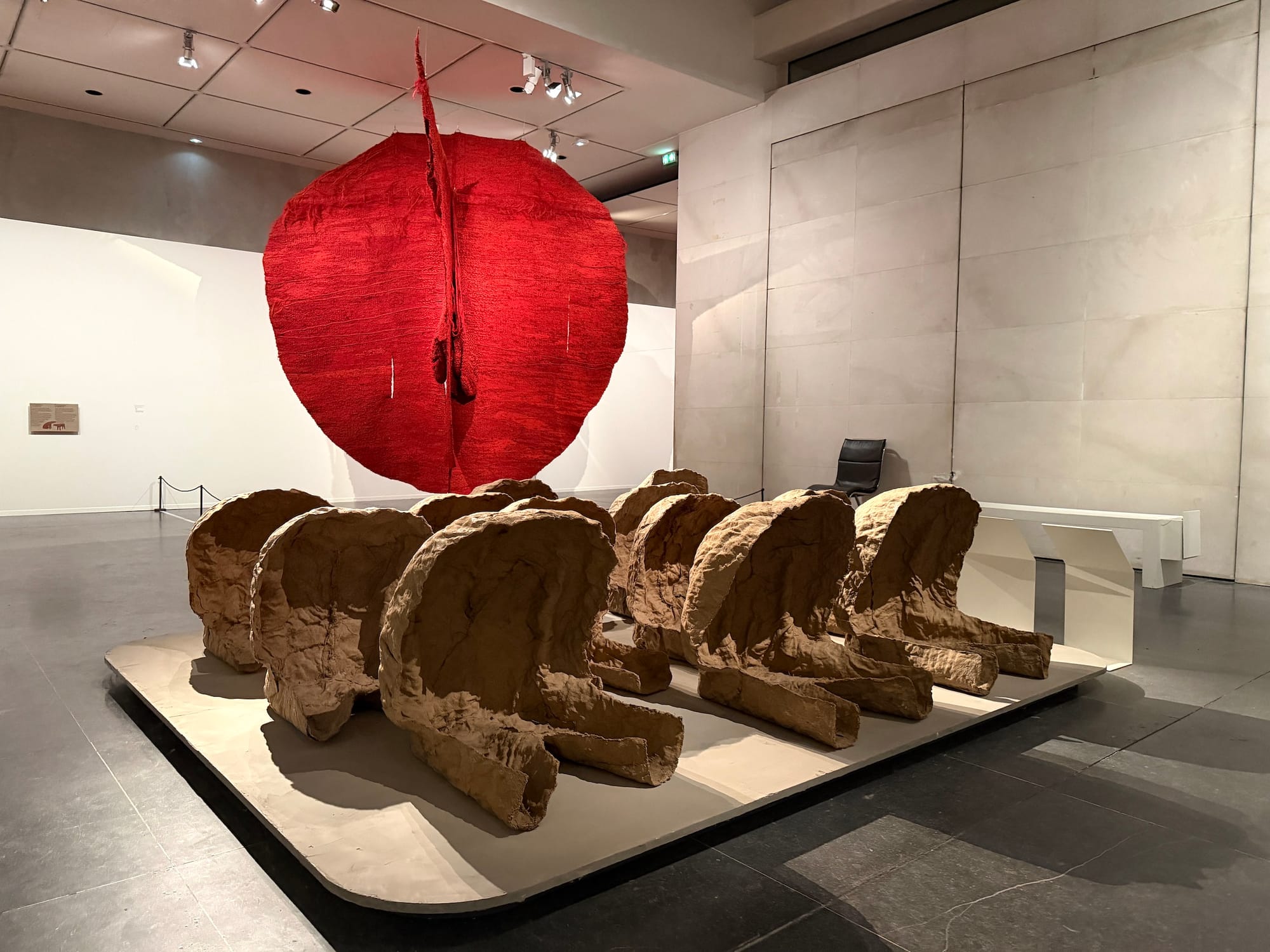
At Bourdelle, this piece neighbors the imposing “Abakan Red” (1969), a hanging sculpture whose two giant flaps form the backdrop for an erect sword-like protrusion. While both works have sexual connotations, the more you look the more complex they appear, synthesizing tensions between softness and hardness, flaccidity and tautness. “Abakan Red”’s upraised, tensed spike draws attention to its droopy downward flaps, and vice versa. Likewise, the textures — most often, burlap and sisal — range from velvety to forbiddingly asperous. (Visitors can experience this by touching various ropes displayed in an educational vitrine.)
However elemental her shapes, the artist never loses sight of the human form. The hanging sisal-and-jute piece “Black Garment” (1975), for instance, enhances this sensibility via the mechanism rotating the massive weave, which slowly changes the viewer’s perspective, from seeing it as flat to perceiving its volume, like a black habit draping a torso.
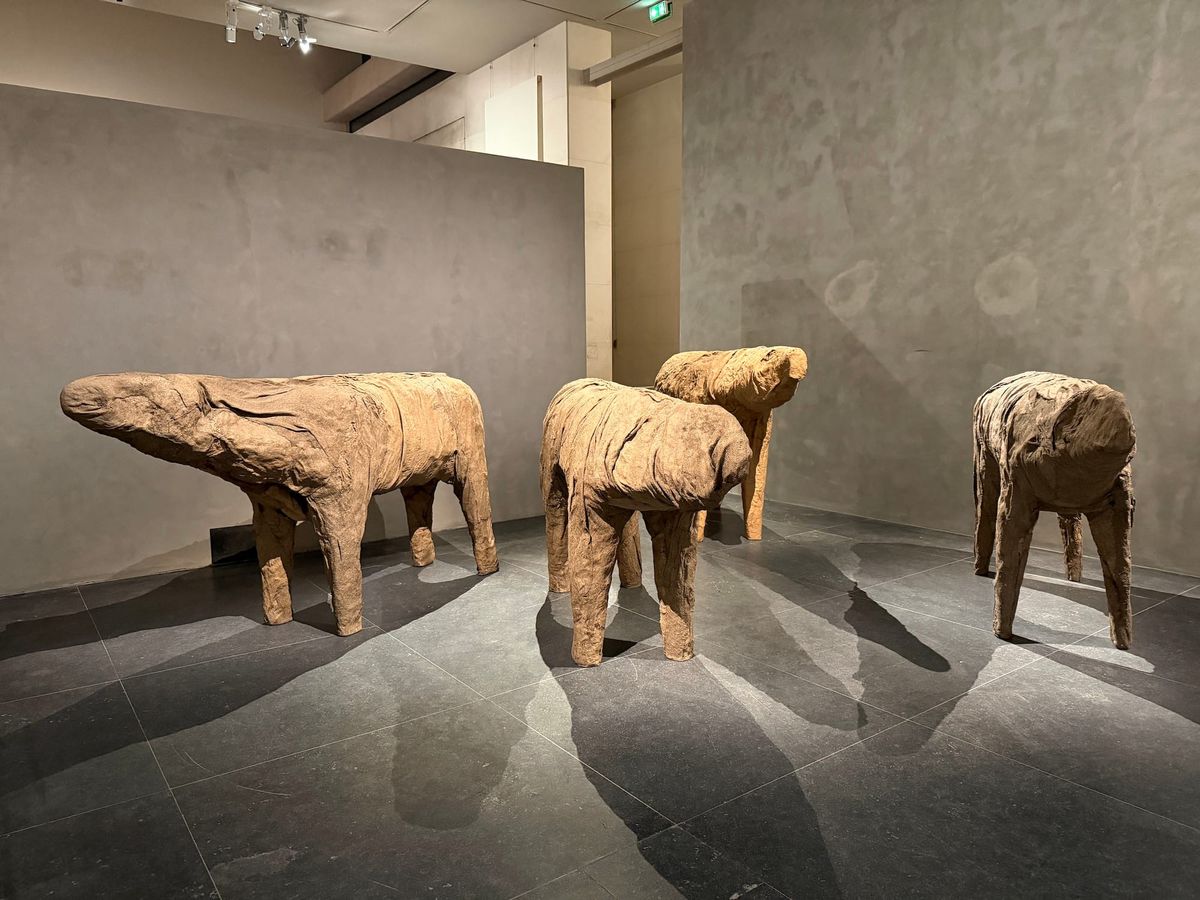
Some of the exhibition’s most striking sculptures are those in the final section that explore the idea of a collective — from a herd of monolithic animals in resin-soaked burlap (“Standing Mutants,” 1992–94) to resin-and-jute human bodies lined in rows (“Crowd V,” 1995–97) and kinetic, marching ones, à la Muybridge (“Dancing Figures,” 2001).
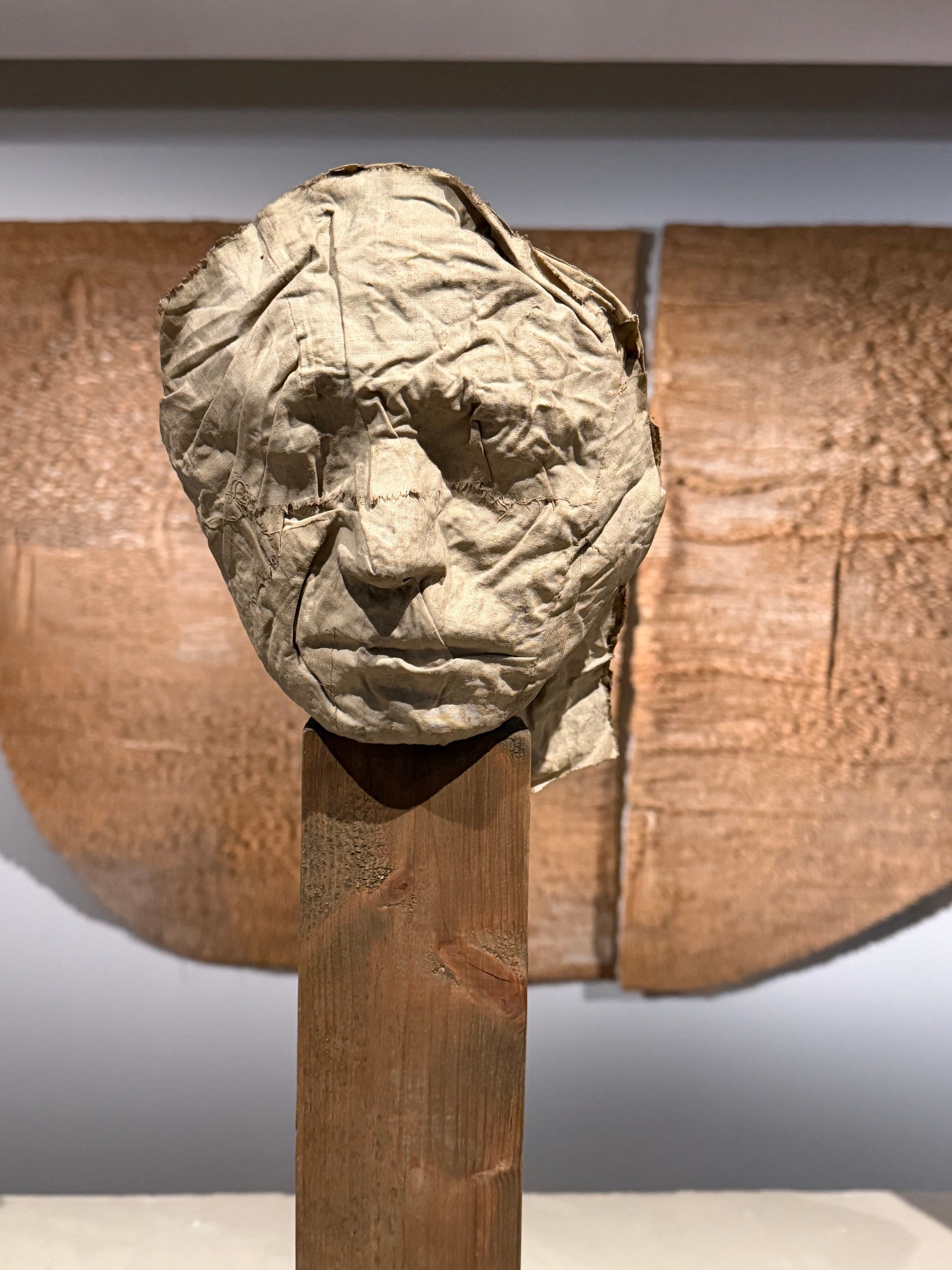
Under Poland’s communist regime, collectivity was controlled, and controlling. Such domination lingers in the foreboding, stacked density of headless bodies in “Crowd V,” even though the work was made after the regime’s fall. Other sculptures, such as “Dancing Figures” and “Backs” (1976–80), feel more ritualistic; the hollowed out, headless resin-jute bodies in the latter sit in a supplicant pose, backs bent. Despite its vulnerability, the grouping conveys a quiet power, the faceless anonymity of multitudes transformed into a collective oneness.
Magdalena Abakanowicz: The Thread of Existence continues at Musée Bourdelle (18 rue Antoine Bourdelle, Paris, France) through April 12. The exhibition was curated by Ophélie Ferlier Bouat with Jérôme Godeau, Colin Lemoine, and Margaux Coïc.