Mexican Artist Alleges Plagiarism of Femicide Project
Elina Chauvet says her "Red Shoes" installation was staged in Bucharest without her knowledge or name.

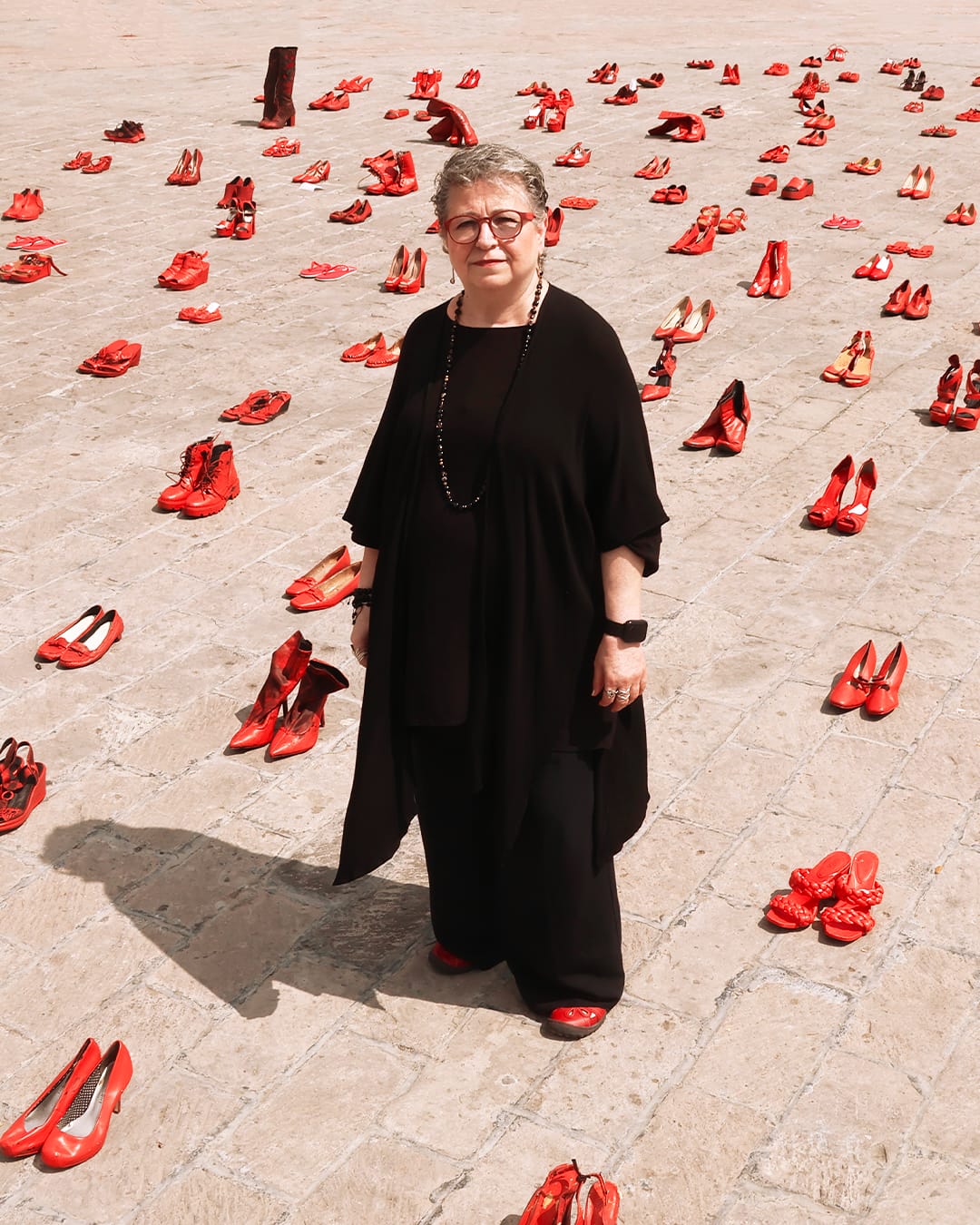
How should credit be given when an art practice elevates an ordinary object into a globally understood symbol? Mexican artist Elina Chauvet, best known for her public stagings of “Zapatos Rojos (Red Shoes)” (2009–) addressing femicide and gender-based violence in Mexico, says that the project was reproduced in Bucharest last month without her knowledge or name.
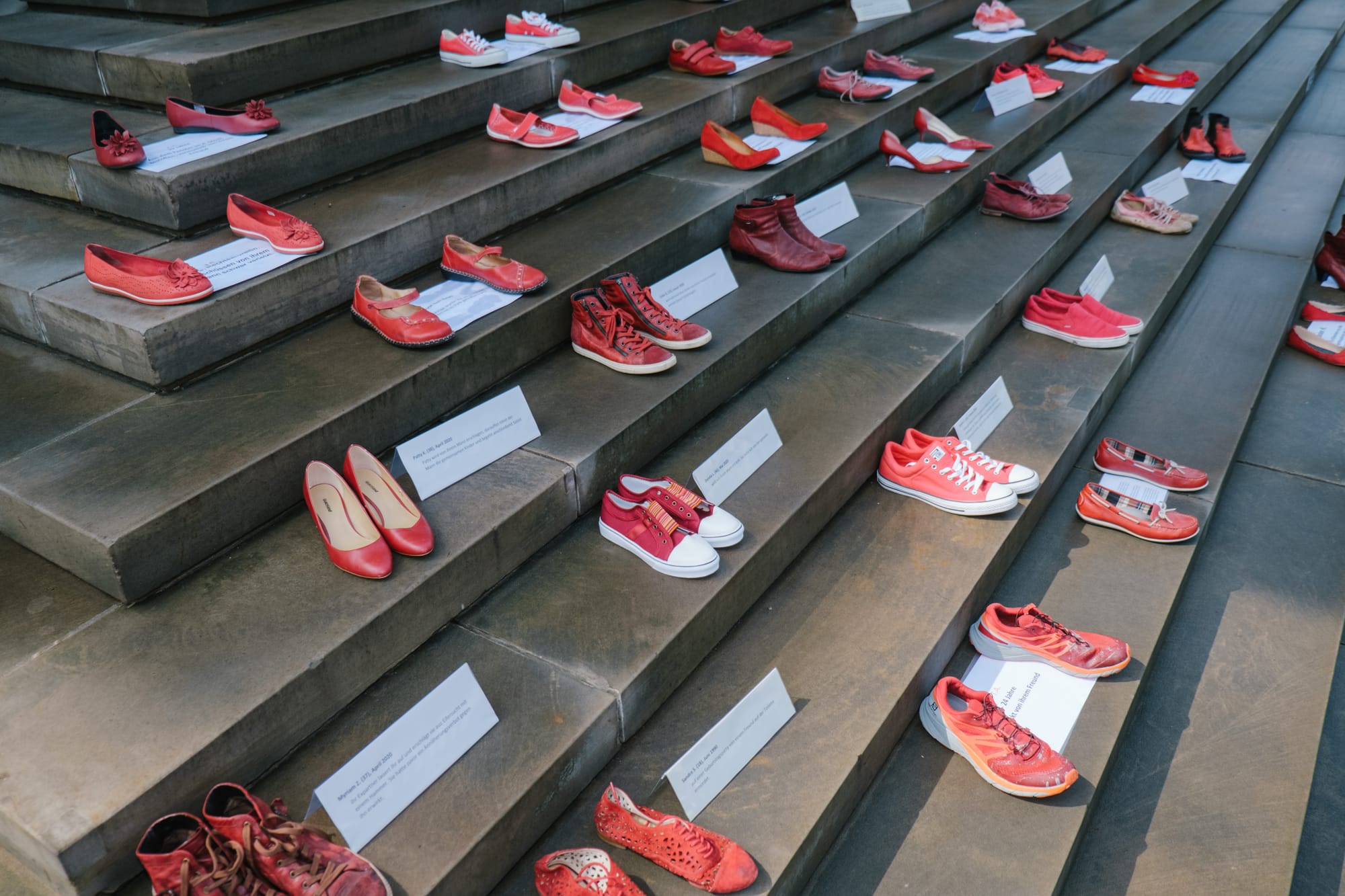
“Zapatos Rojos” takes the form of dozens or hundreds of pairs of red shoes publicly displayed in site-specific formations. Each pair of shoes connotes the absence of a femicide victim, or a disappeared woman or girl. Chauvet began this collaborative installation in Ciudad Juárez, an industrial Mexican border town with a documented reputation for femicide since the early 1990s, and has since restaged the work across Central and North America, as well as multiple European countries, in the last 16 years.
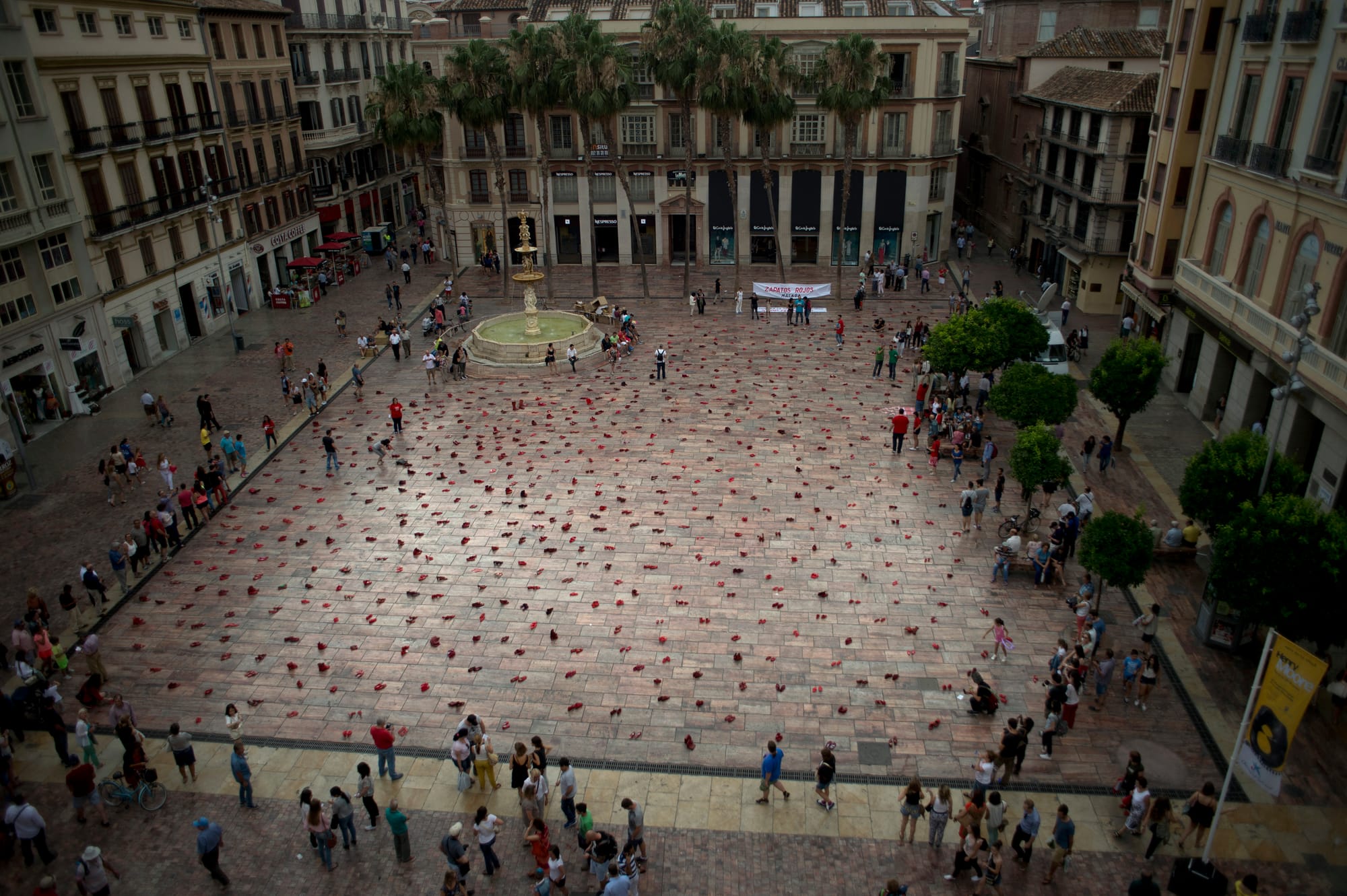
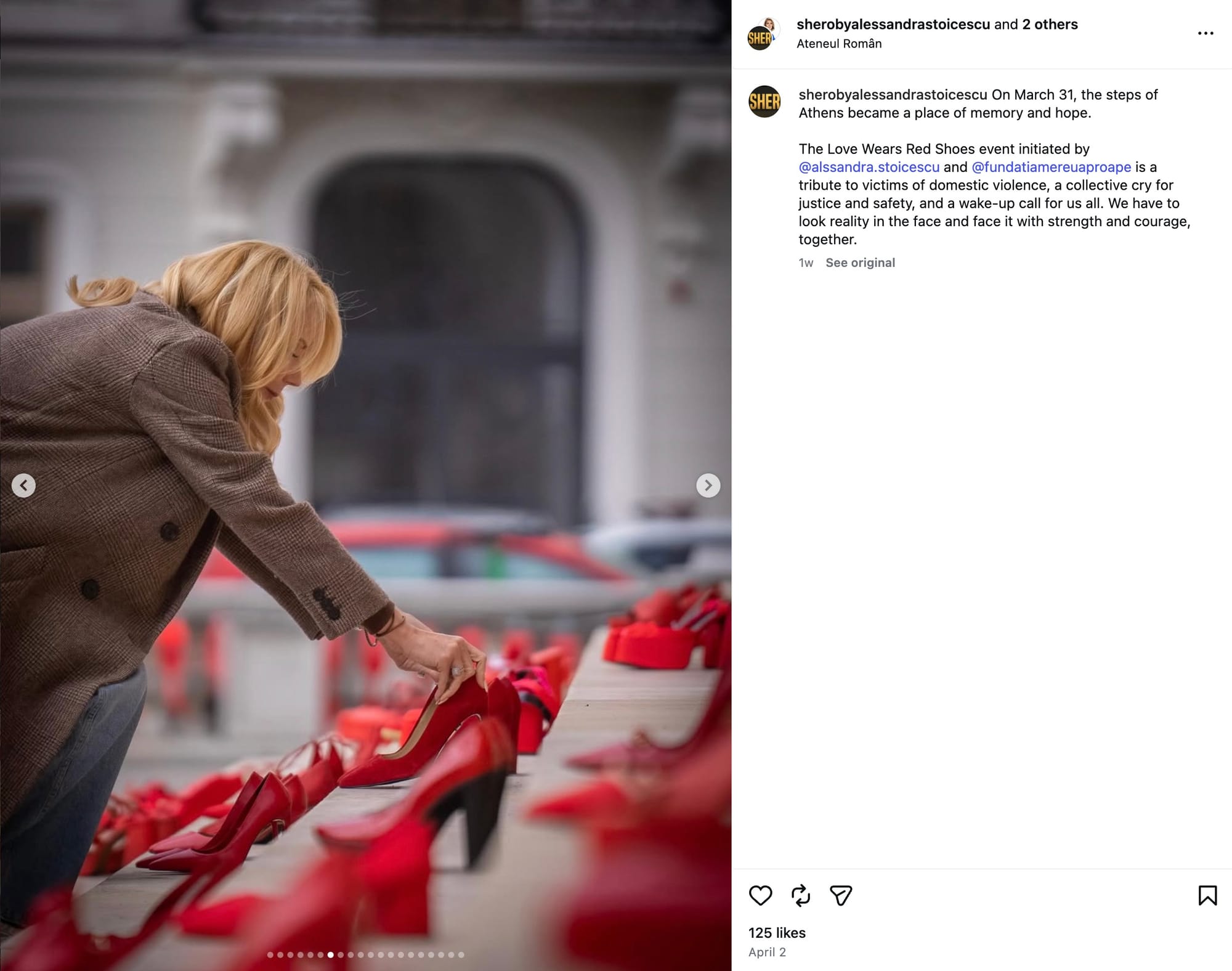
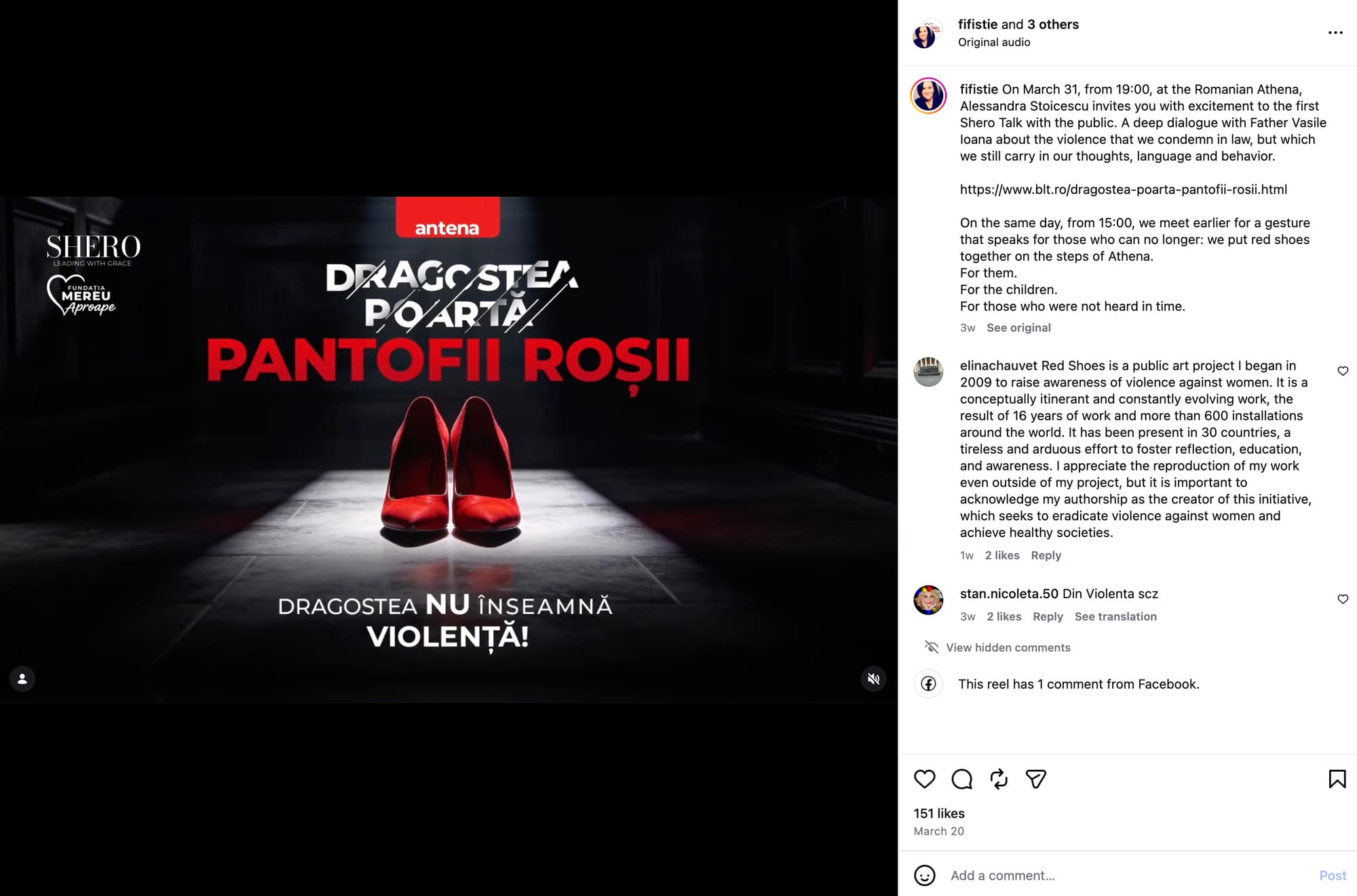
On March 31, Romanian news anchor Alessandra Stoicescu hosted a public intervention called “Dragostea poartă pantofii roșii” (Romanian for “Love wears Red Shoes”) outside the Romanian Athenaeum concert hall. In observation of the parliament passing legislation officially defining femicide the week prior, Stoicescu organized the installation, which anchored a panel about domestic violence, intimate violence, and femicide, through her feminist campaign platform, called Shero. The event was done in collaboration with Mereu Aproape Foundation, which is devoted to survivors of domestic violence.
Despite the similarities with Chauvet's installation, Stoicescu's project did not credit the artist in marketing materials or social media posts. On Stoicescu's Shero website, an entry about “Dragostea poartă pantofii roșii” notes that she and the Mereu Aproape Foundation had originally staged the same red shoes intervention on February 14, 2018, on the steps of the National Museum of Romanian History, but does not mention Chauvet.
The artist said that she had been in touch with Stoicescu in 2018 to voice her concerns over the erasure of her authorship at the time, telling Hyperallergic that the news presenter ended up mentioning Chauvet's name during the program after their conversation.
Now, eight years later, Chauvet alleges that Stoicescu again co-opted the red shoe motif without contacting her or citing her beforehand.
After learning about Stoicescu's March 31 event, the artist left multiple comments on various Instagram posts requesting acknowledgment for the concept of the installation. Chauvet shared her own statement on Instagram on April 6, stating that “Zapatos Rojos” is copyrighted and to be recreated only under her authorization and guidelines.
“I am not an inspiration to you; if I were, you would not have erased my name from my work,” Chauvet's statement read, also referencing her 2018 conversation with Stoicescu.
Neither Stoicescu nor the Mereu Aproape Foundation responded to Hyperallergic's inquiries in time for publication.
Chauvet works with the hosting communities to stage each reproduction of “Zapatos Rojos.” Local residents donate dozens of pairs of shoes to the artist, participate in group sessions to paint them all red, and help assemble the public installation. In its development and interactivity, the project both unearths and represents the collective pain felt by those who have lost a loved one to femicide worldwide.
The project was born from Chauvet's own loss attributed to gender-based violence. In 1993, the artist's 32-year-old sister was killed by her husband in Ciudad Juárez.
In an email to Hyperallergic, Chauvet mentioned that it takes two to three months to stage “Zapatos Rojos” in every host location. “I have an agreement in which people commit to carrying out the project within its guidelines, and cannot do more than one installation to avoid monopolizing it,” she said.
“I know my work very well and I know that wherever it is presented it is a success, it generates a lot of interest and gives media visibility because of the theme and its aesthetics,” Chauvet continued.
Since Chauvet publicly addressed the matter on April 1, Stoicescu has edited two post captions on Instagram and one entry on the Shero website to cite the artist as her inspiration for this event. The news anchor has also disabled the comments section on her Instagram page since April 3, and has not addressed Chauvet's public concerns. The artist says Stoicescu still has not directly communicated with her about this.
“‘Zapatos Rojos’ is not a movement, it's an artwork. Movements end, but art continues,” Chauvet said to Hyperallergic.
“It's more than an installation, it's also my life story,” she continued. “In many ways I'm part of the work, and the work is part of me.”