Milwaukee Art Museum Returns Two Jars to David Drake’s Descendants
The Wisconsin museum’s ownership transfer was followed up by a Virginia museum’s announcement of the return of another “Dave the Potter” vessel this week.

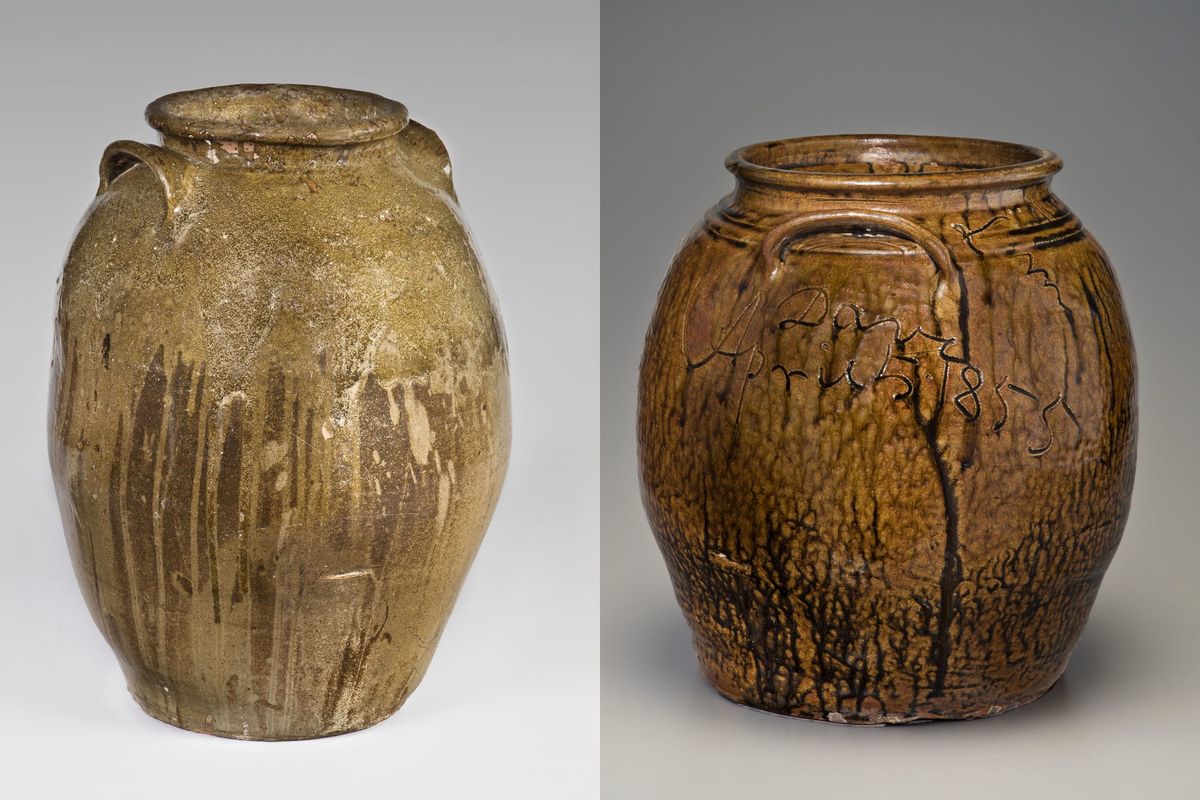
The Milwaukee Art Museum has returned two 19th-century stoneware vessels by Dave (David) Drake to the descendants of the African-American ceramicist under an ownership transfer agreement that allows the objects to be displayed long-term. While the hefty jars serve as examples of ceramic mastery, Drake had also inscribed them with his name and brief poems during a time when Black literacy was criminalized in the antebellum South.
“For our family, this agreement is about more than the ownership of these two vessels,” said Yaba Baker, Drake's fourth great-grandson, in a press statement on the return. “It is about recognizing David Drake as our ancestor whose voice, expertise, and creativity have endured for over 175 years.”
Colloquially known as Dave the Potter, Drake was born into slavery around 1801 on a plantation in the Carolinas. Little is known about Drake's early life, but a handful of records show that as a late teen, Harvey Drake and Abner Landrum brought him to work in their pottery business in Edgefield, South Carolina — the epicenter of ceramic production in the American South during the 19th century.
Drake became a master potter known for throwing particularly large works, and surreptitiously learned to read and write at great risk, as South Carolina had instituted anti-literacy laws for enslaved and free African Americans through the Negro Act of 1740. The act also forbade African Americans from earning their own money or moving abroad, implementing harsh corporal or even deadly penalties. Regardless, Drake exercised his agency by incising his name into his pottery and displayed his expertise by authoring original rhyming couplets.