National Gallery of Art Acquires Stirring Artemisia Masterpiece
“Mary Magdalene in Ecstasy” (c. 1625) is the first work by the Italian Baroque artist to enter the institution’s collection.

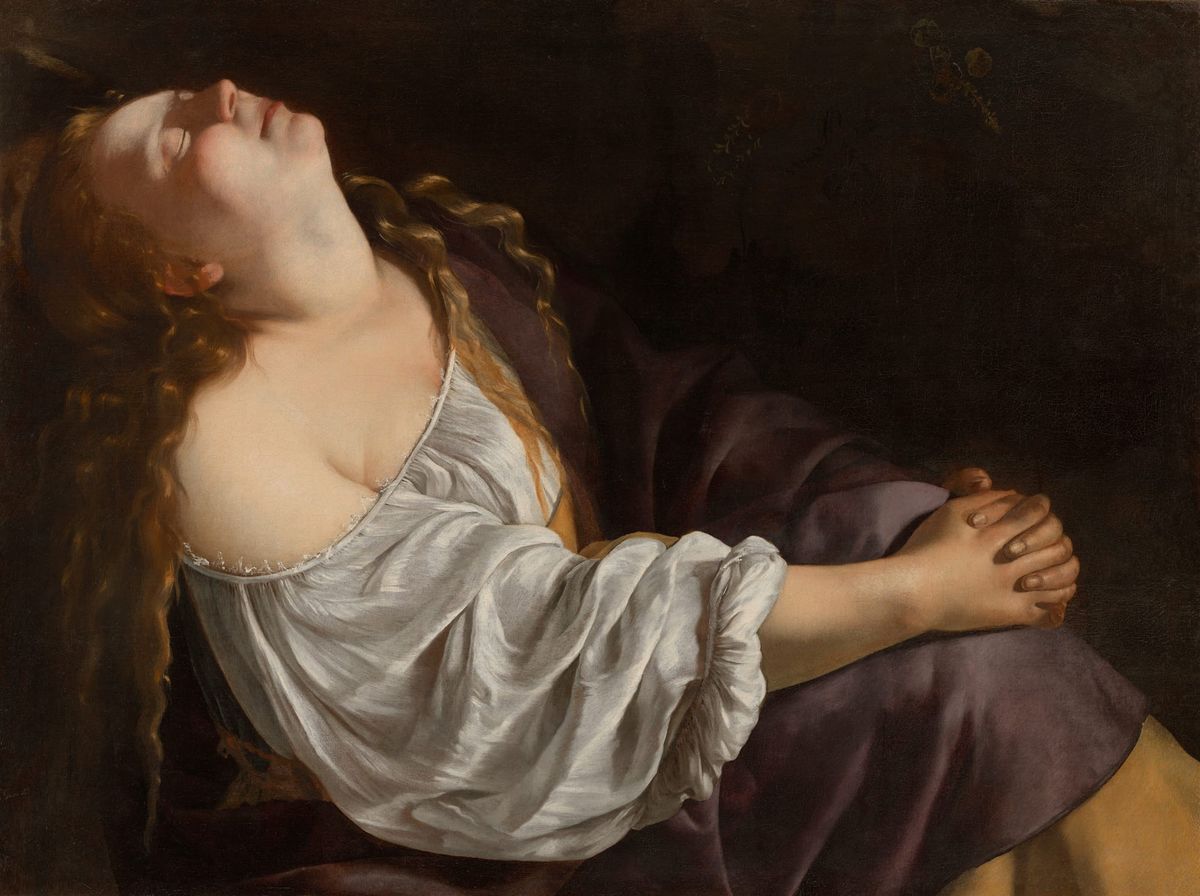
The National Gallery of Art (NGA) in Washington, DC, has acquired a painting by Italian Baroque master Artemisia Gentileschi, a historic first for the institution's collections. “Mary Magdalene in Ecstasy” (c. 1625), depicting the devout follower of Jesus Christ in solitude amid a divine vision, was thought to be lost for centuries until it re-emerged in 2011 from a French private collection.
After its 2014 sale at Sotheby's, “Mary Magdalene in Ecstasy” made its United States debut in the 2021–22 group exhibition By Her Hand: Artemisia Gentileschi and Women Artists in Italy, 1500-1800, reunited with various other masterpieces at the Wadsworth Museum of Art in Connecticut and at the Detroit Institute of Art. The show was co-curated by Eve Straussman-Pflanzer, who has since become the curator and head of Italian and Spanish Paintings at the NGA.
Gentilischi created this work at the apex of her career upon her return to Rome. In an email to Hyperallergic, Straussman-Pflanzer stated that the artist's “strongest, and arguably most important” paintings were made in the early 1620s.
“In this period, Artemisia Gentileschi offers the viewer her most confident pictures, including our newly acquired ‘Mary Magdalene,’ where the figures, male or female, are fully realized, sentient human beings,” she said.
The composition evokes Caravaggio's earlier rendition — stripped of the skull, cross, and ointment jar that usually accompanied the disciple in favor of depicting her cave-dwelling life in solitude after the ascension of Christ. Against the sparse backdrop of a dark cavern, Mary Magdalene is reclining with her eyes closed, her head tilted back to expose her neck. Gentileschi imbues the work's spiritual context with a sensual essence by showing Mary's unbound hair, exposed shoulder, and the crease between her underarm and breast. In her state of divine ecstasy, Mary Magdalene appears totally ignorant of the spectator, in spite of the forced proximity employed by the framing.
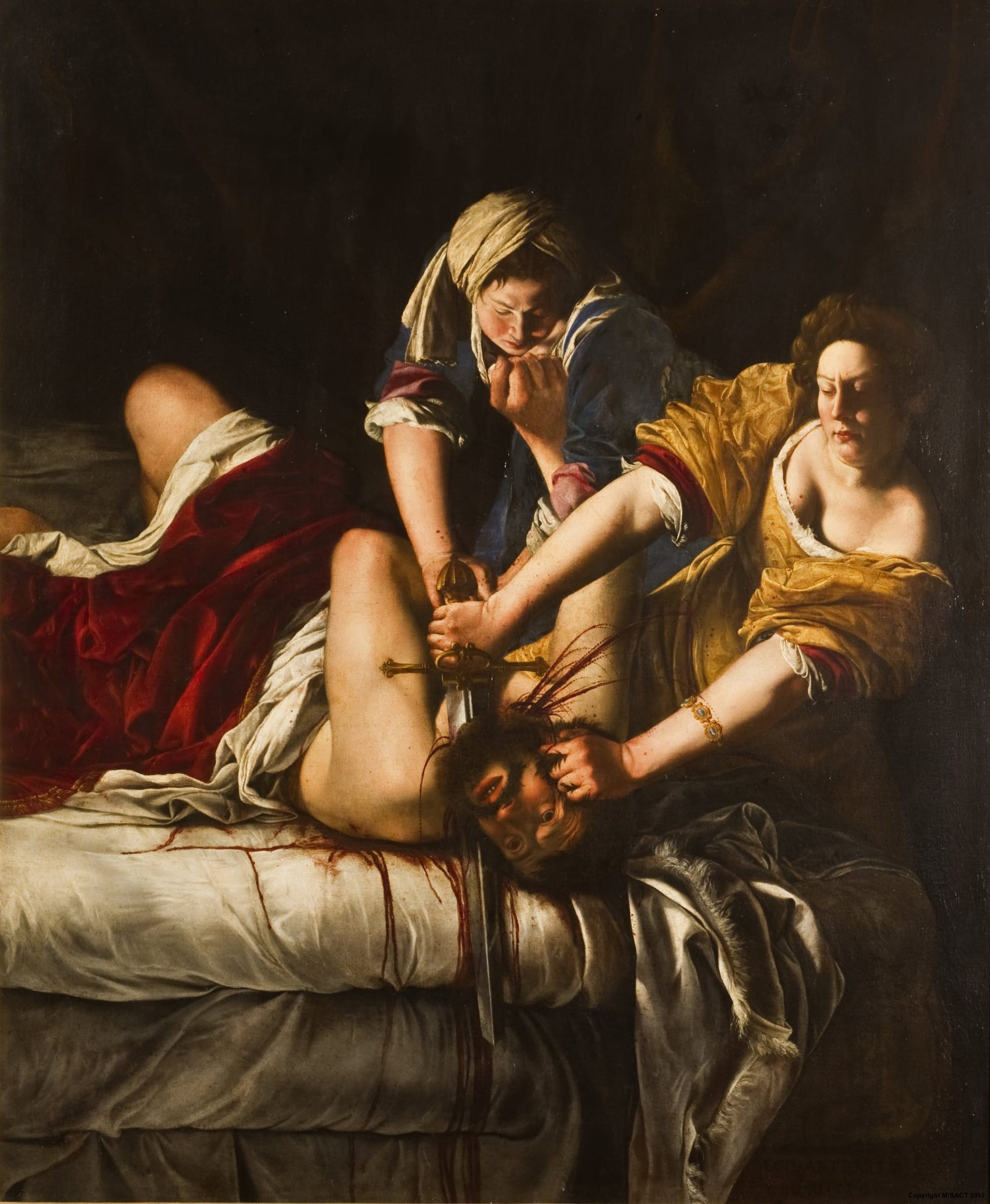
Gentileschi frequently interacted with viewers through her figurative subjects and self-portraits, often commanding authority through direct gaze, life-size scale, and confrontational depictions of biblical heroines.
A celebrated artist throughout her life and long afterwards, Gentileschi is best known for combining feminine assertion and vulnerability through dramatic works such as “Judith Beheading Holofernes” (c. 1620) and “Susanna and the Elders” (1610).
In the work recently acquired by the NGA, however, Mary Magdalene's fidelity and spiritual euphoria don't necessarily separate her from the viewer. “We feel and experience this conversion/change along with her,” Straussman-Pflanzer said.
Acknowledging the significance of the acquisition, the curator emphasized the importance of conveying to the public that “women artists in the 17th-century were extremely accomplished.”
“They were able to capture the power of human emotion and human experience — in this case religious conversion — and transmit it in a vivid and powerfully evocative picture that captures the complexity of human experience, especially that of a woman undergoing a profound emotional and mental change,” she continued.
“This is Artemisia Gentileschi's gift,” Straussman-Pflanzer said.