Dozens of Venice Biennale Artists Demand Israel’s Exclusion
Artists Yto Barrada, Carolina Caycedo, Gala Porras-Kim, and Alfredo Jaar are among the nearly 200 signatories of a new missive.

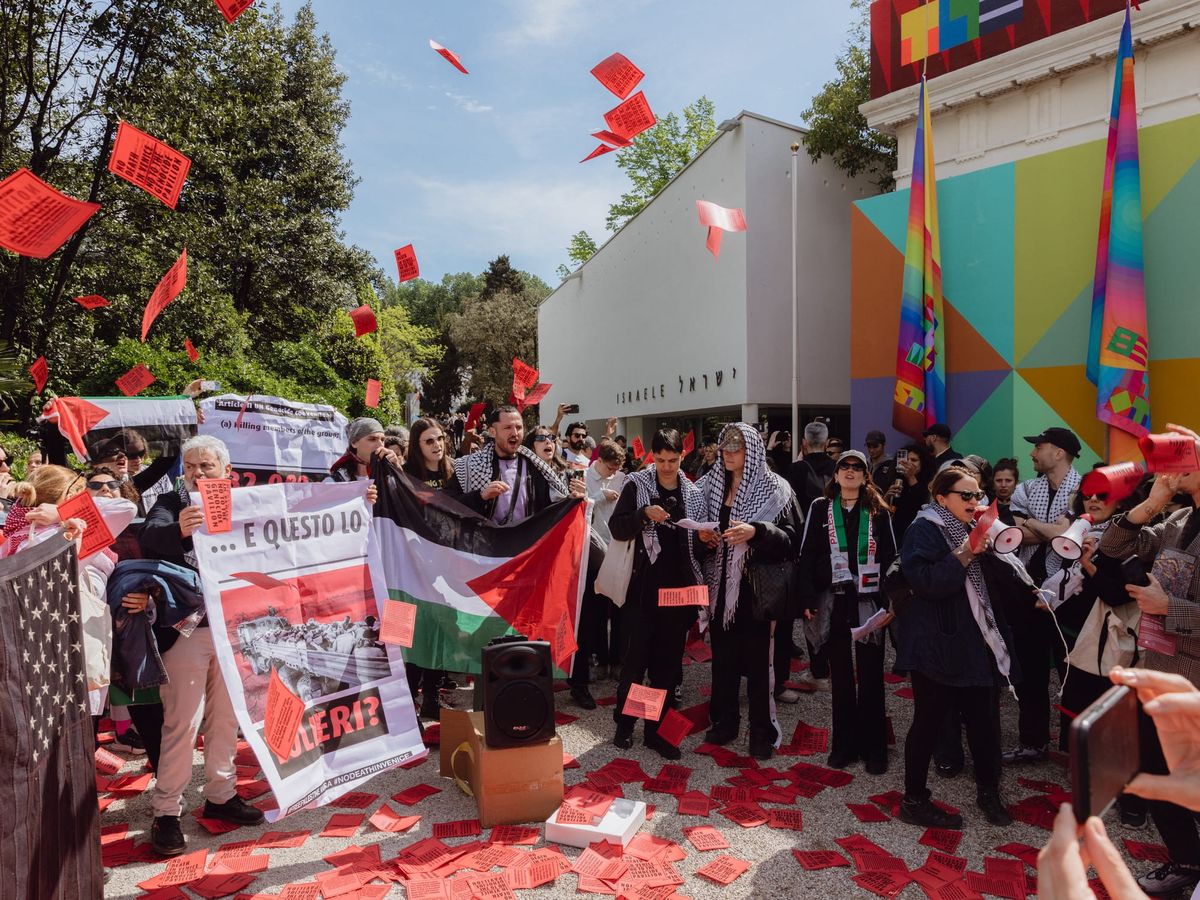
With less than two months until the Venice Biennale opens, nearly 200 artists, curators, and staff participating in the 61st edition are calling on the event organizers to exclude Israel from this year's program in a new open letter.
“The Venice Biennale’s complicity with the attempted destruction of Palestinian life must end. No artist or cultural worker should be asked to share a platform with this genocidal state,” reads the missive, released today, March 17.
The 178 signatories include pavilion artists Yto Barrada (France), Isabel Nolan (Ireland), and Asmaa Jama (Somalia), as well as artists in the central exhibition, such as Carolina Caycedo, Gala Porras-Kim, and Alfredo Jaar.
“Signing this letter is the minimum I can do in the face of genocide and ecocide,” Caycedo, the Los Angeles-based Colombian artist known for her environmentally engaged art practice, told Hyperallergic in an email. “Our voices, our demands, our non-hegemonic stories, though plural and diverse, become stronger when woven into collective gestures or care and resistance.”
The letter was organized and distributed by the Art Not Genocide Alliance (ANGA) collective, which launched in protest of Israel's pavilion in 2024. In a recent opinion piece for Hyperallergic explaining its push to exclude Israel from the 2026 show, ANGA argued that the Biennale's administration is “actively ensuring the presence and participation of a state that was founded on the ethnic cleansing and illegal occupation of Palestine.”
Citing multiple prominent human rights organizations’ designation of Israel as an apartheid state and the fact that Palestine cannot and does not have a national pavilion, the collective's 2024 petition to the exhibition's leaders garnered over 24,000 signatures globally — nearly 2,000 signatories had participated in previous Biennales as well.
Regardless, the Biennale Foundation responded to the 2024 petition in a statement to Hyperallergic saying that nations recognized by the Italian Republic were welcome to request participation, and that the exhibition “may not take into consideration any petition or call to exclude the participation of Israel.”
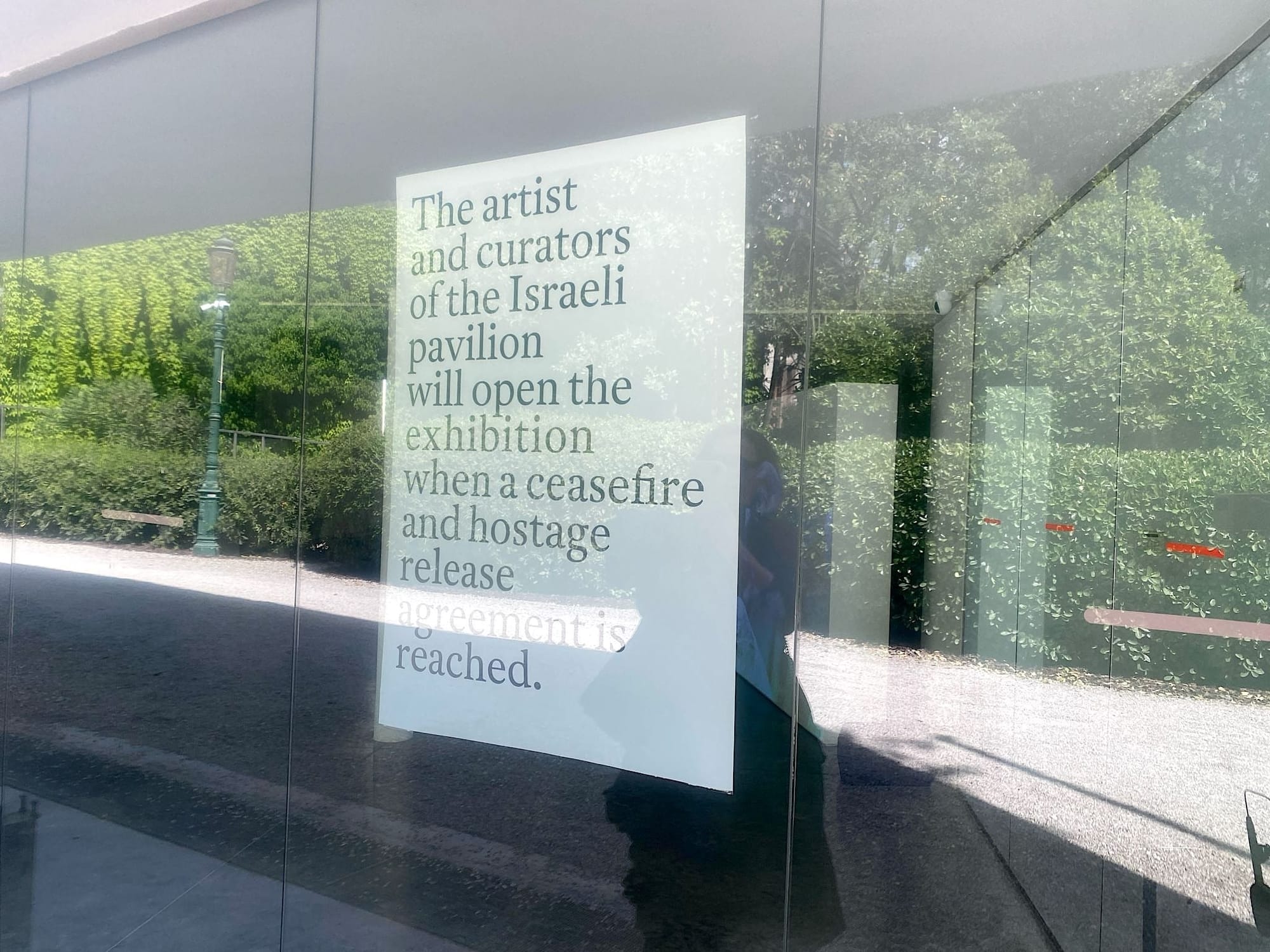
Curators Mira Lapidot and Tamar Margalit and artist Ruth Patir ultimately made a symbolic decision to close the Israeli pavilion to the public until “a ceasefire and hostage release agreement is reached,” a move some saw as insufficient amid calls for increasing support for the Boycott, Divest, Sanctions (BDS) movement targeting Israel.
ANGA's calls to boycott the Biennale resurfaced last October, when it was confirmed that Israel would be participating again in a temporary pavilion in the Arsenale complex as the permanent Giardini pavilion was being renovated. Romania-born Israeli sculptor Belu-Simion Fainaru was selected to represent Israel for the 61st Biennale.
Caycedo told Hyperallergic that she feels artists in the Biennale are being “dragged into a position of complicity.”
“For me, making art and showing it in art exhibitions is not a neutral process,” Caycedo continued. “Art is a form of re-existence and solidarity, and I sign this letter in response to the call from Palestinian civil society to denounce the normalization of Israel’s crimes against human rights and the rights of nature.”
While killing hundreds in Iran and Lebanon in joint attacks with the United States, Israel continues to launch deadly strikes in Gaza and exacerbate the humanitarian crisis in spite of the declared ceasefire and Hamas's release of the remaining Israeli hostages. A recent report from the Lancet Global Health medical journal states that over 75,000 Palestinians were violently killed in the first 15 months of Israel's decimation of Gaza.
The new letter signed by upcoming participants invoked the exhibition's earlier political precedents in its argument to force Israel's withdrawal this year — in 1974, the entire Venice Biennale was devoted to the liberation of Chile in protest of General Pinochet's coup d'etat, and apartheid South Africa was excluded from the exhibition from 1968 to 1993.
The collective also referred to the Foundation's recent confirmation that Russia would also be included in the 61st Biennale, which sparked outrage and threatened its financial support from the European Union. Russia was notably absent from the last two exhibitions: The nation loaned its pavilion to Bolivia at the last minute in 2024, and in 2022, the pavilion's representing artists withdrew in protest of the invasion of Ukraine.
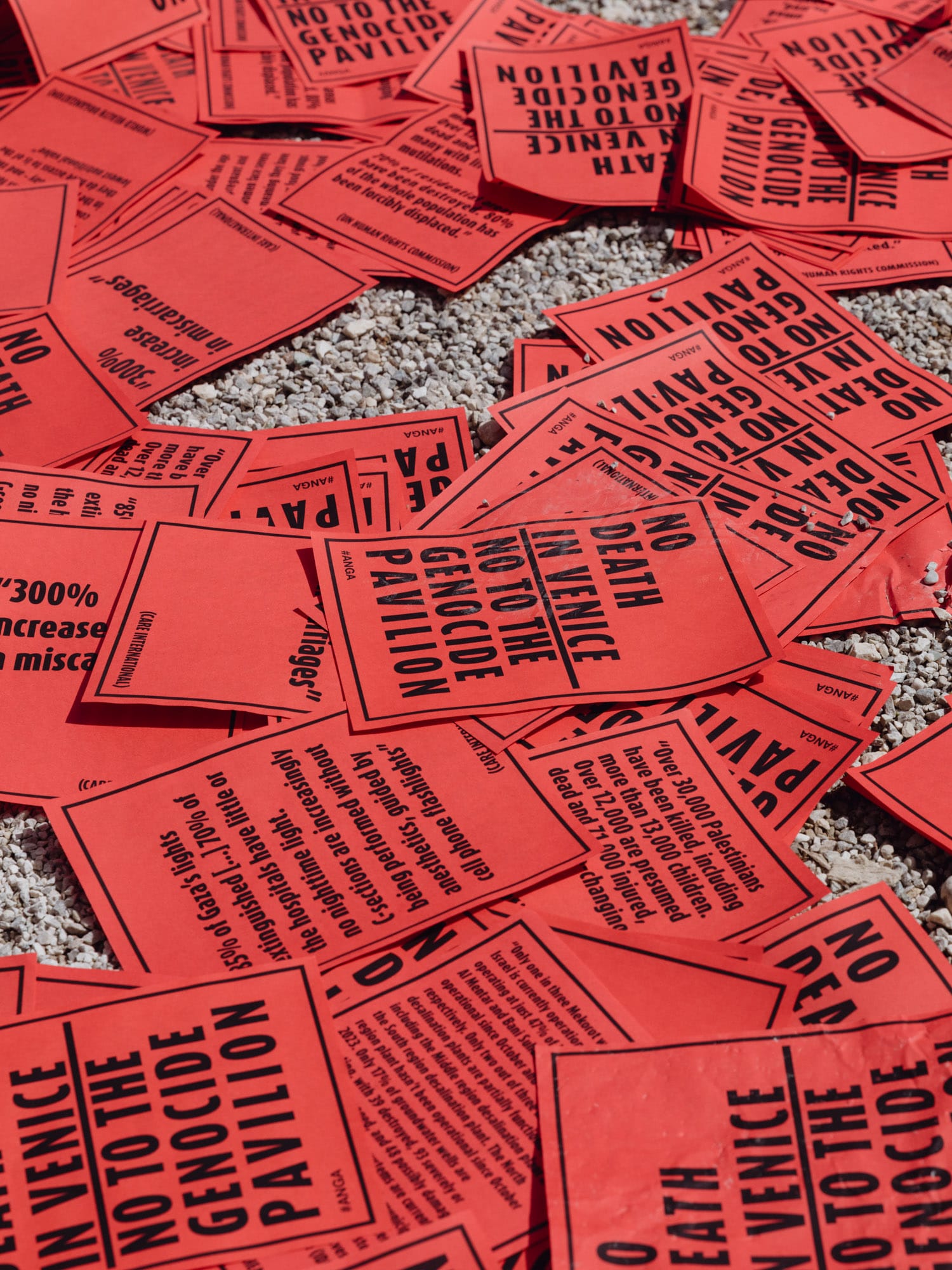
“The Biennale's recent attempt to reintroduce Russia has triggered a political crisis in Italy, revealing two facts that can no longer be concealed: first, that the Biennale is not a neutral platform but a political space; and second, that it continues to operate through clear double standards,” the collective wrote in a press statement for its letter.
The Biennale Foundation did not immediately respond to Hyperallergic's request for comment.
When asked about his decision to sign the petition, Matteo Norzi, the co-curator for Perú's national pavilion highlighting the geometric kené art of Shibipo-Konibo artist Soi Biri (Sara Flores), directed Hyperallergic's inquiry outward instead.
“To be candid, I believe the question is best directed to those who chose not to sign the petition,” Norzi wrote in an email. Both Soi Biri and co-curator Issela Ccoyllo also signed the letter.
“In light of the horror that has happened, and continues to happen, it is difficult to understand how one could choose not to sign,” Norzi said plainly.