Over 6,000 Sign Letter Opposing Russia’s Venice Biennale Pavilion
The petition, signed by cultural figures such as Pussy Riot's Nadya Tolokonnikova, comes as the European Union threatens to pull Biennale funding over Russia's inclusion.

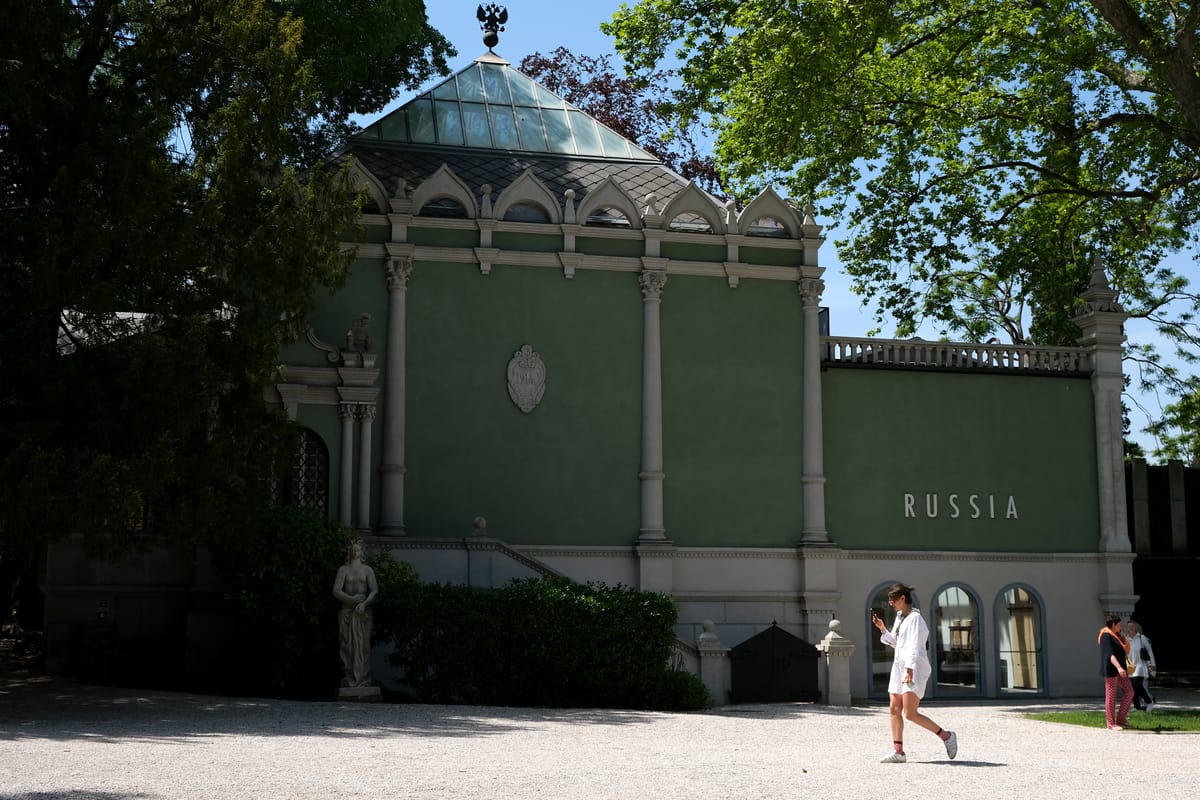
Thousands of artists, academics, curators, journalists, and political figures are calling on leaders of the Venice Biennale to “address the implications” of Russia’s participation in an open letter published this week. Authored by the Arts Against Aggression International Movement, the petition comes just days after Biennale organizers confirmed in a news release that Russia will take part in its 61st edition, which opens on May 9 and runs until November 22.
The Venice Biennale is facing increasing pressure to cancel Russia's pavilion at the international contemporary art festival, including by the European Union, whose executive cabinet said in a statement today that it will consider the “suspension or termination” of an ongoing grant to the Biennale Foundation if the nation remains a participant.
If the pavilion moves forward, this year will mark Russia’s return to the Biennale for the first time after its absence in the 2022 and 2024 editions.
Shortly after the Russian invasion of Ukraine in 2022, Kirill Savchenkov and Alexandra Sukhareva, the two artists scheduled to represent Russia, withdrew from the event, stating in a joint social media post that “there is no place for art when civilians are dying under the fire of missiles, when citizens of Ukraine are hiding in shelters, when Russian protesters are getting silenced.”
The Russian pavilion almost remained dark during the 2024 edition, too. But just weeks before the Biennale opened, Russia decided to lend its unoccupied pavilion to Bolivia as it pursued the Latin American nation’s lithium reserves. A temporary banner with the words “Estado Plurinacional de Bolivia” hung atop the side of the building for the duration of the exhibition.
This year is different. Russia plans to participate with an exhibition called The Tree Is Rooted in the Sky, which will feature at least 38 artists and musicians, according to the Venice Biennale’s website. In an email to Artnews, Vladimir Putin’s cultural envoy, Mikhail Shvydkoy, said that “Russia never left the Venice Biennale” and framed the 2026 participation as evidence that efforts to isolate Russian culture have failed.
But over 6,000 signatories would beg to differ. The new petition, titled “Stop the Normalization of War Crimes through Art,” argues that Russia’s planned state pavilion this year contradicts the Biennale’s own March 2022 pledge to cut ties with official Russian entities for as long as the war in Ukraine continues.
“This position established an important ethical commitment by one of the world’s leading cultural institutions,” the letter reads. “Today, as Russia’s war against Ukraine continues, the announced presence of a Russian state pavilion raises urgent questions about how this principle is being upheld.”
The news release published on the Biennale’s website last week asserts that the foundation rejects all exclusion or censorship of culture or art. “La Biennale, like the city of Venice, continues to be a place of dialogue, openness, and artistic freedom, encouraging connections between peoples and cultures, with enduring hope for the cessation of conflicts and suffering,” the release reads.
The letter pushes back on this sentiment, stating that “the claim that ‘culture is above politics’ is never neutral.” In the case of Russia, the letter argues, this “formula” has become a political tool for promoting aggression and bringing forth state objectives “while disguising them behind the language of cultural exchange and dialogue.”
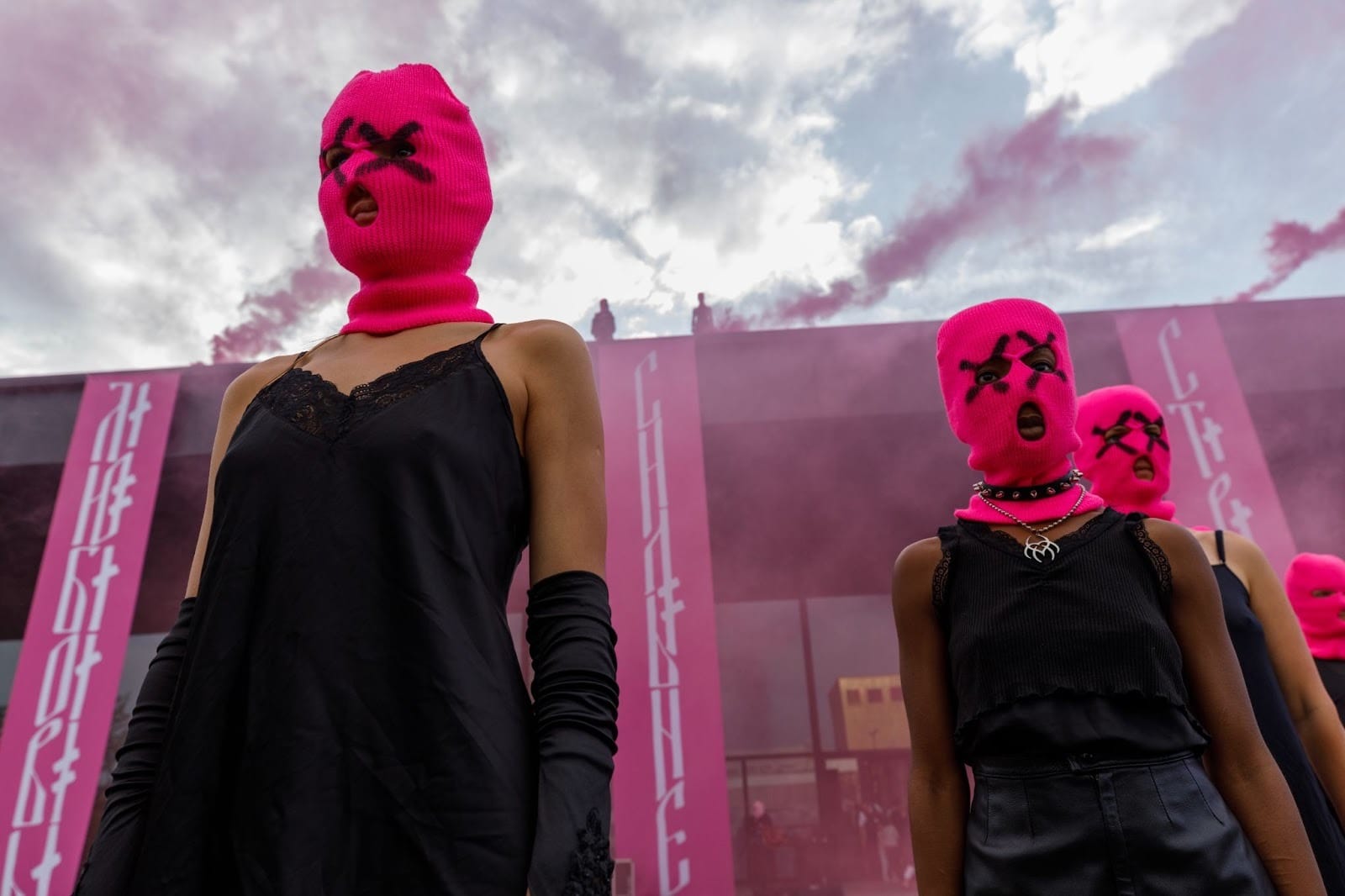
Among the letter’s signatories is Nadya Tolokonnikova, a founder of Pussy Riot. Russia sought to label the feminist punk band and art collective an extremist group late last year, and the Tverskoy District court in Moscow upheld the claim on December 15. A Moscow court had previously sentenced five members of the exiled group to prison in absentia on charges related to its protests and artworks critical of Putin.
“The participation of official Russia in the Biennale is a serious blow to Europe’s Security,” Pussy Riot said in a statement posted to both Instagram and X last Thursday. “Since the start of the full-scale invasion of Ukraine, cultural ‘soft power’ has become part of Russia’s military doctrine and an instrument of hybrid warfare. The Kremlin has long used culture as a continuation of foreign policy — and as a way to legitimize the regime abroad.”
“Expect Resistance," Pussy Riot’s statement continues. “We will drown out the noise you export – death, tragedy and lies.”
Artists and cultural figures have made similar calls for Israel to be excluded from the Venice Biennale amid its ongoing genocide in Palestine. In 2024, the Israeli pavilion was partly shuttered by the artist and curators, a gesture that some criticized as performative and insufficient.
Reached by email, Tolokonnikova of Pussy Riot decried Venice Biennale President Pietrangelo Buttafuoco’s decision to allow Russia to participate.
“It’s a shame that neo-fascists across Europe hold the highest positions of power and openly support Vladimir Putin,” Tolokonnikova told Hyperallergic. She did not provide details of what sort of resistance or action might be in the works.
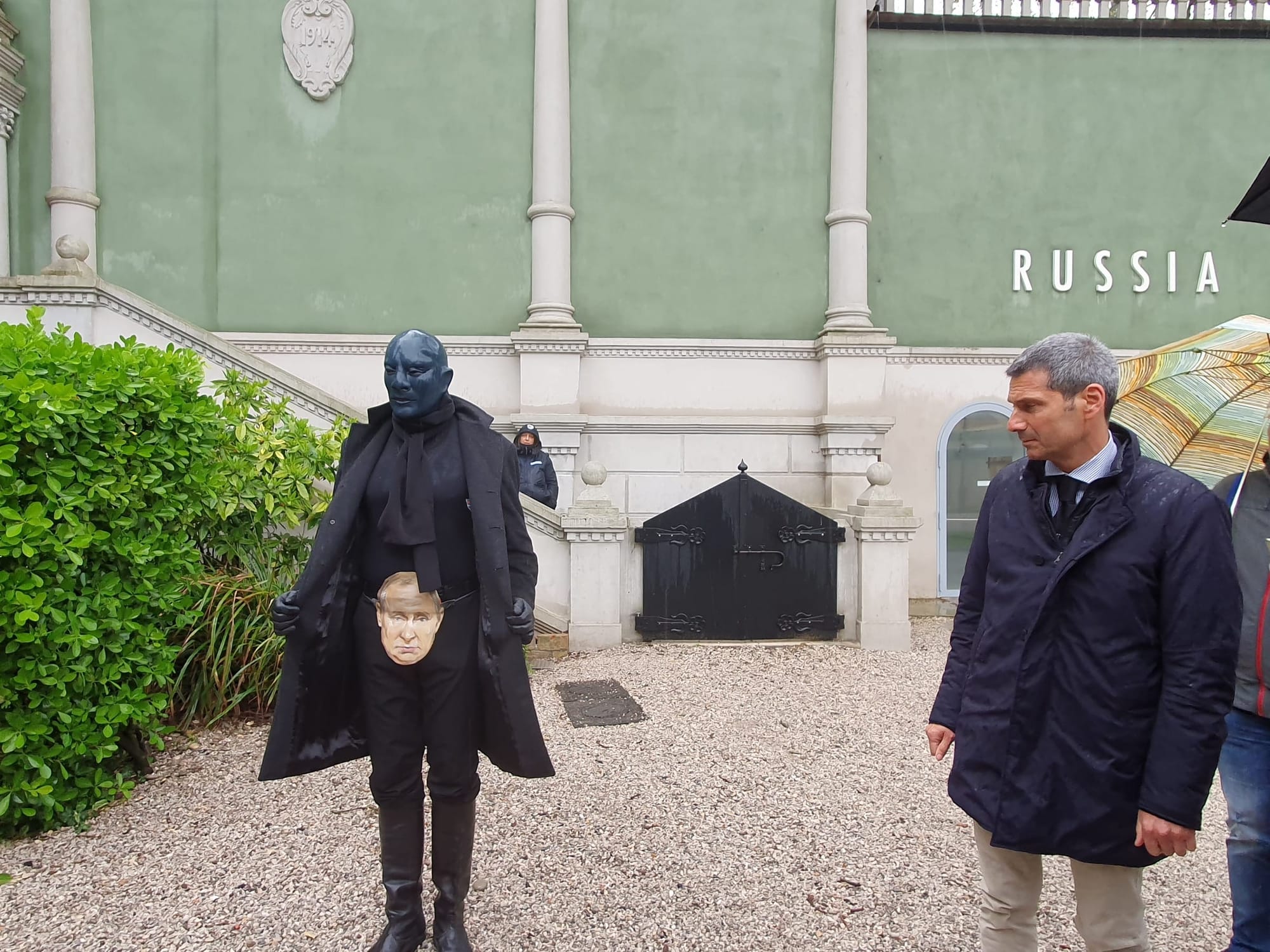
The Italian culture ministry released a statement last Thursday clarifying that Russia’s participation in the 61st International Art Exhibition “was decided entirely independently by the Biennale Foundation, despite the Italian government’s opposition.”
The statement also referenced Italy’s efforts to help reconstruct Ukrainian cultural buildings, affirming that it is paying “great attention” to safeguarding Ukraine’s artistic heritage, which has been “devastated by Russian bombing.”
The recent petition had 6,360 verified signatories on Change.org as of today, including Yulia Lytvynets, director of the National Art Museum of Ukraine in Kyiv; Olena Siyanko, executive director of the Ukrainian Museum in New York; and Italian member of the European Parliament Pina Picierno.
"The Biennale should remain a place where art does not conceal or concede to violence, but illuminates truth, memory, and responsibility — and resists any attempt to instrumentalize culture in the service of dictatorship, imperial domination, and oppression," the letter reads.