Philadelphia Sues Trump Administration Over Removal of Slavery Exhibits
The city is pursuing legal action after artwork and panels about the history of slavery were removed from a historic park.

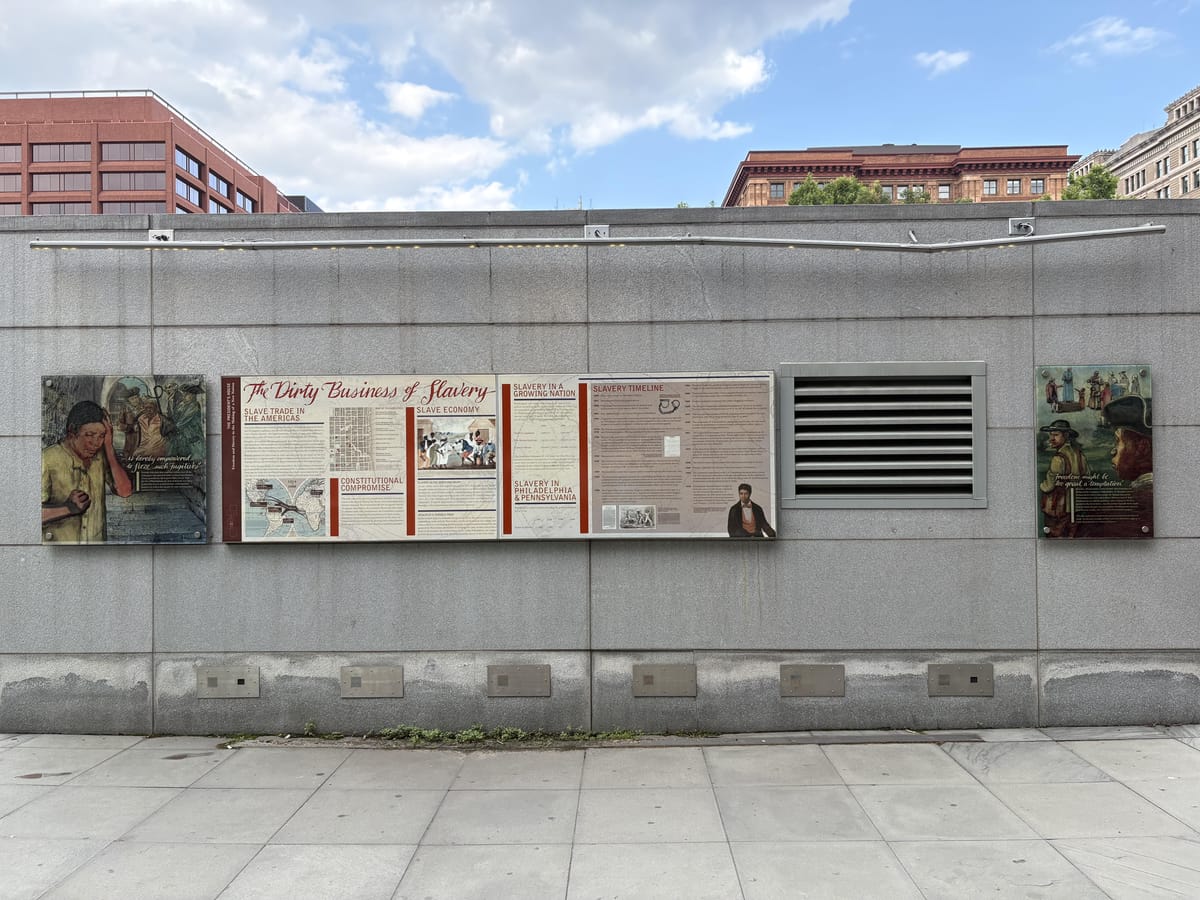
The city of Philadelphia is suing the Department of the Interior (DOI) and the National Park Service (NPS) after officials removed wall text and illustrations describing slavery from a historical park on Thursday, January 22.
The removal of exhibits about slavery from Independence National Historical Park comes months after Trump named the site in an executive order calling for reviews of exhibits at the Smithsonian and the National Parks system. Footage captured by the Philadelphia Inquirer shows staff dismantling labels from an exhibition about slavery within the park, which houses the Liberty Bell and the residence of the first United States presidents. The Constitution and Declaration of Independence were also signed on the site’s grounds.
In his March 2025 executive order, Trump ordered the DOI, which oversees the NPS, to “take action” to ensure displays at its sites do not “inappropriately disparage Americans past or living.”
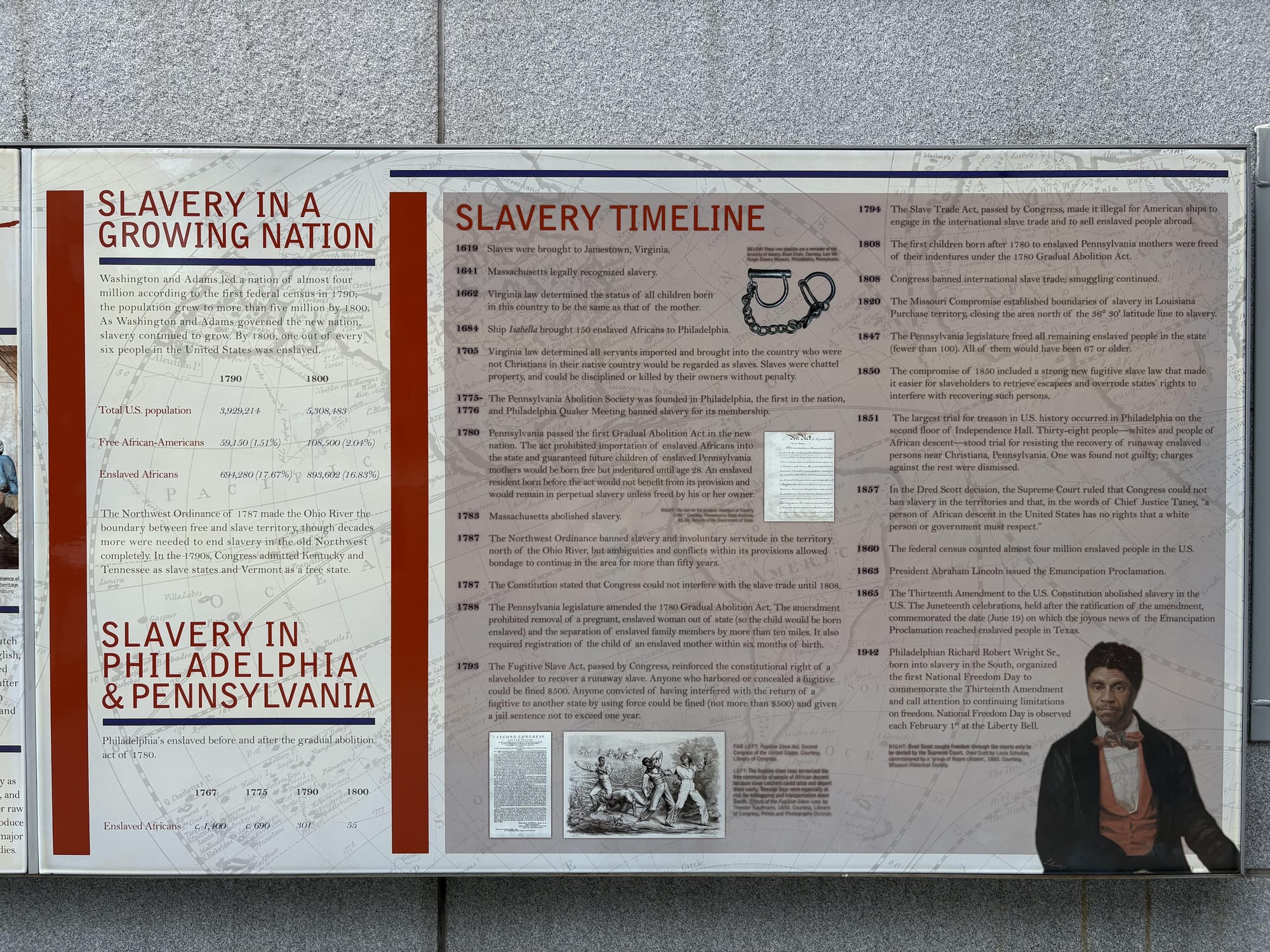
According to Philadelphia’s lawsuit, filed Thursday in federal court, the removed items were part of the $8.5 million outdoor exhibition Freedom and Slavery in Making a New Nation, created in 2009 on the park’s President's House. The exhibition commemorated the lives of nine enslaved individuals whom George Washington brought to his residence.
One panel, titled “The Dirty Business of Slavery,” described the Constitution’s failure to outlaw slavery, including its designation of enslaved individuals as three-fifths of a person. It also contained a graphic depicting the routes of the trans-Atlantic slave trade. The panel further stated that after the US outlawed the importation of enslaved people, the enslaved population still grew, in part due to forced breeding resulting from the rape of enslaved women by White men.
Documentary filmmaker Louis Massiah, who contributed to the exhibition, told Hyperallergic that the screens for the five video vignettes he produced were "dark” when he visited the site on Thursday.
"I went to the site last night, and it was like looking at a carcass," Massiah said.
The scripts for the films were written by activist Lorene Cary and featured actor portrayals of individuals enslaved by Washington, including Ona Judge Staines, Martha Washington's seamstress, who escaped in pursuit of liberty.
Massiah said he didn't know the whereabouts of the video files or the server.
In a statement to Hyperallergic, a DOI spokesperson said the removal was in accordance with Trump’s earlier executive order.
“Following completion of the required review, the National Park Service is now taking appropriate action in accordance with the Order,” the spokesperson said. The spokesperson condemned the City of Philadelphia for “filing frivolous lawsuits in the hopes of demeaning our brave Founding Fathers who set the brilliant road map for the greatest country in the world.”
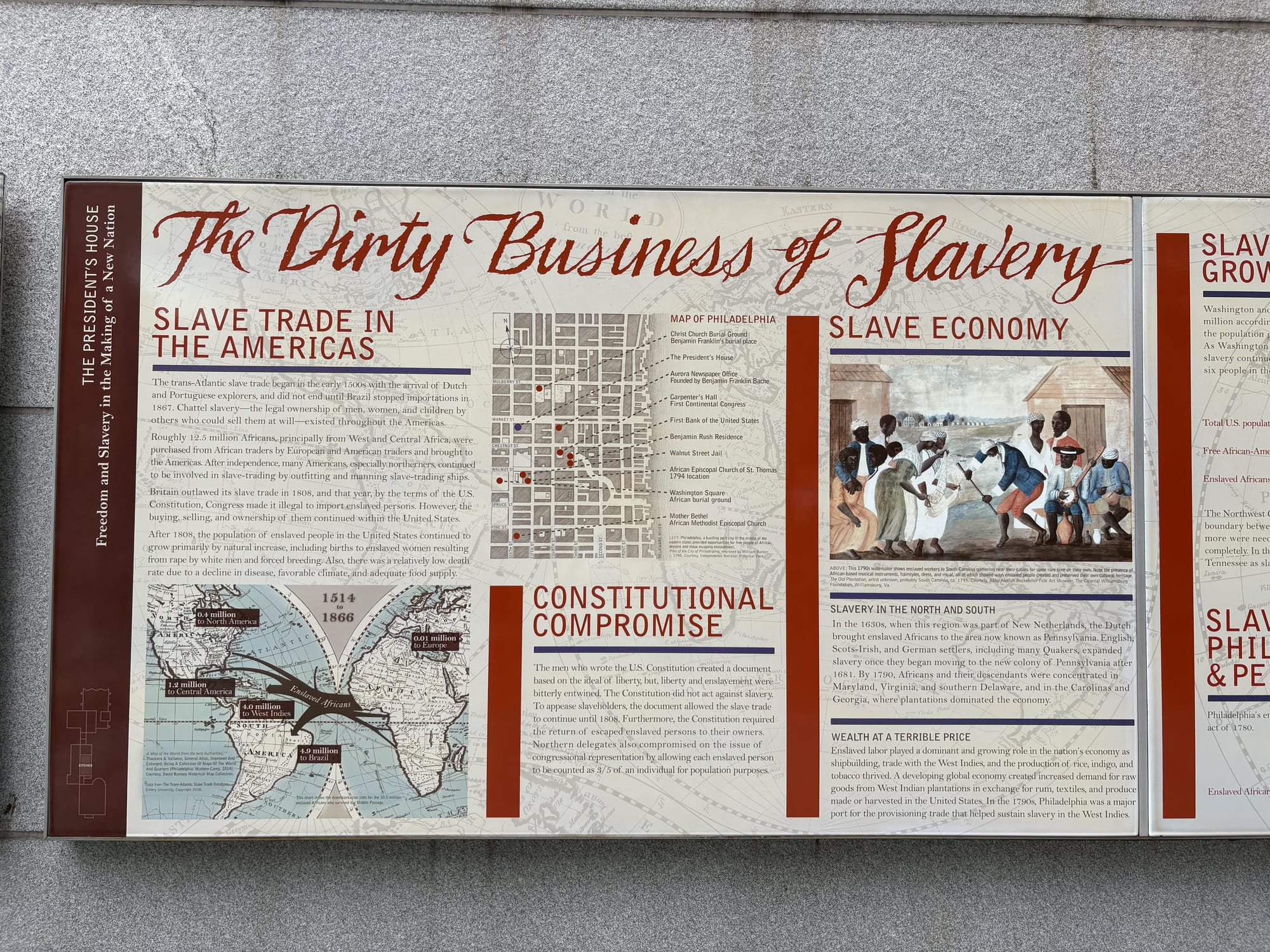
Expecting drastic modifications to the country’s National Park signage, the Minnesota-born project Save Our Signs has already documented the contents of Independence National Historical Park exhibit and others across the country in a public database containing thousands of images.
“We at Save Our Signs are angered and disappointed to learn about the removal of the President's House exhibit,” librarian Molly Blake, a founding member of Save Our Signs, told Hyperallergic. “[...] The administration's removal of this exhibit is an act of top-down censorship of history that makes those who agree with this administration's ideology uncomfortable.”
Photos from the exhibition collected by Save Our Signs, before its alteration, show detailed text of the removed signage, as well as other exhibits, including a video work accompanied by a text describing how George Washington kept a rotation of enslaved individuals in and out of the state so that they would not become free under Pennsylvania law.
In court, Philadelphia argued that the NPS did not have the authority to remove the exhibits, which the city had commissioned in partnership with the federal government.
"The whole site was the result of many years of community organizing and dialogue between local activists, historians, civic leaders, artists, political leaders, and government workers from the city, state, and federal government," Massiah told Hyperallergic.
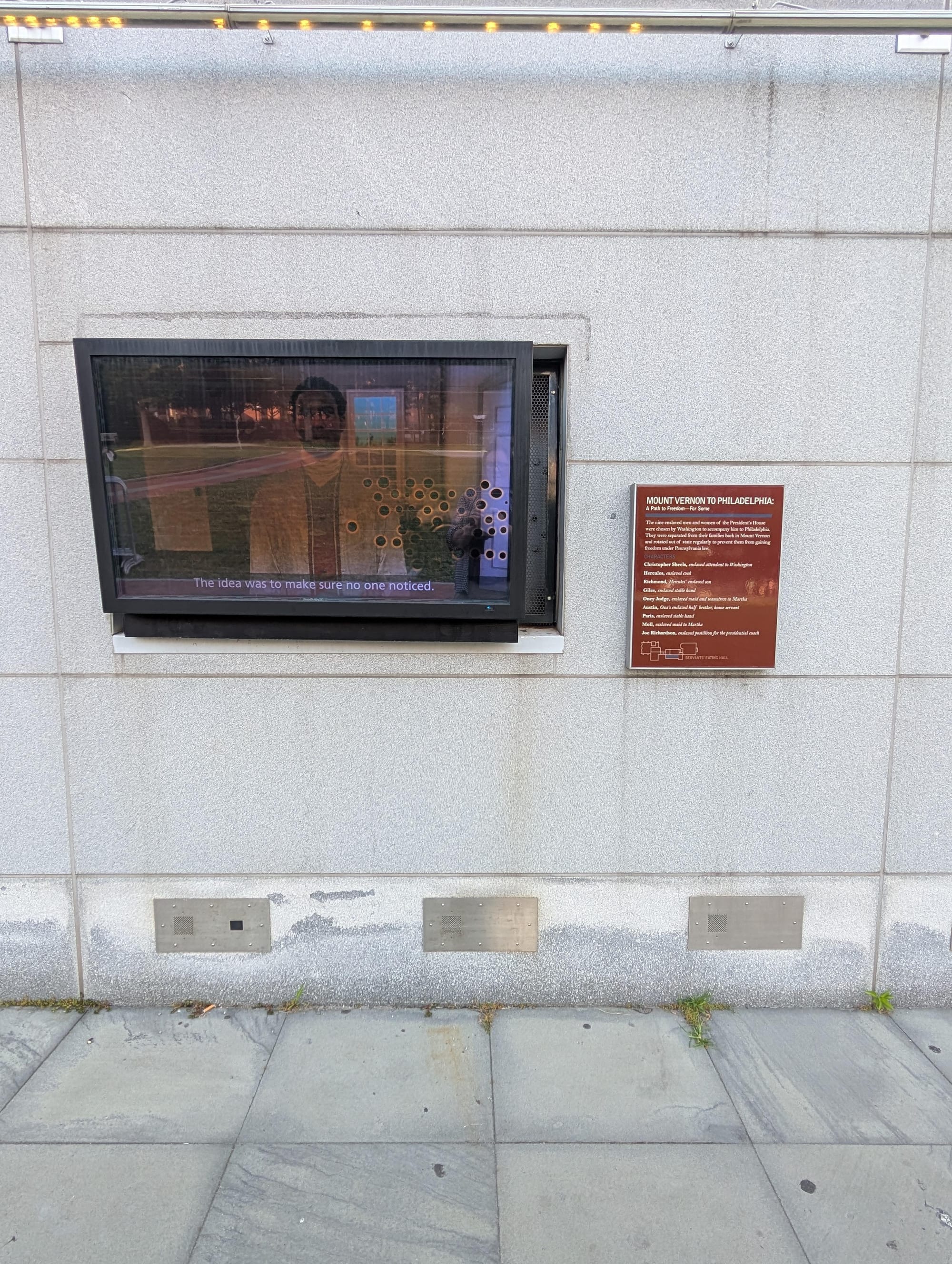
Blake noted that “while we have some photographs of this exhibit, these photographs can never replace the interpretive panels that have been removed.”
“The photos help us remember what has been lost, but they are not a replacement for the exhibit, which belongs at the President's House,” Blake said.
The extent to which the NPS dismantled the exhibition is unclear. The lawsuit requests the court to stop further removal of “any exhibits, panels, artwork, or other items from the President’s House Site” and asks the DOI “to ensure the safety, security, and preservation of any such items removed from the President’s House Site.”
"In remembering the nine enslaved Africans brought to that house from Virginia by the Washingtons, [the exhibition] allows all of us to understand the presence and crucial role played by Black Americans in the early years of this country," Massiah told Hyperallergic. “And also the decisions made about citizenship that have continued to be a major vector in shaping the American experiment.”