Protesters Decry Chinatown Museum’s Acceptance of “Jail Money” at Town Hall
Leaders of New York’s Museum of Chinese failed to persuade protesters that a $35 million grant from the city was not tied to the construction of a borough jail.


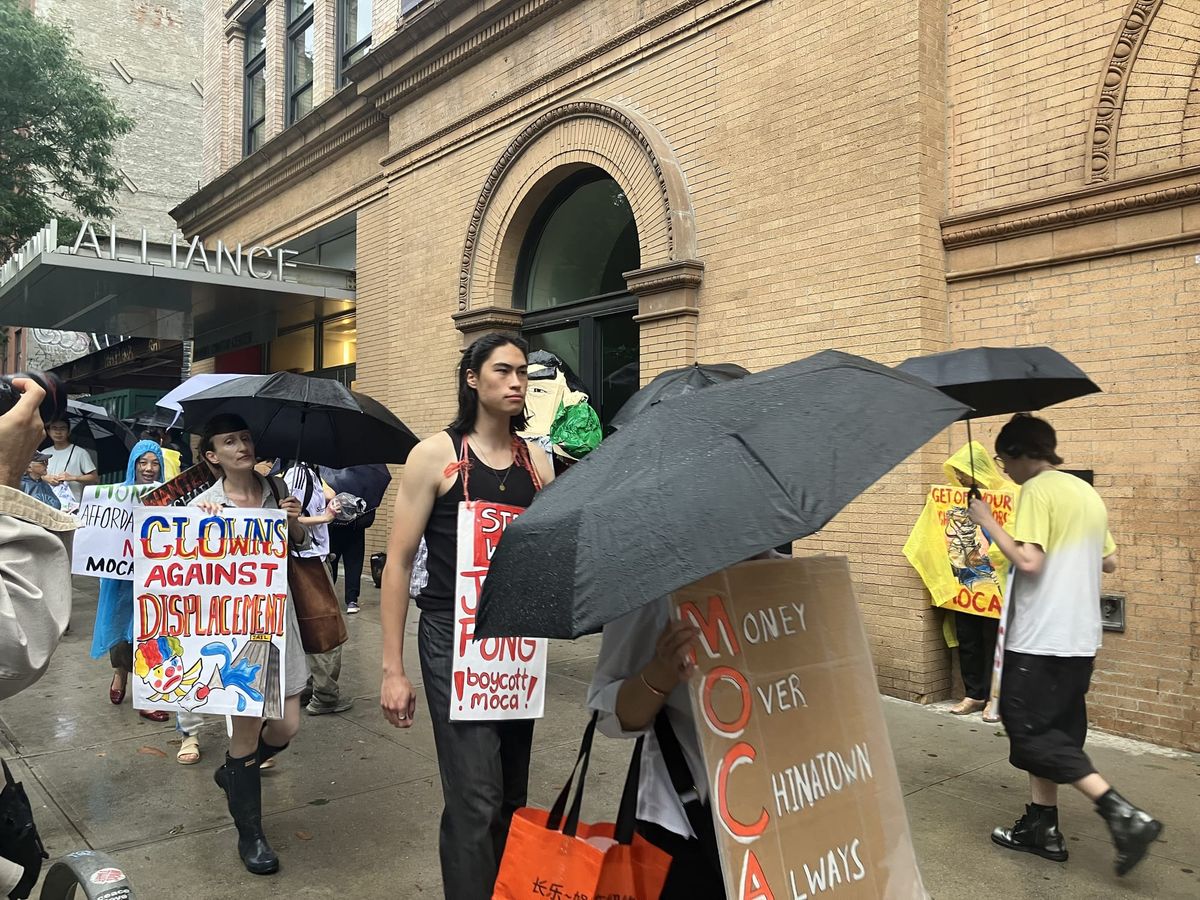
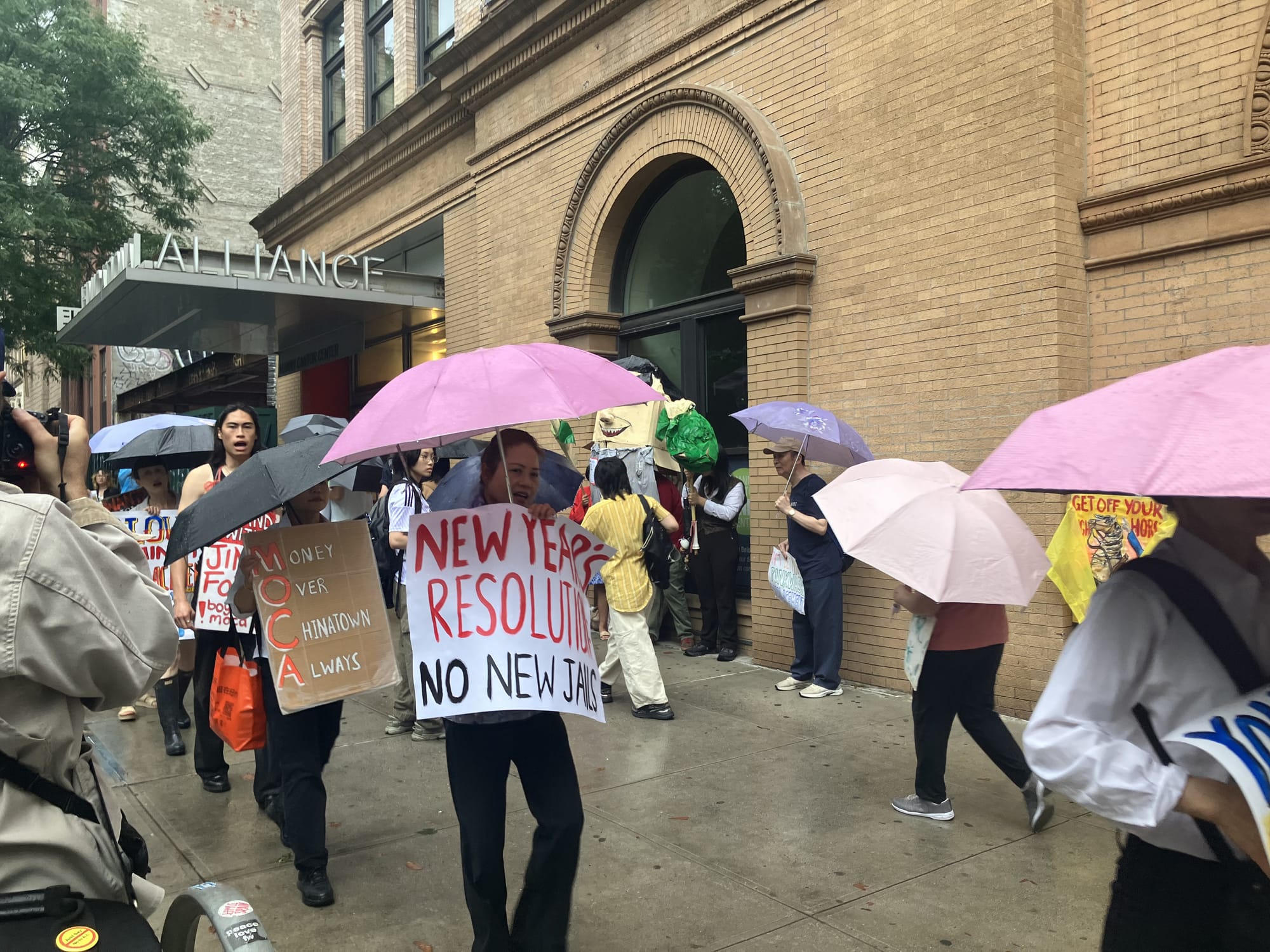
As New Yorkers braced for a torrential storm on Tuesday evening, July 21, dozens of protesters in rain gear marched in front of a Lower East Side community center carrying signs bearing the messages: “Community united against MOCA’s Racism,” “No Jail,” and “You’re Not Fooling Anyone.” Protesters also sheltered a suited effigy of Museum of Chinese in America (MOCA) President Michael Lee from the inclement weather.
Inside Manny Cantor Center, a panel of leaders from MOCA heard testimony from Chinatown community members. During a town hall event organized by the museum, Lee attempted to distance the institution from a $35 million capital grant — tied to the construction of a Chinatown jail — that it accepted from the city in 2019.
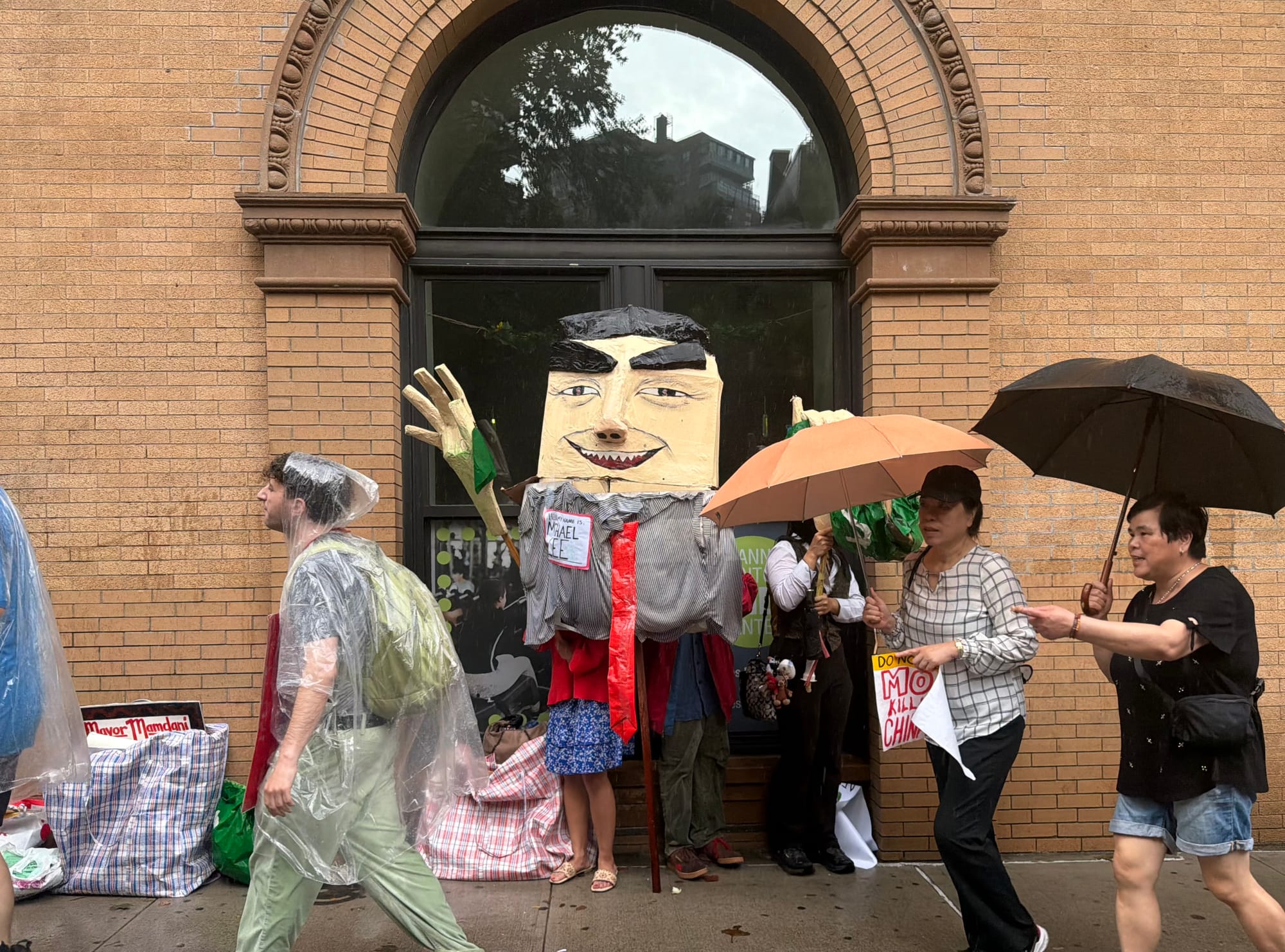
For the protesters outside, the capital grant, which the museum used to purchase the Centre Street space it had previously rented, symbolized the institution’s acceptance of “jail money” and perceived complicity in other issues endemic to a changing Chinatown, including gentrification and displacement.
Lee, who took charge in 2024, articulated that the museum emphatically opposes the construction of the jail, but took the city’s money because it risked closure and losing the space it had resided in since 2009.
The 46-year-old museum houses a collection of over 85,000 objects that document the Chinese-American diaspora. However, in the years since it accepted the grant, the museum has become a contentious institution in the neighborhood, prompting protests and exhibition withdrawals from artists alleging that the institution benefits from mass incarceration.
“MOCA is still supporting the new jail through their actions, despite what they say … they took the money,” Zi Shun Ning, an organizer for Youth Against Displacement (YAD), told Hyperallergic outside the event.
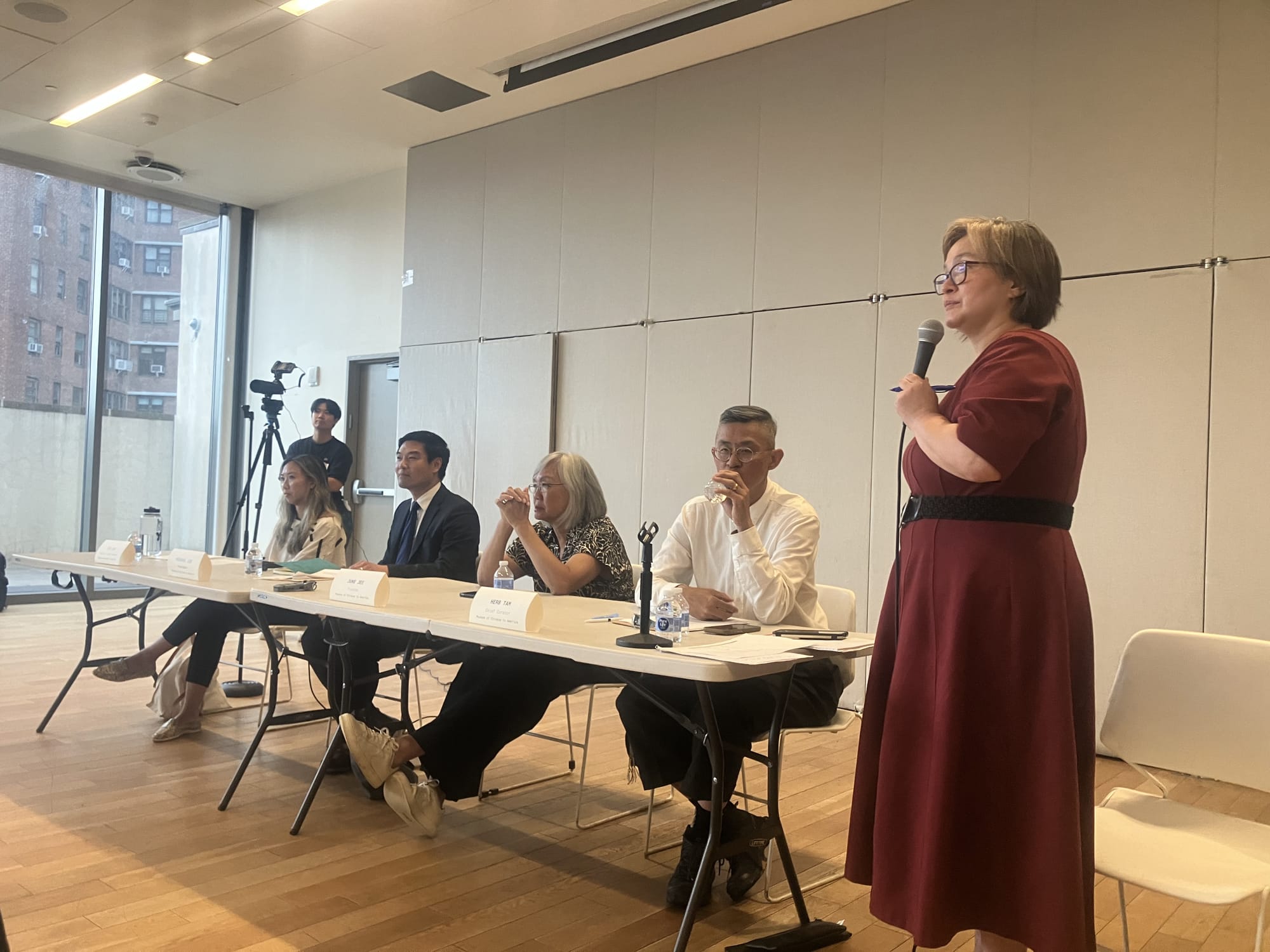
Organizers for advocacy groups including YAD, Planet Over Profit, and East Park River ACTION arrived early to the venue, handing out pamphlets to passersby that billed MOCA's town hall as a "clown hall."
While Lee and the museum leadership framed the funding as necessary for the institution’s survival, community members expressed concern that MOCA's funding was inextricably connected to the city’s plan to build the Manhattan Borough-Based Jail. The facility, which would become the world’s tallest jail, is expected — with the construction of three other borough-based jails — to replace Rikers Island prison following a legal order to close the notorious facility over human rights abuses.
Other speakers during the town hall called for the protesters to give up their cause, defending the museum as a “vital, necessary home for our history and culture.”
During the town hall, Hyperallergic asked Lee if he empathized with and planned to address the grievances of the protesters outside.
“ We respect everybody's right to protest,” Lee replied. ”They have every right to fight against the jail and to see MOCA as a symbol of the jail; if they feel that's where they should direct their energy towards, then we completely respect that.”
He encouraged the protesters to redirect their advocacy toward moving the jail elsewhere.
"We chose this venue so that those who felt uncomfortable entering MOCA itself could attend,” Lee added. “I personally invited the Chinese Staff and Workers Association, as well as Youth Against Displacement to participate in today's discussion.”
Protester Aaron Yin rejected the museum’s framing of the $35 million grant at the town hall: “Will MOCA ever admit that the $35 million dollars is jail money?”
Lee resisted the term “jail money,” reiterating that the museum applied for the grant “solely to purchase the building and make sure it stays here in Chinatown.” The longtime executive lamented that the investment coincided with the city’s announcement of the new jail system.
Yin passed out a 2021 printout of a New York Magazine report that contained an admission from the Department of Cultural Affairs (DCLA) stating that the grant was directly tied to the “city’s broader effort to close Rikers Island.”
Civil rights attorney Rocky Chin expressed support of MOCA, stating, “ We need an anchor that preserves our family archives and addresses the urgent issues of our time, from the rise of anti-Asian violence to threats against birthright citizenship.”
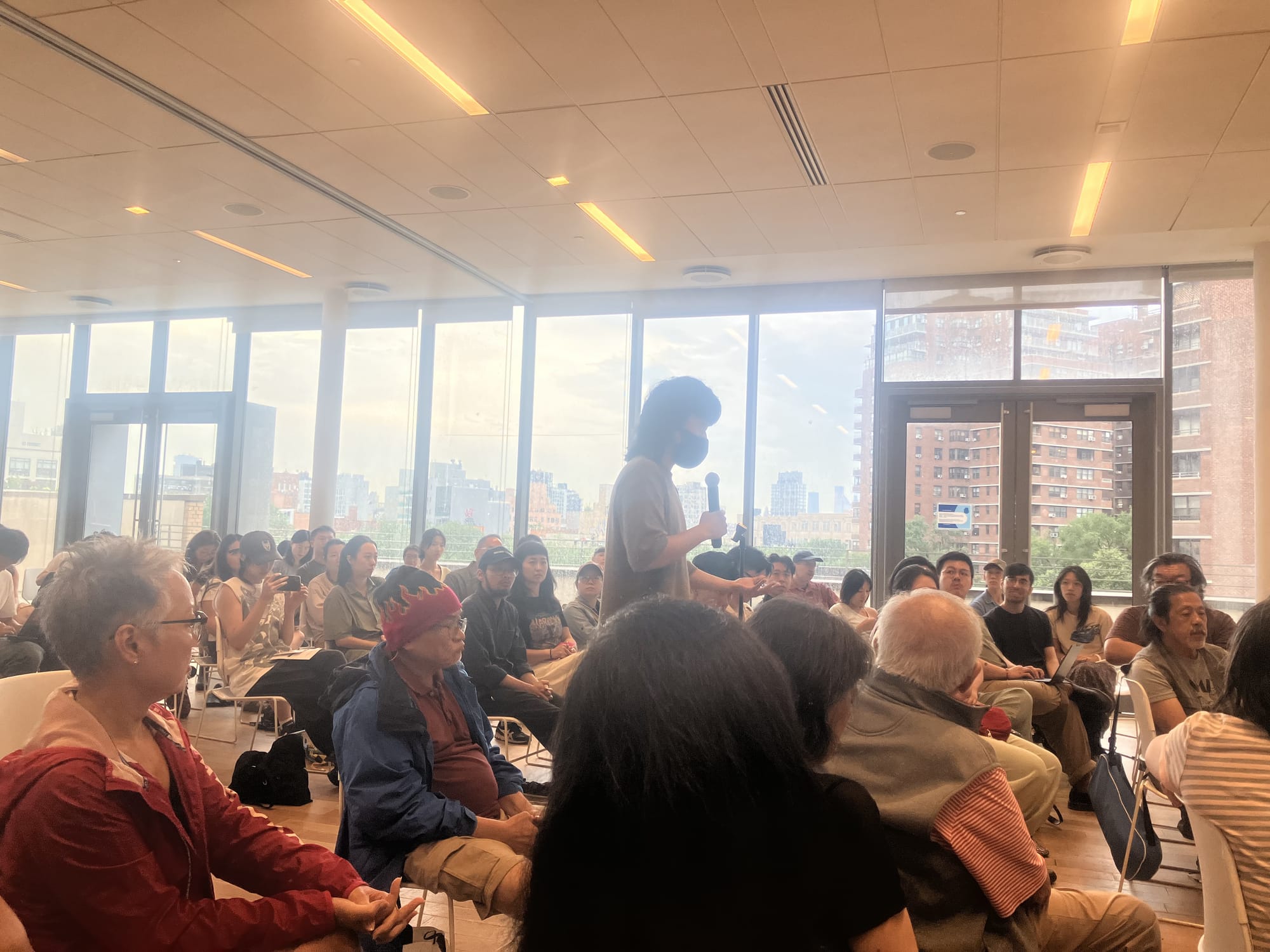
Another commenter, Melinda Chiu, who traces her lineage back generations in Manhattan’s Chinatown, called for the museum and its protesters to resolve their disputes, but reproached the museum for its perceived lack of response for the last five years.
“Obviously the jail is terrible for Chinatown,” Chiu said, adding, “I feel that instead of fighting each other, we could also work together because Chinatown is going down because of gentrification.”
Outside the event, demonstrators called attention to Lee’s concurrent status as a volunteer board member of the Chinese-American Planning Council (CPC), the nonprofit home care organization which they called the “worst sweatshop in New York City.” The CPC was named in a lawsuit the Legal Aid Society filed in 2023 against the state for “systemic wage theft” of home care workers assigned to 24-hour shifts. During the town hall, Lee referred the audience to the CPC's official statements on the case.
Protesters also chided former MOCA board member Jonathan Chu, a real estate magnate who owned the Elizabeth Street building where the beloved Chinatown restaurant Jing Fong shuttered during the pandemic.
One protester, Liang Chen, a longtime Lower East Side resident, told Hyperallergic he was concerned that a jail in Chinatown would only worsen the neighborhood’s issues.
“Chinatown’s economy has gone down, and it’s getting worse,” Chen said. “Fewer people are coming to Chinatown to spend their money.”
Pat Arnow, who is affiliated with the East River Park ACTION and part of the Coalition to Protect Chinatown, told Hyperallergic during Tuesday’s demonstration that the protestors would love "a good faith gesture to show they really mean it."
“If they came out against the jail in a forceful way, that might make a difference," she said. "Because they’re the powers that be, and we are not.”