Required Reading
This week, Žižek weighs in a global protest, Walker Evans at MoMA, political cartoons, Smithsonian's space problem, Faulkner sues Woody Allen, and more.

This week, Žižek weighs in a global protest, Walker Evans at MoMA, political cartoons, Smithsonian’s space problem, Faulkner sues Woody Allen, and more.
Slavoj Žižek on the global protest:
The most remarkable thing about the eruptions is that they are taking place not only, or even primarily, at the weak points in the system, but in places which were until now perceived as success stories. We know why people are protesting in Greece or Spain; but why is there trouble in such prosperous or fast-developing countries as Turkey, Sweden or Brazil? With hindsight, we might see the Khomeini revolution of 1979 as the original ‘trouble in paradise’, given that it happened in a country that was on the fast-track of pro-Western modernisation, and the West’s staunchest ally in the region. Maybe there’s something wrong with our notion of paradise.
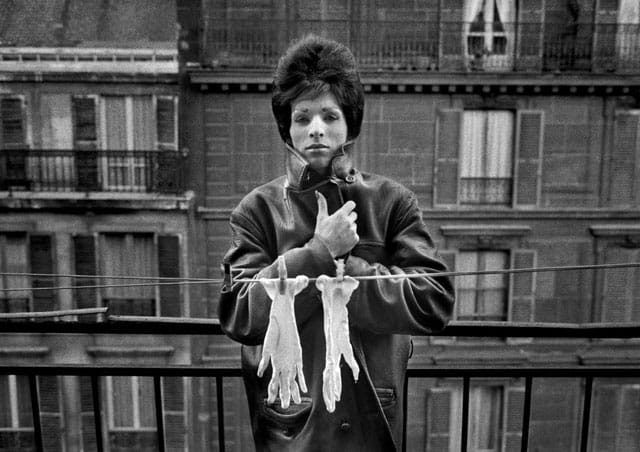
Ken Johnson reviews Walker Evans at MoMA:
He didn’t make a fetish of the fine-art print. His aim was to get out of the way of his subjects, to let them speak for themselves. The things in his pictures seem to have inner lives, like people. As they do in many of Edward Hopper’s paintings, old buildings in Evans’s pictures have an uncanny interiority, as if they were conscious beings.
What is the power of the political cartoon? A review of a new book on the topic has some interesting thoughts, including this controversial quote from artist and illustrator Al Hirschfeld:
A cartoon doesn’t depend on the quality of the drawing so much as the idea. If it’s a good idea anyone can do it. But a caricature has another quality. The word “abstract,” I suppose, is the only one I can use. Are Picasso, Lautrec and Hokusai caricaturists, graphic artists or painters? They were all caricaturist in my view.
UNESCO has added 19 new World Heritage Sites to its list, including China’s Honghe Hani Rice Terraces, Mount Fuji in Japan, Iran’s Golestan Palace of the Qajar era, the Hill Forts of Rajasthan, and the wooden churches, tserkvas, of the Carpathian Region in Poland and Ukraine.
The Smithsonian is running out of space for its 130 million objects, and during a recent audit the National Museum of American History was unable to locate 10% of the pieces in its collection. The institution is currently trying to digitize its collection, which they believe will take roughly half a century to put online.
Two new art shows in London focus on the work of young Palestinian artists, and in one of them an eight-foot tall replica of the West Bank wall is recreated in the gallery.
In a case of overzealous (possibly even insane) artist estates, the William Faulkner estate was suing Woody Allen’s Midnight in Paris (2011) movie over the inclusion of a nine-word line from Faulkner’s “Requiem for a Nun,” which wasn’t even quoted correctly:
Faulkner’s estate tried to argue the line “describes the essence of Requiem,” and therefore qualified for qualitative importance. [Judge] Mills didn’t see it that way, and his response is kind of hilarious. “Qualitative importance to society of a nine-word quote is not the same as qualitative importance to the originating work as a whole,” he wrote. “Moreover, it should go without saying that the quote at issue is of miniscule quantitative importance to the work as a whole. Thus, the court considers both the qualitative and quantitative analyses to tip in favor of fair use.” The judge also implied the Faulkner estate probably profited from being mentioned in the movie.
Required Reading is published every Sunday morning EST, and it is comprised of a short list of art-related links to long-form articles, videos, blog posts or photo essays worth a second look.