Required Reading
This week, a Rothko sells for ~$150 million, NASA's moon photos, identity of Jack the Ripper uncovered, violence of architecture, art institutions and imperialism, screenshots as POV, and more.

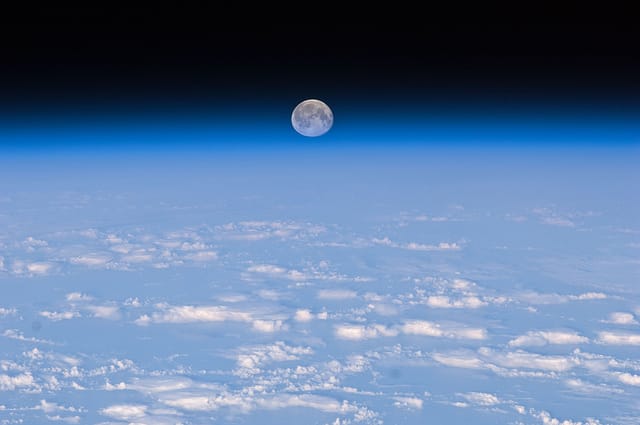
This week, a Rothko sells for ~$150 million, NASA’s moon photos, identity of Jack the Ripper uncovered, violence of architecture, art institutions and imperialism, screenshots as POV, and more.

Why were these important paintings by Mark Rothko sold privately and not at auction? Katya Kazakina, writing for Bloomberg, has a fascinating story (with a lot of unanswered phone calls), and she reports:
Three paintings — two by Mark Rothko valued at as much as $250 million and one by Richard Diebenkorn — will be absent from upcoming auctions in New York because they were sold privately earlier this year, according to a person familiar with the matter who asked not to be named because the information is private.
… One of the Rothkos was valued by auction experts for as much as $150 million and the Diebenkorn for as much as $20 million, the person said. Rothko’s $86.9 million auction record was set when his 1961 “Orange, Red, Yellow” sold at Christie’s in 2012. The auction house the same year sold a Diebenkorn painting from his “Ocean Park” series for an artist record of $13.5 million.
… “Unquestionably, it is the jewel in the crown,” said David Anfam, author of “Mark Rothko: The Works on Canvas,” the first volume of the artist’s catalogue raisonne, an illustrated book that lists the details of 834 paintings by Rothko. “Unlike its companion at the Guggenheim in Bilbao, it’s not labored. In terms of its size there is nothing to compare it with since this is the only ‘classic’ Rothko, as opposed to the Seagram and Harvard murals, of such epic dimensions.”
An auction item appears to have solved the mystery of Jack the Ripper. DNA evidence on a shawl from the scene of one of his crimes points to Polish-born hairdresser Aaron Kosminski. The Daily Mail has the full (hard-to-believe) story:
A shawl found by the body of Catherine Eddowes, one of the Ripper’s victims, has been analysed and found to contain DNA from her blood as well as DNA from the killer.
The landmark discovery was made after businessman Russell Edwards, 48, bought the shawl at auction and enlisted the help of Dr Jari Louhelainen, a world-renowned expert in analysing genetic evidence from historical crime scenes.
Using cutting-edge techniques, Dr Louhelainen was able to extract 126-year-old DNA from the material and compare it to DNA from descendants of Eddowes and the suspect, with both proving a perfect match.
In Israel, the West Bank, and Gaza, architecture and design play a pivotal role in the occupation. Eyal Weizman’s work in the field has been very important:
Local Israelis and Palestinians explain how it feels to live in a landscape where everything, from walls and roads, terraces and sewage, to settlements and surveillance are designed to ensure the separation of the two peoples, while simultaneously maintaining control.
… I realised that there was a completely different way of using architecture and of being an architect. Weizman’s work lies at the intersection of architecture with politics, violence, conflict and human rights. As an Israeli architect opposed to the occupation of the West Bank and Gaza Strip, he fell foul of the Israeli architectural establishment early in his career, and was forced to explore alternatives to “building buildings”. Our film looks at how architecture can be used to interpret, protest and resist, in Weizman’s case, the Israeli occupation of the West Bank and Gaza.
Asim Rafiqui has some interesting things to say about art institutions and their collusion with the politics of imperialism:
We do not need museums to display imagined histories of “past” civility, but podiums to express our radical political voices and fulfill our participation and our rights as citizens of our societies.
There is a flaw in his argument, though, which is not to say that both cannot happen simultaneously. There is no one view of a culture, and we have to encourage a multifacted view rather than shoehorning it into a fixed or strictly contemporary narrative.
Joanne McNeil explores the screenshot as POV. She writes:
Screenshots are a sister to the POV footage that is taking over YouTube and Vimeo. Generally filmed with GoPro or Google Glass, the point of view of the image-maker is much more pronounced than with still photographs — you can tell how tall someone is, or if they tripped while walking. There’s a reason why that demo footage always features action-intensive activities like extreme sports and roller coaster rides. But most of us aren’t on hot air balloons or skydiving at this very moment. If you want to see what I see right now, let me take a screenshot.
… a screenshot is meant to show you the context, like the juxtaposition of tweets in your stream (another window into your world, as the people you follow make a Twitter stream uniquely yours)
Kevin Smith’s latest horror film, Tusk, is trying something new, namely marketing two strains of marijuana to be sold with the movie’s name. The New York Times reports, “The medical marijuana will be available at the Buds & Roses dispensary in the Studio City district of Los Angeles from Monday to Sept. 26 under the brand names Mr. Tusk and White Walrus.”
Some thoughtful insights into issues of privacy today by Roxane Gay at the Guardian:
Privacy is a privilege. It is rarely enjoyed by women or transgender men and women, queer people or people of color. When you are an Other, you are always in danger of having your body or some other intimate part of yourself exposed in one way or another. A stranger reaches out and touches a pregnant woman’s belly. A man walking down the street offers an opinion on a woman’s appearance or implores her to smile. A group of teenagers driving by as a person of color walks on a sidewalk shout racial slurs, interrupting their quiet.
For most people, privacy is little more than an illusion, one we create so we can feel less vulnerable as we move through the world, so we can believe some parts of ourselves are sacred and free from uninvited scrutiny. The further away you are from living as a white, heterosexual, middle-class man, the less privacy you enjoy – the more likely your illusions of privacy will be shattered when you least expect it.
The Islamic State (aka ISIS) has been using social media as a very aggressive weapon, and the world is trying to figure out what this means for the future of the internet and war. Here are some useful pieces:
- “The ISIS Social Media Attack” on WBUR
- “ISIS Displaying a Deft Command of Varied Media” at the New York Times
- “ISIS Social Media Mastermind Revealed as ‘Distinguished’ Boston US College Graduate” at the International Business Times
A new map reveals how our galaxy fits into the universe. The images are beautiful:

Brooklyn is such clickbait. Right, Brooklyn?
Required Reading is published every Sunday morning EST, and is comprised of a short list of art-related links to long-form articles, videos, blog posts, or photo essays worth a second look.