Required Reading
This week, Ferguson, David Hockney and the avant-garde, Francis Bacon's "missing" exhibition, art in a mall, Persian calligraphy, naked in a Yves Klein sculpture, the infamous 19th-century "Ape Woman," and more.
This week, Ferguson, David Hockney and the avant-garde, Francis Bacon’s “missing” exhibition, art in a mall, Persian calligraphy, naked in a Yves Klein sculpture, the infamous 19th-century “Ape Woman,” and more.
Ferguson is on everyone’s mind, and here are some important links:

– “Ferguson’s Grand Jury Problem,” by Noah Feldman (Bloomberg View, November 25, 2014)
– “The Assault on Young Black Life Extends Beyond Ferguson,” by Dani McClain (The Nation, November 25, 2014)
– “Why Ferguson Burns,” The Editors of The Nation (The Nation, November 25, 2014)
– “WATCH: Ferguson Protester Smashes Fox News Camera On Live TV,” by Catherine Thompson (Talking Points Memo, November 25, 2014)
– From Twitter: “Boycott @ABC and @GStephanopoulos for compensating Darren Wilson 4 an interview ’til they do the same 4 families of the slain. #Ferguson” —@snelsonus
– “VIDEO: Shocking mistake in Darren Wilson grand jury,” by Lawrence O’Donnell (MSNBC, November 26, 2014)
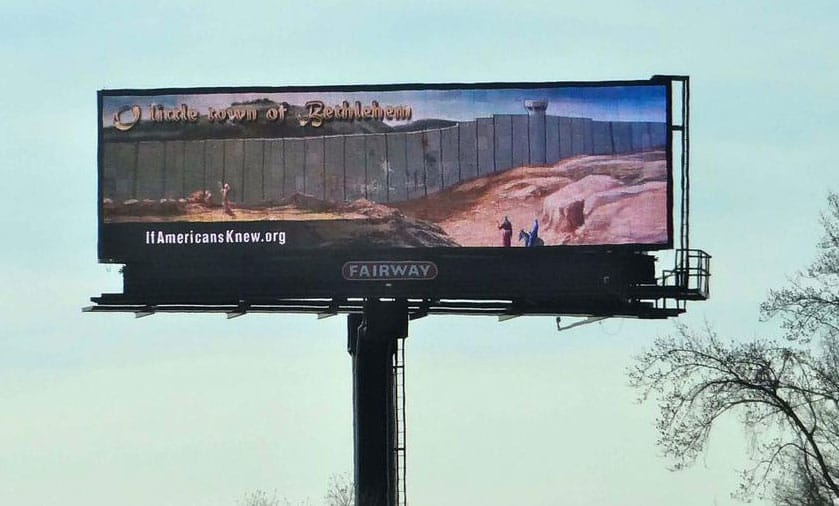
– “Seeing East Jerusalem in East St. Louis,” by Elliot Ratzman (GOOD magazine, November 26, 2014)
– and this tweet from @raylong gives you something to think about.
Writing in Vanity Fair, W. Kamau Bell talks about “On Being a Black Male, Six Feet Four Inches Tall, in America in 2014.” He explains:
Simply put, I am afraid of the cops because I am black. To raise the stakes even further, I am male. And to go all in on this pot of fear, I am six foot four, and weigh 250 pounds. Michael Brown, the unarmed Missouri 18-year-old shot dead by police this summer, was also six foot four. Depending on your perspective, I could be described as a “gentle giant,” the way that teachers described Brown. Or I could be described as a “demon,” the way that Officer Darren Wilson described Michael Brown in his grand-jury testimony.
I don’t engage in any type of behavior that should place me in a cop’s crosshairs. I don’t live in “one of those neighborhoods,” or hang out with a “bad crowd,” (unless you count comedians). I am not involved in felonious activity. I’m not bragging. I’m just boring. But the fact that I’m not involved in any of that stuff doesn’t leave me any more confident I won’t be killed. That’s because I’ve been endowed with the triple crown of being killed for no good reason: big, black, and male.
David Hockney likes to be controversial sometimes, but these statement are pretty factual and shouldn’t surprise anyone:
‘Nobody’s taking any notice of the avant-garde any more,’ Hockney notes. ‘They’re finding they’ve lost their authority.’
He’s probably correct about that. For the past decade or two, it has been hard to say what the cutting edge might be. In a world without rules it is impossible for anyone to break any. ‘They thought they would get authority by damaging the other, earlier establishment,’ Hockney suggests. ‘But by doing that you damage all authority.’
Hockney himself has never been a member of the avant-garde, or any other team; more an expeditionary force of one, determinedly pursuing his own explorations. The centre of his interest has always been what he calls ‘the depiction of the visible world’. And his crucial skill has been drawing, which he was thoroughly taught at Bradford and practised late into every evening, thus developing an extraordinary virtuosity.
He laments the neglect of drawing in recent art education. ‘People had been drawing for 40,000 years, and they gave it up in 1975. It’s almost funny. But they couldn’t give it up really. You can’t: it’s always back to the drawing board!’ By that, he means that any new way of seeing the world will have to be produced by the human eye, heart and hand, working together. And this applies as much to new types of photographic imagery as it does to paintings.
The Shanghai Biennial appears to be turning away from the overheated Chinese art market to explore a new type of work:
For “Social Factory”, the tenth Shanghai Biennale, which opened this past Saturday at the Power Station of Art (until 31 March 2015), the Berlin-based Anselm Franke, the Biennale’s first chief curator to come from outside China, uses Shanghai’s industrial heritage as a way to reflect on the shifting social sands of a rapidly modernising China. “A factory is planned and is about the standardisation of production. The fabrication of social structures doesn’t work the same, they are formed underground, by connections,” Franke said at the opening.
The fascinating mystery of the Francis Bacon art exhibition that no one tends to remember:
“This really is the show that time forgot,” said Gregor Muir, director of the Institute of Contemporary Art, the venue for the first Bacon retrospective, staged 60 years ago in January. “It was clearly an important moment for art in London and Bacon was already recognised as a contemporary talent, he had shown with Lucian Freud and Ben Nicholson at the Venice Biennale, but when we wanted to find out more we hit a brick wall. There was just nothing there.”
… “The holy grail that we are looking for is a photograph of the way the gallery looked,” said Muir, who is planning a small display about the “lost” show for early next year, “but we would also like to hear from anyone who may have seen it. They would be quite old by now, of course. The gallery at Dover Street had a glass side and we believe the Pope paintings were hung opposite the paintings of the businessmen. They have exactly the same poses as the popes. The composition is indistinguishable.”
Critic Brian Boucher ended up naked in a Yves Klein box as people unknowingly groped him:
I didn’t have to wait long for my first customers. An elderly couple, with shaky voices but speaking loudly so they could hear each other, approached moments after the attendant closed the door behind me. She reached in from the left, he from my right. They touched my arms and hands. “Dorothy, can you feel me? I’m pinching you!” he said. They managed to find each other’s hands, but were also touching me without realizing it was a ménage-a-trois. It was hard to keep from laughing.
Seattle-based critic Jen Graves goes to a local mall and looks for the art. This is what she finds in the 1.2-million-square-foot space:
This is all fine with me. A mall is not made for art. Alderwood Mall does not have galleries. The days of Thomas Kinkade are over, and not even a high-priced photographer of whales or wolves is here. In a scan of the names of the nearly 200 stores and restaurants, only the Picture People and Love Culture sound tangentially art-related, and the fact that they aren’t is not disappointing. The art value of a mall is the mall itself, as an overall installation. Every mall, Alderwood included, has a potent governing aesthetic: the aesthetic of nearly infinite variation on the same thing, over and over. Synonymity.
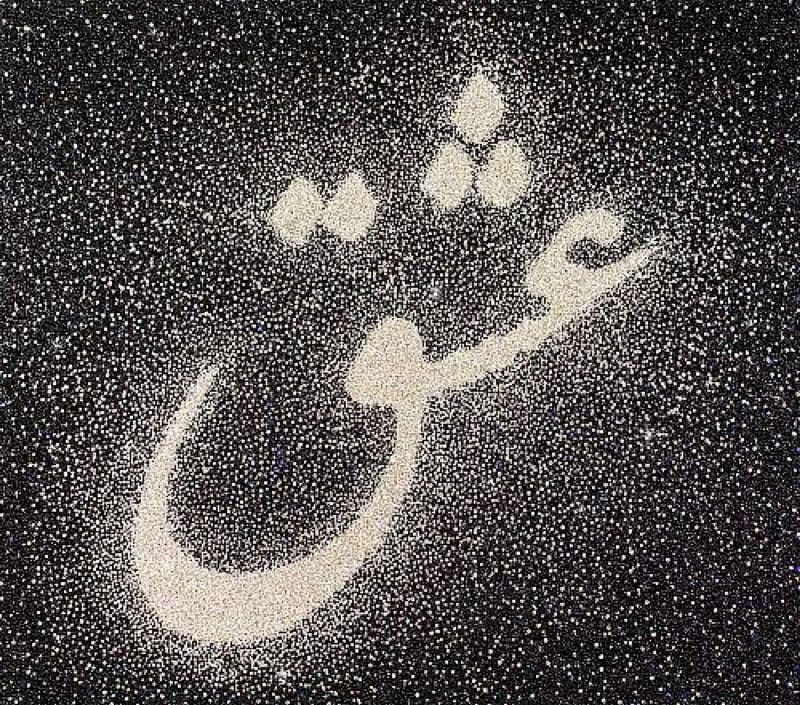
If you like Persian calligraphy, then:
The Genius of Persian Calligraphy charts the emergence and proliferation of nasta’liq through the exploration of four of the style’s most preeminent exponents: the presumptive inventor, Mir Ali Tabrizi (active between 1370 and 1410); the exemplar of the classical style, Sultan Ali Mashhadi (d. 1520); the large-format specialist, Mir Ali Haravi (d. 1550), and the aforementioned Mir Emad al-Hasani (d. 1615). Each of these calligraphers’ artistic output mirrors an important phase in the development of nasta’liq … Beginning with the mastery of Mir Ali Tabrizi, whose talents and instruction led to the consecration of a number of selselehs (lineages) in eastern Iran and beyond, and continuing onwards to the peerless works of Mir Emad at the court of Shah Abbas the Great, the exhibition considers how the calligraphers honed their skills through long hours in their ateliers and raised nasta’liq to the highest reaches of aesthetic delight for patrons, kings, and connoisseurs throughout the Persianate world, from Anatolia to South Asia.
A great takedown of the typical BS that passes as foreign reporting on a complex country like Lebanon:
Perhaps no story represents Lebanon’s warped identity quite as well as the tale of Lebanese hipsters mistaken for jihadists on account of their well-groomed beards – a phenomenon covered by both NPR and New York Magazine. In yet another paradox typical of Lebanon, the same week that the Foreign Affairs’ commentary piece was published, Beirut ranked as the world’s 10th most inspiring city, and Lebanon ranked 14th on the Global Terrorism Index.
Thanksgiving dinners googled in all 50 US states tells us the following dishes are surprisingly popular:
- stuffed artichokes (New York and New Jersey)
- persimmon bread (California)
- hawaiian salad (Illinois)
- pumpkin crunch (Hawaii)
- pumpkin whoopie pie (New Hampshire and Maine)
- frog eye salad (Colorado, Idaho, Nevada, and Wyoming)
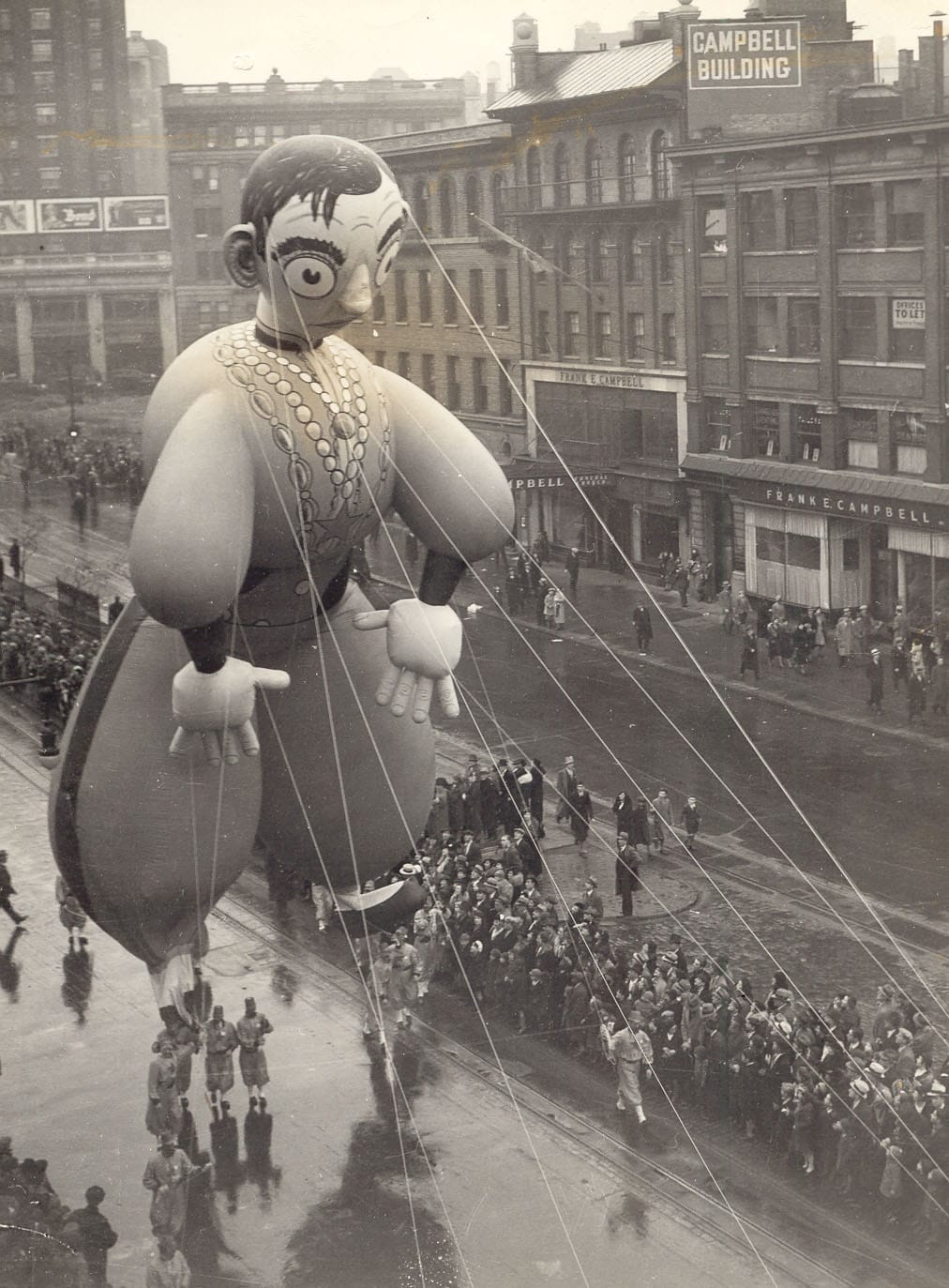
Nine decades of the Macy’s Thanksgiving Day parade in photos (via Curbed), including this balloon of Edie Cantor, the parade’s first balloon based on a real person (1934):
Speaking of Thanksgiving, this is a great piece of satire that asks “how would US media report on Thanksgiving if it was taking place in another country?” It’s pretty spot on.
First-class air travel is on the rise for the elite (aka 1%), and the Financial Times has the story, including this example of neo-opulence (emphasis mine):
Even before the financial crisis, observers were predicting the death of first class. When recession took hold, it seemed a done deal. In fact, however, the opposite now seems to be true. An analysis carried out for the FT by the aviation data company OAG shows a significant rise in the number of first-class seats in the air. At the same time, airlines are launching new and ever more lavish first-class cabins – most noticeably, Etihad’s Residence, a three-bedroom private apartment which enters service next month.
Julia Pastrana was born in the mountains of Western Mexico in 1834, and she went on to become one of the most famous human curiosities of the 19th century, variously known as “the Ape Woman,” “the Bear Woman,” or “the Baboon Lady.” Her story says a lot about the culture she was born into:
In England, where Julia ventured with a new impresario after successful tours of the eastern US and Canada, this otherness continued to be a useful promotional strategy. A poster advertising Julia’s show at London’s Regent Gallery, where she appeared three times a day in 1857, portrayed her with exaggerated, reddened lips and a large nose, much like contemporary racialized images of African-Americans. (This despite the fact that at least one doctor declared she had “no trace of Negro blood.”) The twelve-page promotional booklet that Theodore Lent, Julia’s new showman, prepared advertised her as “the Baboon Lady,” and again described her parents’ close contact with wild animals. But it also assured audiences that in Julia “the nature of woman predominates over the ourang-outang’s,” and described her as sociable, clever, and kind.

Required Reading is published every Sunday morning ET, and is comprised of a short list of art-related links to long-form articles, videos, blog posts, or photo essays worth a second look.