Required Reading
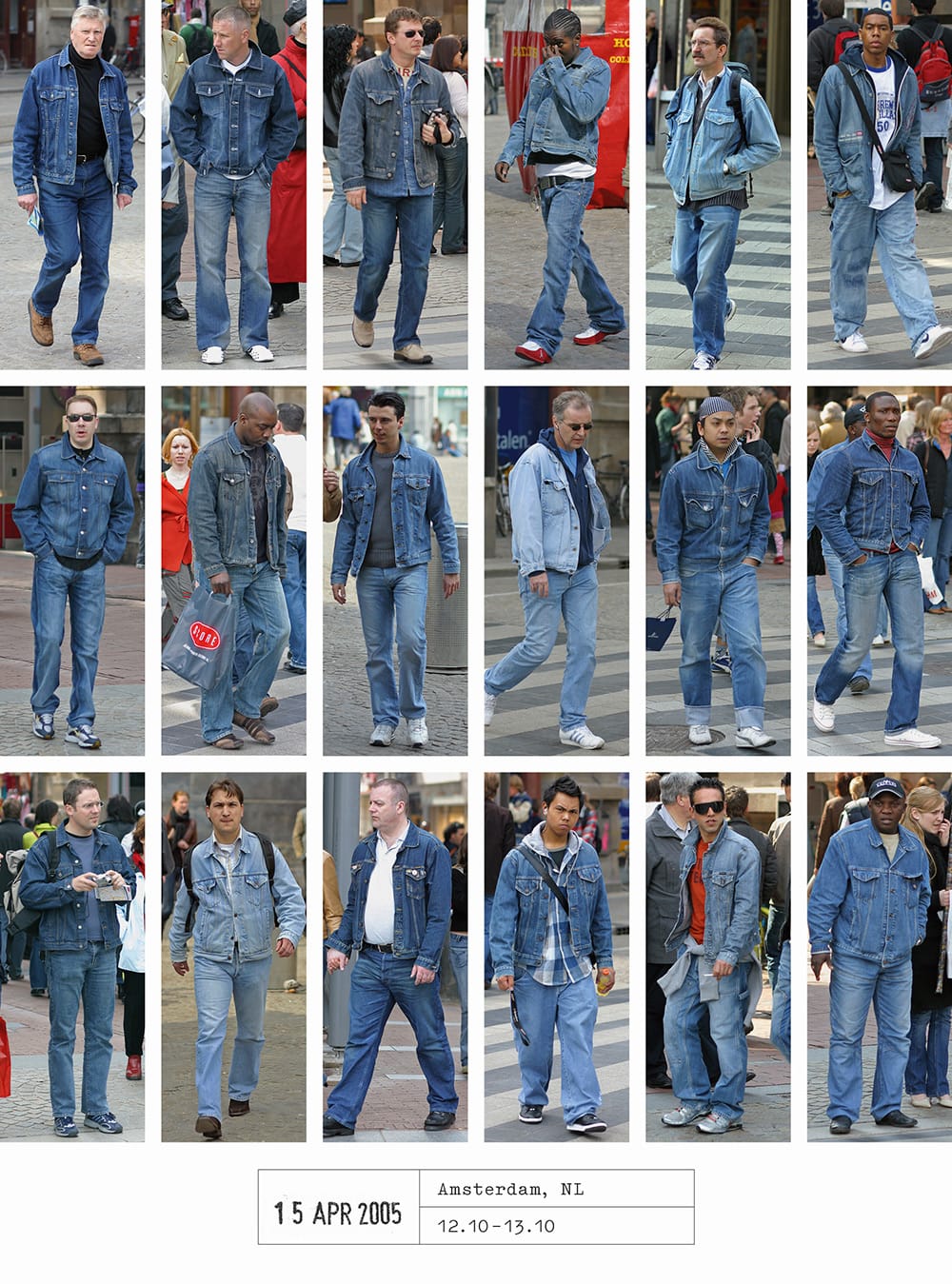
This week, New York's creative soul, social media sell-out, KFC in Japan, bad architecture, dressing the same around the world, web 3.0, and more.

This week, New York’s creative soul, social media sell-out, KFC in Japan, bad architecture, dressing the same around the world, web 3.0, and more.
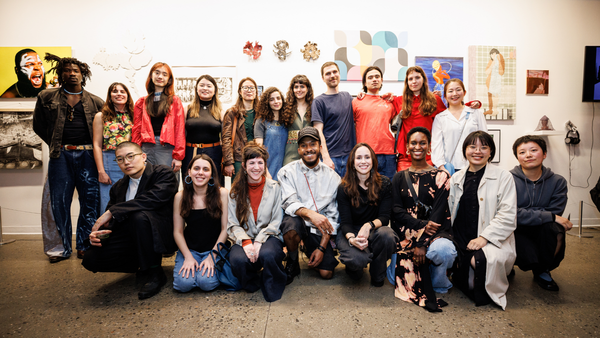
New York Times writer Alan Feuer tells the voices (often affluent and out of touch with the new wave of creativity) griping about New York’s creative soul being dead to shut up:
… the supremacy of real estate and capital that so many people carp about has helped define a new New York aesthetic, one that has moved away from traditional disciplines like painting and sculpture into a more itinerant, guerrilla-style version of performance art. Whether it’s the madcap anarchy of Brooklyn’s annual Bike Kill, in which tattooed lunatics joust on homemade cycles, or the Junxion, a secret cell of artists who drive school buses of marching bands and fire-spinners to remote locations (say, underneath the Kosciuszko Bridge), this wacky and transgressive method of creation is D.I.Y. in spirit and armed with tactics that draw upon graffiti, punk rock, the Situationists and the Occupy movement.
Acknowledging the city’s rising affluence in order to oppose it, this neo-New York School tends to look at obstacles like security deposits — or security guards — as potential opportunities, and does so with a rebel zeal for reclaiming the streets.
None of which means the visual arts no longer have a place.
Is it the end of the “Facebook Revolution,” as social media networks get in bed with autocratic governments?
Facebook proved it last Saturday by blocking an announcement inviting Muscovites to attend a January rally in support of anti-corruption activist Alexei Navalny, who is about to be sentenced to a long prison term on trumped-up charges.
… Facebook never directly admitted that it blocked the page. Roskomnadzor, Russia’s official web censorship body, did, however, report that the event page was being blocked on orders from the prosecutor general’s office, which said the proposed rally had not been granted a city permit. Pages announcing the rally on the Russian social network VKontakte and on the LiveJournal blog platform were also removed from view.
Interesting thoughts on the situation facing digital artists today:
I’ll start by making two claims, which I won’t return to since they speak for themselves, and because they are — as far as I’m concerned — incontrovertible. With the first, I’m paraphrasing Nicholas Mirzoeff in saying that post- should not be understood as “the successor to,” but as “the crisis of.” Having established this, the second claim aims to get one thing straight: every artist working today is a postinternet artist. Let’s move on.
The latest Night at the Museum film with Ben Stiller contains numerous historical inaccuracies, and the British Museum isn’t happy:
The audience let out an audible gasp, with one woman screeching: ‘There was no lava at Pompeii — Vesuvius erupted with a pyroclastic flow’ … The ancient Roman town was buried in the deadly explosion not by lava, but ash and pumice.
A really fascinating cultural story about how KFC’s Colonel Sanders became Father Christmas in Japan:
On Christmas Eve, Kentucky Fried Chicken’s lines will snake down the block, and those unlucky enough not to pre-order their special chicken buckets a month in advance may have to go without KFC’s signature blend of 11 herbs and spices.
And not having KFC on Christmas in Japan is a real bummer. In what appears to be one of the most successful fast food marketing campaigns of all time, KFC has for more than thirty years maintained a uniquely on-brand alternate history in Japan, one that makes fried chicken ubiquitous on the day of Jesus’ birth.
“The prevailing wisdom here is that Americans eat chicken on the 25th,” a friend wrote from Tokyo last week. He said he has “blown countless Japanese minds” by suggesting that Western KFCs may even close on Christmas.
Academy Award–winning director, screenwriter, and producer James Schamus shares his thoughts on the film business, and they sound remarkably similar to the art world:
“The best way to break into producing is to be a billionaire, or be the daughter of one.” Despite this tongue-in-cheek reference to Megan Ellison, Schamus had nothing but good things to say about her, and he did not lament the changes in the world of film funding that have movies being funded by high net-worth individuals more often than ever:
“The billionaires are paying for all of our politics, why shouldn’t they pay for our movies? With the equity markets what they are now, extremely wealthy people don’t have any place to put their money. Hollywood has always been very good at vacuuming all of that up and never giving a cent back. But if you have Megan Ellison making 5 out of the top 10 films in a year and American Hustle pays for a few misses, how is it any different if the money is coming from billionaires instead of studios?”
Schamus gave the example that Little Miss Sunshine was funded by a high net-worth individual because the financing partners couldn’t show that it could be made in a more traditional sense, which is to say through pre-sales — and the film may not have been made if not for a high net-worth individual.
Kriston Capps offers us his list of the worst buildings of 2014, and of course the new Freedom Tower is on it:
The other major component of the World Trade Center that finished this year is One WTC, and it may stand as the worst project of a generation. The problems with this building are as storied as those of the World Trade Center transit hub. The architect of the erstwhile “Freedom Tower,” David Childs, can’t be blamed for all those problems. The elegant 7 World Trade Center stands nearby as proof that he can do better, as do his preliminary designs.
Noam Chomsky on racism in the United States:
“There are prospects, but it is going to be very hard. This is a very racist society; it’s pretty shocking. What has happened with regard to African-Americans in the last 30 years actually is very similar to what Blackmon describes happening in the late 19th century.”
“The constitutional amendments after the Civil War that were supposed to free African-American slaves — it did something for about 10 years, then there was a North-South compact that granted the former slave-owning states the right to do whatever they wanted. And what they did was criminalize black life, in all kinds of ways, and that created a kind of slave force … It threw mostly black males into jail, where they became a perfect labor force, much better than slaves.”
“If you’re a slave owner, you have to pay for — you have to keep your ‘capital’ alive. But if the state does it for you, that’s terrific. No strikes, no disobedience, the perfect labor force. A lot of the American Industrial Revolution in the late 19th, early 20th century was based on that. It pretty much lasted until the Second World War, when there was a need for free labor.”
“After that, African-Americans had about two decades in which they had a shot at entering society. A black worker could get a job in an auto plant, the unions were still functioning, and he could buy a small house and send his kid to college. But by the 1970s and 1980s it’s going back to the criminalization of black life.”
“It’s called the drug war, and it’s a racist war. Ronald Reagan was an extreme racist — though he denied it — and the whole drug war is designed, from policing, to eventual release from prison, to make it impossible for black men and, increasingly, more and more women and hispanics to be part of society.”
“In fact, if you look at American history, the first slaves came over in 1619, and that’s half a millennium. There have only been three or four decades in which African-Americans have had a limited degree of freedom — not entirely, but at least some.”
Thoughts on Web 3.0:
Companies like Uber and airbnb are enjoying their Andy Warhol moment, their $15 billion of fame, in the absence of any physical infrastructure of their own. They didn’t build that— they are running on your car, apartment, labor, and importantly, time. They are logistics companies where all participants pay up the middleman: the finanzialization of the everyday 3.0. According to NYU business professor Arun Sundrarajan, personal and professional services are now blended, creating a continuum of commercial activity while at the same time raising serious issues about labor protections against discrimination, for example.
Today, nothing remains outside of labor.
Some of the most clever approaches to protesting, including:

Required Reading is published every Sunday morning ET, and is comprised of a short list of art-related links to long-form articles, videos, blog posts, or photo essays worth a second look.