Required Reading
This week, Anish Kapoor's new perpetual whirlpool, Ruscha's lost rock art, artists who stayed in Nazi Germany, Beck and Warhol, why the dollar sign is an S, and more.

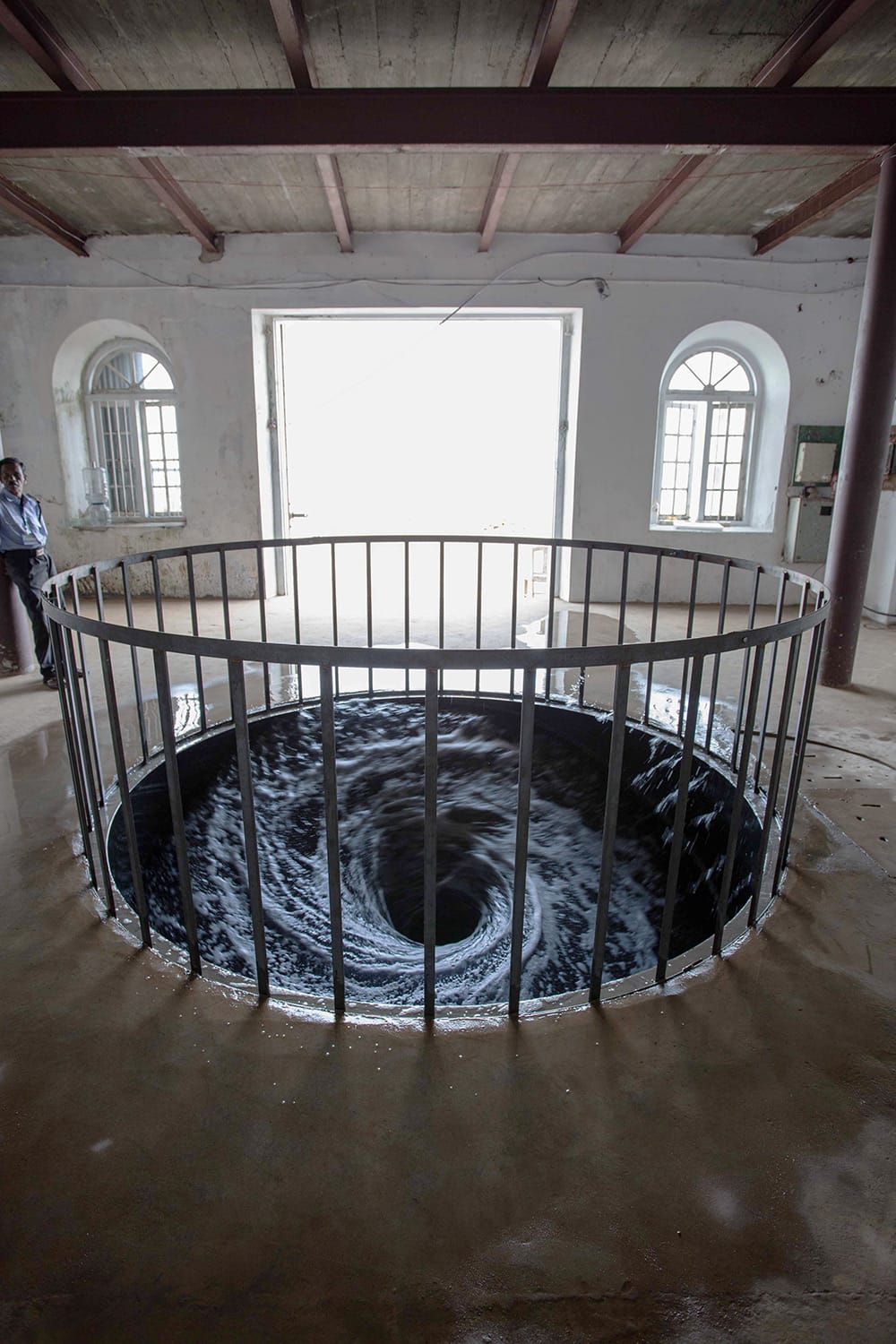
This week, Anish Kapoor’s new perpetual whirlpool, Ruscha’s lost rock art, artists who stayed in Nazi Germany, Beck and Warhol, why the dollar sign is an S, and more.

At the end of the 1970s, artist Ed Ruscha left a fake rock artwork somewhere in the Mojave desert. French artist Pierre Bismuth has spent a decade trying to find it (with a camera crew):
The jumping-off point for Bismuth’s film is his long-standing fascination with a little-known and unexhibited work by the American artist Ed Ruscha: an artificial rock made out of resin and named Rocky II after the Sylvester Stallone movie. A BBC crew filmed Ruscha during its creation for a 1980 documentary, which also captured him depositing the work somewhere in the Mojave desert, where it has apparently remained ever since, indistinguishable from all the other rocks around it.
This “undetectability” tickled Bismuth. “What is an art piece that nobody can see?” he says. “That’s already quite an interesting statement. But more than that, what is an art piece that nobody knows about? I mean, this is really pushing it. I understand that an artist can do an invisible piece, but a piece that no one knows is kind of weird. It’s beyond any kind of conceptual statement you can have.”
A good review at the Los Angeles Review of Book about a book that examines the lives of artists who chose to stay in Germany when the Nazis took over:
Artists Under Hitler examines in detail the experiences of 10 modernist artists who chose to stay in Nazi Germany and seek “accommodation” with the regime. “Accommodation” is used here as a term of art. It may strike some as a euphemism, and while it should, the choice of the term and its implications are integral to Petropoulos’s enterprise, which is to present an ostensibly evenhanded documentary of what these artists did, and to a lesser extent, why they did it. He gives us details such as how each artist got appointed to which post, who did what favors for whom, and who looked the other way when. Petropoulos cites a number of factors for why they did what they did:
first, a misunderstanding of the Nazi leaders and their goals; second, an unchecked ego and sense of self-importance […]; third, a highly developed survival instinct […] combined with a more garden-variety opportunism; fourth, the mixed signals from the Nazi leaders themselves […]; and finally, a belief that the intellectual goals of modernism and fascism were compatible.
A Google chief is warning us about the possibility that we may lose our digital photos, documents, and files:
He concedes that historians will take steps to preserve material considered important by today’s standards, but argues that the significance of documents and correspondence is often not fully appreciated until hundreds of years later. Historians have learned how the greatest mathematician of antiquity considered the concept of infinity and anticipated calculus in 3BC after the Archimedes palimpsest was found hidden under the words of a Byzantine prayer book from the 13th century. “We’ve been surprised by what we’ve learned from objects that have been preserved purely by happenstance that give us insights into an earlier civilisation,” he said.
Ever wondered about pop musician Beck’s connection to the art world? Here you go:

High-priced NYC real estate is being snatched up by foreigners, according to the New York Times, but there’s something strange about all of it (emphasis mine):
About $8 billion is spent each year for New York City residences that cost more than $5 million each, more than triple the amount of a decade ago, according to the website PropertyShark. Just over half of those sales last year were to shell companies.
The Times examination reveals the workings of an opaque economy for this global wealth. Lacking incentive or legal obligation to identify the sources of money, an entire chain of people involved in high-end real estate sales — lawyers, accountants, title brokers, escrow agents, real estate agents, condo boards and building workers — often operate with blinders on. As Rudy Tauscher, a former manager of the condos at Time Warner, said: “The building doesn’t know where the money is coming from. We’re not interested.”
As an indication of how well-cloaked shell company ownership is, it took The Times more than a year to unravel the ownership of shell companies with condos in the Time Warner Center, by searching business and court records from more than 20 countries, interviewing dozens of people with close knowledge of the complex, examining hundreds of property records and connecting the dots from lawyers or relatives named on deeds to the actual buyers.
… Among the Time Warner Center owners identified by The Times are at least 17 billionaires on Forbes magazine’s annual list of the world’s richest people. Five of the world’s leading art collectors own units, as do eight people who have been chief executives of major companies. And it has been home to numerous celebrities, including the singers Jimmy Buffett and Ricky Martin, the New England Patriots quarterback Tom Brady and the talk show host Kelly Ripa.
The discussion around the Hollywood film American Sniper continues to rage. One real-life US sniper writes:
No single service member has the monopoly on the war narrative. It will change depending on where you serve, when you were there, what your role was, and a few thousand other random elements.
… The movie tells the story of Navy SEAL sniper Chris Kyle, said to have 160 confirmed kills, which would make him the most lethal American military member in history. He first shared his story in a memoir, which became the basis for Clint Eastwood’s film adaptation. Kyle views the occupation of Iraq as necessary to stop terrorists from coming to the mainland and attacking the U.S.; he sees the Iraqis as “savages” and attacks any critical thought about the overall mission and the military’s ability to accomplish it.
This portrayal is not unrealistic. My unit had plenty of soldiers who thought like that. When you are sacrificing so much, it’s tempting to believe so strongly in the “noble cause,” a belief that gets hardened by the fatigue of multiple tours and whatever is going on at home. But viewing the war only through his eyes gives us too narrow a frame.
Then J. Hoberman reviews it for the New York Review of Books and offers a big-picture look at the problematic film within the scope of cinema history:
American Sniper embodies a national repetition compulsion, what Freud defined as “the desire to return to an earlier state of things.” For the artist that state may be the memory of watching the unambiguously heroic Sgt. York in the reassuring company of his father. For some members of the audience, American Sniper may offer a similarly comforting sense of a guardian angel and a cathartic righteous anger. For others, the movie may serve to assuage contrition for a war that, twelve years after it was begun, has left Iraq, as well as many of our own returning combatants, shattered. But for many, I suspect, American Sniper may be weirdly liberating—gratifying a perhaps hitherto unsuspected desire to see their pessimism, hopeless and unchanging, projected on the screen.
How one professor was stripped of his tenure over a blog post. It’s a complicated but fascinating (and distressing) story:
Again, the precedent this suggests is sweeping. No academic who speaks or writes with any regularity, whether in the classroom or at conferences or in academic journals or blog posts, can possibly meet the standard of accuracy “at all times.” If tenure can be revoked for failing that standard, every tenured professor is at the mercy of administrative whims. An inaccuracy can always be documented. And the graduate instructor, along with many other members of the academy, would obviously fail the test of “a respect for others’ opinions” if those others include, for example, people who believe that gay marriage should be illegal.
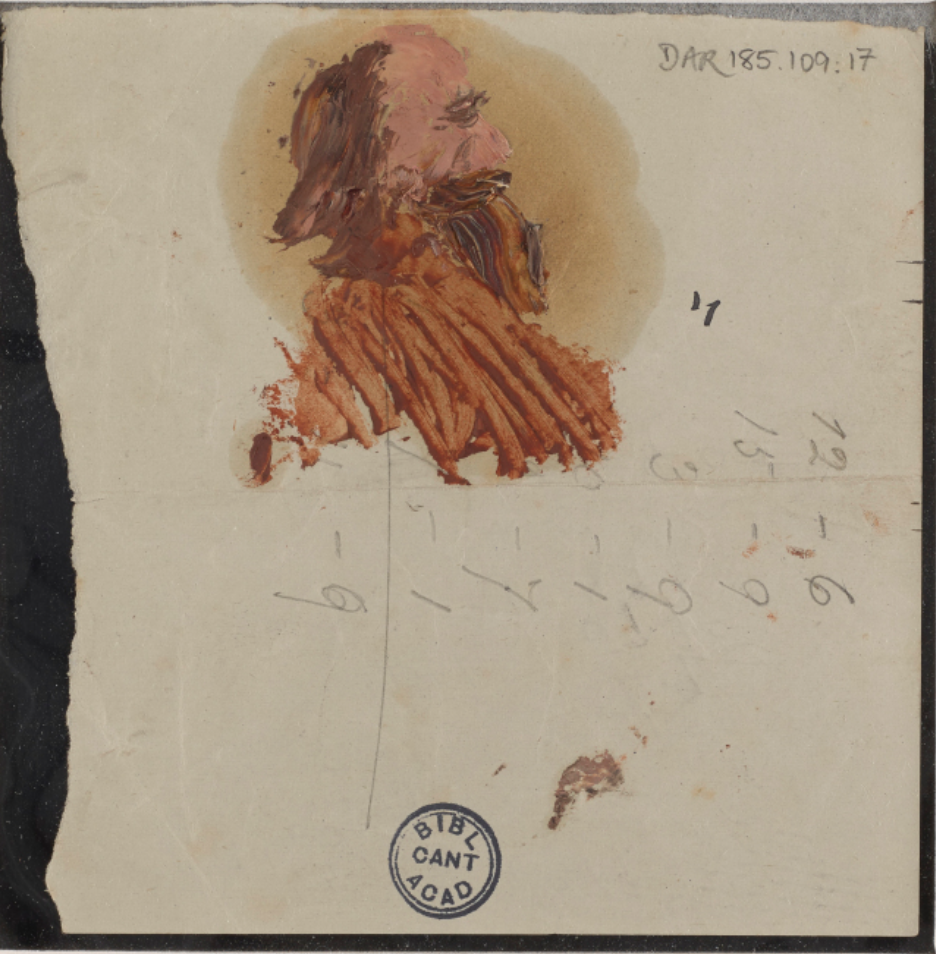
Charles Darwin wasn’t precious about the first draft of his groundbreaking Origin of the Species manuscript. His children ended up using it as scratch paper, and the drawing on the pages are humorous to us nowadays, considering the importance we place on the book. Here is one; the rest are on The New Yorker blog:
The zany story of a Wikipedia editor who has devoted years to fixing one grammatical “error” — the incorrect use of “comprised of” in articles:
Giraffedata is something of a superstar among the tiny circle of people who closely monitor Wikipedia, one of the most popular websites in the English-speaking world.
Giraffedata—a 51-year-old software engineer named Bryan Henderson—is among the most prolific contributors, ranking in the top 1,000 most active editors … Henderson has now made over 47,000 edits to the site since 2007, virtually all of them addressing this one linguistic pet peeve. Article by article, week by week, Henderson redacts imperfect sentences, tightening them almost imperceptibly. “I’m proud of it,” says Henderson of the project. “It’s just fun for me. I’m not doing it to have any impact on the world.”
Ever wonder why the dollar sign is a letter S with a line through it? Io9 has the answer, and it’s the Spanish peso’s fault:
Yes, so influential was the silver “piece of eight” that 32% of the world’s population live in countries with currencies named for, or originally patterned after, that single Spanish coin, including the modern U.S. dollar.
… So merchants devised a simple and obvious shorthand: “P” for “peso” (when plural, “Ps“). It could have ended there, but some (I assume they were just bored) merchant(s) thought it would be even cooler to write the P and S on top of each other. This apparently caught on, and by the 1770s they had dropped the bowl from the P entirely, reducing the shorthand to an S crossed with the vestigial stem of what once was a P. And thus was born a brand new symbol, still used to mean peso today: the peso sign ($).
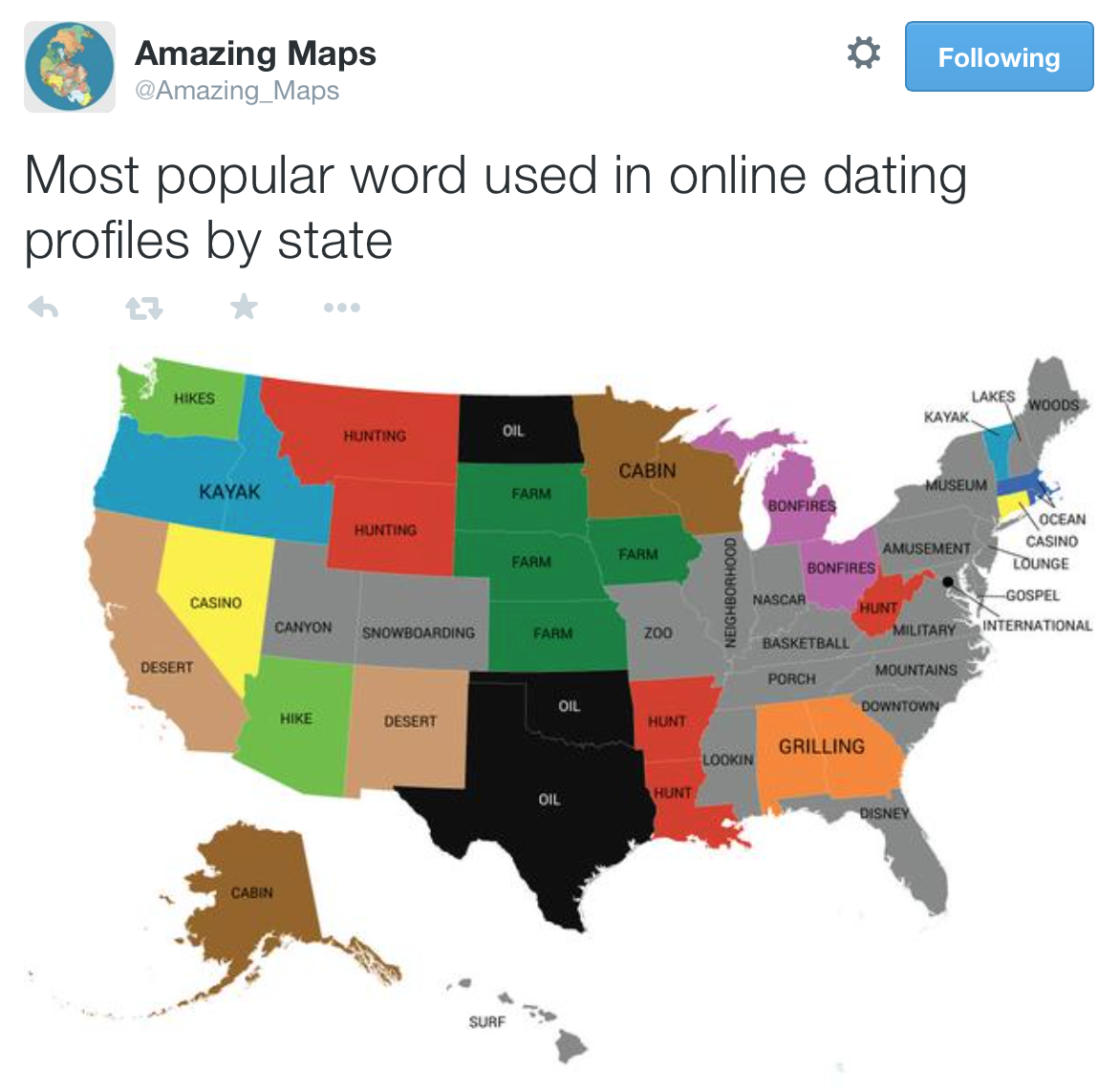
Amazing Maps has a doozy today, and notice that New York State is the only place where “museums” is the most popular term in online dating profiles:
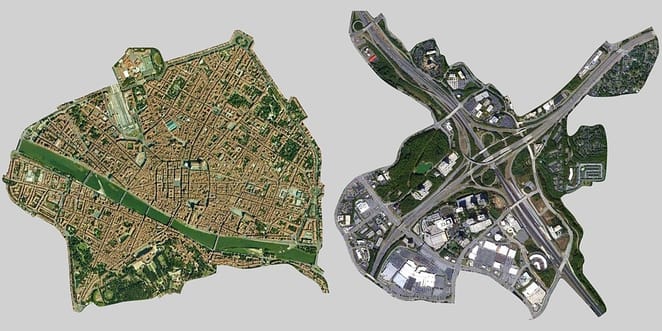
Today in wow, the whole city of Florence (left) can fit into the same space allotted to this one highway interchange in Atlanta (right). Yes, they are the same scale:
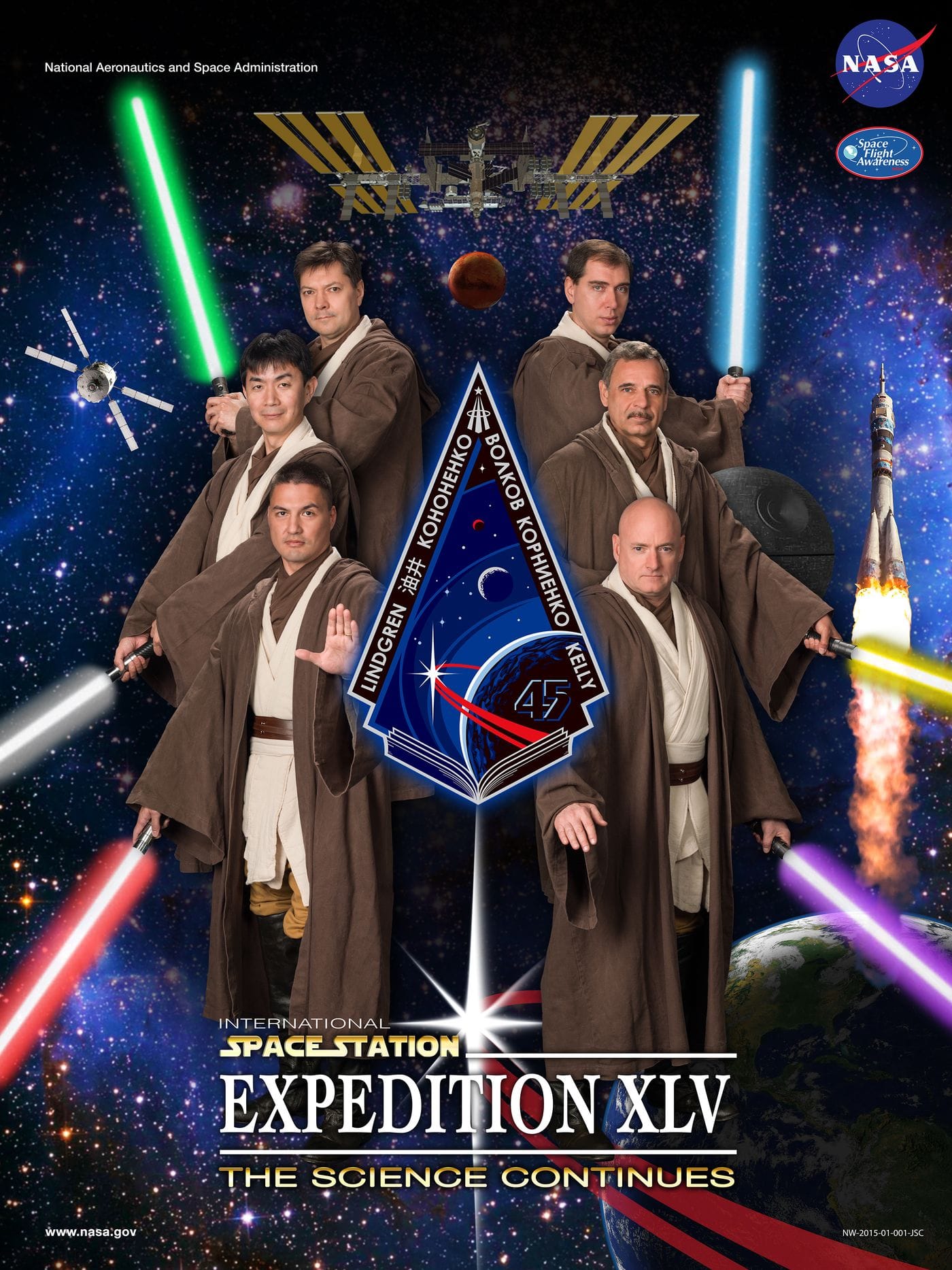
NASA astronauts just geeked out and dressed up as Star Wars characters for their official portrait:
Required Reading is published every Sunday morning ET, and is comprised of a short list of art-related links to long-form articles, videos, blog posts, or photo essays worth a second look.