Required Reading
This week, considering why museums publish online, destroying an Islamic museum, a new peacock spider, Mac's original icons, male shaming, and more.


This week, considering why museums publish online, destroying an Islamic museum, a new peacock spider, Mac’s original icons, male shaming, and more.

How should we assess the success of museums and their online publishing endeavors?
For museums to become significant publishers online, they need to accept that playing the metrics game will mostly only preserve the status of certain institutions: those with name recognition and large encyclopedic collections that can be digitized and utilized in diverse ways, from research to a Tumblr, appealing to an audience that varies from the art historian to the occasional user based thousands of miles away from the museum. This strategy has been incredibly successful for museums that already top the list of visitor counts — the likes of the Met, MoMA, or the Tate and their millions of Twitter followers and Facebook fans. This is not a digital strategy that would work for a contemporary art space in a mid-size city. In the past decade, as institutions internalized the importance of digitizing, a number of attitudes toward online presence emerged. The building of online publishing platforms relates to a traditional role of museums — to support research, then publish and publicize it — and indeed, many museums large and small publish catalogues, books, and sometimes also magazines. But publishing on the internet differs from these initiatives because of the pressure to attract a global audience. If most text online goes unread, how to explain the incentive of these institutions to publish?
Felice Picano talks to Lambda Literary “On Remembering the Past, the AIDS Crisis, and Gay Activism“:
It is the job of a writer to convey a world that is gone. There are so many different types of people, some well-known and some not known at all. All are good subjects, and all the people who have been around us define who we are. I find them fascinating. I’m the dullest of them.
The story of a car bomb that detonated outside Cairo’s Museum of Islamic Art last year. It demonstrates how dysfunctional the Egyptian museum system is when confronted with emergency situations:
The problems began immediately after the blast. Amid the chaos, curators were unable to locate the distinctive Allen key required to lever open the intricate locking mechanisms for the few showcases that withstood the explosion. As water from the sprinkler system seeped into the cracks, desperate workers resolved to smash their way in, but succeeded only in chipping other valuables and mixing new glass among the fragments of 1,000-year-old lanterns and urns.
Museum of Modern Art Curator Paola Antonelli has acquired Macintosh’s original icons, designed by Susan Kare:

Writing for the Boston Globe, Michael Andor Brodeur sees a rise in male shaming by the media:
Where did this intensified attention toward the male body come from? It’s easy to conjure some likely culprits: The 24/7 validation cycle of social media has stoked hyper-consciousness of appearance among the famous and non (even the most dashed-off selfies are the product of several takes); and the Internet joins the already noisy shame-scape of gossip magazines, fitness advertisements, movies, and TV shows that regularly sport more six-packs than the parking lot at Gillette Stadium.
But according to Dr. Jennifer Greenberg, a research director at Massachusetts General Hospital who works with patients suffering from severe fixations on appearance, while men and women are both subjected to unattainable ideals and altered images, men may put more emphasis on them.
It was revealed this week that the NYPD has been editing the Wikipedia pages of the people they’ve killed, like Garner and Diallo. According to Capital New York:
Computer users identified by Capital as working on the NYPD headquarters’ network have edited and attempted to delete Wikipedia entries for several well-known victims of police altercations, including entries for Eric Garner, Sean Bell, and Amadou Diallo. Capital identified 85 NYPD addresses that have edited Wikipedia, although it is unclear how many users were involved, as computers on the NYPD network can operate on the department’s range of IP addresses.
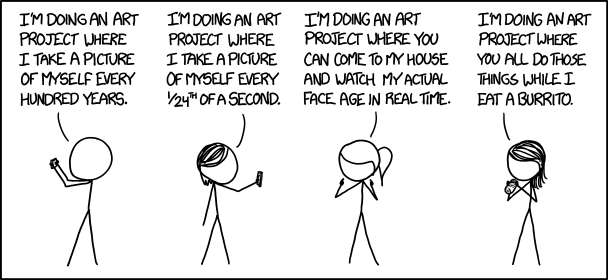
Xkcd tackles the topic of “art projects“:
DC’s Holocaust Museum is receiving collection donations at a rate of four a week, something it never predicted when it opened in 1993.
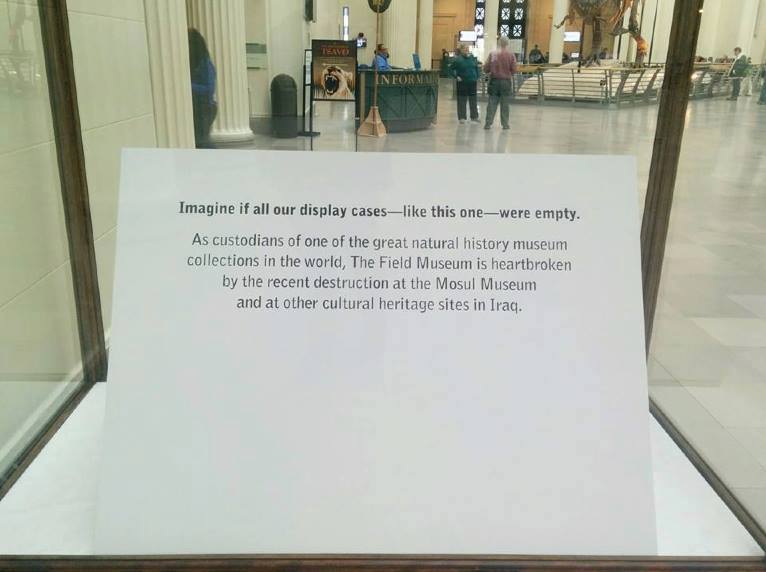
The Field Museum in Chicago had this response to the destruction of antiquities by members of ISIS (aka Islamic State):
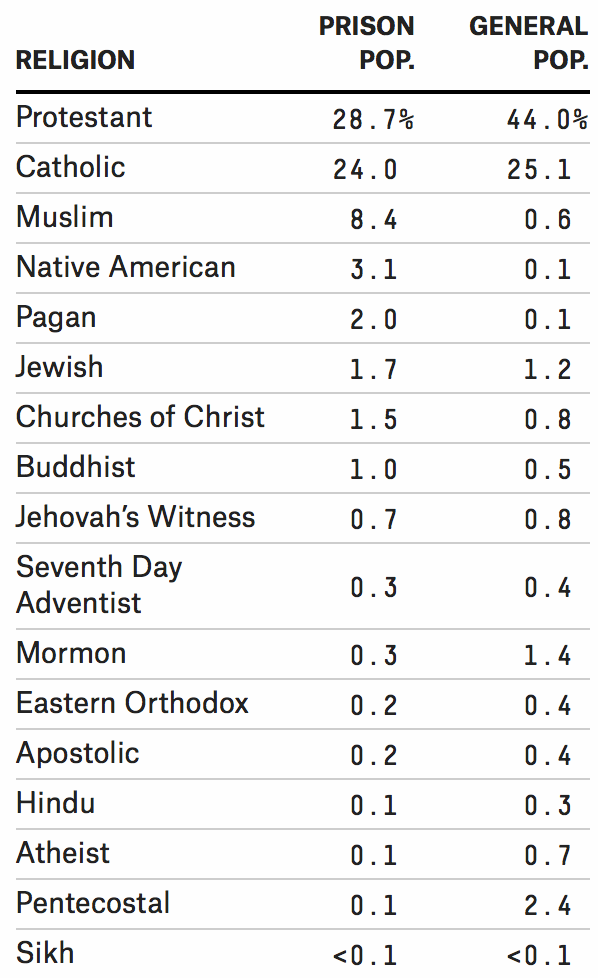
These are some surprising statistics about the religious affiliation of US prison populations:
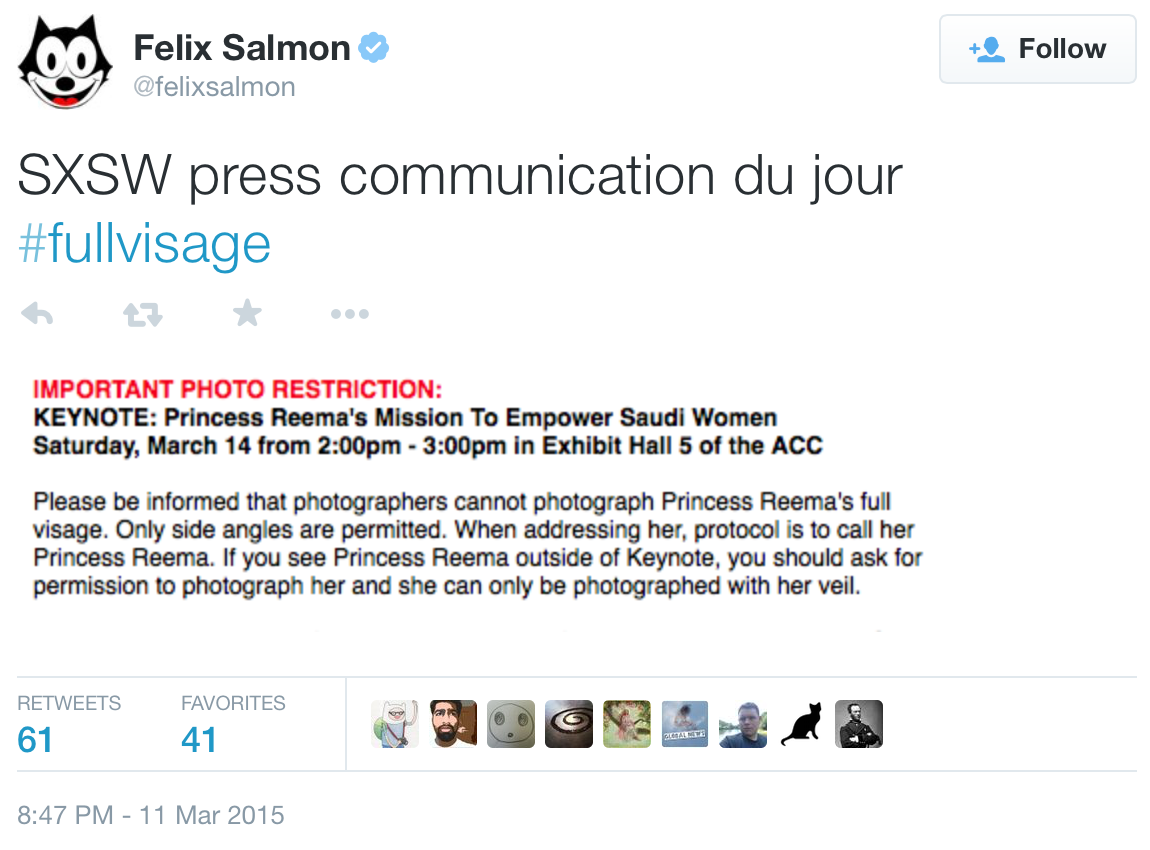
Thanks to @felixsalmon for this laugh:
Required Reading is published every Sunday morning ET, and is comprised of a short list of art-related links to long-form articles, videos, blog posts, or photo essays worth a second look.