Required Reading
This week, the myths of an affordable LA, a church made of trees, gay lit, US sanctions and Iranian artists, decolonizing African art, and more.

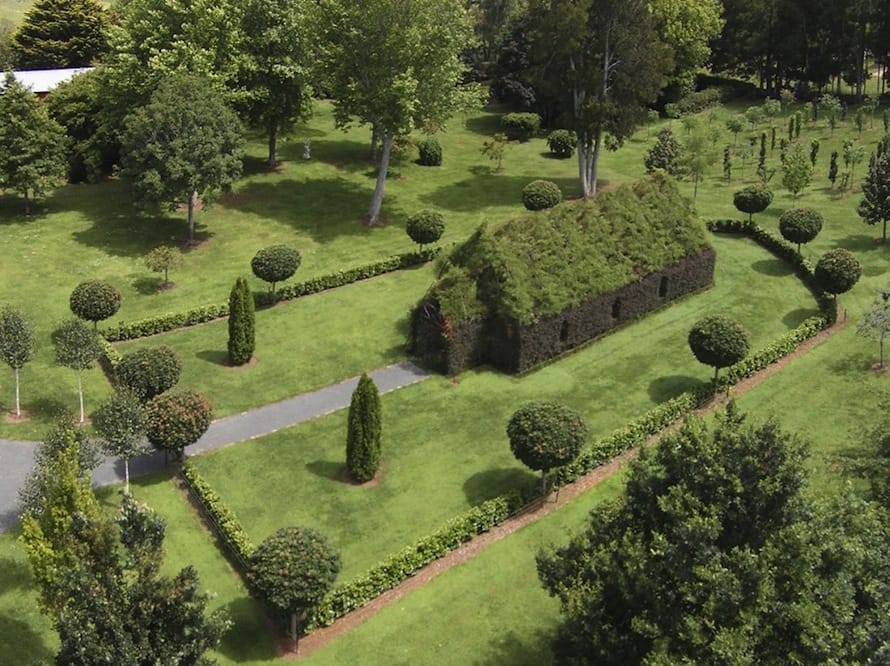
This week, the myths of an affordable LA, a church made of trees, gay lit, US sanctions and Iranian artists, decolonizing African art, and more.

Scott Timberg goes against the hype that paints Los Angeles as a cheap creatives paradise and writes about some of the realities people face in the city:
For many of us in Los Angeles—a metropolitan area that 57 percent of Angelenos can’t afford to live in, according to a recent study—this is a city from which we are constantly on the brink of slipping away. Average rent in L.A. is $2,550 for a two-bedroom apartment. In fact, the disparity between wages and market prices here is the worst in the country, nastier than in New York City or the Bay Area, and it’s become the toughest American city in which to buy a house … Los Angeles and California were hit especially hard by the Great Recession, and the damage lingered longer than almost anywhere else. L.A. County’s unemployment rate was up around 12 and 13 percent for years, and along the way hundreds of thousands dropped out of the labor force entirely.
Carolina Miranda of the LA Times has also devoted some time to deconstructing some of the myths of LA:
As Curbed L.A. helpfully pointed out, you can’t rent a dreamy, two-bedroom bungalow for $1,250 in Echo Park, no matter what the New York Times says. But many Angelenos nonetheless seem pretty happy to live with the stereotype of Los Angeles as a cultural wonderland. I’ve had countless gallerists, artists, curators and even journalists (who should know better) happily parrot the line about L.A. as a utopia for “creatives” who come here to feel less inhibited and less cold.
… And even though there is plenty of buzz in the arts community about the opening of massive galleries — including Hauser Wirth & Schimmel to Maccarone — many of these are simply the L.A. outposts of behemoth international spaces and therefore not organic to the city’s scene. In other words, these are places that sit above the fray, catering to a 1% that doesn’t necessarily live or pay taxes here. Moreover, try showing your art at any of these spaces if you don’t have a pricey MFA from one of a handful of brand-name art schools.
The story of a young man who climbed on a Broadway stage to try and charge his phone from one of the prop power outlets is already the stuff of legend (though totally true, see video below), but there has been a new twist to the tale … 19-year-old Nick Silvestri of Long Island held a press conference with the play producers and explained:
I don’t go to plays very much, and I didn’t realize that the stage is considered off limits. I’ve learned a lot about the theater in the past few days—theater people are really passionate and have been very willing to educate me. I can assure you that I won’t be setting foot on a stage ever again, unless I decide to become an actor.
Stan Persky reviews at book at looks at the gay writers who “changed” the US:
When Christopher Bram begins Eminent Outlaws, his history of contemporary gay writing in the U.S., with the bold declaration that “the gay revolution began as a literary revolution,” it has an odd ring. A revolution sparked by mere words? After all, as gay poet W.H. Auden put it, “Poetry makes nothing happen.” Bram’s novel claim at first glance seems dubious, but it turns out to be surprisingly accurate.
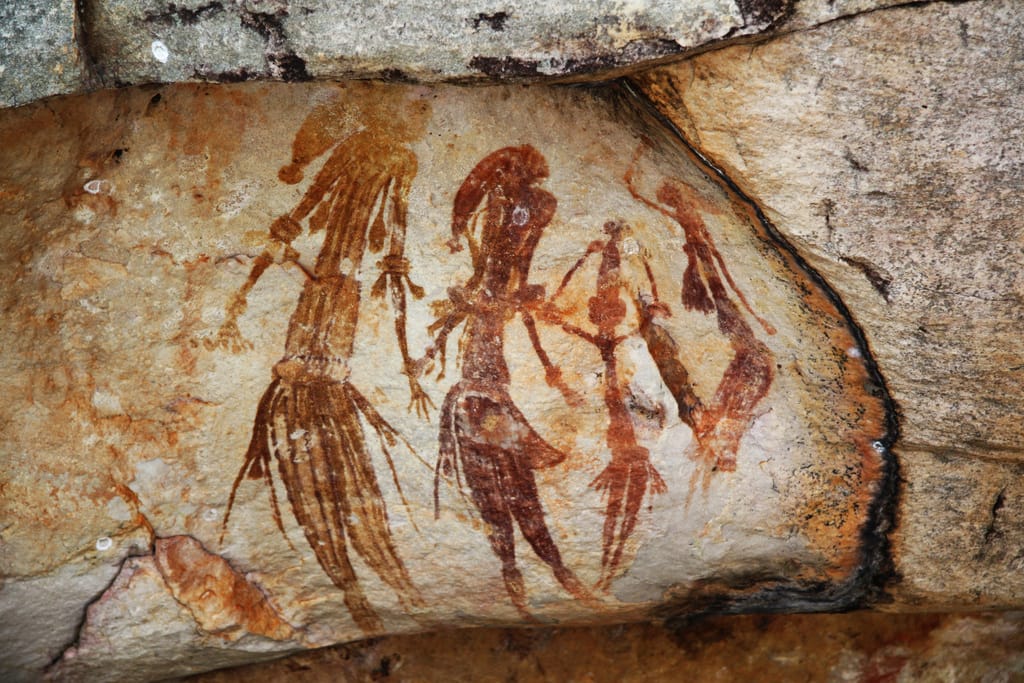
The Bradshaw rock art in present-day Australia has long puzzled historians because they depict “figures with unusual body shapes, tassels and hair that are unlike any other rock art in Australia.” There have long been theories of previous waves of humans who may have settled the area but new research proves that the Aborigines were the first Australians and the artists behind the unusual art:
They support growing archaeological evidence that the Australian Aborigines are one of the oldest cultures to exist on the planet.
… The Bradshaw rock paintings, which were named after Joseph Bradshaw who found them in 1891, triggered theories of an earlier human culture in Australia due to their difference from other Aboriginal rock art in the Kimberley region.
The paintings show figures shaped like ‘clothes pegs’ wearing elaborate costumes. The paintings are so delicate in some cases that individual strands of hair have been drawn on.
The artworks led to theories that they may have been created by people who travelled to Australia from Indonesia around 70,000 years ago following the eruption of Mount Toba.
How US sanctions hurt Iranian artists:
For Iranian curators working on international exhibitions, it’s not uncommon to be constantly asked for proof that the funds are in fact being used to pay the artists and not to buy arms. It was unpleasant, if unsurprising, to be asked to prove that I wasn’t an arms trader. For an Iranian, getting paid is always tricky. With Western bank branches and PayPal unavailable in Iran, it is difficult to transfer money into the country. It helps to have family and friends living abroad, but even then transfers may be delayed and deferred, or those making the transfers may even have their accounts frozen.
After this week’s outage at the New York Stock Exchange, Molly Crabapple published this over-the-top “report” from the front lines. It’s hilariously worth a read:
My face attractively smeared from the ash of burning cocaine, I pause for a selfie. Then, I see it.
All the tourists are dead. And missing their spleens.
I hire now-former JP Morgan CEO Jamie Dimon as my local fixer. “Tell me the ways of your people, caught as they are between the present and the ancient past”, I demand, offering him half a hotdog as payment. Instead, he weeps. He tried to seek shelter at the dungeon of his favorite pro domme, he tells me, but when his black card bounced she slammed the door in his face.
This could change things for African Art in non-African collections:
Sindika Dokolo, a Congolese businessman and art collector, is on a crusade to force Western museums, art dealers and auction houses to return Africa’s art, particularly works that might have been removed illegally during the colonial era.
“Works that used to be clearly in African museums must absolutely return to Africa,” Mr. Dokolo said in an interview while in town for an exhibition showcasing some of the works in his collection. “There are works that disappeared from Africa and are now circulating on the world market based on obvious lies about how they got there.”
After years of being a passionate street art advocate, RJ Rushmore writes about his experience “inside the mural machine“:
Street art’s greatest strength is its ability to be nimble. Gaia made a similar point at an event at the Philadelphia Museum of Art in May, where he described street art in Philadelphia as something that can fill in the cracks that Mural Arts doesn’t reach. April Fools’ Day? Street art is there. Black Lives Matter? Street art is there. Potholes need fixing? Street art is there. Street art gives artists an almost unrivaled opportunity to respond quickly to the world around them, whether that means making work with timely pop culture references or commentary on world events, or being inspired to the architecture and design of the city. The nimbleness of street art is also closely related to its use as a space for experimentation and free(ish) expression. For all those reasons and more, street art is an essential element of a healthy public space.
Philosopher Slavoj Žižek on Greece:
Imagine a vicious teacher who gives to his pupils impossible tasks, and then sadistically jeers when he sees their anxiety and panic. The true goal of lending money to the debtor is not to get the debt reimbursed with a profit, but the indefinite continuation of the debt, keeping the debtor in permanent dependency and subordination. For most of the debtors — for there are debtors and debtors. Not only Greece but also the US will not be able even theoretically to repay its debt, as is now publicly recognised. So there are debtors who can blackmail their creditors because they cannot be allowed to fail (big banks), debtors who can control the conditions of their repayment (the US government) and, finally, debtors who can be pushed around and humiliated (Greece).
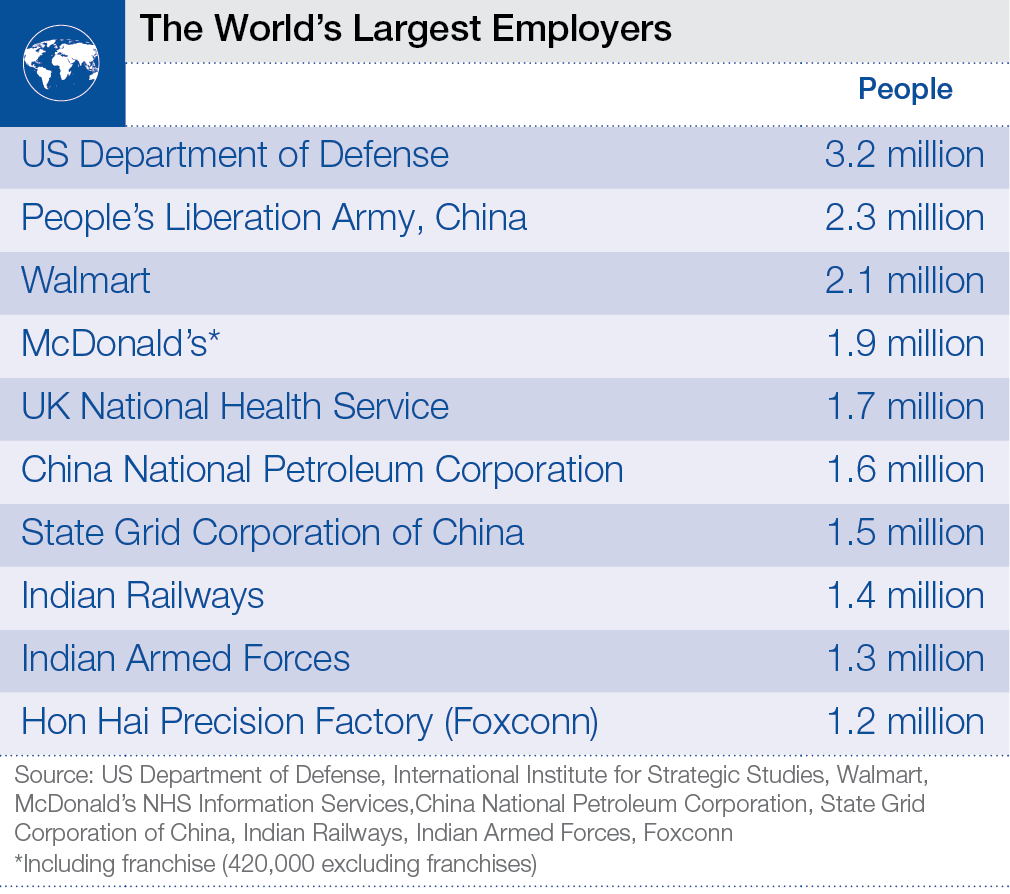
What are the world’s biggest employers?
In April 2014, British GQ published a cover story critical of right-wing media emperor Rupert Murdoch, but now the story is “missing” … and people are wondering why:
Why would Condé go through all the effort of ensuring Wolff’s article could not be read not only by its English readers without access to a print copy, but by readers in other countries as well? Nothing in the actual piece, whose text was obtained by Gawker via an eBay auction of the original print edition, would strike the ordinary American reader as illegal, and there’s no indication that Wolff or GQ published anything inaccurate.
… These laws are self-evidently ludicrous, and the fact that a Western government is harassing Wolff and GQ for publishing opinions about a public figure is preposterous. Thankfully such codes are largely unthinkable in the United States, where journalists like Wolff enjoy, and deserve, strong press protections under the the First Amendment. But in this particular instance, the U.K.’s speech laws are acting as a de facto restraint on Wolff’s First Amendment rights, here in the United States. After all, Condé clearly felt the need to prevent the article’s text from reaching American readers—a large, and possibly the largest, share of Wolff’s audience—and, as you can see above, even attempted to create the perception that Wolff’s column was never published in the first place.
Maybe this is a great opportunity to point to Adam Curtis’ excellent short film on Murdoch:
The cult of Vice:
NBC’s once-trusted heavy hitter, Brian Williams, was recently suspended, Al Jazeera America’s newsroom appears to be in tumult, and CNN seems to rack up on-air faux pas by the week.
Their fall coincides with Vice’s rise. Smith has long said he wants Vice to be “the next MTV, ESPN, and CNN rolled into one,” and in 2015, that has started to become a reality. Vice is no longer the edgy digital outsider, but a slick global empire lubricated with millions in investment and ad dollars that, coupled with a brash attitude, make the company a ray of light among the decaying temples of legacy journalism.
Vice’s attraction for its valuable millennial audience is predicated on the notion that it is real and raw, not plastic and prepackaged like the rest of the mainstream media world. But it may be truer to say that Vice simply packages itself more deftly than almost any other big media company.
… But as Vice has increased its output of serious journalism, there have been growing pains. The wall between editorial and advertising, where Vice gets much of its revenue, can be porous. Last year, Charles Davis, a Vice associate editor who was let go after two months, posted an email from a Vice editor on Twitter saying that every story involving a large brand had to be “run up the flagpole” to general manager Hosi Simon, even if the brand didn’t have an advertising relationship with Vice. He received the email after approving a freelancer’s story that called for a boycott of the NFL. While the editor who authored the email wrote that in his experience, Simon “simply says ‘ok’ to almost anything,” Davis tweeted that “In my experience, every single time—every single time—I had a story ‘run up the flagpole’ it was killed.” Davis said four stories he wrote were killed in his time as an editor and freelancer at Vice, including a piece about labor violations at South by Southwest, which eventually ran on Salon.com.
The beatbox battle between father and daughter that has been going viral. It’s really amazing:
Required Reading is published every Sunday morning ET, and is comprised of a short list of art-related links to long-form articles, videos, blog posts, or photo essays worth a second look.