Required Reading
This week, considering Hiroshima 70 years later, museums as publishers, the myth of a Brooklyn exodus, Ferguson's radical knitters, popular vape flavors, and more.


This week, considering Hiroshima 70 years later, museums as publishers, the myth of a Brooklyn exodus, Ferguson’s radical knitters, popular vape flavors, and more.

Last week was the 70th anniversary of one of the world’s most tragic events, the bombing of Hiroshima (today is the day of commemoration for the bombing of Nagasaki). The New Yorker has compiled an archive of writing on the topic, including John Hershey’s August 31, 1946, article “Hiroshima“:
Mr. Tanimoto shoved off again. As the boatload of priests moved slowly upstream, they heard weak cries for help. A woman’s voice stood out especially: “There are people here about to be drowned! Help us! The water is rising!” The sounds came from one of the sandspits, and those in the punt could see, in the reflected light of the still-burning fires, a number of wounded people lying at the edge of the river, already partly covered by the flooding tide. Mr. Tanimoto wanted to help them, but the priests were afraid that Father Schiffer would die if they didn’t hurry, and they urged their ferryman along. He dropped them where he had put Father Schiffer down and then started back alone toward the sandspit.
The Volta has published a special issue devoted to Hiroshima and Nagasaki. I haven’t finished going through it, but it looks excellent. It includes a story by artist/writer Etel Adnan … which begins:
When did I hear about Hiroshima, when and where? In 1945 I was twenty, and in Beirut. The war had ended with a big bang, so it seemed, and it must have been because of Hiroshima. Some terror had finished the war, a war that for Lebanon represented an economic boom, a participation in adventure. Japan was extremely far from our daily horizon. Ten years later, in January 1955, I was landing in New York harbor, on my way to UC Berkeley. It’s in Berkeley that I found out the immensity of that ‘event.’ A debate had started about its necessity, as Oppenheimer, one of the two physicists held as most responsible for the making of the atomic bomb, was feeling guilt and speaking around the nation against that ultimate weapon. I saw my first images of the explosion in Hiroshima and the mushroom like white cloud looked to me as a human brain, adding to its terror.
What do we do when our icons crumble? Three writers (incl. Philip Kennicott) at the Washington Post look at the big picture:
Iconoclasm can be accidental or purposeful, an act of liberation or oppression, and there’s never any guarantee that it will work. Ham-fisted destruction of symbols is a sure sign of the totalitarian mind-set — and an image destroyed in the physical world can have extraordinary longevity and power in the collective conscious. The following is a field guide to the loss of symbols, here and around the world.
The Whitney Museum’s Sarah Hromack considers the issues facing institutions interested in publishing:
There is a largely unarticulated, yet nevertheless effective class system that governs the kinds of publications institutions produce, and the ways those publications function in public space. While the Internet and the Web began problematizing the publication, conceptually and physically, so many years ago, printed matter still holds its ground within the context of the museum. On its surface, the exhibition catalogue is a historical document. It is the last remaining physical vestige of a show-gone-by: an object, an heirloom, a relic — a conversation piece perched atop book shelves and coffee tables. Whether publishing independently or in collaboration with another institution or publishing house, the museum produces both knowledge and value in the exhibition catalogue, reifying the object-based aesthetics that still govern the physical gallery space while affirming its own desire for cultural, academic, and historical gravitas.
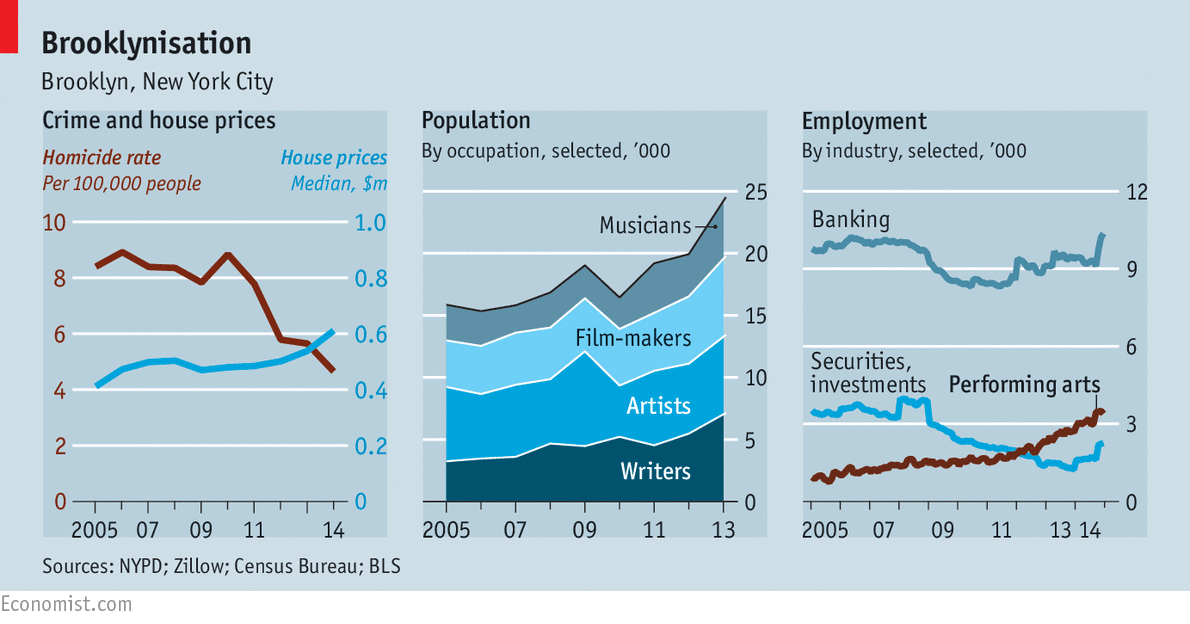
Is the Brooklyn exodus of artists, writers, musicians, and other creative professionals a myth? According to The Economist, yes:
Meet Ferguson’s radical knitters:
“As a black woman, you’re invisible,” says Taylor Payne, a member of the group. “But knitting makes people stop and have a conversation with you. If someone asks me what I’m doing, I say, ‘I’m knitting for black liberation.’ Sometimes they respond and sometimes I just get ‘Oh, my grandma knits,’ like the person didn’t hear me. But at least it opens the door to talking about my experiences.”
A great review by Lizzie Skurnick of Harper Lee’s new novel that says gender, not race, is the issue of this newly released version of her famous book. Though this passage stopped me in my tracks:
Add Lee writing about Scout breathing in “the warm bittersweet smell of clean Negro,” or admiring Tom as a “black-velvet Negro, not shiny, but soft black velvet,” you see that while Go Set a Watchman is controversial for some, Mockingbird was always pretty controversial for others. (I’m still waiting for the book in which a white character is introduced by his or her color and smell.)
A new report looks at 700 popular films from 2007 to 2014 and how they represent gender, ethnicity, and sexual identity. It includes some fascinating facts:
- Across 700 films, a total of 9,522 characters were coded 40‐ to 64‐years of age. Less than a quarter (21.8%) of these characters were women. Only 19.9% of the middle‐aged characters were female across the 100 top films of 2014. This is not different from the percentage in 2007.
- Of those characters coded for race/ethnicity across 100 top films of 2014, 73.1% were White, 4.9% were Hispanic/Latino, 12.5% were Black, 5.3% were Asian, 2.9% were Middle Eastern, <1% were American Indian/Alaskan Native or Native Hawaiian/Pacific Islander, and 1.2% were from “other” racial and/or ethnic groupings. This represents no change in the portrayal of apparent race/ethnicity from 2007‐2014.
- Across 4,610 speaking characters in the 100 top films of 2014, only 19 were Lesbian, Gay or Bisexual. Not one Transgender character was portrayed. Ten characters were coded as Gay, 4 were Lesbian, and 5 were Bisexual. Only 14 movies sample wide featured an LGB depiction and none of those films were animated.
Writing for The Times Literary Supplement, Gabriel Said Reynolds explores the newly discovered Birmingham Qur’an in the context of debate on Islamic origins:
However, the BBC article – like a subsequent New York Times article (also July 22) – misses the most significant point about the dating of this Qur’an manuscript (which contains only a small section of the text: parts of chapters 18, 19, and 20). Islamic tradition reports that Muhammad received revelations from the angel Gabriel between the year 610, when he was forty years old, and his death in 632. But according to Islamic tradition, he did not write down these revelations. Instead, his proclamations were preserved only on various scraps (one tradition speaks of palm leaves, parchment and the shoulder blades of camels), or in versions which some of his companions composed. An official text of the Qur’an was only recorded around 650, during the reign (644–656) of Uthman (the third Caliph, or successor, of the Prophet Muhammad). According to a well-known Islamic tradition Uthman had his “official” text of the Qur’an prepared by a committee, and all variant versions destroyed by fire: “Uthman sent to every Muslim province one copy of what they had copied, and ordered that all the other Qur’anic materials, whether written in fragmentary manuscripts or whole copies, be burnt”.
The top 50 vape flavors in the US, includes some that offer interesting cultural insights (esp. #4). Here are the top 20; the rest are here:
- Cigarette
- Widow
- Blackberry Leatherman
- Confederate Swamp
- Tavern On The Green
- Dark Chocolate
- Beefwater
- Neat Dad
- Kilgore Trout
- Methamphetamine
- Adamantium
- Shakespeare Lecture
- Laundromat Change Machine
- Binky
- Ukrainian Drought
- 1988 Honda Civic Hatchback
- Old Marshmallow
- Dentist Visit
- Student Lounge
- Græwood Myst
What are the chances of a pigeon pooping on you in NYC? This is the answer, but it doesn’t seem right at all, and I say this as an avid walker in NYC who has only been pooped on once in my almost two decades here:
You are 20% likely to be pooped on by a pigeon within 2 hours, assuming you are walking nonstop through New York City, which contains a population
of 1 million pigeons who poop at a rate of every 12 minutes.
A look at the conventions of gender and travel writing (h/t @dominicumile):
The authors of these narratives talk a lot about how they shouldn’t be on the road because good girls stay at home. Explaining why she was leaving her marriage to travel, Gilbert writes, “Until I can feel as ecstatic about having a baby as I felt about going to New Zealand to search for a giant squid, I cannot have a baby.” Here, the act of travel itself is so subversive to gender norms that the destination almost doesn’t matter. This absolves the writer of responsibility for her choices — where she goes, what she does there, or how she writes about it. Much emphasis is put on how “authentic” their lives are, hence the self-congratulatory title of Newman’s collection of travel writing, What I Was Doing While You Were Breeding (2014). But these books are not so much transgressive as regressive. After all, they obey their gender codes: men go on adventures, women on journeys of self-discovery.
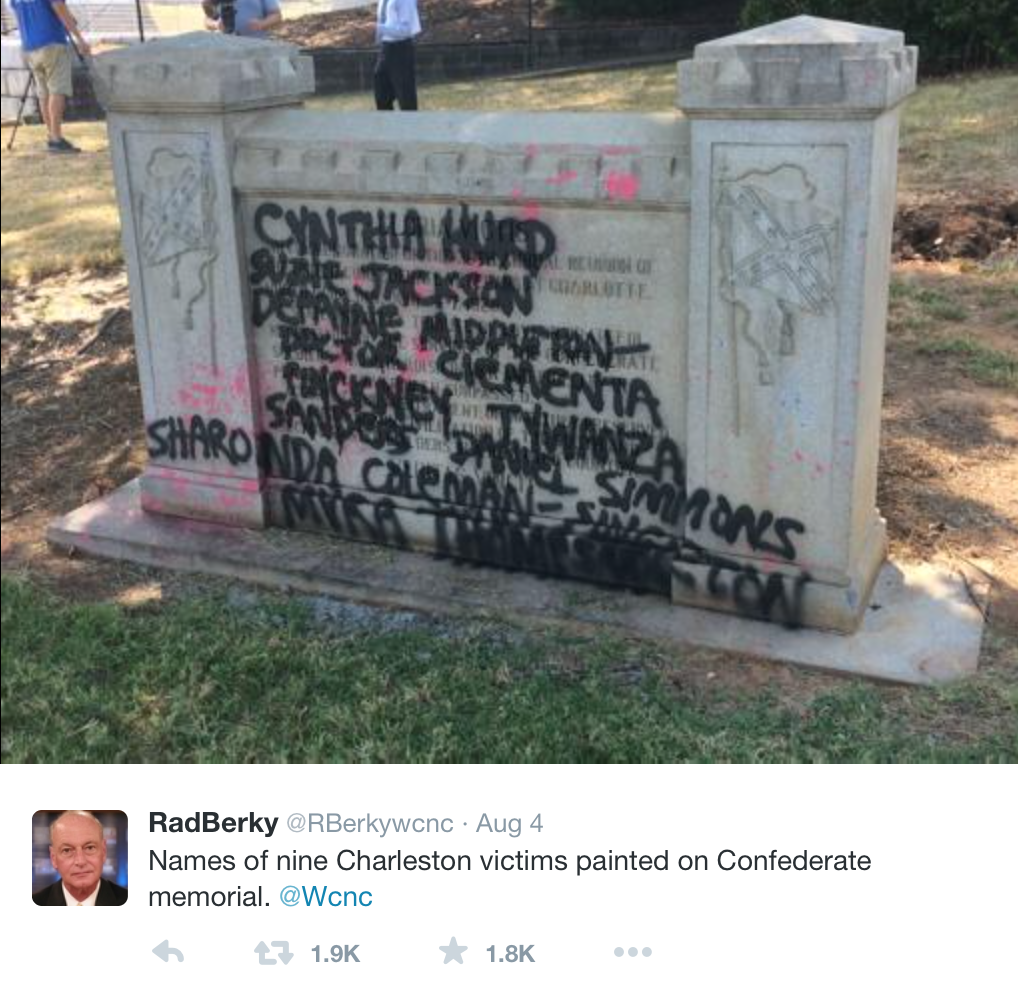
This happened this week in Charlotte, North Carolina:
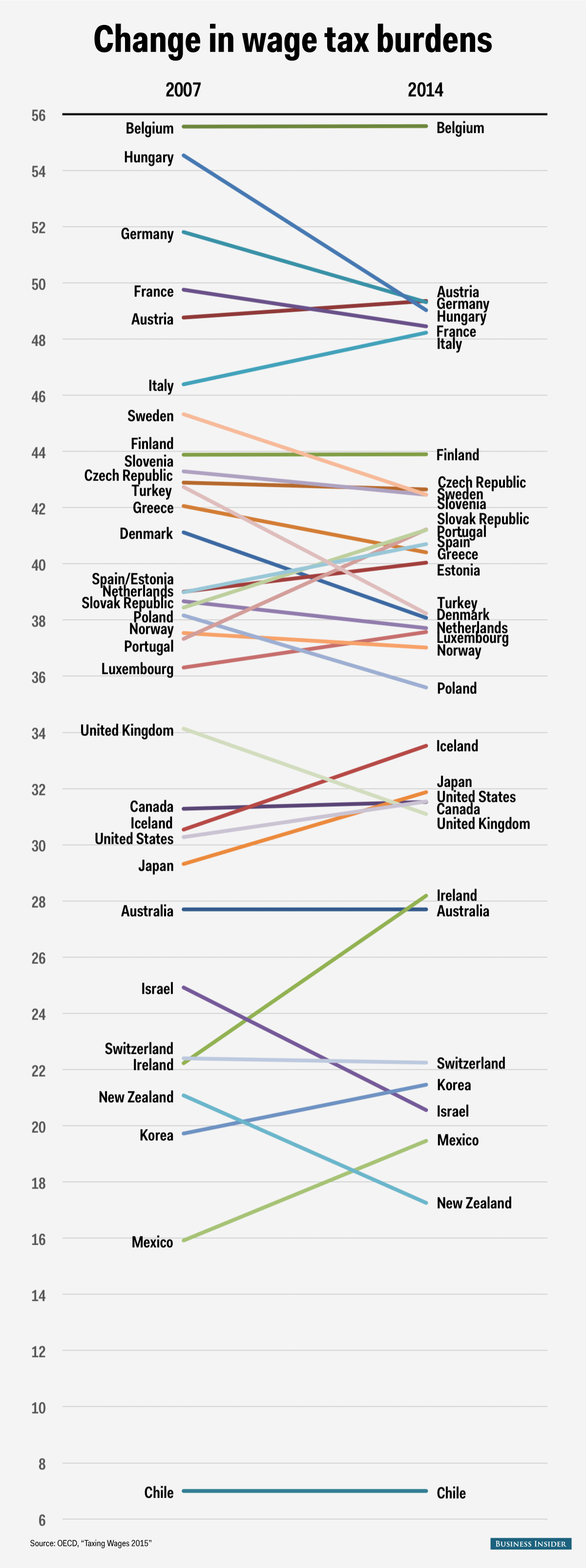
Business Insider creates a graph showing how much income is taxed around the world:
Pretty funny: Why I Deleted Your Promo Email.
Required Reading is published every Sunday morning ET, and is comprised of a short list of art-related links to long-form articles, videos, blog posts, or photo essays worth a second look.