Required Reading
This week, college and the market, foundations funding inequality, MoMA by the numbers, 1-star Yelp reviews of US national parks, and more.


This week, college and the market, foundations funding inequality, MoMA by the numbers, 1-star Yelp reviews of US national parks, and more.

“How college sold its soul to the market” by William Deresiewicz:
But we no longer have youth as it was imagined by modernity. Now we have youth as it was imagined by postmodernity — in other words, by neoliberalism. Students rarely get the chance to question and reflect anymore — not about their own lives, and certainly not about the world. Modernity understood itself as a condition of constant flux, which is why the historical mission of youth in every generation was to imagine a way forward to a different state. But moving forward to a different state is a possibility that neoliberalism excludes. Neoliberalism believes that we have reached the end of history, a steady-state condition of free-market capitalism that will go on replicating itself forever. The historical mission of youth is no longer desirable or even conceivable. The world is not going to change, so we don’t need young people to imagine how it might.
8 signs that your foundations may be inadvertently perpetuating inequity:
- Your application takes more than 10 to 15 hours to complete
- Your LOI is a mini application
- You require more than five attachments
- You require organizations to translate their budget into your format
- You overly rely on a scorecard to determine funding decisions
- Your grant is invitation-only
- You are rigid in the percentage of an organization’s budget you will fund
- Your application takes more than six months to process
A really good letter to that Duke University student who didn’t want to ready Allison Bechdel’s Fun Home for religious reasons (ugh):
For the rest of your life, adults will show you things and tell you things that you don’t like. You’re going to find things that conflict with your beliefs, people who disagree with them, systems that go against what you stand for.
In high school you can opt out of a class with a note from your parents. In college you can skip an optional book on the curriculum. That’s true. But you can’t spend your whole life refusing to participate or taking a pass. You can’t avoid all these things and these people and these systems and be a participant in the world. You need to figure out how you’re going to cope.
You probably know this already but sex is on TV, in movies, in books, in your neighbor’s dorm room. There’s also a bunch of other things you find morally offensive all around you: violence, lying, and stealing. Bad acts and evil things are an unavoidable part of being human.
So what do you do now that you’re (almost) an adult?
This whole profile, which tells us how a New York lighting designer spends his Sundays, is brilliant, from the first line to the last. It begins:
In 2010, Bentley Meeker left an anonymous note in the temple of the Burning Man festival, concerning his relationship with his son, who is now 15 and lives in California. After the temple burned down — as is the ritual at the annual Nevada event — he found resolution.
Lots of people are noticing that white nationalists are getting excited by Donald Trump’s Presidential bid:
Jared Taylor, the editor of American Renaissance, a white-nationalist magazine and Web site based in Oakton, Virginia, told me, in regard to Trump, “I’m sure he would repudiate any association with people like me, but his support comes from people who are more like me than he might like to admit.”
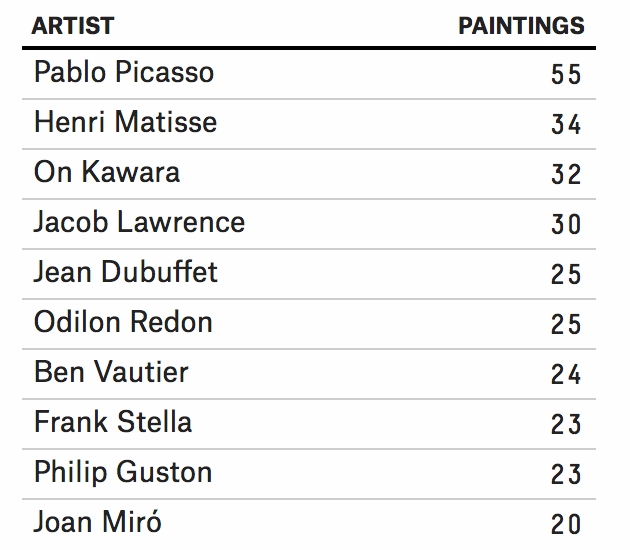
FiveThirtyEight crunched the numbers about the Museum of Modern Art’s painting collection and found some interesting things, like there are 55 paintings by Picasso and 34 by Matisse in the collection (though there are only 3 van Goghs):
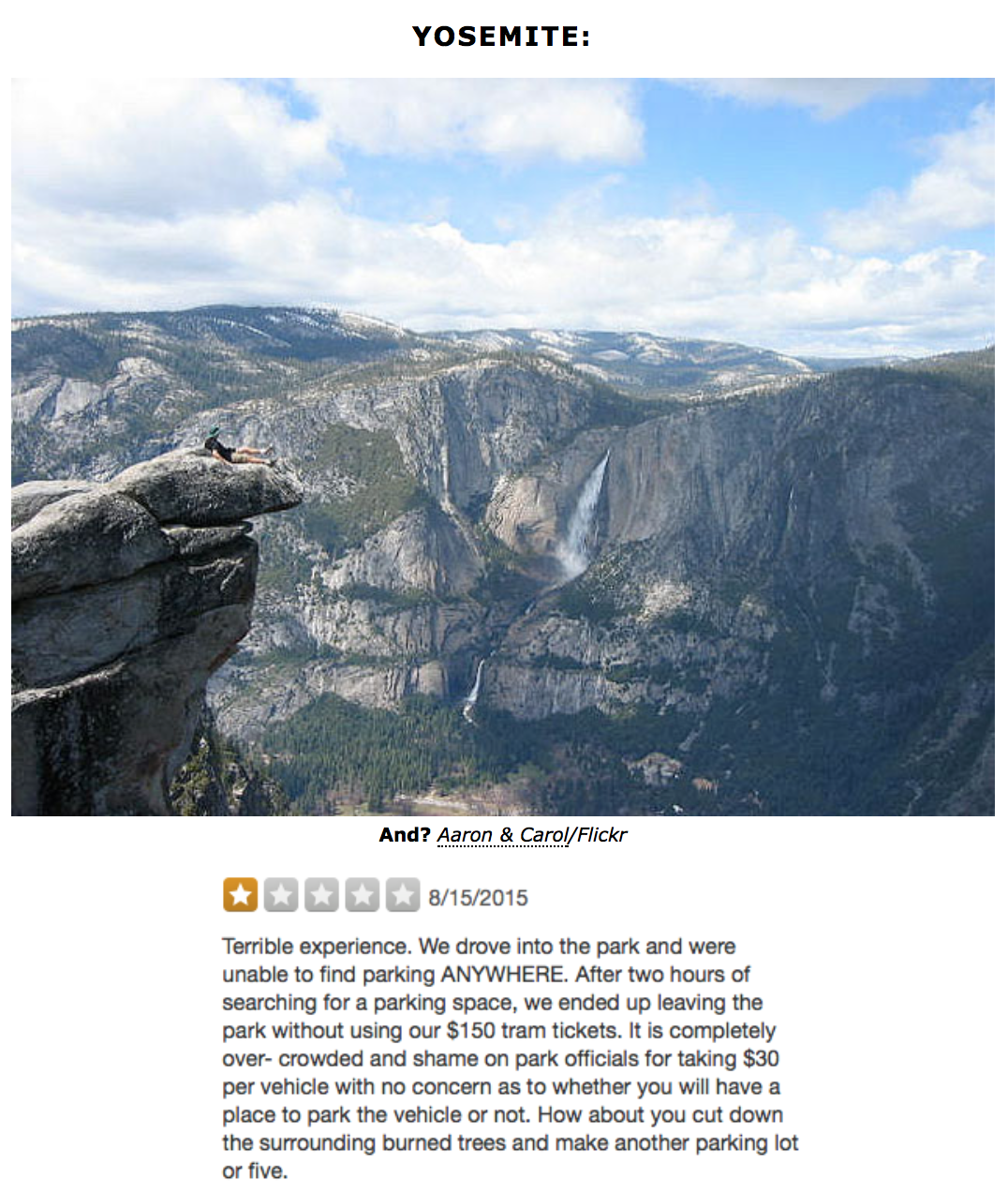
One-star Yelp reviews of US national parks:
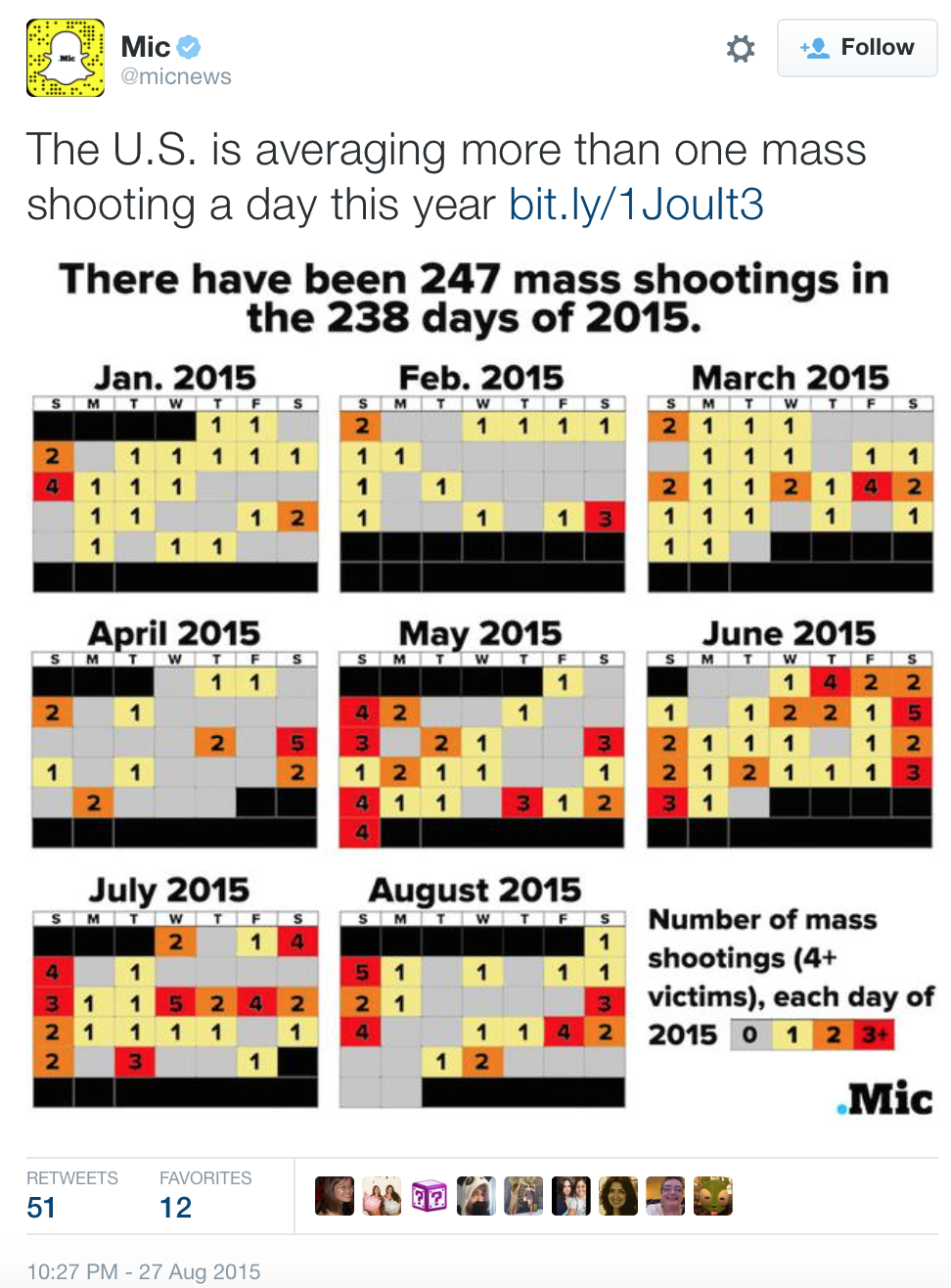
There are more non-religious people than most people think:

More drones means we will never have privacy, like this man sunbathing on top of a wind turbine:
But then again … how Peru is using drones to protect Machu Picchu and other historic sites:
The drone flights are indisputably valuable for archival and research purposes, but as Castillo and Watanave soon discovered, they’re a good way to document current abuses of archaeological sites as well. Peru’s middle class is growing, and land is at a premium, meaning that ancient ruins are often threatened by building. In a famously embarrassing incident, a 4,000-year-old pyramid at the El Paraíso archaeological site was knocked down by developers, while in February 2015, the archaeological site of Farfán in Cajamarca was leveled and fenced in by a man who claimed to own the property (a claim the Ministry of Culture, unsurprisingly, contests).
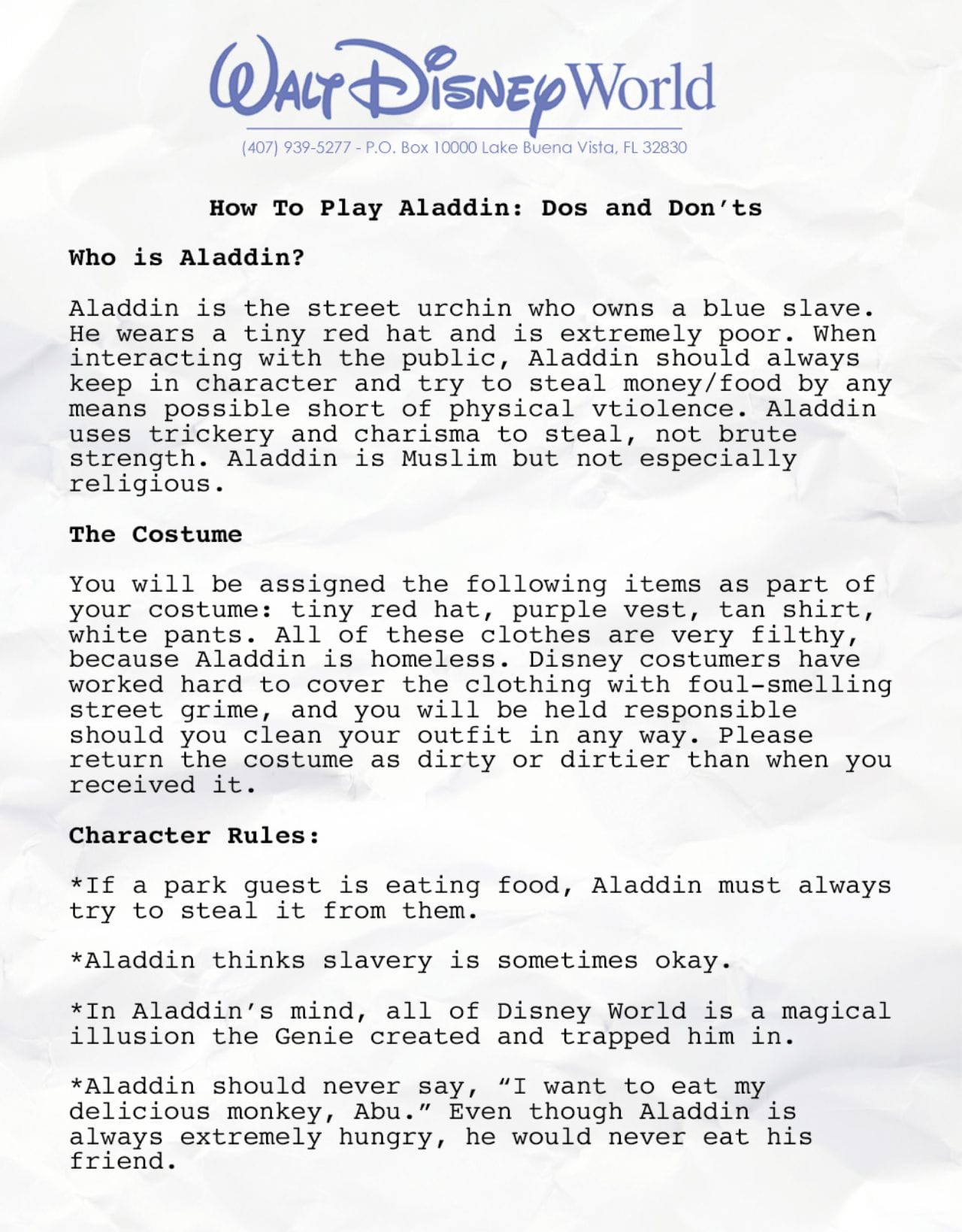
Clickhole has a funny piece on the handbook given to actors playing Aladdin at Disney World (satire):
Required Reading is published every Sunday morning ET, and is comprised of a short list of art-related links to long-form articles, videos, blog posts, or photo essays worth a second look.