Required Reading
This week, Paris > Beirut, Goya's portraits, robber barons and looting, street art and gentrification, and more.

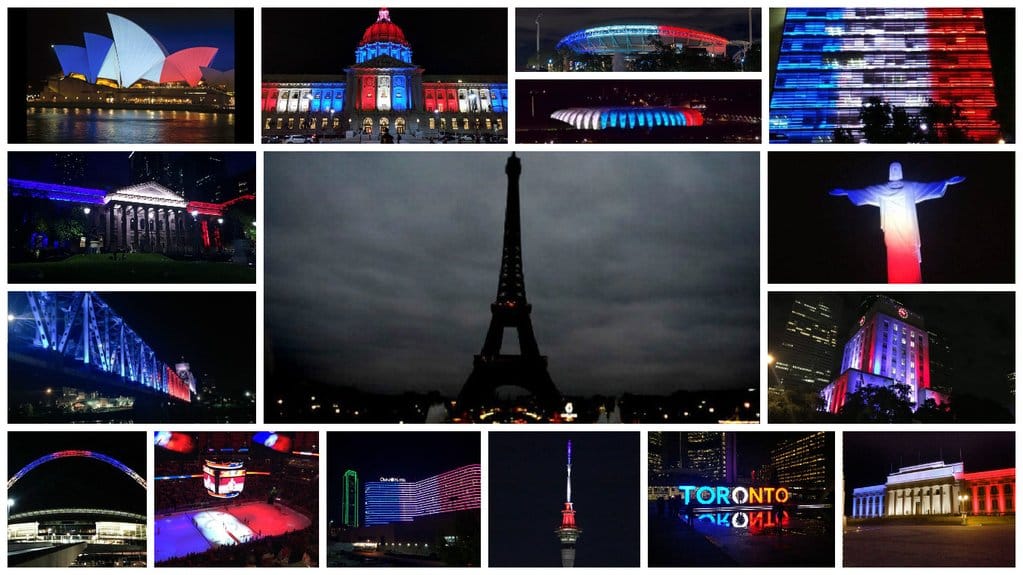
This week, Paris > Beirut, Goya’s portraits, robber barons and looting, street art and gentrification, and more.

The events in Paris on Friday have triggered many responses, but some of the most cutting have been from those asking why the Beirut attack a few days earlier didn’t trigger the same emotional outpouring or the implementation of Facebook’s “safety check-in” feature. Joey Ayoub writes:
It also seems clear to me that to the world, my people’s deaths in Beirut do not matter as much as my other people’s deaths in Paris.
‘We’ do not get a safe button on Facebook.
‘We’ do not get late night statements from the most powerful men and women alive and millions of online users.
‘We’ do not change policies which will affect the lives of countless innocent refugees.
This could not be clearer.
I say this with no resentment whatsoever, just sadness.
TJ Clark discusses Goya’s portraits at the National Gallery in London:
It is indicative, I think, that when Goya set himself the task of describing the boundary (or lack of one) between living and dying, as he did here, he seems automatically to have thought in terms not just of a double portrait – which would be extraordinary enough – but of a group portrait, or the parody of a group portrait, or a portrait of ‘life’ (just) surrounded and haunted by entities from elsewhere. That is to say, Arrieta presents us with Goya’s deepest thinking about himself and other people, and their reality and unreality for him. Any attempt to put that thinking into words is bound to be crude and intrusive, rather like Arrieta’s fist as he holds the glass (of hemlock? of blood?), trying to persuade Goya to swallow, when what one wants is a prose as unnoticeable and supportive as Arrieta’s other hand on Goya’s shoulder. But here goes.
Remember when US robber barons went to Europe and just bought whole historic buildings and shipped them back to the US? Yeah, it’s complicated:
From the moment Hearst agreed to shell out the cash—around $300,000 in total—Byne realized he was facing a number of challenges in moving a monastery, stone by stone, across the Atlantic Ocean to a California forest. Luckily, American money worked wonders on a weak Spanish government.
The first, and perhaps most pressing issue, was that taking a monastery out of Spain violated a host of Spanish cultural preservation laws, many of which the Spanish government had generated in the wake of Byne’s previous antiquities-purchasing binges. “It is forbidden to ship a single antique stone from Spain today—even the size of a baseball,” Byne himself admitted. Thus, Byne took extreme precautions in keeping his project quiet. Two of Hearst’s architectural consultants, Walter T. Steilberg and Julia Morgan corresponded about the “need for secrecy in this matter.” “I am not trusting, in this talkative country, to the discretion of any typist, and shall send all of my reports in pencil…” wrote Steilberg.
One of the ways Byne convinced the Spanish government to turn a blind eye to his pillaging was by convincing the Spanish Ministry of Labor that his project was a “partial solution to the serious problem of unemployment.” In the midst of a serious Spanish economic depression, Byne hired more than 100 local townspeople to dismantle the monastery. The disassembling process went quickly, thanks to the neat construction of the site—Byne described the monastery as “a joy to take down.”
Critic Mary Louise Schumacher walks us through the rehanging of the permanent collection at the Milwaukee Art Museum:
The museum is completing a $34 million project that touches every aspect of the institution. This includes a glittery new atrium on the lake and exhibition spaces that have been dramatically renovated, expanded and reimagined.
But it’s the doings inside — a top-to-bottom rethinking of the story of art — that’s most transformational for the institution.
The human moments that make up this museum have been present amid the controlled chaos of the reinstallation. The beautiful sculptor who died young of a brain tumor, the artist who showed America to itself, the vivacious philanthropist who effectively had her own apartment in the museum, the children who went door to door raising funds for a war memorial almost half a century ago, the Gilded Age industrialist who wanted Milwaukeeans to have an art gallery.
Philip Kennicott takes a look at the new Renwick Gallery in DC, including this unfortunate bit:
And for some reason the facade, which contains the motto “Dedicated to Art,” has been defaced with a silly addition, emending the words chiseled there about 150 years ago with: “Dedicated to the Future of Art.” It would be better to pursue that future with vigor and intelligence inside than to advertise it in vulgar fashion on the outside. This temporary addition needs to go, and fast.
The always insightful artist and critic Mira Schor reflects on what Paris means for her generation. It ends so beautifully:
The news from Paris is one of the many blows to our sense of the loss of reason and hope of our time, yet the day is followed by the day, and one has to figure out how to make the days count even if the idea of accumulating material for the human archive is increasingly revealed as a fantasy.
The woman who read through a Donald Trump rally:
Like I said, we went with an open mind and then it all started. There were some “Dump Trump” protesters. The way the supporters treated the protestors was really unbelievable and that’s what made me mad. All four of us as a collective group, our energy shifted. The way Donald Trump said, “Get them out of here”—when you say those words, that activates your supporters to be able to be the same way. Then there was a man who snatched a lady’s Obama hat. She was one of the protesters and was leaving and her hair just went with the hat. Then he threw it into crowd and everybody cheered. I thought, “That’s bullying. That’s aggressive.” I don’t think Trump handled it with grace. I thought, “Oh, you’re really not empathetic at all.” That’s when the shift happened.
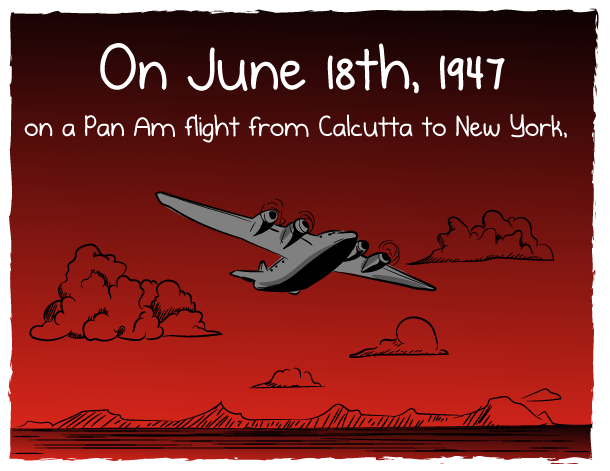
This week’s comic by The Oatmeal may be one of the best yet:
Vandalog asked curators and artists if “street art sold out and gentrified our cities?” Gallerist-turned-museum-director-and-now-gallerist-again Jeffrey Deitch replied [emphasis theirs]:
Most of the major and most influential artists who are know for their work on the street have enthusiastically participated in the versions of Wynwood Walls and Coney Art Walls that I have curated. The artists are happy to have their work displayed in this context.
Gentrification that displaces residential communities for luxury housing, and creative economic development in decaying communities with high crime and unemployment are very different propositions. The public mural projects in Wynwood helped to turn around a dangerous, crime ridden neighborhood with many vacant lots and abandoned buildings. The new galleries, restaurants, stores and offices for creative industries have created jobs and spurred needed economic investment.
There is also a big difference between a real estate developer who hires a “street artist” to paint a mural to promote a new building and the creation of a well curated outdoor mural museum that contributes to the artistic dialogue in a serious way.
Until the major museums (the Brooklyn Museum is an important exception) open up and show the work of artists who emerged on the streets, projects like Wynwood Walls and Coney Art Walls are essential venues for the public to learn about and enjoy some of the most important contemporary art.
Jetpacks are finally becoming a thing, as this demonstration by a company in New York proves (at one point didn’t we all think the public would have jetpacks by the 1990s?):
The largely unknown history of Afro-Iranians is being told. You may not realize that:
The majority of Afro-Iranians came to Iran via the Indian Ocean slave trade, a trade route between East Africa and the Middle East, which was dominated by Afro-Arabs merchants beginning in the ninth century. Because of the dispersal of slaves throughout the Middle East and subcontinent, virtually every country bordering the Persian Gulf has a legacy of slavery and African population, like the Afro-Iraqis, Afro-Pakistanis, Afro-Kuwaitis, Afro-Omanis, Afro-Saudis and so on.
And then there is this amazing German elementary class, which did an incredible rendition of a Kraftwerk song (h/t @jmcolberg):
Required Reading is published every Sunday morning ET, and is comprised of a short list of art-related links to long-form articles, videos, blog posts, or photo essays worth a second look.