Required Reading
This week, archeology politics, critical thinking and painting, futurist terms, #terroristselfie, how people spend time online, and more.

This week, archeology politics, critical thinking and painting, futurist terms, #terroristselfie, how people spend time online, and more.

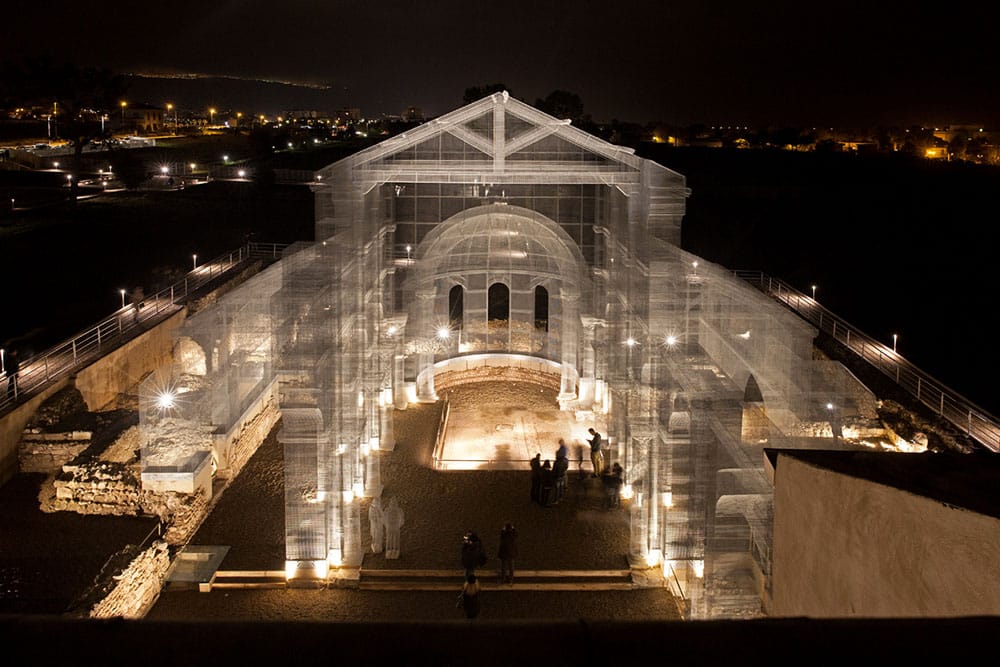
The archeological ruins of Syria raise important questions about the value we place on objects rather than human lives. Michael Press writes:
We can name the sites that have been looted and damaged: Palmyra and Apamea and Mari – the Temple of Bel, the Arch of Triumph, the Great Mosque of Aleppo. But the Syrian dead are nameless.
There is one important exception to this: Khaled al-Asaad, an archaeologist beheaded by ISIS at Palmyra last year. Why is al-Asaad unique? Because (for academics) we can relate to his field and his interest in the ruins of Palmyra? Or perhaps for another reason. It has been reported that ISIS murdered al-Asaad because he refused to reveal to them the location of antiquities that had been hidden for safekeeping. Perhaps we care about al-Asaad because he made the same calculation of the value of monuments versus human (Syrian) life that we do.
We’re all laughing at Donald Trump’s talking point about making Mexico pay for a barrier wall (yes, he’s crazy), but the idea has some historical precedent. A new paper from the Museum of the Sealand explains how the Sumerians made the Amorites pay for a wall they built to protect themselves from their neighbors:
Among the texts in a private collection donated to the Museum of the Sealand is a receipt that includes a newly discovered royal year name for Šu-Suen, a king of Ur in the 21st century BC.Professor Joseph King prepared the original transliteration of the cuneiform inscription, and we are indebted to his work.Royal year names from the Third Dynasty of Ur (2112–2004 BC) are crucial to our reconstruc-tions of the early history of ancient Mesopotamia. 1 In this case we have striking new evidence for a well-known event: the building of the wall to hold back the Amorites and protect the heartland of Sumer. 2 Luckily, this new text helps us explain how Šu-Suen managed the costs of this great undertaking by forcing the Amorites themselves to pay for it.
There’s an interesting article by Laurie Fendrich on Two Coats of Paint titled “How critical thinking sabotages painting.” She writes:
Applied to painting, critical thinking too often ends up calling into question the very medium—a deconstructionist impulse that particularly sabotages beginning students. Playing baseball or tennis requires accepting the game as a whole, and so does painting. But unlike baseball or tennis, painting is an open-ended pursuit without any numerical victory or defeat. It’s fraught with subjectivity and uncertainty. It is, as an artist I know has said, one semi-mistaken brushstroke after another applied until a kind of truce against the possibility of a perfect painting is reached.
Painting is particularly ill-suited to the critical thinking that has become ubiquitous on college syllabi and de facto mandated by outcomes-assessment mavens who demand that all professors, even art professors, articulate “desired outcomes” from specific “goals and objectives.” Nonetheless, given the corporatization, bureaucratization, quantification, and discrediting of subjectivity and taste in higher education, it has been able to establish first a foothold, then a beachhead, and ultimately a colony in that most unlikely of places, the college painting classroom.
What happened to Emma Sulkowicz after her mattress performance? She’s back with a new show in LA:
Certain topics are off limits however. Try to ask her about “Mattress Performance” or other subjects that she feels “objectify or fetishize her,” as the press release states, and she’ll politely refer you to the Emmatron. Step onto the platform opposite the sculpture and you can select from a series of questions on an iPad, ranging from the mundane (“For how long did you carry the mattress?”) to the deeply personal (“Tell me about the night you were assaulted.”). Answers recorded by Sulkowicz play from Emmatron’s unmoving lips. On the afternoon I visited, these responses were barely audible, unintentionally highlighting the primacy of the interaction with the living, breathing artist in the room. There was one Emmatron question, however, that struck me as being especially relevant her current work. Q: What is the Difference between Politics and Art? A: All Art is Political.
In order to interview Sulkowicz, I had to abide by the rules of the piece and step on the platform like everyone else. As a writer — generally the observer, rarely the observed — I felt especially awkward putting myself on display. It did give me an insight however, into Sulkowicz’s daily experience as part of this durational work. I was surprised that someone who had received so much hostility online would want to invite similar confrontations in the real world. “All the vitriol I’ve ever received has been through the Internet,” she told me. “I’ve gotten death threats over email but never to my face, because those people are just much more comfortable behind their computer screens.” On the contrary, Gleason told me that a few visitors had become so emotional during their interactions with Sulkowicz that they had been moved to tears.
20 terms every futurist should know:
6. Longevity Dividend
While many futurists extol radical life extension on humanitarian grounds, few consider the astounding fiscal benefits that are to be had through the advent of anti-aging biotechnologies. The Longevity Dividend, as suggested to me by bioethicist James Hughes of the IEET, is the “assertion by biogerontologists that the savings to society of extending healthy life expectancy with therapies that slow the aging process would far exceed the cost of developing and providing them, or of providing additional years of old age assistance.” Longer healthy life expectancy would reduce medical and nursing expenditures, argues Hughes, while allowing more seniors to remain independent and in the labor force. No doubt, the corporate race to prolong life is heating up in recognition of the tremendous amounts of money to be made — and saved — through preventative medicines.
The myth and challenges of queer Arab life, according to a gay Arab man in Beirut:
Like everywhere else in the world, sexual identities in the Middle East intersect with class, gender, and the complex interplay of private and public, making it impossible to speak of a singular ‘queer Arab’ experience. There are a multitude of queer Arab experiences: from gender rights activists providing underground abortion services to long romantic partnerships between Bedouin men in Siwa, each queer life in the Arab world is unique. Trying to write about a singular gay Arab experience would be, as one Lebanese gay rights activist put it, the equivalent of “writing a story about gay life in the US, and just interviewing someone from the Westboro Baptist Church, a closeted teenager in Nebraska, and Adam Lambert.”
Micky Bradford was in front of the North Carolina governor’s mansion to protest the new state bill that denies LGBT people any protection from discrimination at work or housing and bans transgender individuals from using public restrooms that don’t match the sex listed on their birth certificates. She chose to express herself through dance. “It’s important to see a black trans woman be unafraid of police and policing,” Bradford said of her dance. Here’s the video:
The forgotten female action stars of the 1910s:
During the early years of cinema in the 1900s and 1910s, men starred in action films such as westerns, but women dominated the so-called “serial” or “chapter” film genre. These were movies in which the same character appeared over several installments released on a regular basis, with plots that were either ongoing or episodic. The story lines typically featured female leads getting into danger, getting out of danger, brandishing guns, giving chase in cars, and battling villains. The film scholar Ben Singer estimates that between 1912 and 1920, about 60 action serials with female protagonists were released, totaling around 800 episodes.
What’s most striking about the category, Singer says, is its “extraordinary emphasis on female heroism.” Protagonists exhibited traditionally “masculine” qualities like “physical strength and endurance, self-reliance, courage, social authority, and the freedom to explore novel experiences outside the domestic sphere.” Then, by the early 1920s, those films and their stars, the so-called “serial queens,” disappeared.
Lest liberals start feeling superior about the possibility that Donald Trump will become the Republican candidate, Jim Lewis, writing for the Intercept, reminds us that a liberal culture, not a conservative one, created Trump (emphasis mine):
After all, it wasn’t some Klan newsletter that first brought Trump to our attention: It was Time and Esquire and Spy. The Westboro Baptist Church didn’t give him his own TV show: NBC did. And his boasts and lies weren’t posted on Breitbart, they were published by Random House. He was created by people who learned from Andy Warhol, not Jerry Falwell, who knew him from galas at the Met, not fundraisers at Karl Rove’s house, and his original audience was presented to him by Condé Nast, not Guns & Ammo. He owes his celebrity, his money, his arrogance, and his skill at drawing attention to those coastal cultural gatekeepers — presumably mostly liberal — who first elevated him out of general obscurity, making him famous and rewarding him (and, not at all incidentally, themselves) for his idiocies.
Earlier this week, everyone was talking about that odd “selfie” that Ben Innes took with the suspected terrorist who hijacked an Egypt Air plane from Egypt to Cyprus. He eventually explained his motivation to the Guardian:
I’m not sure why I did it, I just threw caution to the wind while trying to stay cheerful in the face of adversity. I figured if his bomb was real I’d nothing to lose anyway, so took a chance to get a closer look at it. I got one of the cabin crew to translate for me and asked him if I could do a selfie with him. He just shrugged OK, so I stood by him and smiled for the camera while a stewardess did the snap. It has to be the best selfie ever.
For her part, Innes’s mother insisted the photo was being mischaracterized. “All we can say is that the picture is clearly not a selfie as everyone has been describing it,” she said. Here’s the image (and his mom is right):
Ben Innes from #Aberdeen poses for a picture with #EgyptAir #MS181 hijacker. pic.twitter.com/ywdGYuDWwm
— Paul Smith (@Journo_Paul) March 29, 2016
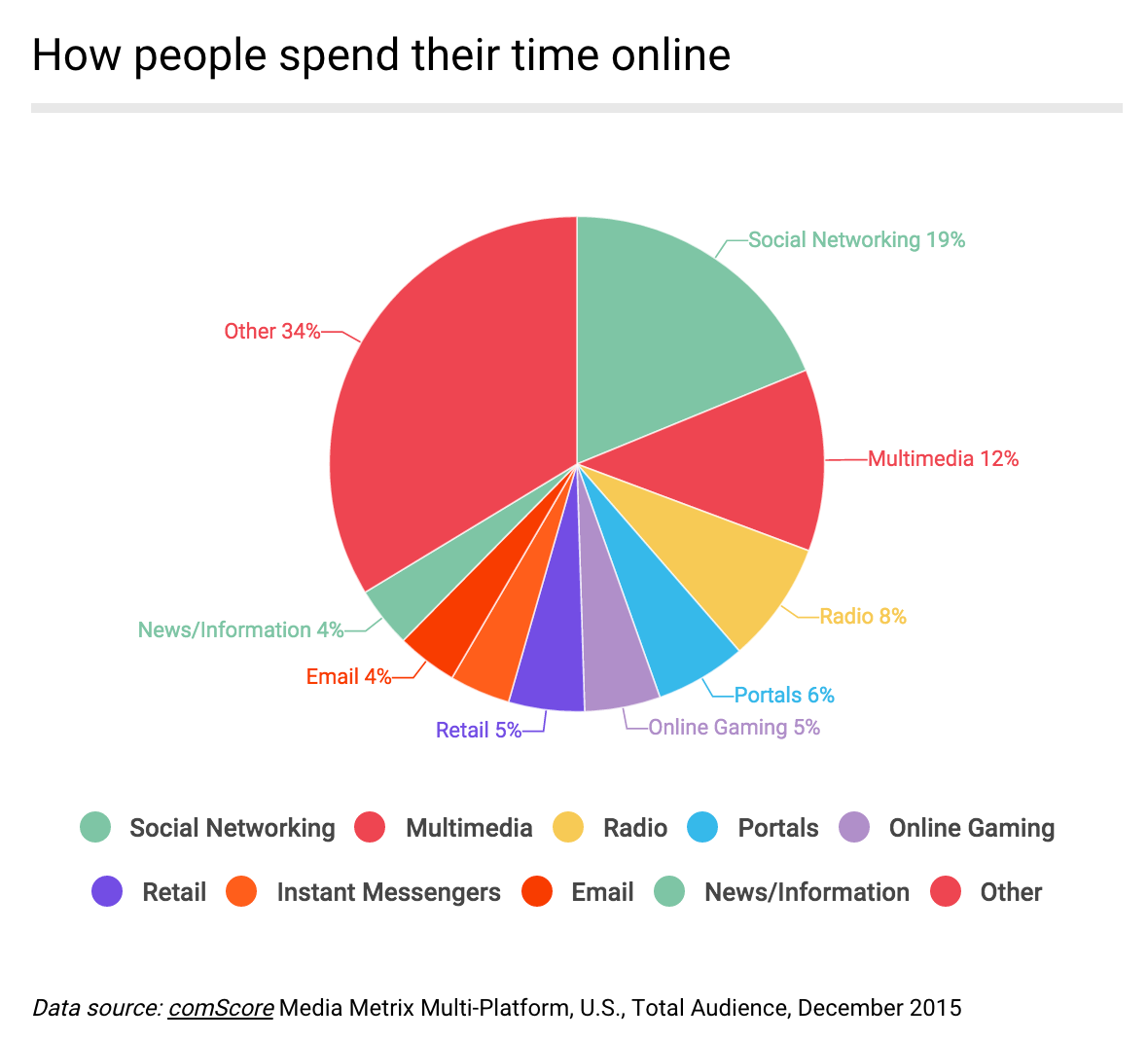
Ever wonder how people in the US spend their time online? Well:
The adorable BB-8 from the latest Star Wars just got a whole lot cuter:
Required Reading is published every Sunday morning ET, and is comprised of a short list of art-related links to long-form articles, videos, blog posts, or photo essays worth a second look.