Required Reading
This week, the attention web, Art Institute of Chicago's rehanging, Superman's Jewishness, Libeskind in Kurdistan, defining neoliberalism, and more.


This week, the attention web, Art Institute of Chicago’s rehanging, Superman’s Jewishness, Libeskind in Kurdistan, defining neoliberalism, and more.

The “Cult of the Attention Web“:
The finite nature of time means that, in the world of the attention web, the competitive landscape is all encompassing. Everything is in competition with everything else. Facebook is as much in competition with Twitter, as it is with Spotify and Apple Music, Gawker and BuzzFeed, Hulu and YouTube, Candy Crush and Two Dots, Amazon and Walmart, Xbox and Playstation, Chipotle and your family dinner table, your hobbies and your bed. Because in the attention web, time spent shopping, eating, talking, playing, or sleeping is time that you are not looking at ads. It’s why Facebook has experimented with in-feed shopping. It’s why they bought a messaging app and VR company. It’s behind their big drive into video, as well as article self-publishing. They have to compete on all fronts to win the attention war. If they could serve up your meals they would.
Coca-cola talks about trying to win “share of stomach”, acknowledging that they are not just in competition with the other players in the drink industry, but in competition with every other food company and restaurant for the finite resource of stomach real estate. The attention web has taken this concept to a new scale that pits a vast array of industries against each other. This broad, unending competition for people’s time takes it’s toll on even the most popular services. See Twitter, Yahoo, Zynga and others.
As with all finite resources, there is a physical cap to how much time can be mined from the world, with population size as the forcing function. The number of people on the internet is directly proportional to the amount of time available. If you assume that technology companies want to maintain their growth curves, there are three possible avenues for them to take against this constraint:
Lori Waxman doesn’t like the rehang of the Art Institute of Chicago’s post-1945 galleries. She writes:
Instead, the curatorial team overseen by James Rondeau, formerly the museum’s curator of modern and contemporary art and now its new director, has grouped artworks into exasperatingly vapid mini-galleries deserving of nicknames like The Muddy Canvas Room, The Monochrome Room, The Bad Work by Good Artists Room, The Room of Amazing Production Values and The Leftover Objects Room. Big spaces are divided up into cubicles by the kind of half-walls that do no favors in art fairs, with most paintings hung alone and guarded by an obtrusive stanchion. A luminous color field by Mark Rothko can’t survive such a setting, nor a wry little checkerboard canvas by Sherrie Levine. A less dynamic hanging is hard to imagine.
"Hamilton," the book based on the musical, is the #1 book on Amazon and "Alexander Hamilton," the biography the musical is based on, is #18.
— Alexandra Alter (@xanalter) April 13, 2016
How Superman stopped being Jewish:
So what happened in between these two drastically different versions of the Man of Steel? Well, assimilation happened. The status of Jews in America shifted dramatically. The price of getting into the country clubs turned out to be greater than expected, and Superman paid it too. Superman originally represented the Jewish immigrant experience, but that story drifted further and further into the past. His Kryptonian name, Kal-El, even sounds Jewish, especially in contrast with Clark Kent. But as Jews increasingly didn’t need to change their names to be successful, Superman’s dual identity became less of a potent metaphor and more of a fun gimmick. How is Superman going to prevent Lois Lane from figuring out who he really is this time? (Spoiler: The solution was usually robots. Superman had loads of robot duplicates of himself, which kind of lessened the tension.)
The decline of Jewish radicalism meant that Superman’s awesome power lacked that poignant purpose, and that’s where new themes came in to fill the gap. That usually meant totally absurd stories in the 50s and 60s, like the time that Superman turned into a lion man or discovered that JFK was a shape-changing alien.
In case you don’t know exactly what neoliberalism is (which many people say is at the root of problems today), this is a solid explainer:
So pervasive has neoliberalism become that we seldom even recognise it as an ideology. We appear to accept the proposition that this utopian, millenarian faith describes a neutral force; a kind of biological law, like Darwin’s theory of evolution. But the philosophy arose as a conscious attempt to reshape human life and shift the locus of power.
Neoliberalism sees competition as the defining characteristic of human relations. It redefines citizens as consumers, whose democratic choices are best exercised by buying and selling, a process that rewards merit and punishes inefficiency. It maintains that “the market” delivers benefits that could never be achieved by planning.
The title says it all:
I’m on the Kill List. This is what it feels like to be hunted by drones
OK, maybe a little more:
I have been warned that Americans and their allies had me and others from the Peace Committee on their Kill List. I cannot name my sources, as they would find themselves targeted for trying to save my life. But it leaves me in no doubt that I am one of the hunted.
I soon began to park any vehicle far from my destination, to avoid making it a target. My friends began to decline my invitations, afraid that dinner might be interrupted by a missile.
I’m not sure if this will be a surprise for most people, but artists of minority populations aren’t getting the same funding and opportunities as white artists:
Nationally, only 6 percent of minority organizations receive comparable funding from individual donors to organizations serving mostly white patrons, according to Grantmakers in the Arts [GIA], which evaluates how equally grants are distributed.
In New York, for example, while 67 percent of the city’s population identifies as “people of color,” only 38 percent of arts sector employees share that identity, according to data from the New York Department of Cultural Affairs.
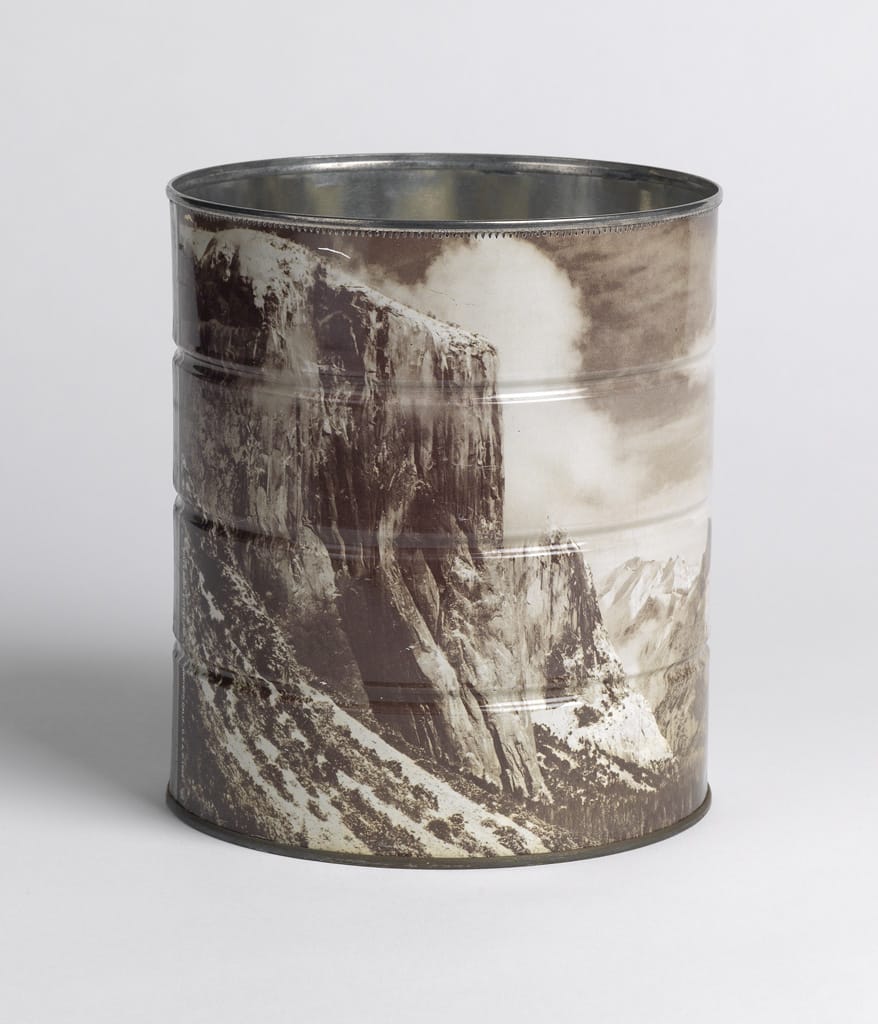
Who knew a 1969 Hills Brother coffee can wrapped with a photograph by Ansel Adams would be an auction item?
Always blame the technology:
2016: Smartphones are destroying our culture.
1795: Books are destroying our culture. pic.twitter.com/KUFcEILaG8
— the dead author (@thedeadauthor) April 11, 2016
If this story doesn’t pique your interest, then I don’t know what to say:
A former 1960s bondage-film actress is waging legal combat with a toycompany for ownership of her husband’s mail-order aquatic-pet empire.
A beautiful graphic by Joe Fox, Ryan Menezes, and Armand Emamdjomeh for the LA Times of every shot (all 30,699 of them) Kobe Bryant ever took:

If you want to know why Syrians are leaving the country and risking everything to find security, then watch this video, made available by the Independent:
This gif has been making the rounds recently:
“This is a myosin protein dragging an endorphin to the part of the brain which creates happiness. You’re watching happiness!”

Required Reading is published every Sunday morning ET, and is comprised of a short list of art-related links to long-form articles, videos, blog posts, or photo essays worth a second look.