Required Reading
This week, US architecture's odd couple, Roberta Smith about the new SFMOMA, Taibbi on Trump, censorship in Israel, multi-generational affluence in Florence, animals in art project, and more.

This week, US architecture’s odd couple, Roberta Smith about the new SFMOMA, Taibbi on Trump, censorship in Israel, multi-generational affluence in Florence, animals in art project, and more.

Philip Kennicott writes about modern American architecture’s “Odd Couple,” Philip Johnson and Frank Lloyd Wright:
They were very different personalities, with radically different approaches to the craft they pursued. Wright was an idealist, steeped in a romantic rhetoric of Art and Democracy, American to his core, intent on reforming the world through an organic architecture that was rooted to place, embedded in the natural world, horizontal in form, and pre-industrial in its rich, handcrafted detail. Johnson was an opportunist, a dilettante and a showman, better at finessing the social, bureaucratic and economic obstacles to building than at actual design. Wright had ideas and made them manifest; Johnson played with ideas and made them sexy. Between them, they shepherded American architecture through the age of muscular modernism, with its utopian aspirations in the real world, to the age of discourse, where what architects say about their work often matters as much as the work itself.
Some data looks at why cultural organizations are not attracting low-income visitors. Some findings:
- Out of the gate, four of 10 members of the US market don’t feel welcome in an art museum.
- The data indicate that history museums are perceived to be slightly more welcoming to lower income audiences than are art museums.
- The average visitor to an aquarium reported paying approximately 52% more to visit than did a visitor to an art museum, and also reported 73% lower negative attitude affinities. In other words, persons who don’t feel welcome at an organization don’t necessarily do so because of cost-related factors.
Roberta Smith writes about the new SFMOMA:
The West Coast Modern is not only bigger than the Museum of Modern Art in New York, it is poised — with concerted diversifying — to do for the late 20th and 21st centuries what its East Coast cousin did for the art of the late 19th and early 20th.
This feeling is strongest in parts of the Fisher Collection display, where Mr. Garrels has devoted handsomely installed, often intimate galleries to works by individual Minimalists and German Neo-Expressionists, among them Carl Andre, Gerhard Richter, Georg Baselitz, Brice Marden, Agnes Martin, Anselm Kiefer and especially Ellsworth Kelly, who is represented by what is essentially a four-gallery survey of his career.
Matt Taibbi writes about Trump and every line is a pleasure to read:
There were now two Republican Parties. One, led by Trump, was triumphant at the ballot, rapidly accruing party converts, and headed to Cleveland for what, knowing the candidate, was sure to be the yuugest, most obscene, most joyfully tacky tribute to a single person ever seen in the television age. If the convention isn’t Liberace meets Stalin meets Vince McMahon, it’ll be a massive disappointment.
Lavelle Porter pens a letter to Audre Lorde. It begins:
Two years, ago your name came up in one of the most improbable places. A few weeks before the St. Louis Rams drafted Michael Sam, making him the first openly gay player in NFL history, a white male sportscaster in Texas named Dale Hansen gave a passionate response to Sam’s critics: “Civil rights activist Audre Lorde said, ‘It is not our differences that divide us, it is our inability to recognize, accept, and celebrate those differences.’” I never thought I’d see the day that a silver-haired, Southern white sportscaster with a Texas accent would publicly quote you, a black lesbian feminist socialist poet, and would do so in defense of a black gay professional football player, but here we are. Hansen’s full statement was powerful and drew attention. But the moment also made me wary. I thought about how this story of a gay athlete coming out in a major male sport was indicative of an assimilationist moment in queer politics. I wondered about your being reduced to an innocuous “civil rights activist” and not the militant poet who criticized the US invasion of your ancestral homeland Grenada, who spent time in the Soviet Union, and who might be critical of the macho, brutal sport that the young man plays or the billion-dollar corporation that runs it.
Curator Chen Tamir writes the arts censorship that is becoming a normalized part of life in Israel. Unfortunately, she overlooks the larger question of Palestinian artists and arts workers in this equation, but this is a continuing conversation:
Further examples include the redirection of arts funding to things like the Zionist Art Prize, and right-wing Prime Minister Benjamin Netanyahu, acting as temporary Minister of Education, vetoing the 2015 candidate for the Ministry’s annual literature prize. Calls for censorship are even coming from students—at Sapir College, a 2014 exhibition triggered vandalism and demonstrations against an exhibition that included hamsas (hand-shaped charms) inscribed with provocative slogans. These were students demonstrating againstfreedom of speech and expression.
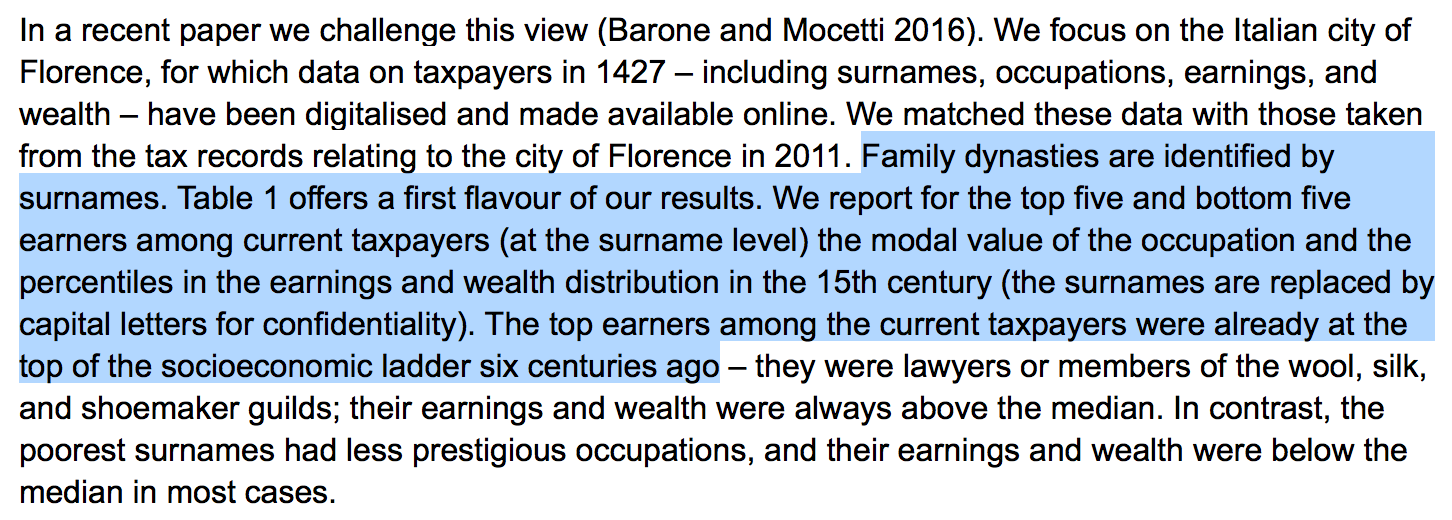
Just in case you didn’t think affluence was generational (there goes most people’s hopes of social mobility):
Elliot Sperber thinks that the use of animals for art projects need to stop:
While the use of live animals as objects of art seems to be more common than ever in this second decade of the third millennium, and is central to such iconic works of contemporary art as Joseph Beuys’ 1974 piece “I Like America and America Likes Me” (in which the artist spent three days in a gallery with a wild coyote), the practice is less than 80 years old. The use of living animals as objects of art, as opposed to subjects of art or objects of mass entertainment, can be arguably traced to 1938, when Salvador Dalí (ridiculed for his self-advancing proclivities by other surrealists by the anagrammatic nickname Avida Dollars) presented his installation “Rainy Taxi.” In this work, a precursor to Edward Keinholz’s 1964 “Backseat Dodge ’38,” two mannequins were placed in a taxi. A shark-headed chauffeur sat in front. In the back seat, surrounded by lettuce and chicory, living snails crawled over the female. While Dalí’s use of living animals was not widely emulated at first, by the 1960s the use of live animals in the art world became more common.
Cara Ober interviews Hans Haacke:
Q: After many years and projects that critique the art market, how do you negotiate your relationship with the art market in building a career?
A: I try not to have the market influence what I am doing. However, throughout history, not just in the art world, human activity has inevitably been affected by financial or comparable exchanges. That is part of life. It’s a question to what extent it dominates one’s behavior and goals.
There are artists who go much further than I do – I don’t go to art fairs and don’t exhibit my work in such a context. Some artists refuse to exhibit in commercial galleries or museums. I respect that, but I don’t believe it is socially productive.
What an artist does should reach an audience and thereby have a potential effect on society. And that requires being involved with the venues where one’s work can reach the public. Such venues are often associated with the art market. I do exhibit in commercial galleries and I have done so since my graduation from art school.
Confessions from journalists who worked on Facebook’s “trending” team. It’s a little scary:
I often found that when I reported a problem with the Trending tool or a discrepancy in the guidelines, my claims were dismissed. When a man would report the same problem, he would be congratulated for noticing the problem and actions would be taken to fix it. This silencing was devastating. I found myself speaking up less and less, until I got to a point where I no longer reported any problems or errors I encountered.
In one instance, a woman who reported a timecard approval discrepancy to her direct supervisor was told she was wrong without any investigating. The next week several contractors were missing hours from their paychecks – the attitude toward making sure we were paid on time and correctly was very careless. When another woman asked for clarification on guidelines because copy editors were giving her conflicting guidance, she was told to “stop pitting people against one another”.
Since 2014, 15 of the approximately 40-50 employees on the trending team have quit. Ten were women, including myself. Those numbers are telling when you consider that curators are paid well (starting salaries are between $55,000-$65,000), at least by most media industry standards, and are provided free meals while at work. This job should theoretically be very appealing, but the turnover rate was always high.
David Treuer writes about a new book that examines the enslavement of Native Americans in the western parts of the United States, and it may transform what you think about slavery and US history:
Reséndez launches his thesis with a bang that might (and probably should) upset the most widely held idea about the colonization of the New World: That as bad as the Spanish, Portuguese and later the English were, most Indians died from diseases against which most had no immunity, which was no one’s fault. It’s the “no harm no foul” approach to colonization.
It’s a fascinating question in light or recent anti-BDS actions by Israel: What form of resistance to the occupation is acceptable? Daoud Kattab has no answers but lots of questions:
The international community has thrown money at this problem, but even some of the international funded projects, including solar panels in south Hebron, makeshift housing in the Jordan Valley and other such projects, were destroyed by the Israeli army without any effective response from the very same donors that are also investing in various Israeli research projects, including drones and other not so innocent undertakings.
And this white cat has become a bit of a Japanese Twitter social media sensation for its “ballet” poses:
今日のミルコ ダンス♪ pic.twitter.com/PeBQcyeCeN
— 無重力猫ミルコのお家@ねこ休み展 (@ccchisa76) May 14, 2016
Required Reading is published every Sunday morning ET, and is comprised of a short list of art-related links to long-form articles, videos, blog posts, or photo essays worth a second look.