The older I get, the more dissatisfied with my work I become. It’s too demanding for the sort of silly, sensitive person that I am. It makes me miserably unhappy. The only hope is to go on working.
I don’t consider myself very successful. Being well-known or having lots of exhibitions have nothing to do with being an artist, those things are just chance.
I have no interest in the younger generation of artists whatsoever. I think it’s a great pity that some of them go on pretending to themselves that they are artists.
You don’t need to be in a particular frame of mind to paint, you just need to be broke.
Required Reading
This week, Alex Israel shlock, Brooklyn's most famous building, Howard Hodgkins is unhappy (in life), John Cage meets Sun Ra, and more.


This week, Alex Israel shlock, Brooklyn’s most famous building, Howard Hodgkins is unhappy (in life), John Cage meets Sun Ra, and more.

Jerry Saltz writes a well-deserved takedown of the Alex Israel exhibition in LA. This shlocky artist has climbed the ranks and few people (except for his rich collectors, which includes his parents) can explain it:
Since then, he’s become a super-hot artist. Which makes him a very interesting case study, because success has changed him. He’s 34, and his works regularly sell for hundreds of thousands of dollars, and have topped $1 million at auction. One is always wary of making generalizations, but when an artist is surrounded by this much money and success, becoming an anointed member of the jet-set, global mega-wealthy, it can be hard to make work that is about anything but lifestyle and success. The early work really got under our skin: It was wild not to know if we were on the inside or outside of that feedback loop. This newer work just gets on our nerves with its one-note archness, pretend critique, and go-with-the-decor aesthetic. At first, I thought museums would be resistant to this strain of easy art. Then, not two hours after I left the Gagosian exhibition, I walked into the big multiplexed Los Angeles County Museum of Art with its new pavilions, and the first thing I saw was Israel’s gigantic, almost monochrome sunset-colored Sky Backdrop. It’s a million-dollar selfie machine. I imagined a LACMA exhibition: “Alex Israel: The Early Year.” Whatever they call those people who fill seats at the Academy Awards when the stars step out, that’s what this art looks like; there but unobtrusive.
The building at 770 Eastern Parkway in Brooklyn is famous around the world. Do you know why?
But the unassuming Crown Heights building is actually one of the most iconic structures in New York City and beyond — at least 11 replicas of 770’s ornamented brick facade have been built in locales as diverse as Milan, Italy and Sao Paulo, Brazil.
The building isn’t as architecturally impressive as the Empire State Building or the Brooklyn Bridge. The structure at 770 Eastern Parkway has a different kind of magnetism: religion.
Some fascinating thoughts on decolonization and the cultural industry, particularly in reference to First Nations rights in Canada:
“Decolonization” implies revolution. It instigates a shifting terrain of social relationality that, when applied to cultural production, assumes a connection between what has been and what is to come, encouraged and enacted through aesthetic forms. But I am not always sure what the term “decolonization” actually connotes in its usage. What referents attach to “decolonization” when it is named in regard to aesthetic practices?
Artist Howard Hodgkins gives some insight into his state of mind:
You’ve probably heard the distressing news that Gawker has filed for bankruptcy after the Hulk Hogan lawsuit. One former employee, the one who wrote the most controversial post about the Silicon Valley plutocrat, writes about the so-called “outing” of Peter Thiel and points out it is not what most people claim:
And then there’s the much-cited 2007 post I wrote about the puzzling reaction of Silicon Valley’s elite to any discussion of Peter Thiel’s sexuality. By then, friends and others in Thiel’s circle had known he was gay for years. He was not in any kind of closet. I was aware that he had concerns about the idea of my writing a story on the subject, but those concerns, as far as I’d been able to determine, were purely professional, not personal — he was worried that it might place him at a disadvantage when raising money for a new Clarium Capital hedge fund in the Middle East.
I’m gay myself — a disclosure I make with a rhetorical eyeroll here — so I find it surprising to this day that people characterize the post as an “outing” that was somehow “cruel.” (I’ll note that many publications blithely asserted these opinions as facts without bothering to ask me about my actual state of mind.)
In June 1986, two 20th century heavyweights John Cage and Sun Ra came together in a Coney Island freak show for a one-off performance that has assumed truly legendary status. Here’s what they produced:
Following their series of Sun Ra 7″s, label Modern Harmonic now making the mythic recording available on vinyl once more, releasing the complete concert as a monophonic double LP set for the first time, featuring over twenty five minutes of previously unheard music, and accompanied by liner notes from writer Howard Mandel, who was in the audience that night.
Henry Louis Gates, Jr. on the politics of Muhammad Ali:
So many of the deeply moving tributes pouring out in memory of Ali have stressed his centrality in mainstreaming black radicalism, in broadening the appeal and reach of black cultural nationalism. (He also mainstreamed the complexity of being a black human being by trumpeting both his ego and id.) And there is no gainsaying the importance of Ali to our people’s embrace of the word “black” as a replacement of Negro, along with the right to change one’s religion and one’s name: “I am America,” he once said. “I am the part you won’t recognize. But get used to me. Black, confident, cocky, my name, not yours; my religion, not yours; my goals, my own; get used to me.”
The question is: How did Ali help to accomplish this transformation, help to mainstream black radicalism?
That time Muhammad Ali drew his thriller in Manilla on a napkin:
https://twitter.com/espnboxing/status/740913985290043392
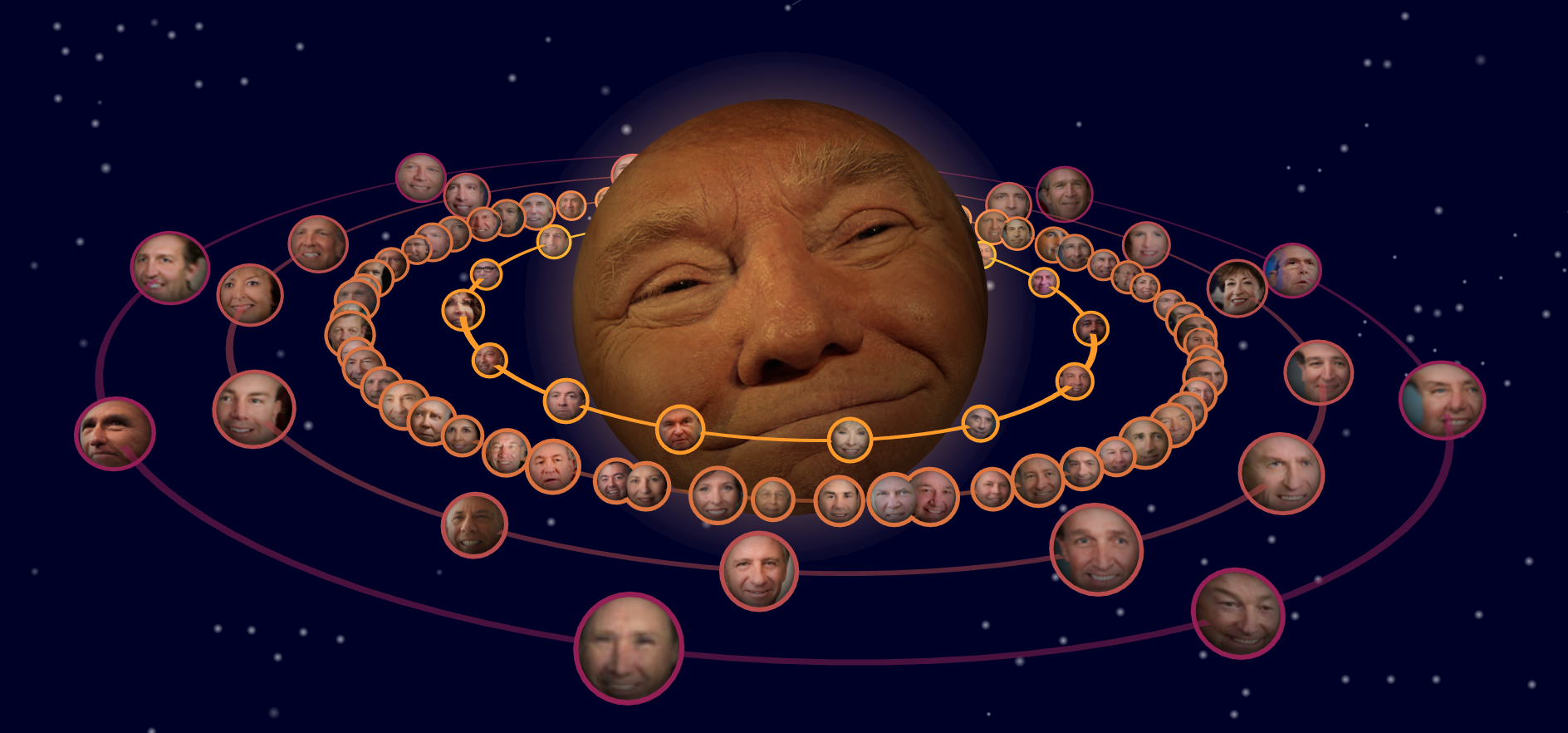
A fantastic infographic that points out who has endorsed Trump:
https://twitter.com/BiellaColeman/status/740155118880980992
Required Reading is published every Sunday morning ET, and is comprised of a short list of art-related links to long-form articles, videos, blog posts, or photo essays worth a second look.