Required Reading
This week, Jeff Wall's insecurity, Deborah Kass says "vote Hillary," hostile architecture, Star Wars and the fantasy of US violence, and more.

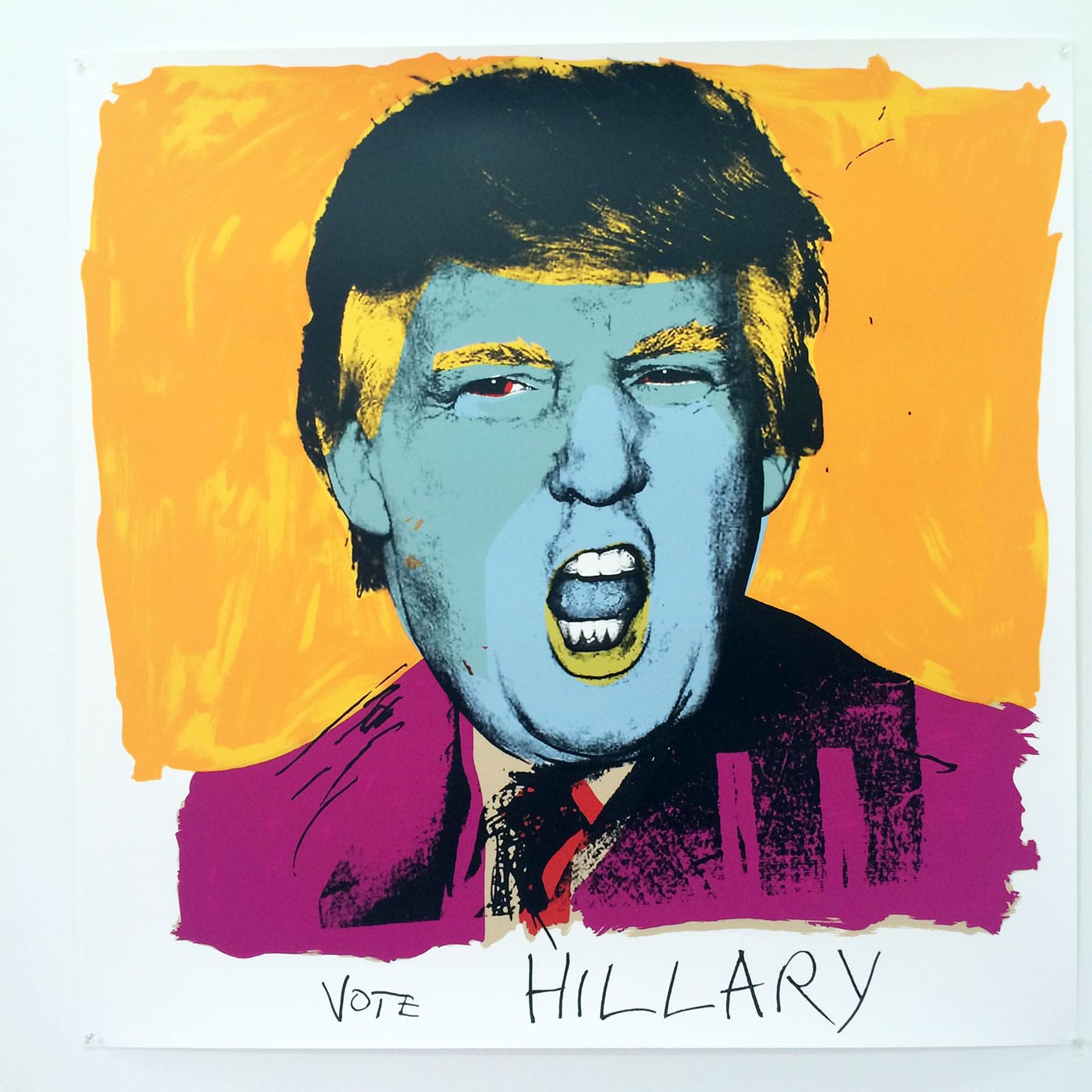
This week, Jeff Wall’s insecurity, Deborah Kass says “vote Hillary,” hostile architecture, Star Wars and the fantasy of US violence, and more.

You’d think an artist of the caliber of Jeff Wall wouldn’t have these thoughts, yet he sounds as insecure as everyone else:
For all his success, he sounds regretful. “Not regretful because I love photography and am still excited by it, but I’m still haunted by the idea that it was a misstep and all that followed has just been a big mistake.” A brilliant mistake, I reply, taken aback.
Is Star Wars actually a dangerous trojan horse in our culture that numbs us to the realities of violence? Or does it warp our ideas of violence? This essay by Roy Scranton raises some serious questions for those of us who love the sci-fi series:
“Star Wars” managed a remarkable trick. Two years after the fall of Saigon and America’s withdrawal in defeat from a dishonorable war, Mr. Lucas’s Wagnerian space opera recast for Americans the mythic story so central to our sense of ourselves as a nation.
In this story, war is a terrible thing we do only because we have to. In this story, the violence of war has a power that unifies and enlightens. In this story, war is how we show ourselves that we’re heroes. Whom we’re fighting against or why doesn’t matter as much as the violence itself, our stoic willingness to shed blood, the promise that it might renew the body politic.
The literary historian Richard Slotkin called this story “the myth of regeneration through violence,” and he traces it from the earliest Indian captivity narratives through the golden age of the western, and it’s the same story we often tell ourselves today. It’s a story about how violence makes us American. It’s a story about how violence makes us good.
99% Invisible did a great podcast about “hostile architecture” and design that you should hear:
Unpleasant designs take many shapes, but they share a common goal of exerting some kind of social control in public or in publicly-accessible private spaces. They are intended to target, frustrate and deter people, particularly those who fall within unwanted demographics.
The Asian Art Museum in San Francisco is celebrating its 50th anniversary with a major exhibition, Emperors’ Treasures: Chinese Art From the National Palace Museum, Taipei, and critic Charles Desmerais has a thoughtful review:
For the museum’s part, though the theme may have seemed accessible at first, the vast topic should probably have been dramatically trimmed back. By showing the audience more about a single imperial family and its interaction with art, we might have ended up with even more broad knowledge, specifics be damned, about classical Chinese art and its place in the culture.
Which brings me back to the matter of recognition of the museum’s rightful place in the Bay Area. Most estimates place the Asian population at about one-third of San Francisco’s total, which would seem to ensure a built-in audience for the museum. But Asia is a very big place — the Asian continent is home to 60 percent of the people alive — encompassing myriad nationalities, languages, religions and cultural groups.
A wonderful poem by Keith Leonard is titled “Museum” and begins:
I walked the three floors
of the local antique store
and imagined white plaques
adorning each room
—but unlike museums
I could touch the displays,
and could take a seat
at a beautiful walnut table—
Did novelist Octavia Butler predict the Trump campaign? Kinda, Fusion reports — here’s a snippet from her 1990s novel:
TMW you see a presidential slogan in a dystopian sci-fi novel set in 2032 being used today. #OctaviaButler #trump pic.twitter.com/jhAZKSLUEM
— Reviewer #2 ✊🗽 (@oligopistos) June 30, 2016
Observer journalist Dana Schwartz wrote an open letter to her boss (and Donald Trump’s son-in-law, Jared Kushner) about his support for Trump. She writes:
Mr. Kushner, I invite you to look through all of those images in the slideshow above, the vast majority sent in your father-in-law’s name. Right now, this hate is directed to one of your employees, but the message applies equally to your wife and daughter.
You went to Harvard, and hold two graduate degrees. Please do not condescend to me and pretend you don’t understand the imagery of a six-sided star when juxtaposed with money and accusations of financial dishonesty. I’m asking you, not as a “gotcha” journalist or as a liberal but as a human being: how do you allow this? Because, Mr. Kushner, you are allowing this. Your father-in-law’s repeated accidental winks to the white supremacist community is perhaps a savvy political strategy if the neo-Nazis are considered a sizable voting block—I confess, I haven’t done my research on that front. But when you stand silent and smiling in the background, his Jewish son-in-law, you’re giving his most hateful supporters tacit approval. Because maybe Donald Trump isn’t anti-Semitic. To be perfectly honest, I don’t think he is. But I know many of his supporters are, and they believe for whatever reason that Trump is the candidate for them.
Kushner responded with a full defense of Trump (that includes his grandparents’ story of Holocaust survival):
The fact is that my father in law is an incredibly loving and tolerant person who has embraced my family and our Judaism since I began dating my wife. His support has been unwavering and from the heart. I have personally seen him embrace people of all racial and religious backgrounds, at his companies and in his personal life. This caricature that some want to paint as someone who has “allowed” or encouraged intolerance just doesn’t reflect the Donald Trump I know. The from-the-heart reactions of this man are instinctively pro-Jewish and pro-Israel. Just last week, at an event in New Hampshire, an audience member asked about wasting money on “Zionist Israel.” My father-in-law didn’t miss a beat in replying that “Israel is a very, important ally of the United States and we are going to protect them 100 percent.” No script, no handlers, no TelePrompter—just a strong opinion from the heart.
Kushner’s cousins then took issue with his use of their family story:
But now he’s under fire from his own relatives, who are angry he invoked their grandparents’ story of survival during the Holocaust in an attempt to defend Trump.
… But Kushner’s estranged relatives are angry about his decision to invoke their grandparents’ story as Holocaust survivors — and they let it be known on social media, complete with a few typos.
“I have a different takeaway from my Grandparents’ experience in the war,” Marc Kushner, a New York City-based architect and first cousin, wrote in a Facebook post Thursday morning with a link to his cousin’s Op-Ed. “It is our responsibility as the next generation to speak up against hate. Antisemitism or otherwise.”
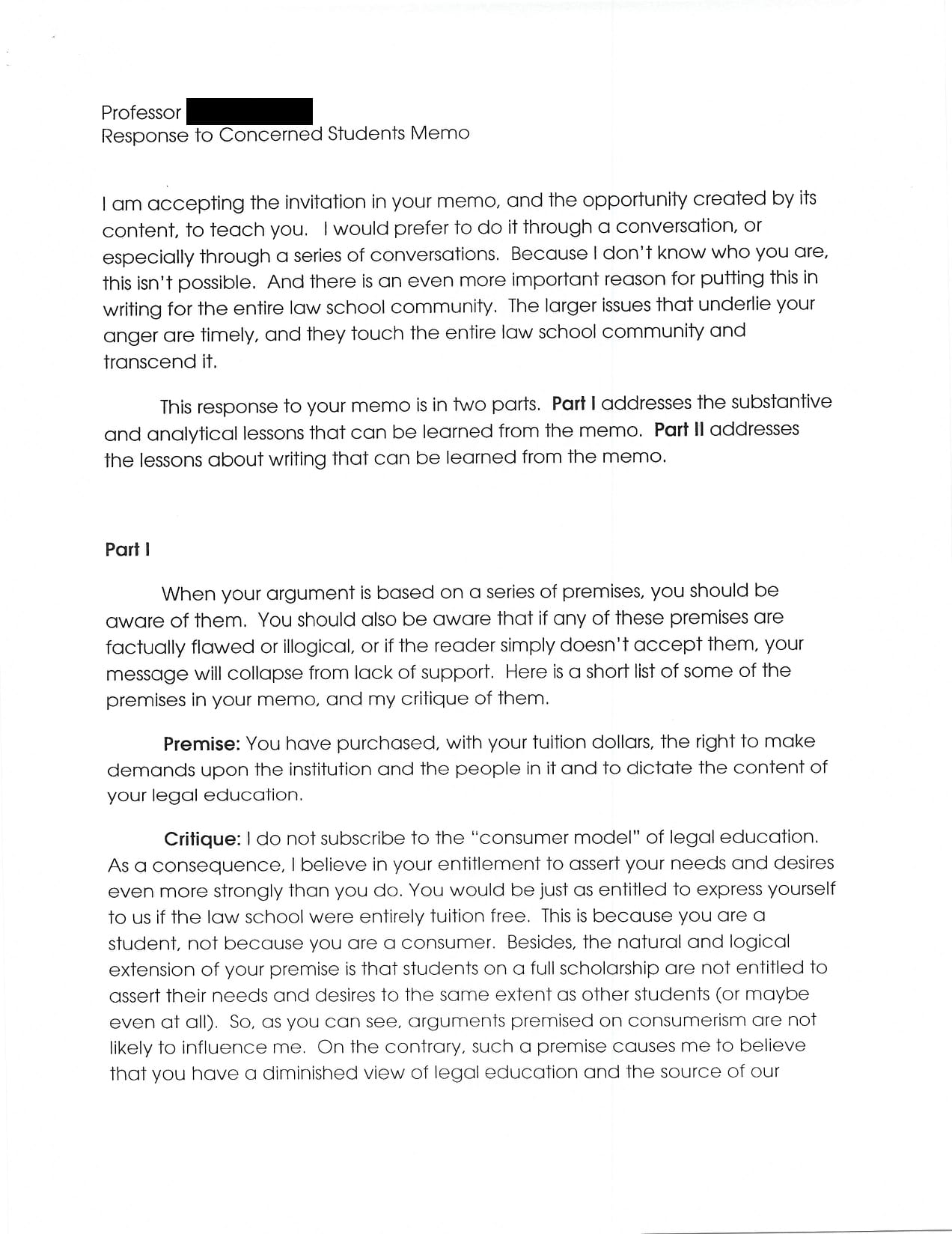
A law professor received an anonymous complaint about a Black Lives Matter T-shirt he wore in class. His response is one of the best arguments against a “consumer model” of legal education, plus great pro-Black Lives Matter advocacy. And it’s just a pleasure to read. Here’s a taste:
China’s news websites now have to “verify” social media stories before they report them. The Chinese internet regulator released this statement (emphasis mine):
All websites must consistently maintain the right propaganda direction. Strict measures must be taken to ensure the truth, comprehensiveness, objectivity, and fairness in news reportage. It is forbidden to pursue timeliness without verifying content on social media platforms before publishing the content as news.
The Notice demands that all websites bear the responsibility of further regulating the procedure of news reporting and publishing, and set up a sound internal monitoring system on internet platforms including mobile news apps, Weibo, and Wechat. It is forbidden to fabricate or omit news sources on websites. It is forbidden to use hearsay to create news or use conjecture and imagination to distort the facts.
“Truth, comprehensiveness, objectivity, and fairness in news reportage” sounds rather familiar.
This past week, the Office of the Director of National Intelligence released a new video “showcasing security tips for U.S. travelers abroad,” and it’s pretty scary (it suggests we should ALL be scared of surveillance!!!):
A socialite named Louise Linton published a supposedly nonfiction book on her time in Zambia. The response to her heartless memoir has been intense:
Billed as “The inspiring memoir of an intrepid teenager who abandoned her privileged life in Scotland to travel to Zambia as a gap year student where she found herself inadvertently caught up in the fringe of the Congolese War,” the book has aroused a flood of online comments and reviews, which have accused the author of being patronising and inaccurate.
The hashtag #LintonLies has been used more than 14,000 since times since an extract was published in the Telegraph newspaper on Monday. Many of those commenting are angry Zambians who say they don’t recognise the country that Linton depicts.
Required Reading is published every Sunday morning ET, and is comprised of a short list of art-related links to long-form articles, videos, blog posts, or photo essays worth a second look.