Required Reading
This week, why we need art, art students today, office design in Tokyo, meth in North Korea, a 17th-century Turkish travel writer, writing the other, and more.
This week, why we need art, art students today, office design in Tokyo, meth in North Korea, a 17th-century Turkish travel writer, writing the other, and more.

Why we need art now:
Art illuminates and analyzes the human condition. Shakespeare’s lessons still apply. The suffering portrayed in opera provokes tears, even in another language. I learned a great deal about the impact of wars on those who fight them from the 1946 film The Best Years of Our Lives and, more recently, The Hurt Locker. The Crystal Pite/Jonathon Young co-creation Betroffenheit was probably the best thing I have seen all year – a stunning dance piece about catastrophe and grief.
Art opens us up to new ideas — so important always, but crucial now as the world seems to be losing its peripheral vision. We can all take refuge in our echo chambers, but the danger of cutting ourselves off from other ideas — or from ideas, period — is in vibrant display at the moment.
And on an emotional level, art — from pop songs to poetry — can keep us company when we’re down, inspire us to do better.
Art is beauty. I think about newcomers to Canada — refugees from Syria and elsewhere — touring through the National Gallery of Canada or the Art Gallery of Ontario and being introduced to the works of Tom Thomson and the Group of Seven — exquisite perspectives on their new country after so much horror at home.
Artist Grayson Perry visits an art school and offers some observations about the students:
Another thing that strikes me is the fact that nobody really talks about being original. None of the students seems remotely concerned about it, which is quite healthy I think. It’s an illusive dream to pursue originality as an art student. It’s not like learning to play the violin, where you can be demonstrably talented at a young age. With art, you really need to find your own voice and that takes a while. Actually, it’s a marathon – and if you are eventually original, you’re lucky.
Lynda and Stewart Resnick may be known to art worlders as the couple who gave $35 million to the Los Angeles County Museum of Art for an exhibition space designed by Renzo Piano (aka the Resnick Pavilion), but they are also megafarmers who use more water than anyone else in California. This has created some strange and peculiar situations:
And here’s a key fact to consider against this backdrop: The Resnicks aren’t just pumping to irrigate their fruit and nut trees—they’re also in the business of farming water itself. Their land came with decades-old contracts with the state and federal government that allow them to purchase water piped south by state canals. The Kern Water Bank gave them the ability to store this water and sell it back to the state at a premium in times of drought. According to an investigation by the Contra Costa Times, between 2000 and 2007 the Resnicks bought water for potentially as little as $28 per acre-foot (the amount needed to cover one acre in one foot of water) and then sold it for as much as $196 per acre-foot to the state, which used it to supply other farmers whose Delta supply had been previously curtailed. The couple pocketed more than $30 million in the process. If winter storms replenish the Kern Water Bank this year, they could again find themselves with a bumper crop of H2O.
The New York Times has dedicated the whole issue (no ads either) of the New York Times Sunday magazine to the turmoil in the “Middle East.” It is an impressive undertaking:
History never flows in a predictable way. It is always a result of seemingly random currents and incidents, the significance of which can be determined — or, more often, disputed — only in hindsight. But even accounting for history’s capricious nature, the event credited with setting off the Arab Spring could hardly have been more improbable: the suicide by immolation of a poor Tunisian fruit-and-vegetable seller in protest over government harassment. By the time Mohamed Bouazizi succumbed to his injuries on Jan. 4, 2011, the protesters who initially took to Tunisia’s streets calling for economic reform were demanding the resignation of Zine el-Abidine Ben Ali, the nation’s strongman president for 23 years. In subsequent days, those demonstrations grew in size and intensity — and then they jumped Tunisia’s border. By the end of January, anti-government protests had erupted in Algeria, Egypt, Oman and Jordan. That was only the beginning. By November, just 10 months after Bouazizi’s death, four longstanding Middle Eastern dictatorships had been toppled, a half-dozen other suddenly embattled governments had undergone shake-ups or had promised reforms, and anti-government demonstrations — some peaceful, others violent — had spread in an arc across the Arab world from Mauritania to Bahrain.
Edward White has been writing monthly series about unusual, largely forgotten figures from history, and this time he reflect on Evliya Çelebi, the seventeenth-century Turkish writer and traveler:
According to his own recollection, Evliya Çelebi … experienced a life-changing epiphany on the night of his twentieth birthday. He was visited in a dream by the Prophet Muhammad, dressed nattily in a yellow woollen shawl and yellow boots, a toothpick stuck into his twelve-band turban. Muhammad announced that Allah had a special plan, one that required Evliya to abandon his prospects at the imperial court, become “a world traveler,” and “compose a marvelous work” based on his adventures.
… Muhammad’s intervention, whether an act of providence or not, spurred three decades of globetrotting indulgence. Evliya took in Anatolia, Mecca, Medina, Jerusalem, Cairo, Athens, Corinth, Sudan, and swathes of Europe from Crimea to—supposedly—the Low Countries. His path crossed Buddhists and crusading warriors, the Bedouin and Venetian sailors, ambassadors, monks, sorcerers, and snake charmers. Along the way he wrote the Seyahatname (“Book of Travels”), a magnificent ten-volume sprawl of fantasy, biography, and reportage that is utterly unique in the canon of travel literature, and which confirms Evliya as one of the great storytellers of the seventeenth century.
Media sources are reporting that methamphetamine is being given to North Korean construction workers in a bid to speed up the construction on a skyscraper in the capital city (do we believe them?):
“Project managers are now openly providing drugs to construction workers so that they will work faster,” the source told Radio Free Asia.
“Project managers at a building site in North Korea’s capital Pyongyang are openly supplying their exhausted work force with powerful methamphetamines called ‘ice’. [They] are undergoing terrible sufferings in their work.”
Hundreds of thousands of construction workers are believed to be working on the skyscraper, which forms part of a 60-building development on Pyongyang’s Ryomyung Street.
Rumours that these workers have been dispensed drugs were fuelled when graffiti was found on one of the building sites. It reportedly reads “Pyongyang speed is drug speed”.
Malcolm Gladwell is starting to probe the idiocies of higher education and this might actually make a difference:
Maybe it’s good that an outsider, like Gladwell, is questioning whether a school serving chocolate zucchini cakes is also doing its part to help poor students, and whether a school with $22 billion in the bank needs another donation of $400 million. Why shouldn’t the conventional wisdom of academia be challenged?
Gladwell can reach the elites running higher ed. He’s not a YouTube vlogger venting frustrations in a Tumblr post that will go unnoticed by Ivy League leaders and think tanks ― he’s a New York Times best-selling author and New Yorker writer who is producing a podcast while working on another book.
Higher education needs a gut check, and Gladwell might be one of the best antagonizers to do it.
How to respectfully write from the perspective of characters that aren’t you:
3. Power matters.
They say conflict is the true backbone of story, and power is what makes conflict matter. But fiction classes rarely offer up a real discussion of power and its discontents. As fiction writers, we’re not expected to be well versed in writing about power, the minutia, subtlety, complexity of it, the heartache. Usually, factual research replaces the in-depth conversations about oppression and resistance. There is only so much time.
Understanding power matters more than the factual details.Every character has a relationship to power. This includes institutional, interpersonal, historical, cultural. It plays out in the micro-aggressions and hate crimes, sex, body image, life-changing decisions, everyday annoyances and the depth of historical community trauma. Power affects a character’s relationship to self and others, and their emotional and physical journey through the story. If you ignore this, you get cutout dolls or white faces painted black.
The New York Times‘ Public Editor reflects on the changing nature of the newspaper’s relationship to New York news:
Beyond that, when 90 percent of your audience lives outside New York, it makes sense to skip the small stuff and write stories with the kind of wattage that attracts attention from a farther distance. Something akin to the way The New Yorker approaches news: Its writers don’t land on any particular subject often, but when they do you remember it. The thing is, it’s not easy to be The New Yorker. It’s easy to stake that out as an ambition but not so easy to execute.
Ten food companies control so much of the food industry:
This Infographic Shows How Only 10 Companies Own All The World’s Food Brands https://t.co/kiGXrCuo4T #dataviz pic.twitter.com/LQgVFlvmW2
— Ninja Economics (@NinjaEconomics) August 13, 2016
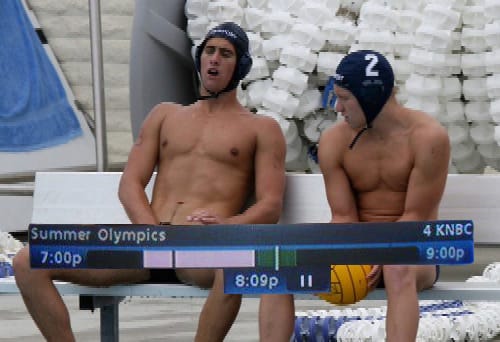
Sometimes its hard to figure out if you’re watching the Olympics or gay porn:
Required Reading is published every Sunday morning ET, and is comprised of a short list of art-related links to long-form articles, videos, blog posts, or photo essays worth a second look.