Required Reading
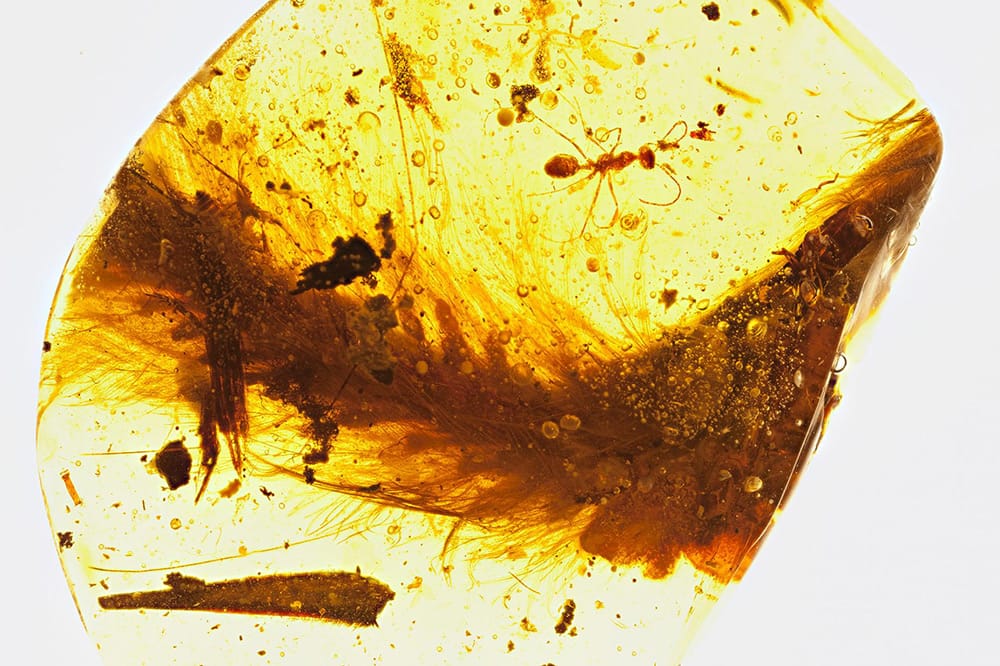
This week, feathered dinosaur tails, the word of the year, the world's first solar panel road, selling art by Instagram, and more.

- The word of the year, according to Merriam-Webster, is quite, well … :
1) 'Surreal' is one of the most common lookups following a tragedy
2) 'Surreal' is our 2016 Word of the Yearhttps://t.co/O7azAyRQC1
— Merriam-Webster (@MerriamWebster) December 19, 2016
- France has unveiled Wattway, the world’s first solar panel road:
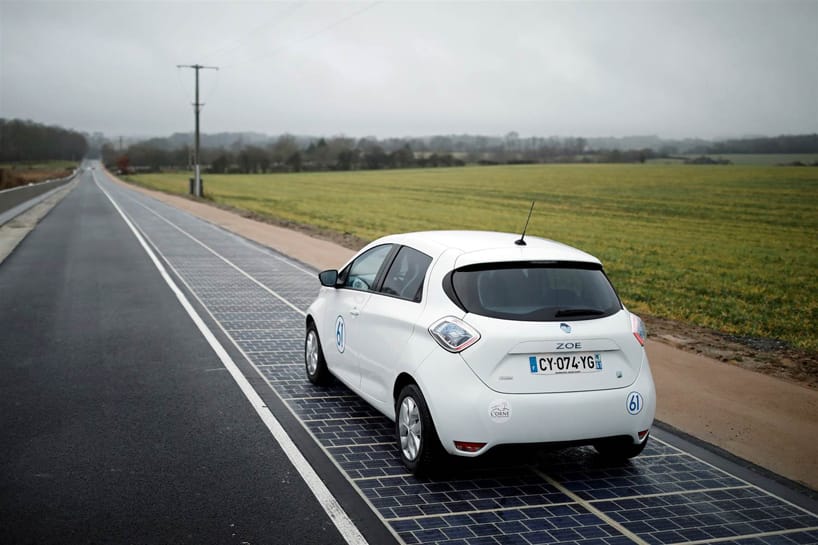
- What do photographers do in this new political atmosphere? Jörg M. Colberg has some ideas:
Not much is there left to say about the United State’s 2016 presidential election other than that the Republican Party (“the party of Lincoln”) has become just another incarnation of any of the neo-fascist parties that have been plaguing Europe for a while now (think France’s National Front). A racist, sexist, two-bit real-estate developer turned reality-TV entertainer who was caught on camera bragging about physically assaulting women is going to be the country’s 45th president. Right now, this is a travesty. No doubt, soon enough it will be a tragedy for all those at the receiving end of the next administration’s policies.
Of course, it’s a bit too easy to claim that all photography is done with the ultimate goal of selling it to the rich. It’s not. But you’ll have to admit that an awful lot of discussion centers on just that. Meanwhile, photographers can’t understand why, for example, the number of people buying photobooks isn’t growing. Show someone not part of our circle any of those books we go gaga over, and you’re likely to at best receive a blank stare: what is this? This is not necessarily to say that per se there’s something wrong with these kinds of books. But I believe there is a lot wrong with our insularity, our inability (if not unwillingness) to cross a divide, while, and this is where this gets really ironic, a lot of the work in our books might even be made about the very people who will just shake their heads since they can’t understand them.
The earliest known recorded reference to veiling, the act of covering one’s hair with cloth, comes from a 13th-century B.C. Assyrian text that describes the practice as reserved for aristocratic women and forbidden for prostitutes and those of lower social status, who were punished if they were caught in head coverings.
In Christianity, veiling was a requirement for women who entered church, and still is in certain traditions. St. Paul’s letters to the Corinthians explicitly references this, stating that “every woman who prays or prophesies with her head uncovered dishonors her head.” The veil also denoted women’s submission to men. “A man ought to not cover his head, since he is the image and glory of God,” Paul wrote. “But the woman is the glory of man … for this reason, and because of the angels, the woman ought to have a sign of authority on her head.”
When Islam arrived in the 7th century, the already-common veiling custom in the Arabian Peninsula was absorbed into the religion. At the same time in the West, the heads of married European women were covered with wimples, headdresses that concealed not just the hair but also the neck and chin as a show of modesty and rank. The wimple later spread to women of lower social status, eventually dying out by the end of the Middle Ages in the 15th century.
Muslim culture was portrayed as inferior to the ways of Europe again and again. Orientalism gave credence to the idea that these societies needed to be conquered and civilized, and the veil became justification to do so.
- Is Trump gaslighting the US? Writer Lauren Dura thinks so:
To gas light is to psychologically manipulate a person to the point where they question their own sanity, and that’s precisely what Trump is doing to this country. He gained traction in the election by swearing off the lies of politicians, while constantly contradicting himself, often without bothering to conceal the conflicts within his own sound bites. He lied to us over and over again, then took all accusations of his falsehoods and spun them into evidence of bias.
At the hands of Trump, facts have become interchangeable with opinions, blinding us into arguing amongst ourselves, as our very reality is called into question.
- Christie’s “top dealmaker,” Brett Gorvy, posted a photo of a Jean-Michel Basquiat painting on his Instagram account, and he sold it the next day when buyers asked him about it — Katya Kazakina has the story. Welcome to social media art sales (it went for $24 million). This is the work:
- Photos and their role in fake news:
Such stories rely on images to sell bogus narratives. The people publishing and promoting fake news routinely take photos out of context, digitally alter them, or combine them with text to manipulate readers, knowing that people tend to accept photographs as truthful representations. “The images need to look legitimate enough to support the ‘realistic’ nature of the article,” says David Berkowitz of the social media company Sysomos. “If it’s too far-fetched, it won’t spread beyond the fringe, and the goal when someone is pushing fake news is to make it go mainstream.”
- What should we be calling Trump’s tweets, then?
Calling them tweets is in a way an illusion. These are public statements from the president-elect. Bulletins. Form of delivery is a detail. https://t.co/oq7HN0d3iL
— Jay Rosen (@jayrosen_nyu) December 23, 2016
- And related:
Donald Trump has tweeted 34,100+ times.
He has called people:
"dummy" 77x
"loser" 243x
"moron" 52x
He has never tweeted about Aleppo.
— Brian Klaas (@brianklaas) December 15, 2016
Required Reading is published every Sunday morning ET, and is comprised of a short list of art-related links to long-form articles, videos, blog posts, or photo essays worth a second look.