Required Reading
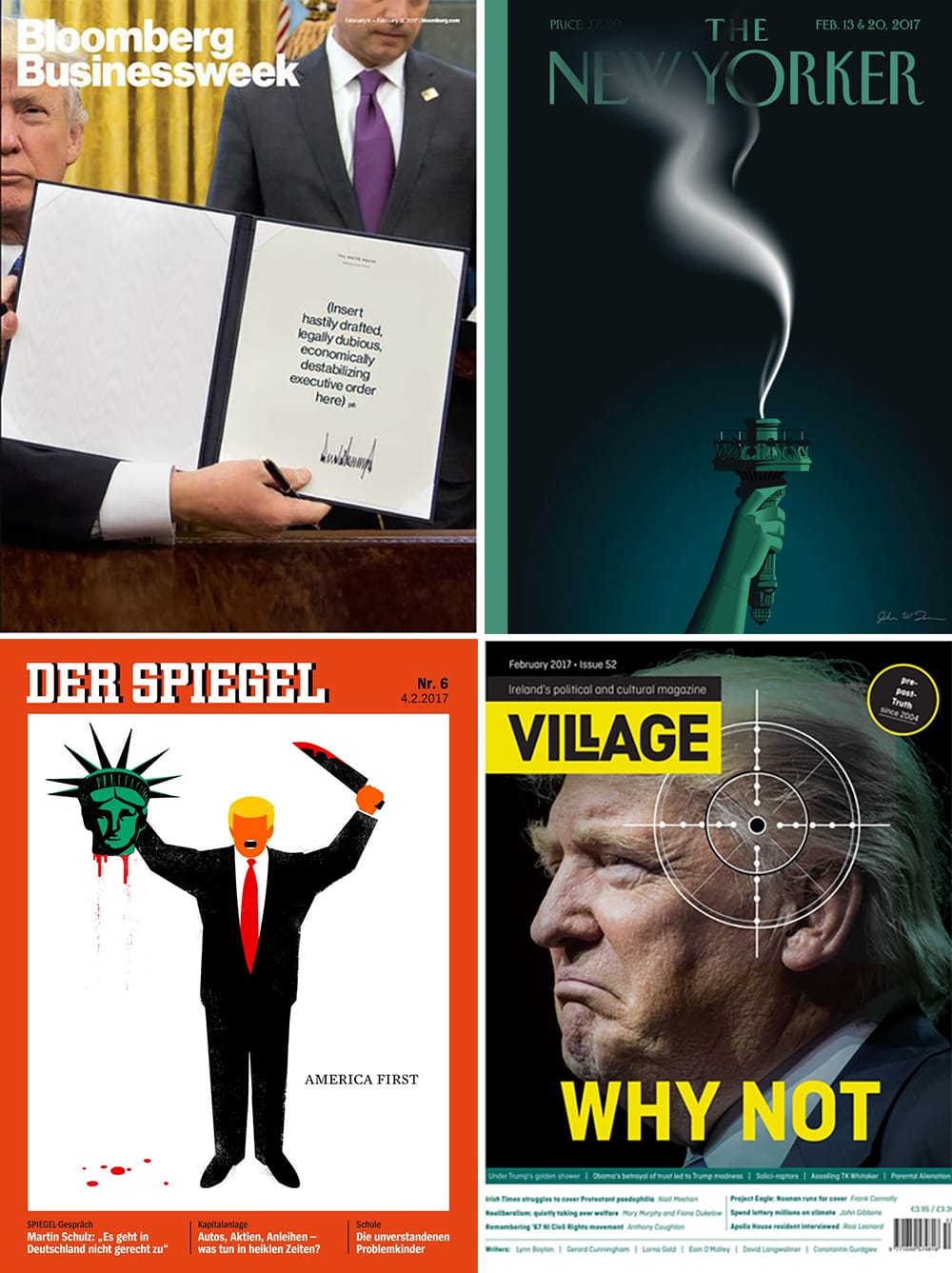
This week, magazine designers go for the jugular, Trump turned down Warhol prints, the state of the digital in 2017, ancient Roman cities, female photojournalists, and more.

That time Trump turned down Warhol prints of Trump Tower:
This could explain why he missed out on what would have been a great art deal in 1981, when he rejected Andy Warhol’s series of Trump Tower screen-prints the artist had made for him on spec (Warhol said: “Mr Trump was very upset that it wasn’t colour coordinated.”)
A Turkish mayor banned a Turkish movie directed by Kurdish cultural figure Mahsun Kırmızıgül, Vezir Parmağı (The Finger of the Vizier), claiming that the comedy runs against the national and spiritual values of the country and mocks its ancestor, the Ottoman Empire.
The New York Times‘ Lens blog looks at the history of women in American photojournalism:
Over the last five years, women have consistently accounted for about 15 percent of the entries to the prestigious World Press Photo awards, according to statistics provided by the organization. And the vast majority of photos in many major publications’ collections of the most significant images of 2016 overwhelmingly carried male photographer’s credits — ranging between 80 and 100 percent, a Times review shows.
Christopher Knight reviews Jimmie Durham at the Hammer Museum:
Durham essentially did what any traditional sculptor does, chipping away to give specific form to an existing mass. That he took aim at a household appliance designed to keep perishables from going bad is at once an artistically poetic act and a socially furious encounter. And throwing stones suggests desperation, employed when one has little else for self-defense against hostility or indifference.
Much of Durham’s work is like that, using found objects and simple actions to operate on multiple levels.
Martyrdom as a surprising theological undercurrent is played out in a video, “Stoning the Refrigerator,” which records the making of “St. Frigo.” The Gospel of John tells of Jesus exhorting the mob in defense of a prostitute who is about to be stoned to death: “He that is without sin among you, let him first cast a stone at her.”
Durham does. We’ve got it on tape. He humbly accepts the risk of hypocrisy.
President Barack Obama’s chief photographer Pete Souza has been posting some powerful images on Instagram to mark the end of the Obama presidency. This image was arguably the most powerful (it made me cry):
T.J. Clark writes about artist Paul Nash at Tate Britain:
I came away from the Tate retrospective, as I often do from shows of English 20th-century art, thinking it sad that for so long – for most of the period between the wars – Nash’s gifts as a colourist were kept in a chokehold. I think I see why. The gifts, when the artist gave into them, were essentially for showmanship, for garish, acidic, factitious effects: impossible pinks, sinister yellows, Blake-type battles of sun and moon, the edges of everything sizzling with phosphorescence. But this wasn’t serious – that was its glory, when it came. It was a rush of vulgar desperation, with something of Bonnard’s or Nolde’s turning their backs on reality.
The full text of Bad Feminist author Roxane Gay’s WI12 speech:
Publishing has a diversity problem. This problem extends to absolutely every area of the industry. I mean, look at this room, where I can literally count the number of people of color among some 700 booksellers. There are not enough writers of color being published. When our books are published, we fight, even more than white writers, for publicity and reviews. People of color are underrepresented editorially, in book marketing, publicity, and as literary agents. People of color are underrepresented in bookselling. On and on it goes.
And, of course, it’s not as if there are no people of color who are eminently capable of participating in publishing. We are many but somehow, publishing can’t seem to find us unless we do the work of three or four writers and catch a few lucky breaks. This inability for publishing to find people of color is one of the great unsolved mysteries of our time, I suppose.
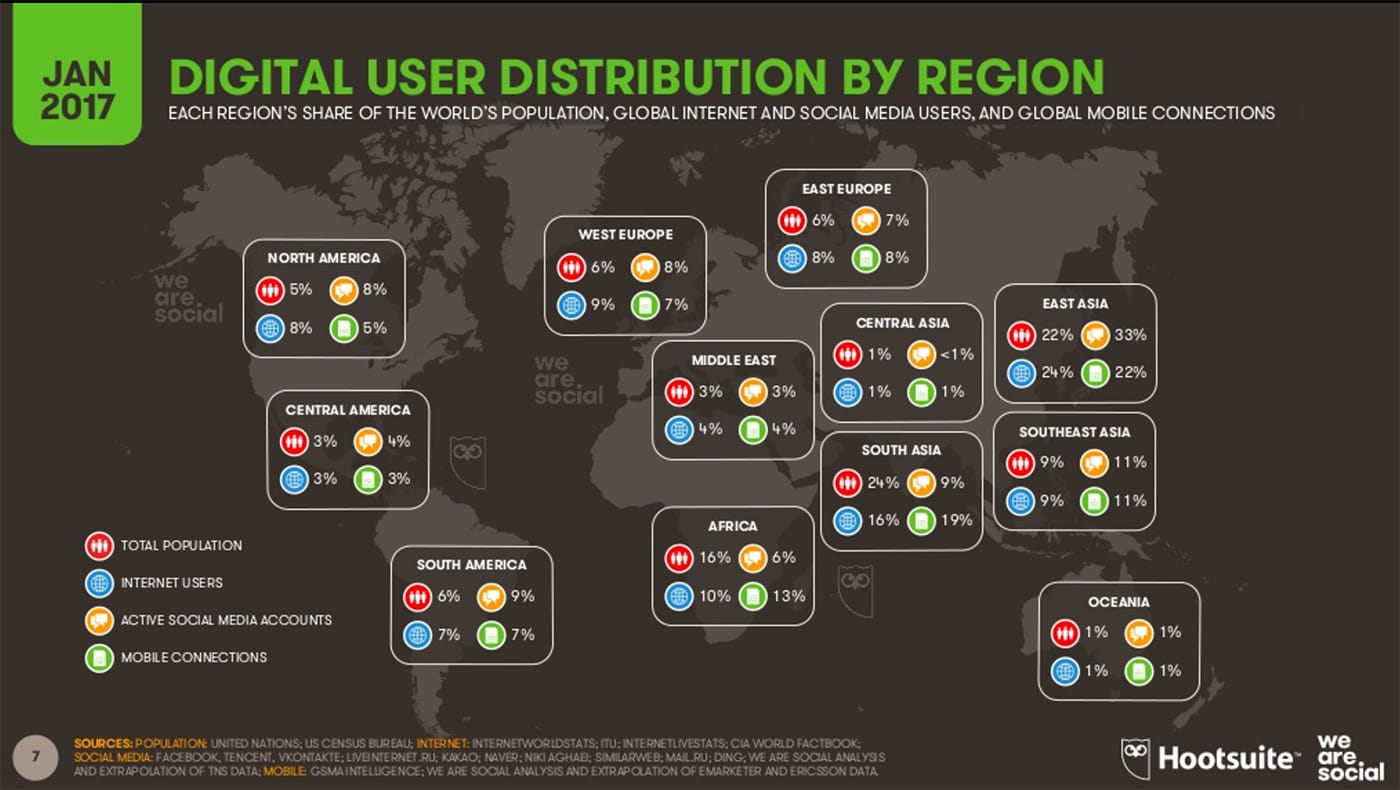
The state of digital in the world, 2017:
The @BeyonceFan666 fan Twitter account seems to have a really good record of predicting the future. It has so far predicted:
- Brexit would pass
- Trump would win
- Beyoncé would be pregnant in February 2017
A fascinating thread looking at the size of cities in ancient Roman empire:
'Ancient cities are TINY' – @gregwoolf on Wilson & Hansen @Clah_Mcr pic.twitter.com/U1mh90Bd1B
— Kate Cooper (@kateantiquity) February 1, 2017
McSweeney’s published Trump’s Black History Month transcript verbatim as a column in its humor section, and it works really well:
Last month, we celebrated the life of Reverend Martin Luther King, Jr., whose incredible example is unique in American history. You read all about Dr. Martin Luther King a week ago when somebody said I took the statue out of my office. It turned out that that was fake news. Fake news. The statue is cherished, it’s one of the favorite things in the — and we have some good ones. We have Lincoln, and we have Jefferson, and we have Dr. Martin Luther King. But they said the statue, the bust of Martin Luther King, was taken out of the office. And it was never even touched. So I think it was a disgrace, but that’s the way the press is. Very unfortunate.
Required Reading is published every Sunday morning ET, and is comprised of a short list of art-related links to long-form articles, videos, blog posts, or photo essays worth a second look.