Required Reading
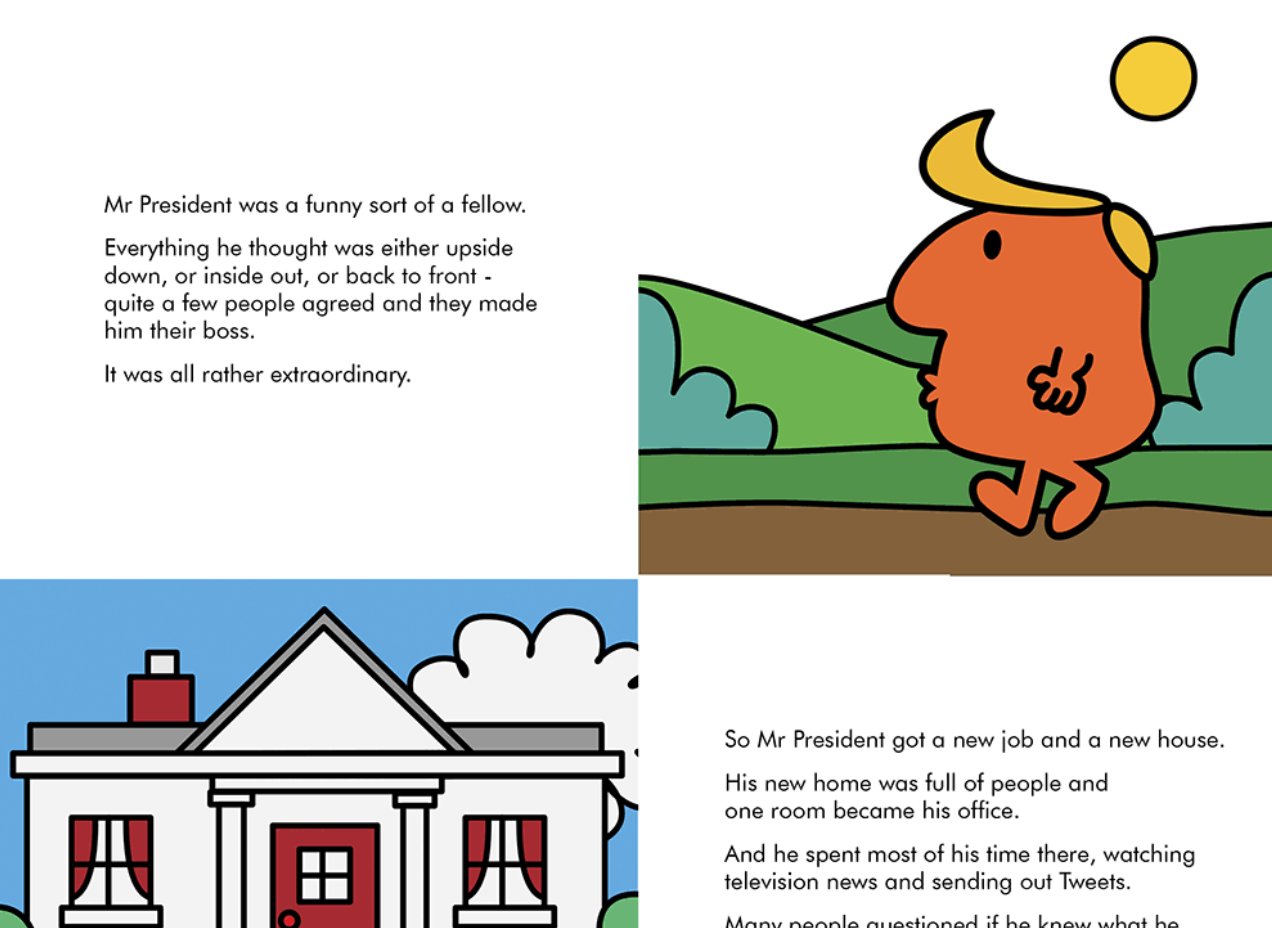
This week, Trump as a Mr. Men comic, Timbuktu's manuscripts, Caravaggio's male muse, unbuilt LA, a poem by Jane Hirshfield, and more.
Regarding the Fast Forward: Painting From the 1980s show at the Whitney Museum, New York Times art critic Roberta Smith writes:
The Whitney show is quite satisfying — even revelatory — since many works have not been on view in years. But the exhibition’s unrealized potential is equally visible. To start with, the Whitney’s collection has some unfortunate gaps. Among the most glaring is the absence of one of Philip Taaffe’s burnished reprises of the ’60s Op Art paintings of Bridget Riley or Victor Vasarely, which operated in the gray area between the Neo-Expressionists and the Pictures Generation.
Also, “Fast Forward” has not been given enough room to even take advantage of outstanding ’80s paintings the museum already owns. Over a dozen artists are represented with small works mostly on paper crowded salon-style on one wall, which is insulting. But there are pleasant surprises here: early works by Andrew Masullo; a Nancy Spero collage; and a painterly, highly personal Glenn Ligon. With more space, some of these artists could have been represented by larger efforts.
Timbuktu’s ancient manuscripts may be saved but they’re still not being translated:
But no current efforts are underway anywhere in Mali to regularly translate the manuscripts from classical Arabic into English or French or to make them available to citizens at large.
While students in American and European universities do Ph.D.’s in nearly every imaginable topic of history around the world, hundreds of thousands of primary-source documents, some more than a millennium old, are not even indexed.
Howard French, a former journalist with The New York Times who covered West Africa and other regions and is a journalism professor at Columbia University in New York, says the lack of translation of the manuscripts has to do with the history of European economic expansion.
A poem by Jane Hirshfield captures some of what many of us are feeling today (you can hear her read it here). It begins:
Let them not say: we did not see it.
We saw.
Let them not say: we did not hear it.
We heard.
Let them not say: they did not taste it.
We ate, we trembled.
Madonna isn’t happy with Trump:
In 1979, a feminist photographer examined 5,000 images of men and women exhibiting body language “that results from and plays a role in reproducing unequal gender relations.” The whole book is quite fascinating:
Who was Francesco Buoneri, and why did his face show up in so many of Caravaggio’ canvases? Well:
For centuries, Francesco Buoneri was a part of this mostly anonymous crowd. Although he seemed to be one of Caravaggio’s most talented followers, one could look in vain for any mention of him in biographical dictionaries. Some later scholars thought he might be French; others, that he was Lombard. Only a single painting, The Resurrection, now in the collection of the Art Institute of Chicago, bore his signature. Nothing more was known about him until the 1990s, when an Italian art historian named Gianni Papi connected Buoneri to another little-known Caravaggisto named Cecco del Caravaggio, and revealed the full importance of this shadowy figure on Caravaggio’s life and art. One key piece of evidence came from a parish census from 1605: Caravaggio was living with a young man named Francesco, listed in the register as his garzone, or boy (in the sense of pool- or errand-; Caravaggio had no children). Another detail came from a centuries-old piece of gossip.
Cuban artist Edel Rodriquez known what a dictator looks like and his cover for Der Spiegel magazine in Germany was meant to point out some interesting parallels. He says:
The artist believes images have a power that words do not ― the ability to communicate to anyone, regardless of their language, background or level of education. “I want to make images that can reach someone with a Ph.D. and someone who is an immigrant laborer who doesn’t speak English.”
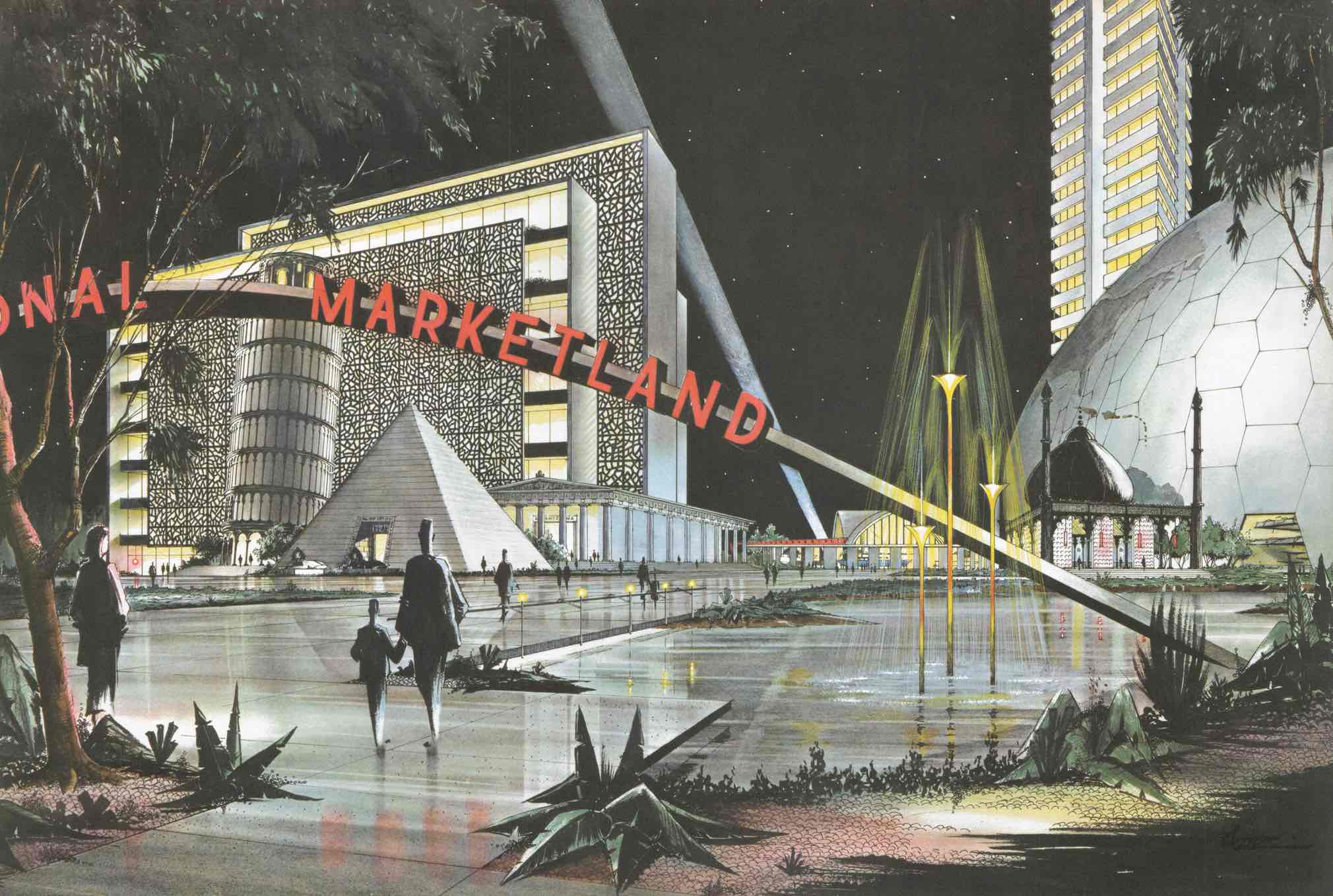
Images from a Los Angeles that could’ve been:
The connection between chicken ritual sacrifices in the 1990s and Trump’s “Muslim” travel ban:
“In Hialeah in the 1990s, it was Santería. With Trump, it’s Muslims,” said University of Virginia law professor Douglas Laycock, an expert on religious liberties who successfully argued the Hialeah case.
Decades ago, the city of Hialeah — a large blue-collar city of mostly Cuban-American immigrants outside Miami — was sued by the Church of the Lukumi Babalu Aye, which wanted to operate a place of worship in an old used-car lot.
And this really happened on Fox News:
This Fox News chart proves Steve Bannon isn't as bad as an Islamic State leader https://t.co/mYYrjvG409 pic.twitter.com/BsHgZDPqAV
— Chris Cillizza (@CillizzaCNN) February 9, 2017
How tech distracted us. Wow:
Columbia University found that nearly 60 percent of all social media posts are shared without being clicked on.
Required Reading is published every Sunday morning ET, and is comprised of a short list of art-related links to long-form articles, videos, blog posts, or photo essays worth a second look.