Required Reading
This week, a Whitney Biennial curator speaks, 8 trends from Milan design week, Clinton designer believes bad design helped Trump, Frida Kahlo's missing adultery painting, Russia's April Fools Day joke, and more.

- Whitney Biennial curator Christopher Lew speaks to Andrew Goldstein about the Dana Schutz painting controversy. In response to a question about the prevalence of violence in the Biennial, Lew responds:
It’s not just violence on its own. If you look at the room with Taylor’s piece, there is that depiction of a murderous act in the death of Castile, but that’s set within the context of Henry’s large painting of the Fourth of July and his painting of his mother with a horse in the background, together with the photographs of Deana Lawson that point to a sense of dignity, love, and self-respect.
So, the violence is set within other aspects of the human condition and human experience—violence and death is there, but so is love, unity, self-preservation, and self-care. The strands of violence are there, but they’re also set alongside a restorative sensibility. For instance, Asad Raza’s installation is in the room right next to Jordan’s, so you can imagine experiencing Jordan’s work and then entering a grove of trees with caretakers who are interacting in a one-on-one therapeutic way.
- Kyle Chayka looks at the big business of imagining the future:
Having set expectations, this future fiction is meant to eventually blur into reality. UAE is “using applied futures as a way to drive their government’s vision,” Scappaticci says, not just through the Dubai Future Foundation but across levels and departments. At the end of the exhibition, Tellart included a survey that asked the attendants which environmental challenge was most pressing and what technology should be used to confront it, in an attempt to gauge the anxieties of a nation.
- The Museum of Modern Art (MoMA) saw a big reputation boost after they displayed work from the seven Muslim-majority countries that were banned from entry with President Trump’s original Executive Order on refugees and immigration:
MoMA’s reputational equities increased in early 2017 while visitor confidence in cultural organizations on the whole was in a general state of decline. Why does reputation matter? As it turns out, when it comes to motivating onsite visitation, reputation matters a lot. This said, take a look at MoMA’s “intent to visit” metrics below. Intent to visit is a different metric than interest in visitation. Intent means that these folks state an intention to visit MoMA. Interest often conceptually removes true barriers to visitation. (“Yes, if I ever get to New York, I am interested in visiting the Statue of Liberty!”) Intent is a more reliable signal than mere interest of actual attendance. These data indicate the visitation intention of people profiling as high-propensity visitors to visitor-serving organizations (Heads-up: Those are the folks who have the demographic, psychographic, and behavioral attributes that indicate an increased likelihood of attending a cultural organization).
- Dezeen looks at 8 trends from Milan design week, including:
The future of food
With ever more reports highlighting the toll our meat consumption and intensive farming takes on the environment, discussion is increasingly turning towards alternative food futures.
At this year’s Milan, there’s an exhibition and taste testing dedicated to the topic. The Future Sausage will explore alternative recipes for your next barbecue, including bangers made with insects, fruit and offal. What will we be served at the week’s raft of parties? One can only imagine.
https://twitter.com/spectatorindex/status/845851719389011969
Records also show that the NYPD sometimes catalogs demonstration videos in cases where no arrests or violence was indicated. One surveillance report from March 28th, 2016, for example, indicates that TARU video teams recorded and cataloged footage from a Black Lives Matter protests near Madison Square Garden despite no arrests being recorded. How frequently such filming operations took place during Black Lives Matter protests without arrest is impossible to fully gauge, due to an apparent gap in the TARU filming reports that the NYPD sent to Thompson. While the video surveillance records cover most of the Occupy Wall Street era over 2011-2013, the NYPD did not provide reports of Black Lives Matter video surveillance operations at the height of the protests in 2014 and 2015. It is certain that the NYPD did film protests during these two years, however, since the 2016 TARU records, such as Lombardo’s request to review footage from December 4th, 2014, refer to previous protest filmings. It is unclear whether this gap indicates that the NYPD failed to hand over TARU reports from these years, or if it failed to document such operations in the first place.
- What happened to Frida Kahlo’s missing adultery painting?
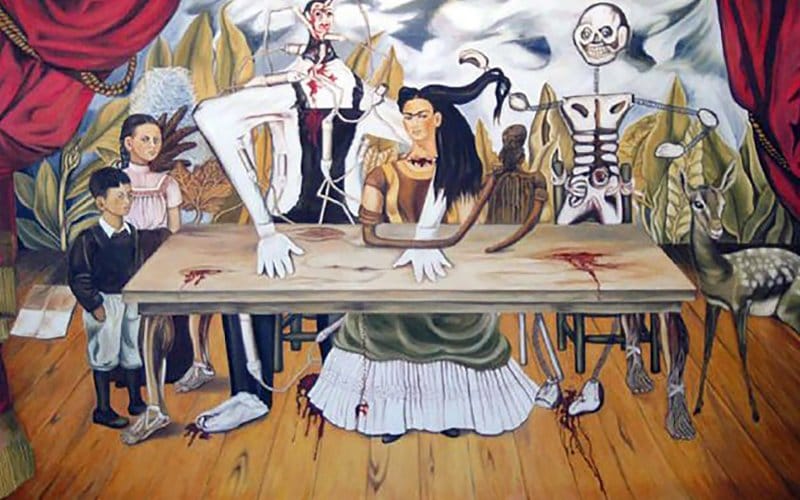
“The Wounded Table is first and foremost a painting of betrayal,” Borzello said. “She never wanted to be pitied. She’s defiant after the divorce. She’s saying I can do these giant things, I can do anything. You can see she’s achieved really a maturity.”
Kahlo worked frantically to finish the painting in time for the Mexico City exhibition, but, once there, she wasn’t entirely pleased with its reception. “Unfortunately, I don’t believe my work has interested anyone. There’s no reason why they should be interested and much less that I should believe that they are,” Kahlo wrote in a letter to Rivera.
… In 1946, Kahlo handed the painting over to the Russian Ambassador to Mexico; it was last seen at an exhibition in Warsaw in 1955. From there, no one knows what happened to the piece and it has since been classified as lost.
Comic Sans was developed too late for Microsoft Bob, but our office administrators started using it a lot in emails – mostly young women whose jobs were to make everything fun. They did birthday parties, organised events, and Comic Sans fitted with their cheery messages. As it became more well-known, it was eventually included in Windows 95.
I started to see it everywhere – and then the backlash began. A group called Ban Comic Sans was formed to educate people about the uses of typefaces, though they did email me to ask if it was OK to set it up. It seemed silly, but I said knock yourselves out. Though that backlash has calmed down, except on Twitter. People who come up to me are more likely to say they love it.
- Michael Bierut, who designed the presidential campaign logo for Hillary Clinton, says Trump may have won “not in spite of his terrible design work, but because of it.” Let that sink in.
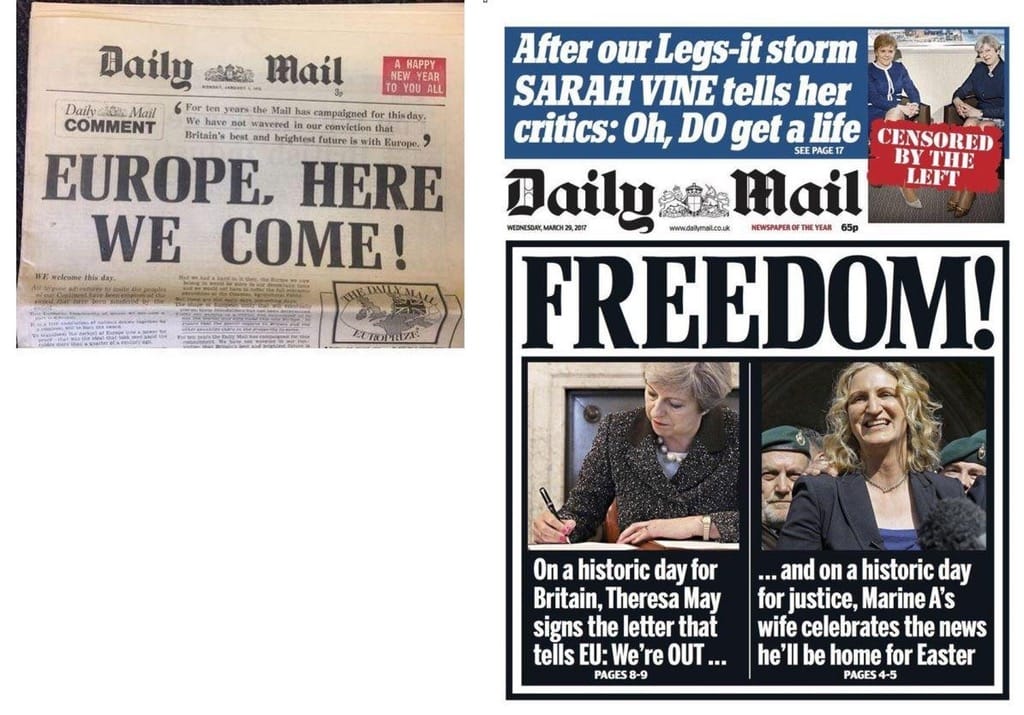
- UK: 1973 vs Today (via the hive mind of Reddit):
- On April Fools Day, various Russian consulates posted an audio file of the purported new automated telephone switchboard message for Russian embassies on Facebook. It’s pretty funny, and yes, it’s an officially sanctioned joke:
“To arrange a call from a Russian diplomat to your political opponent, press 1,” the recording begins, in Russian and English. Press 2 “to use the services of Russian hackers,” and 3 “to request election interference.”
- This video encapsulates so much human experience:
This is the best video on the Internet currently. https://t.co/KPNZddth5S
— philip lewis (@Phil_Lewis_) April 1, 2017
Required Reading is published every Sunday morning ET, and is comprised of a short list of art-related links to long-form articles, videos, blog posts, or photo essays worth a second look.