Required Reading
This week, museum image rights, the inventor of the Papyrus font speaks, why a museum curator quit, is the internet changing time, and more.

- Bendor Grosvenor writes about museum image fees and how they’re out of whack:
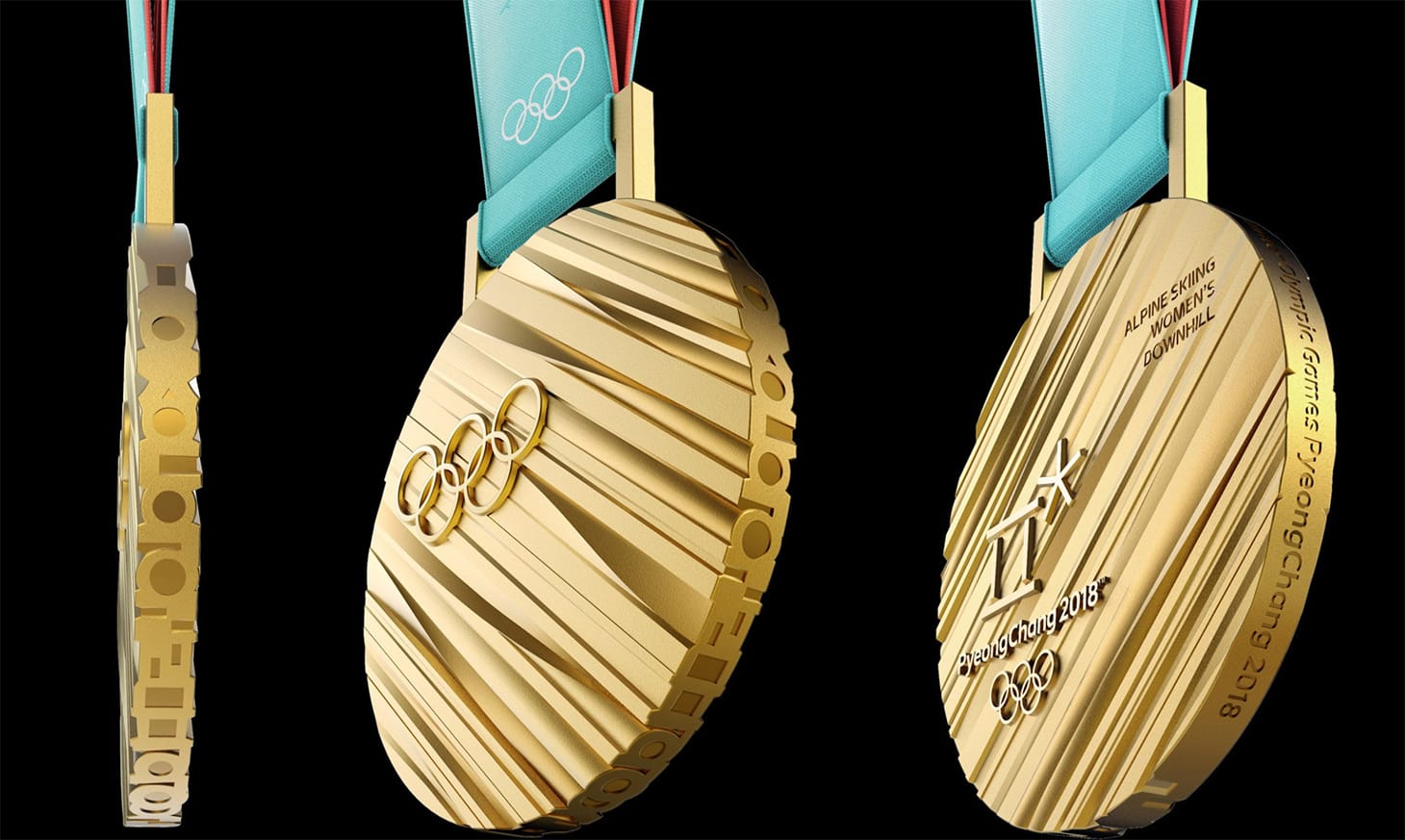
But for ‘old’ art the situation is very different. Many museums will have you believe that because they are licensing newly taken photographs of, say, a Hogarth, then they have copyright over that photograph, and can therefore charge what they want for it. But this is not the case. There are variances, but essentially in both US and UK law a straightforward photographic reproduction of an old painting does not generate any new copyright implications. For a new photograph of a Hogarth to have any copyright vested in it, it must in some way be original (ie, amended, added to, written over, distorted). So don’t let museums tell you that what you’re paying for is the right to legally reproduce their photograph of their painting. They’re not. In fact, all they’re doing is hustling you.
- The designer of the Papyrus font justifies his invention after SNL lampoons it:
“I designed the font when I was 23 years old. I was right out of college. I was kind of just struggling with some different life issues, I was studying the Bible, looking for God and this font came to mind, this idea of, thinking about the biblical times and Egypt and the Middle East. I just started scribbling this alphabet while I was at work and it kind of looked pretty cool,” Costello said.
He added, “I had no idea it would be on every computer in the world and used for probably every conceivable design idea. This is a big surprise to me as well.”
- Curator Andrew Hunter explains why he quit the Art Gallery of Ontario:
I have always been concerned about the role art museums play in the wider world, about how truly engaged they are with the critical issues of our times. I’m fortunate to be able to teach regularly on museum and curatorial practice (currently in the graduate program at OCAD University). We often begin with the origins of the contemporary museum, which was born out of the private collections of wealthy Europeans who had built their fortunes on the extraction of resources, and people, from the most vulnerable nations in the world.
Out of this dubious practice evolved public educational institutions, or so they self-described. Really, they were outward displays of power that reinforced class division and validated the corporate and colonial systems that had made their founders rich. From wealth came power and then cultural dominance: museums set social rules, coercing the broader public toward shared values they deemed to be “acceptable.”
- Saudi king’s gold escalator gets stuck (no comment):
Saudi King Salman's travel companion, his gold escalator, let him down during his historic visit to Russia pic.twitter.com/xgTaqV8WWG
— TRT World (@trtworld) October 5, 2017
- Is the internet changing time? Laurence Scott writes:
The computer scientist and cyber-philosopher Jaron Lanier, who coined the term ‘virtual reality’ and who has written with both optimism and despair about the trajectory of the internet, believes that digitisation’s prodigious memory will be key to a sustainable global economy based primarily on exchanges of information. In Who Owns The Future?, he outlines a possible world in which data is the central commodity and all of us are properly remunerated for our contributions, conscious or involuntary, to the profitable crunching undertaken in Big Data’s storehouses. A simple example is that if you and your spouse meet on an online dating site and eventually get married, then you will receive a ‘micropayment’ every time two other people in the future are successfully matched up based on algorithms of compatibility to which your own happy coupling contributed. Lanier argues that since the data you provide – interests, profession, goals, politics – continually refine and improve the dating site’s ability to pair people, then you should own a share in the efficiency that your information nurtured. In this system, our digital pasts, archived across the network as data, resemble an actor’s filmography or an author’s back catalogue, an ongoing source of royalties. Such a model echoes Airbnb’s desire for everyone to ‘build a history’ online. Here the past is privileged in the way of all valuable things, as unforgettable as any personal treasure. Lanier’s design proposes an economy of remembering, whereby not even the smallest link in a lucrative data chain is forgotten. There is zero tolerance of structural amnesia in this system. As Lanier remarks, ‘Cash unfortunately forgets too much for an information economy.’
- You know those orange-handled scissors that are in homes around the world? This is their story (I love design history.):
According to Jay Gillespie, Fiskars’s current VP of marketing, the company decided to vote on what color the final scissors design would be before it went into production. At the time, Gillespie says, colors like orange and lime were very popular, so they decided to stick with orange. “An icon was born from [that vote],” he says.
- Nina Burleigh of Newsweek takes a look at Trump’s relationship with God:
Trump’s long and sometimes confounding spiritual journey started in Jamaica, Queens, at the bite-sized First Presbyterian Church, and later, at the WASPy Marble Collegiate Church on Manhattan’s Fifth Avenue, where prosperity prophet Norman Vincent Peale preached that you could think yourself to success. In 1952, Peale published The Power of Positive Thinking, a New York Times best-seller for 186 weeks that sold more than 5 million copies and was translated into 15 languages. That tome and his hailstorm of follow-up titles trained a generation of Americans to grin and fake it all the way to the bank. His theology was well summarized by the mantra Fred Trump pounded into his boy, Donald: “You are a killer. You are a king.”
That nugget may have been as close as young Donald ever got to Scripture. During the recent presidential campaign, he called the biblical book Second Corinthians “Two Corinthians,” a transgression on par with referring to the Holy Trinity as the Three Amigos. He has called Communion “my little wine” and “my little cracker.” More alarming for the truly pious, he couldn’t come up with a favorite Bible verse when asked during the campaign, except to say he liked the Old Testament’s “an eye for an eye.”
- This investigation by Buzzfeed gives very credible evidence for the close relationship between alt-right troll Milo, Breitbart and lots of other figures (including Peter Thiel) with the white nationalist movement. This is a must-read:
And the cache of emails — some of the most newsworthy of which BuzzFeed News is now making public — expose the extent to which this machine depended on Yiannopoulos, who channeled voices both inside and outside the establishment into a clear narrative about the threat liberal discourse posed to America. The emails tell the story of Steve Bannon’s grand plan for Yiannopoulos, whom the Breitbart executive chairman transformed from a charismatic young editor into a conservative media star capable of magnetizing a new generation of reactionary anger. Often, the documents reveal, this anger came from a legion of secret sympathizers in Silicon Valley, Hollywood, academia, suburbia, and everywhere in between.
- In case you wondered what equivalent climate regions around the world were for the US, this map is interesting:
US climate with equivalent cities from around the world [OC] [1513 x 983] from MapPorn
- Mona Kareem writes about popular fascination with fiction by Arab dictators:
The news of this new release provoked me, specifically because it reflects a demeaning western approach to modern Arabic literature. Back in 2003, Saddam’s novels were widely discussed among Arab intellectuals exchanging accusations of writing for dictators for money, or under threat. It was an exhausting and embarrassing battle, but nevertheless necessary. At least in these debates, no one claimed to be “politically neutral.” Political neutrality is the discourse of the dominant, they who take their individuality for granted and in such they assume that their actions can be abstract, ahistorical, and isolated of all contexts.
The interest in “Saddam Hussein’s world,” as one Iraqi novelist once described it, was a serious western fetish after the Iraq war. Despite the fact that the man ran a bloody and exciting life, in all impossible ways, the scale of horror and violence was not satisfactory for western eyes. They needed play-cards, movies, novels, video games, private recordings, and all sorts of things to complete a picture of the enemy. It was the best way to abstract the mass destruction of Iraq as something far, far away, on another planet, in Saddam Hussein’s world.
- If you buy a US flag made in the United States, there’s a good chance it was made by a prisoner:
I was born and raised in California and certainly took my fair share of California history classes from elementary school through college. In high school, I marched in protests against Proposition 21, the 2000 ballot initiative that made it easier to prosecute young people, and I was educated by the types of teachers who gave extra credit for attending demonstrations in downtown San Francisco against the Iraq War. But even I was surprised to learn that our country’s symbols of freedom were made by women who had none.
- What should Canadian Twitter users do with the new increased character count? Well:
All true Canadians know there is only one proper use of the new 280 character limit on Twitter. |
Tous les vrais Canadiens savent qu'il n'y a qu'une bonne utilisation de la nouvelle limite de 280 caractères sur Twitter.
— Matt from nowhere (@tederick) September 28, 2017
Required Reading is published every Sunday morning ET, and is comprised of a short list of art-related links to long-form articles, videos, blog posts, or photo essays worth a second look.