Nelson said he’s known Windmuller-Luna since she was a graduate student at Princeton. “She is richly deserving of the Brooklyn position,” he said. “It’s also noteworthy that Brooklyn, even with these hires, has one of the most diverse curatorial staffs of any major American museum.
Nelson also pointed to the lack of controversy surrounding Sawyer, the incoming photography curator, and said the whole controversy is enigmatic of a larger problem in the art world.
“The frustration is based on larger systems of exclusion in the art world,” he said. “It’s a larger problem in art history and curatorial fields that we’ve done a very poor job of attracting people of color not only to African art but art history in general.”
“Why aren’t you all equally upset that Brooklyn hired a white curator for photography?” Nelson tweeted. “It’s because of your misconceptions that those who study African art are black and those who study other things aren’t. You all need to check your assumptions.”
Required Reading
This week, reviewing Art in the Age of the Internet, Colonial Californiano architecture, the boy in Diane Arbus’s "Child With A Toy Hand Grenade" photograph, the winners of Smithsonian's photo contest, and more.

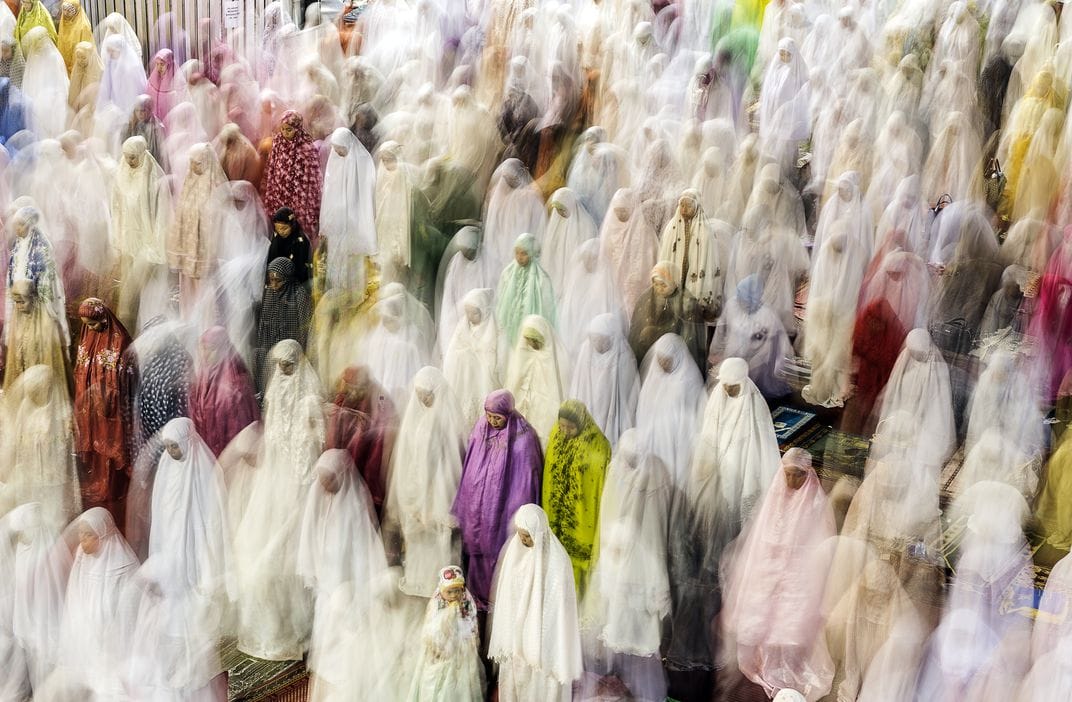
- Ed Halter reviews the Art in the Age of the Internet exhibition in Boston and writes:
But while the show’s title suggests a historical survey of art made since the year that Tim Berners-Lee first proposed the World Wide Web, its selections tend to stray from any direct engagement with either the web, or even the internet more broadly, as a specific set of practices and cultures. Much like the internet itself, Art in the Age of the Internet is great at delivering high-quality, likable content, but not as good at providing a substantial context.
- Colin Wood, who is best known as the boy in Diane Arbus’s “Child With A Toy Hand Grenade” photograph, tells his side of the story:
It was a groundbreaking piece of work and immediately recognized as such, which is why you probably maybe kind of recognize the image. It’s an art photography touchstone commonly used in anti-war propaganda. It’s a portrait of the Vietnam War era that shows instead of tells. It’s, allegedly, what inspired Matt Groening to create Bart Simpson.
… When the photo was taken, Wood was a seven-year-old kid. He’s now 63 and, when he sees that image he remembers a dark period. “That time of my life wasn’t the happiest,” he says. “My parents were divorced. I was pissed off. And I didn’t know how to articulate it. I was mobile and hostile with a smile on my face.”
- Something interesting in going on in Canada’s parks:
Mohawk curator and scholar Lee-Ann Martin has participated in all of these modes of support in the past. But this summer, she is taking a very different approach—namely, putting the art of 50 Indigenous women artists on 167 billboards from coast to coast to coast.
Bad design from funny
The story of the architectural style known as Colonial Californiano is the story of ideas ricocheting between two cultures in unlikely ways. And it is one that leaves its mark on Mexico City to this day in the form of apartment buildings and grand private homes — neocolonial structures whose immediate design antecedents lie not in Mexico, but, ironically, in the United States.
… It was design that embodied optimism, redolent of orange blossoms and easy sunshine. And it spread beyond California through various means: via architects who spent time in Los Angeles and then traveled elsewhere, and through glossy magazines that distributed images of movie star homes far and wide. Howard Hughes, Charlie Chaplin and Dolores del Rio all, at one point or another, had pads designed in the Spanish Colonial Revival style by architects such as Wallace Neff, who helped popularize the style.
- Hannah K. Lee writes about her Korean-American identity as an artist:
My own family’s suggestion that I get a new set of eyelids offended me immediately. This was one of many cultural differences between us. They came from a culture that requires a headshot to accompany a job application. Of course they would want only the best, double-lidded eyes for their daughter. For them, double eyelids meant assimilation. Double eyelids meant success.
This and other operations, like jaw shaving and rhinoplasty, are fraught with accusations that the practice attempts to carve Western faces out of Asian ones, raising the questions: Whose gaze is all this for? Is it that South Korea has something to prove as well?
- Adam Ramsay writes “Cambridge Analytica is what happens when you privatise military propaganda“:
And just as the fighting was privatised, so too was the propaganda. In 2016, the Bureau of Investigative Journalism revealed that the Pentagon had paid around half a billion dollars to the British PR firm Bell Pottinger to deliver propaganda during the Iraq war. Bell Pottinger, famous for shaping Thatcher’s image, included among its clients Asma Al Assad, wife of the Syrian president. Part of their work was making fake Al Qaeda propaganda films. (The firm was forced to close last year because they made the mistake of deploying their tactics against white people).
- Ilana Masad tried to interview poet Terrance Hayes and the rest is, well, weird.
- Some thoughts by Steven Nelson and others about the appointment of a white female curator to the African Art post at the Brooklyn Museum:
- Once you see it … :
You can't unsee it pic.twitter.com/qgFl5gG0DX
— Dennis (@Sweden_Dennis) March 24, 2018
Required Reading is published every Sunday morning ET, and is comprised of a short list of art-related links to long-form articles, videos, blog posts, or photo essays worth a second look.