Required Reading
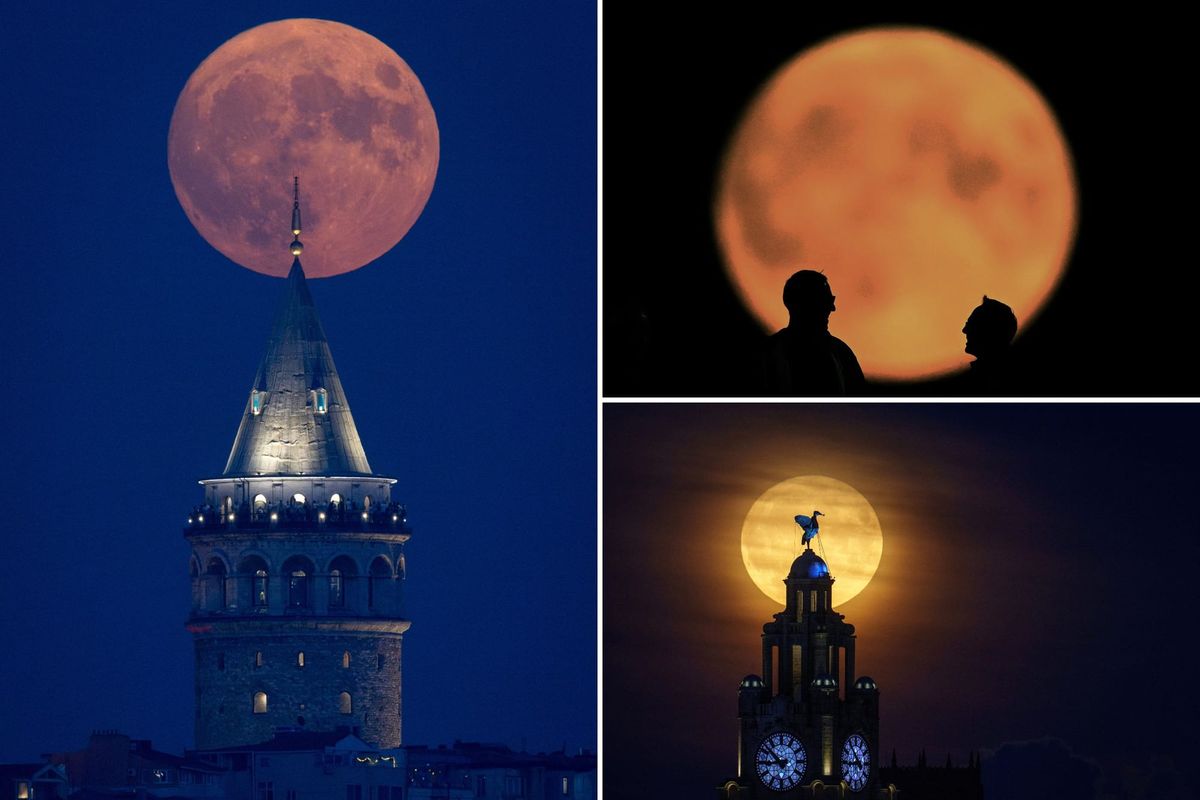
This week, metallic spheres from another solar system, the problem with compulsive gift-giving, shots of a rare blue moon, and much more.

- Daisy Zavala Magaña of the Seattle Times spoke with the owners of Nepantla Cultural Arts Gallery, the only gallery in the Pacific Northwest rooted in Chicano artistic traditions:
“Artists of color are often seen as only making lowbrow art or folk art, and when we’re included in exhibitions, we’re either exotified or tokenized,” Prendez said.
Prendez, 47, recalls being told in high school that his art was “too ethnic” or “too gangster,” leading him to quit for years. Now he and his wife’s gallery makes space for a diverse array of artists, showcasing works from queer, Pacific Islander and Black contributors, among many others.
- Writing for Open Democracy, Yan Shenkman rounds up the five best Russian anti-war songs:
Russian songs protesting the war mostly avoid directly referring to Ukraine, instead mentioning peace and war in the abstract – “We need peace!” or “We don’t want war!” – and serving more as a reflection than a call for resistance. Artists don’t show listeners a way out of a situation they lament, but experience it with them, leaving listeners to draw their own conclusions.
- Madeleine Connors writes about compulsive gift-giving for Dirt:
Like most Americans, I read The Giving Tree by Shel Silverstein as a child. The children’s book confirmed my suspicions about gifts being a shortcut to love. In the book, a tree unconditionally sacrifices its body for the company of a boy who relentlessly asks for more. By the end, the tree has withered to a stump but wins the boy’s affection. The last line reads, “And the tree was happy.” In my mind, the book proposed that perpetual giving was an American virtue and a balm for loneliness.
I’ve been thinking about those days of lost birthday parties in the wake of Greta Gerwig’s Barbie film discourse, which included—at one point—a flurry of debate about who owns Barbie. One Twitter user wrote, “don’t know if this is entirely fair but when someone says, ‘I grew up loving Barbie’ I hear ‘my family was not poor.’” In group chats, my friends and I remarked about how universal Barbie was, regardless of our various income backgrounds. We agreed that claiming she belonged to one economic class was patently false.
- Philanthropic support of journalism has seen a sharp increase recently, and a study has some figures to back that up:
A report by Boston Consulting Group estimated $150 million per year is given to nonprofit news outlets. The same report said that industry needs up to $1.75 billion.
A major drive with a goal of raising $1 billion for local news is expected to be announced this fall, the NORC report said.
- Eric Lagatta of USA Today writes about mysterious metallic spheres that were found in the Pacific and appear to be from another solar system:
The findings may not yet answer the question of whether the metallic spheres are artificial or natural in origin, but Loeb says the team is now confident that what they found is unmatched to any existing alloys in our solar system.
"This is a historic discovery because it represents the first time that humans put their hand on materials from a large object that arrived to Earth from outside the solar system," Loeb wrote Tuesday on Medium, where he has been documenting the expedition and resulting studies. "The success of the expedition illustrates the value of taking risks in science despite all odds as an opportunity for discovering new knowledge."
- Skewering both police and the media, Mia Brett explains the long history of sensationalized yet routinely overlooked violence against sex workers for Teen Vogue:
When sex workers are victims of serial killers, often the public reaction is to assume the women were likely to be victims of violence anyway, given their chosen profession, shifting the responsibility of the crime onto the victim. Victims are separated into “good” women and “bad,” with the insinuation that women will inevitably be harmed if they fall into the “bad” camp. This helps insulate police who don't fulfill their responsibility in catching predators and hampers their investigations, because they probably don’t consider that the same man would want to kill sex workers and women who are not sex workers.
- The Cut's Danya Issawi fulfilled what many of us likely held as a childhood dream of trying out for the US Open's Ball Crew, sharing some of her experience in a brief dispatch:
I walked through the hallways and eventually was spit out through a tunnel at the Louis Armstrong Stadium, where I presume renowned athletes had once exited as well. I pretended I was one of them, miming a camera-shy tennis prodigy as a kind on-site publicist shoved a phone in my face, recording my every motion with the flash on. Being a phony feels so good sometimes.
- Sigh ... at least it passes the Bechdel test?
https://www.tiktok.com/@bigj_68/video/7256938170569297158
- Don't we all know this person?
https://www.instagram.com/reel/Cwf3e1Os-Ac/
- Priceless (the Austrian town of Fucking sadly changed its name to Fugging a few years ago):
Required Reading is published every Thursday afternoon, and it is comprised of a short list of art-related links to long-form articles, videos, blog posts, or photo essays worth a second look.