Required Reading
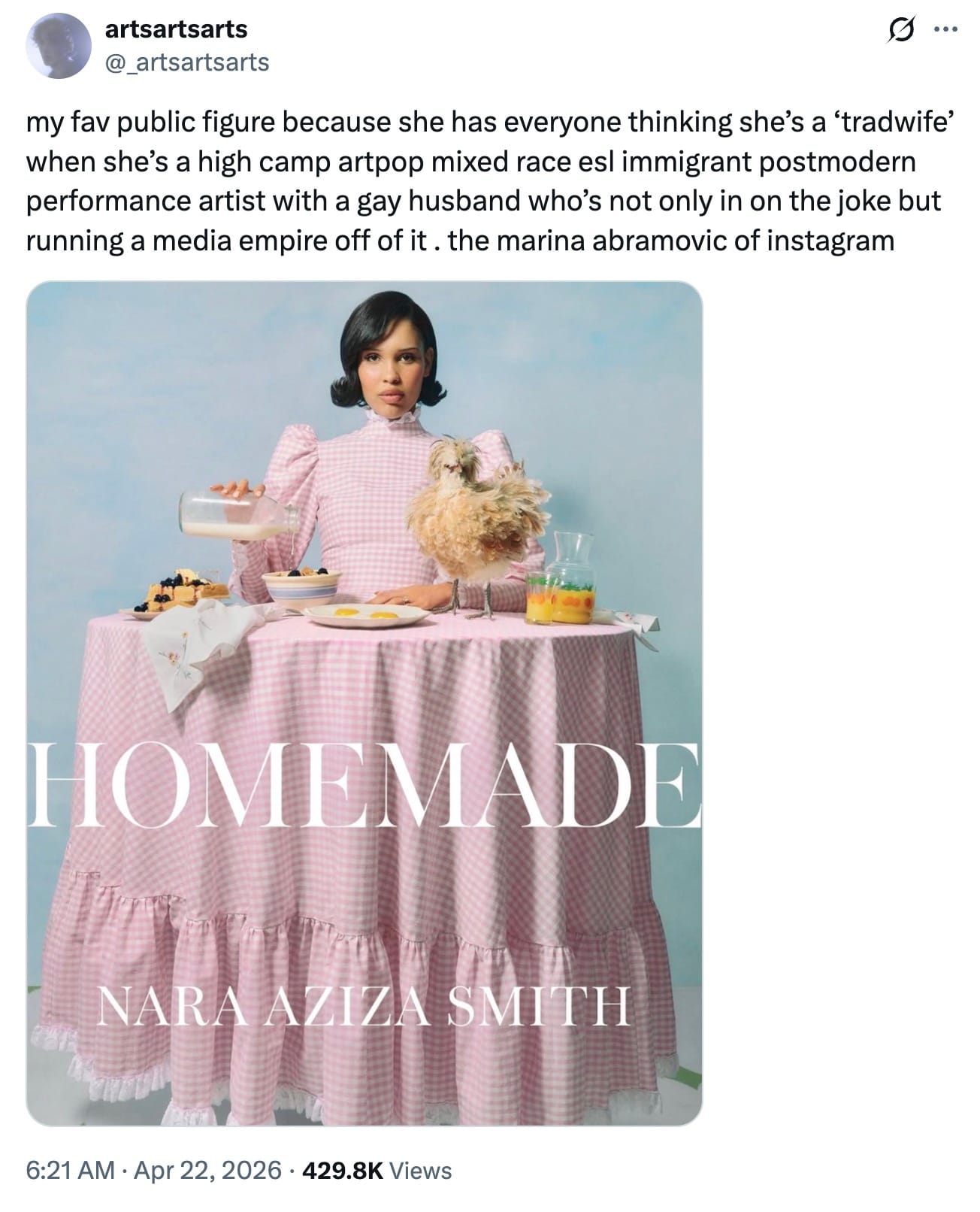
This week, a museum as a site of motherhood, the amazing and terrible ways writers make their livings, Nara Smith as a performance artist? And more.

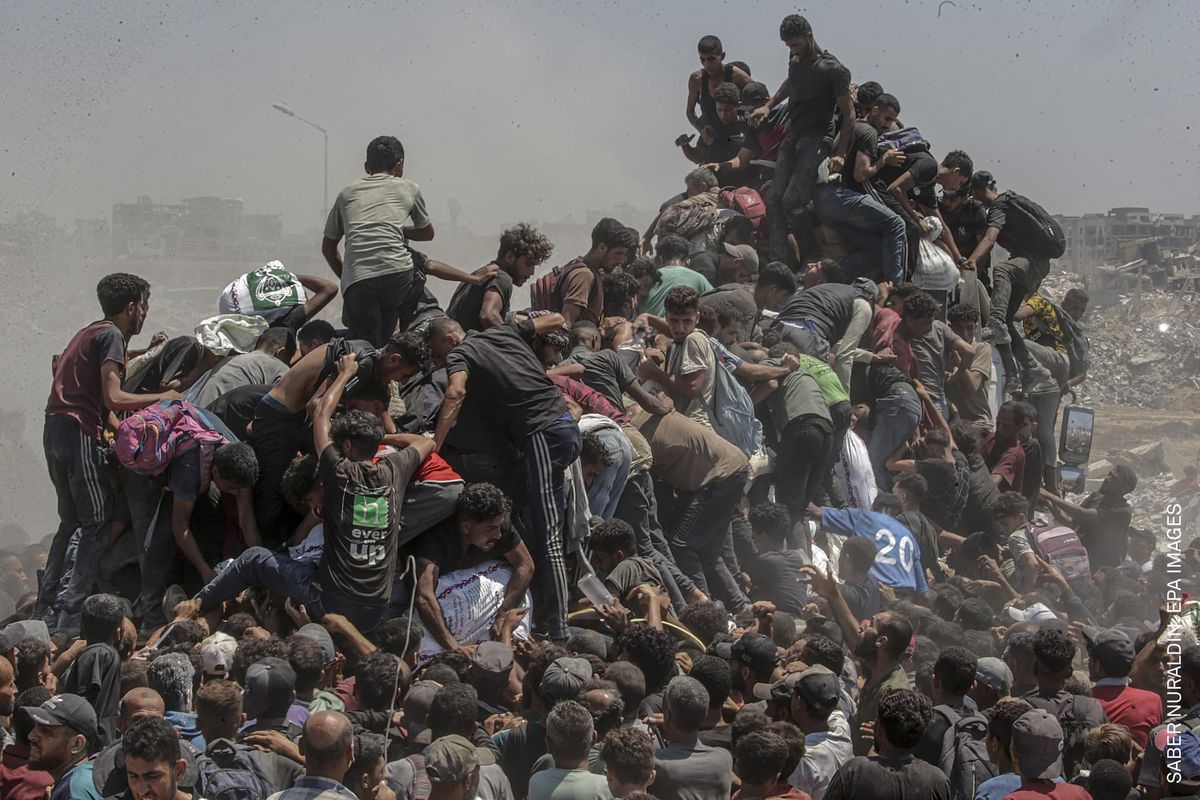
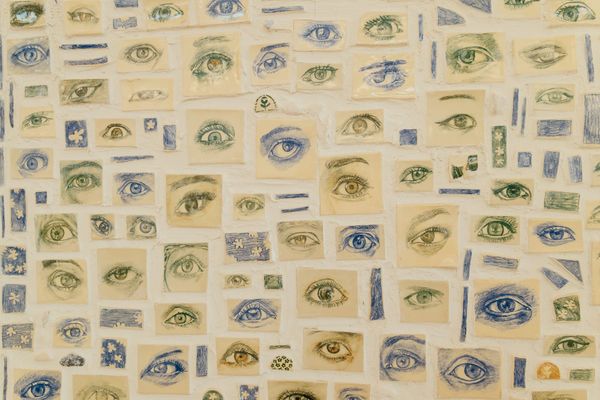
Elena Megalos pens a gorgeous essay on the American Museum of Natural History as a site of motherhood and existential understanding, a source of both order and wonder, accompanied by her equally stunning illustrations. In one portion, she describes walking down a ramp that distills the 13 billion years of the universe's existence into 360 feet. At the very end, she encounters a single strand of hair — a tenth of a millimeter in width — that represents the time of humans, and immediately bursts into tears. In Longreads:
A strand of hair—really? If that hair had been a wire instead, would that tenth of a millimeter have moved me? On whose head had that strand of hair once grown? The curator’s child, I’d bet. That’s what I would have done if I’d been the genius who conceived of this exhibit. Thirteen billion years of cosmic creativity and I couldn’t help loving human beings the most, more specifically the two human beings I’d made.
Because in relation to stars or rocks or even trees, what is a child? Utterly, unbearably inconsequential. If a child’s parent doesn’t set aside this sublime and brutal fact and love them anyway—love them like they are the center—then who in the cosmos will?
I confirmed what I’d suspected: that zooming out and attempting to de-center my children had only brought me back to them.
Meenu Batra, Texas's only licensed Hindi, Urdu, and Punjabi legal interpreter, was arrested by ICE agents without visible badges or uniform at an airport on March 17, despite her legal work status. Gaige Davila writes in Texas Observer:
After placing her in handcuffs, she said, two of those four agents at the airport drove Batra to ICE’s field office in Harlingen in an unmarked van. She had been there many times over the years to renew her work permit and to help attorneys with translation. Office staff recognized her as she was being processed. Agents posed for photos with her handcuffed, which they said was for “social media,” according to the habeas filing.
Batra was moved through various holding cells for 24 hours without food or water, first in Harlingen then in the El Valle Detention Center outside of Raymondville, in neighboring Willacy County. As of mid-April, she remains there without access to the consistent medical care she needs following surgeries she had in December. Within days of being in the facility, she caught a respiratory illness and lost her voice. She was supposed to see her doctor, in Harlingen, the week she was detained.
The world's largest digital library, the Internet Archive, has been preserving newspapers for three decades now, boasting an archive of more than a trillion archived web pages. But in recent months, Joe Mullin writes for the Electronic Frontier Foundation, the New York Times has been blocking it from crawling its site:
For nearly three decades, historians, journalists, and the public have relied on the Internet Archive to preserve news sites as they appeared online. Those archived pages are often the only reliable record of how stories were originally published. In many cases, articles get edited, changed, or removed—sometimes openly, sometimes not. The Internet Archive often becomes the only source for seeing those changes. When major publishers block the Archive’s crawlers, that historical record starts to disappear.
The Times says the move is driven by concerns about AI companies scraping news content. Publishers seek control over how their work is used, and several—including the Times—are now suing AI companies over whether training models on copyrighted material violates the law. There’s a strong case that such training is fair use.
For the independent news publication The 19th, in partnership with the Marshall Project, which covers the criminal justice system, Rebecca McCray writes on what it's like to go through menopause and perimenopause in prison:
Prisons sharply restrict access to news and information, wielding censorship as a tool for maintaining security. Libraries often have scant resources and unreliable hours, and doing basic online research is virtually impossible. Resources sent by mail, including medical reference books, are sometimes banned, misconstrued as pornographic. All of these barriers can make it challenging, if not impossible, for people behind bars to learn about menopause.
“There is no information whatsoever available for women on this topic,” said Ann, who is serving a life sentence at Bedford Hills Correctional Facility in New York. (Because of the high-profile nature of her case, she asked that we use only her middle name.) “There was never any effort by anyone to get me any information when I asked about menopause. I would have to ask a friend to get me information off of the internet.”
The newest issue of The Baffler features an amazing round-up on the varied, colorful, and sometimes aggravating ways writers make their livings (or, sometimes, don't). Here's Philip Connors on working as a fire lookout:
This year will mark my twenty-fourth as a fire lookout. It remains the best job I can think of. I do my work totally alone in a beautiful place, and I am never visited by my boss. I see more hummingbirds in a season than I do humans. I spend about three hours a year in an office: when I sign papers and check out my two-way radio on my first day of work, again when I check it back in on my last.
Even as I make less and less money as a writer every year, my lookout salary has moved in precisely the opposite direction. It turns out that global warming is good for lookouts. Hotter temperatures and more severe droughts mean greater fire danger and bigger wildfires, which in turn mean longer hours and more overtime. Last year I made $31,000 watching for smoke, nearly twice as much as I ever made in my best year as a writer. And for the first time ever, I lost money as a writer, because my unreimbursed expenses from travel to support a book published by a small press came in slightly above the amount I was paid for it. Once upon a time I thought of myself as a writer with a side hustle. Now I think of myself as a fire lookout whose income subsidizes a dilettante’s interest in scribbling.
A Hungarian politician confronts a state media TV anchor who had banned him from the news channel:
A day in the life of "texture-hunting" — casting and printing found textures — in Lisbon:
@crafta.girl I saved all the materials I use in my highlight STAMPS on my Instа: valeriakokur #design #graphicdesign #designer #graphicdesigner #lisbon ♬ original sound - joshyy 🦦
In honor of Washington Square Park's rebrand, a round-up of fun park branding, including a delightful beaver in Parks Canada's logo:
@tresrenee washington square park got a new brand yay or nay?? #brandidentity #nationalparks ♬ original sound - renee
I'm not saying I agree that tradwife influencer Nara Smith is an underappreciated performance artist, but I'm not not saying that, either ....
Required Reading is published every Thursday afternoon and comprises a short list of art-related links to long-form articles, videos, blog posts, or photo essays worth a second look.