Required Reading
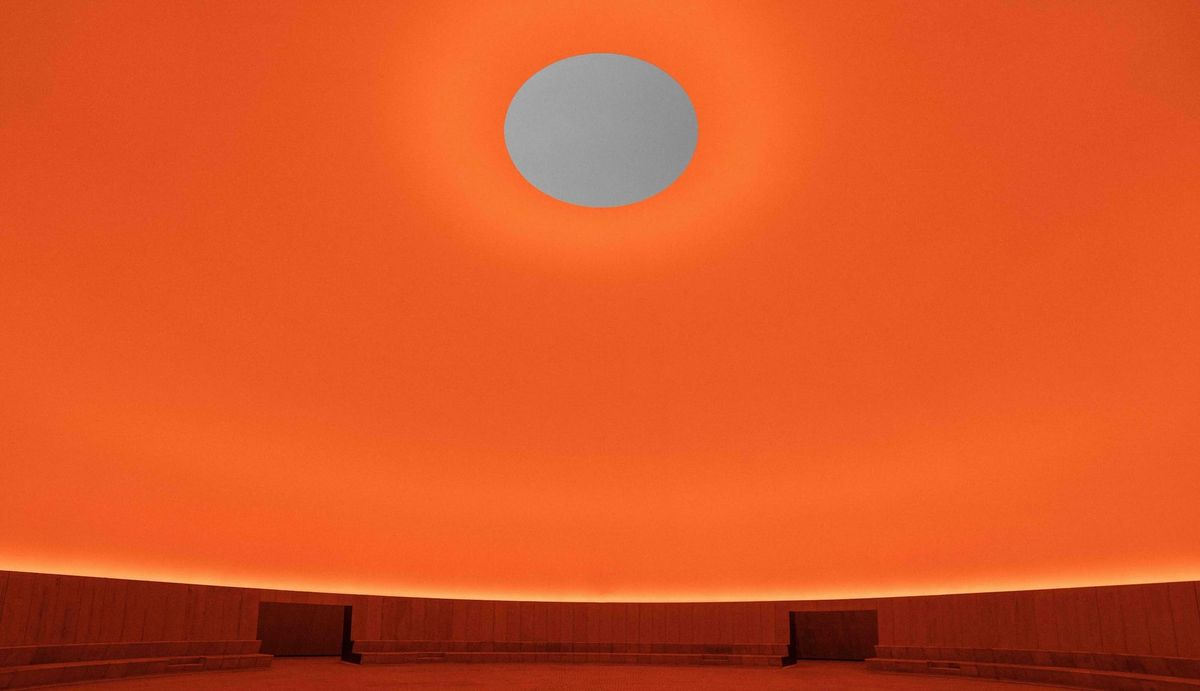
This week: James Turrell in Denmark, a new album by Raven Chacon, a Black radical history of the Declaration of Independence, World Cup songs across time, and more.

With July 4 and its attendant propaganda on the horizon, I'm turning to essays that offer the critical, hopeful perspectives we need on American art and culture. Musician Nate Wooley takes a deep dive into the ever-evolving practice of Diné artist and composer Raven Chacon for the New York Review of Books:
Much of the recent writing about Chacon has rightfully foregrounded his critique of America’s colonial history and its abuses against Indigenous people. This project is central to Chacon’s thinking, but the methods, techniques, and materials he chooses to pursue it connect him with a wider range of American musical mavericks than critics often acknowledge. His oeuvre has echoes of the microtonal hobo ballads of the instrument-builder and theorist Harry Partch, the “Deep Listening” epiphanies that Pauline Oliveros found with her accordion in the bottom of a Houston cistern, and the vibrant painted scores that Wadada Leo Smith uses to entwine the improvisational spirit of jazz with non-Western musical traditions. (Smith’s Ankhrasmation scores were also featured at the academy during Chacon’s run of Aviary.)
All these works, in disparate ways, seem preoccupied with the angst and loneliness that accompany America’s cultural preoccupation with self-determination and individualism.
Meanwhile, critic Kate Wagner opines in the Nation about the defining features of American architecture — good, bad, and ugly:
“Form follows function” is itself an Americanism (and a Chicagoism—a maxim of the architect Louis Sullivan). Shortly after it was first uttered in the late 19th century, it became ironic. The function of a building is to regulate the relationship between site and inhabitant. As the ancient Roman architect Vitruvius would have it, a building must serve at the intersection of firmitas, utilitas, and venustras, or firmness, commodity, and delight. (A more contemporary translation of his famous triad might be “durability, utility, and beauty.”) But in America, advances in engineering rendered a building’s site incidental. As anyone who has ever driven through a mountain suburb knows, our architectural ethos treats the land as something meant to be taken from, not worked with. This is what grants American architecture not just its ugliness but its boldness. It is what unifies the bespoke and the ordinary—although it is the ordinary that has always been the true soul (or perhaps the deepest confession) of the American built environment.
For Hammer & Hope's summer issue, renowned historian Robin D. G. Kelley writes about how Black radical thinkers have read the Declaration of Independence over time:
The Declaration’s significance extends far beyond the aims of the American Revolution or an expression of American nationalism. For Black thinkers, captive and fugitive, it was a referendum on the definition of the human, a rhetorical weapon against America’s conceits of liberty and democracy, and an exhortation on the right to rebel. Black people did not need a document to justify revolt, but it came in handy. It is most powerful when the people it was never meant to represent grab hold of its language and toss it back like an undetonated grenade, whether those hands belong to Denmark Vesey, Nat Turner, Maria Stewart, Dr. Martin Luther King Jr., or Ho Chi Minh of Vietnam. For these and other reasons, the Declaration should be read as a core text in Black studies.
For the Dial, reporter Eythana Miller writes about her quest to preserve Pennsylvania Dutch, the language spoken by her Amish community:
I’ve always assumed that the language’s oral nature has contributed to its concrete, factual diction. There are things you write that you almost never speak aloud. “The earth screams its thirst” might be an evocative way to describe a drought-ridden plain, but in conversation one is much more likely to simply bemoan the lack of rainfall and the dry appearance of the soil. I grieve this, but I also understand it. Language is above all, functional, and what didn’t serve my ancestors they discarded.
Harder for me to accept is how, today, English words are increasingly entering the language, edging out others. This is true for many traditional Amish communities that frequently interact with the wider world. Some English is present in every interview I conducted. Both Delores and Gabriel used “parents” instead of Eldre. Gabriel said “gevisit” and “borroweh” — Deitsch-ified versions of “visited” and “borrow” instead of bsucht and lehne, respectively. In the interview with my aunt Leona, she speaks almost an entire sentence in English, albeit with a Pennsylvania Dutch accent. I feel awkward about it. I want the interviews to show that the language does stand on its own, that it doesn’t need English to be functional. Sometimes I offer the Pennsylvania Dutch words to my interviewees as a suggestion, but I doubt that this is an advisable habit. No matter how zealous my efforts, I cannot repopulate the lexical landscape on my own.
The New Yorker's Patricia Marx delves into the curious phenomenon of "admin nights" — gatherings with the sole purpose of forcing friends to complete those pesky life tasks:
These gatherings, like the one in Dumbo, are commonly called Admin Nights, a term coined, in 2019, by the journalist Chris Colin, who began hosting such events for his friends at his house in San Francisco. “We were all lonesome and all overwhelmed, and I saw a connection,” Colin told me. “I realized there’s this new category of busyness. Not work busyness, not domestic-life busyness, but this third thing. This busyness is so dumb and banal that we don’t really talk about it. It’s the way you’ve been meaning to reconnect your Bluetooth speakers for two months, but you can’t figure that out till you conquer higher-tier items—bank stuff, doctor stuff, phone stuff, car stuff, school stuff, D.M.V. stuff, other stuff—and those require insane hold times, or eye-stabbing chatbot conversations. I felt that if we could tackle this deranged administrative sprawl together, we would hang out more.” (If you have time to read this, you probably don’t need an Admin Night.) Colin also had a political agenda. “I wanted to shine my light on what’s happening—that life has become unsustainable,” he said, “and have people talk about why this is happening and who profits.”
Sohini Desai brings us back to the days of yore when World Cup songs were bangers (which "Dai Dai" is certifiably not), writing a brief history for Defector:
The first-ever global World Cup hit was Los Ramblers’ “El Rock Del Mundial,” which is still one of the best-selling records in Chilean history. The rockabilly tune, packed with Chilean chants and pride, is a far way off from "Dai Dai"; Los Ramblers made it out of pure enthusiasm, meaning the song achieves a purity only possible free from FIFA involvement. Unlike its 21st-century counterparts, the lyrics are specific to the host country, and its sound specific to a Chilean nueva ola time and place.
The UNESCO site of Petra in Jordan is facing damage and destruction at the hand of tourists, 60 Minutes Australia reports:
Inside the astounding art of South Indian kolam:
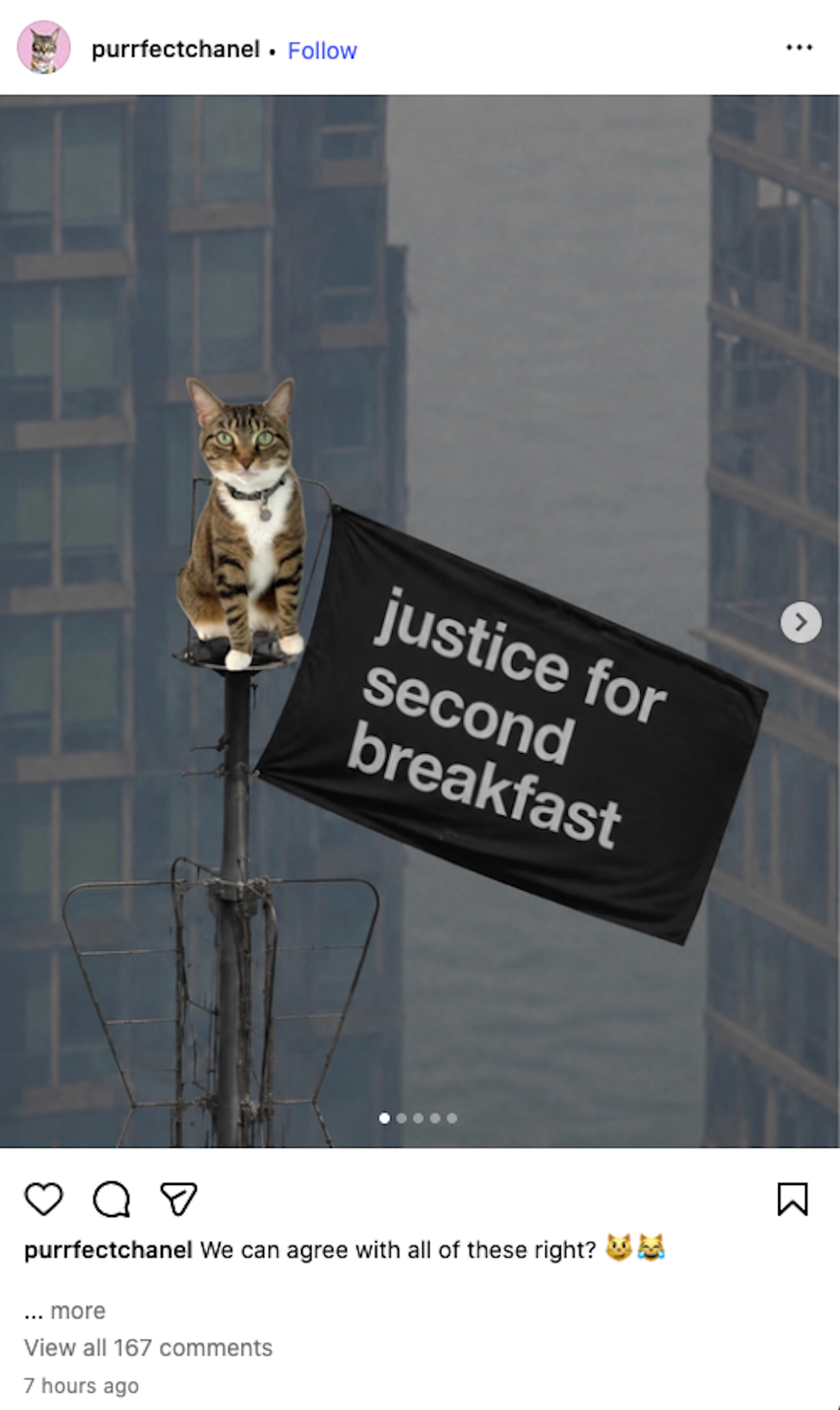
The two daredevils who climbed the Empire State Building have inspired a truly delightful slew of memes, but these ones take the cake fur real:
Me when a Colombia game coincides with Love Island:
Required Reading is published every Thursday afternoon and comprises a short list of art-related links to long-form articles, videos, blog posts, or photo essays worth a second look.