Richard Tsao's "Sanuk" Art
In an interview with Hyperallergic, the artist known for his "Flood Room" paintings compares his decades-long practice to "the need for food."
This article is part of Hyperallergic’s 2026 Pride Month series, featuring interviews with queer and trans elder artists throughout June.
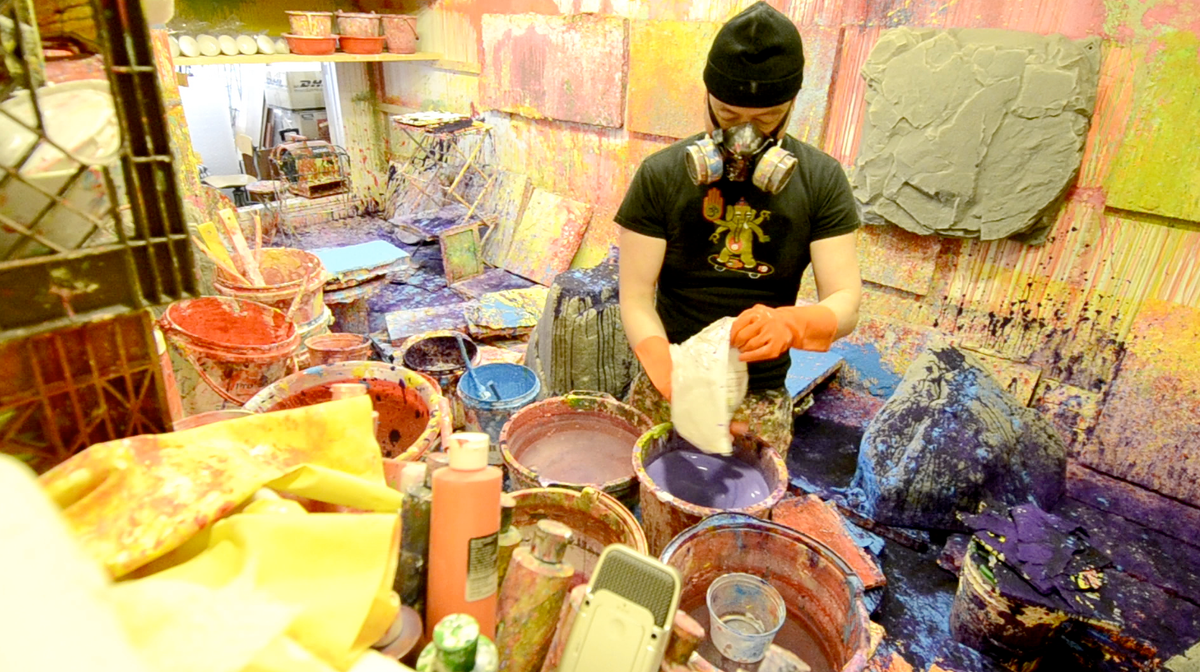
I first met Richard Tsao roughly 20 years ago when I was just getting started in the New York art world. Born and raised in Bangkok and based in New York for more than five decades, Tsao is best known for his labor-intensive "Flood Room" paintings, made through pouring, soaking, and layering of pigments, water, and marble dust into saturated abstractions. A single work can take years to make.
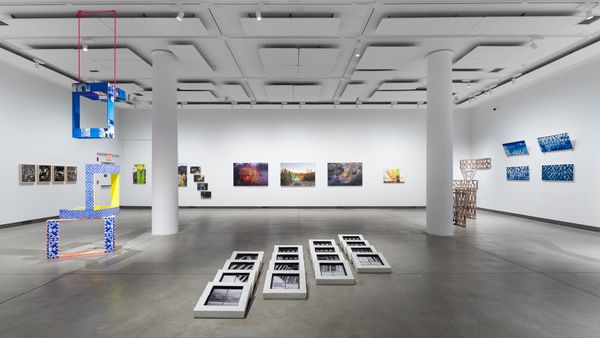
I’ve had the privilege of seeing these works in person over the decades — most recently at his solo exhibition daydreamin’ at Amelie A. Wallace Gallery at SUNY Old Westbury in New York, curated by Hyewon Yi, and at the group show How Asian Is It? at the Milton Resnick and Pat Passlof Foundation, curated by Lily Wei. His works always feel like psychedelic moon landings, as sculptural as they are painterly. I’ve always had trouble photographing them, because photos can’t quite capture their depth of appeal.
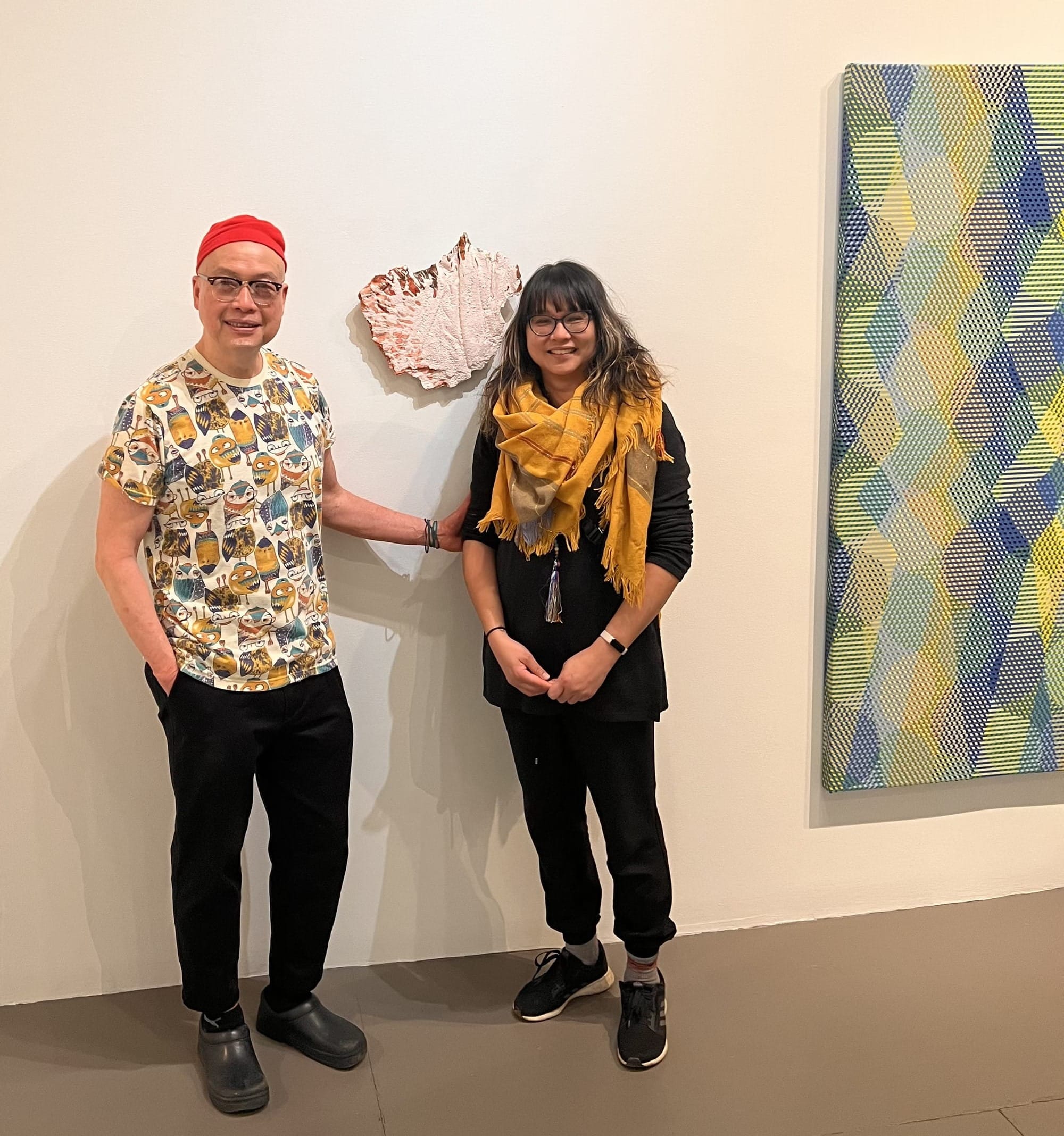
I visited Taso in his studio in Jackson Heights, Queens, New York, where he also maintains a fashion design practice, producing gorgeous, luminous Thai silk jackets, scarves, and coats. He sat cross-legged on the floor — “like a yogi,” he noted — and joked that I could make anything up to help him sound more interesting. I told him that wasn’t necessary: his confluence of work has always stayed with me.
In conversation, Taso describes artmaking as something close to hunger for food, planting a seed in the garden, or sanuk, a Thai word for play. We spoke about coming out gradually, becoming an artist, and his next phase of life as he prepares to leave New York City for Washington, DC. This interview has been edited for length and clarity.
Hyperallergic: When did you come out?
Richard Tsao: I don't really have a specific date. It was a process. It depended on who, what, where, and in what context.
The way I grew up in Asia at that time, we didn't talk about “me." We took our time to talk about me. It wasn't that we were repressed; it just wasn't something we did because it was considered impolite or out of cue. You didn't announce who you were. So it was much more subtle and slow for me. My good friends knew. I fell in love when I was young, in America, and then it was much more natural.
It was tougher coming out as an artist. I knew I wanted to be an artist, but I was scared. The big question of how are you going to support yourself? Your heart says you want to make art, so you have to figure out how. This concern troubled me a lot during my formative years and the many years after, and still does.
H: You came to New York at 18 to study art, but didn't start showing until your mid-30s. Can you tell me more about that?
RT: I was from the old-fashioned school of thinking, where I did not think I should show until I felt really ready. I gave myself a lot of time to learn and to love art. I spent countless hours at the Metropolitan Museum.
I went to Ohio State for three years with the intention of studying architecture, but I also attended Friday night's free life drawing classes, and I got hooked and intrigued with the human figure. Later, I was persuaded by an artist soul mate to come to the Art Students League to immerse myself in the study of the human figure, which I did for 7 years. Cezanne was a big influence then. I knew I was not going to be a figurative painter and was already enamored by Rothko. But I felt I needed to know the rules, especially light and dark/chiaroscuro, before I transitioned into abstraction.
H: How did you get your first show?
RT: In my mid-30s, I started looking for exhibition opportunities. Through good fortune, I met Holly Block at Art in General, who introduced me to Jane Farver, director of exhibitions at the Queens Museum, who offered me my first solo exhibition. The show was up for three months, and Holland Cotter from the New York Times reviewed it. That nudged me further.
I also had something of the overdrive Canal Street vendor in me. There was no email at the time, so I sent Cotter and many other people postcards during the duration of the show. I call them love letters to nowhere, to people I never met, to encourage them to see the show.

H: How, if at all, does your queerness factor into your art?
RT: I didn't go out in the world with queerness as my identity. I also didn't feel my race explained my artwork. I’m Chinese Thai, and I didn't fit neatly into the narrative people wanted to tell about Asian art at the time, but I thought, if I stay with it long enough, my turn might come. For the past 15 years, I've had the good fortune to be represented by Art Projects International with the late Jung Lee Sanders. She helped me tremendously. I hope you include that. I'm forever grateful to Jung, and I'm still really sad that she passed away and miss her a lot.
I don't think my queerness, or being Asian, Chinese, or Thai, factors into my art specifically or directly. I don't actually think very much before I make art. It is a daily need, an over-energetic impulse. It's like the need for food.
The closest comparison is gardening. I grew up loving gardening. Making art is like being out in the garden or out in the mudroom. For a few decades, I had a Flood Room, so it was a lot of sanuk. Of course, I had specific ideas about the outcome of the sanuk, but I didn't think in terms of sexuality or race. I was and still am open to all influences.
H: What's a queer artwork that is important to you?
RT: I never approached it that way. The one artist I really think of is Caravaggio. When I was in Rome decades ago, I was on the hunt for Caravaggio paintings all over Rome. His chiaroscuro was really important to me. My chiaroscuro didn't have his arms or bodies but was more like an extraterrestrial landscape, the way light and color flow and weave and can transport us to another realm was intriguing.

H: What does Pride Month mean to you?
RT: When I was younger and lived on the Lower East Side, I watched the Pride parade on lower Fifth Avenue and went dancing with friends after. As I got older, however, I developed problems with big crowds. One Pride, I was on Christopher Street walking against the surging crowd, and I thought I was going to be trampled. It was scary and traumatic, so I’ve since been avoiding crowds.
That is partly why I am running away to DC., where there are lots of trees and fewer people. I am at a time in my life where I want to hug more trees and fewer people, or hug both trees and people, but more trees. I will have my own terrace where I can garden and sanuk. The terrace is my new mudroom. I come from the “Flood Room,” and now excited that I will have a “Mud Room.”
H: What are you working on now?
RT: I have been working on a photo project about leaves. It is about the everyday, a moment in time, a space in between shapes that makes you stop and take a pause. I think of Morandi. I have loved leaves since I was a child, and now seems like the right time in my life to focus and meditate on their beauty.
In general, the next phase of my life is to take a pause and be quiet. For 53 years, I have been a roadrunner nonstop. Artists have full-time jobs, and we go to our studios in the evenings and on weekends. Time was so precious, seven long days and nights. Now I want to take a little or big, long pause.
My art is about the tracing of time, visual history, and memories of a distant past, growing up in a cacophony of many cultures in Thailand. My Flood Room practice is like a slow archaeological excavation of sights, sounds, tastes, sweet and sour from a long-gone past.
My friend M-Ritz Singer sent me Langston Hughes's poem "Dreams" during COVID, when I was feeling mopey and too isolated. I have it printed and pinned all over my studio. No matter where I am, I think it will always be true. You have to have dreams, and you have to be able to daydream.