Sarah Schulman’s Four Decades of Lesbian Fiction
“Nothing stops me except the publishing industry,” quipped the novelist and AIDS historian, who cut her teeth as an East Village journalist writing for queer and feminist papers.

This article is part of Hyperallergic’s 2026 Pride Month series, featuring interviews with queer and trans elder artists throughout June.
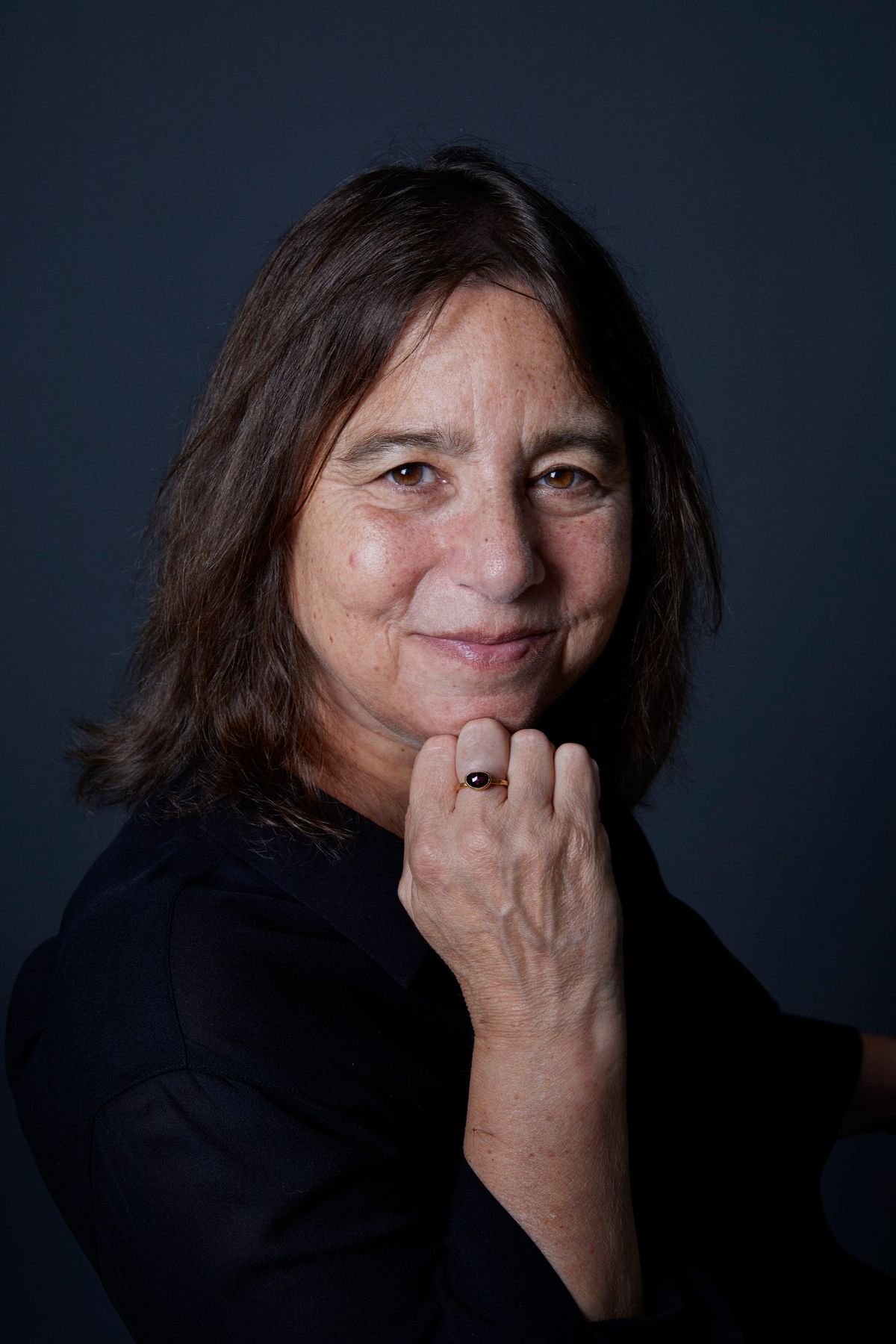
Sarah Schulman says she's "one of those New Yorkers who can't leave New York." In her nearly seven decades in the city, the novelist, playwright, and filmmaker has co-founded the Dyke March, conducted 187 interviews with members of the AIDS Coalition to Unleash Power (ACT UP), reported on the HIV/AIDS epidemic, and drawn pedagogy from Audre Lorde, who was her college professor. Though widely recognized for her documentaries and nonfiction books, including Conflict Is Not Abuse (2016) and Let the Record Show: A Political History of ACT UP New York, 1987-1993 (2021), Schulman identifies first as a novelist; several of her works of fiction focus on lesbian characters and reflect the world of queer poets, artists, and activists she grew up around. Her writerly sensibility and deep belief in community come through in her political activism, mentorship as a professor at Northwestern University, and continued support of student organizers. I spoke with her over the phone about the origins of her interest in writing, the publishing industry's resistance to lesbian protagonists, and the next generation of authors and activists who give her hope for the future.
Hyperallergic: What was your first memorable interaction with the arts? Was there a work of art made by a queer or trans person that made an impression on you as a child?
Sarah Schulman: I was born in 1958 and like New Yorkers at that time, I grew up going to the theater because it was so cheap. A Wednesday matinee on Broadway was $7. I saw Hair. I saw For Colored Girls. I went to the Yiddish Theater. You know that movie theater on Second Avenue and East Street? I was in some plays as a kid because growing up in New York at that time, a lot of my friends' parents were actors. I was a child in Sartre’s The Flies, and I was a child in The Lottery.
But gay … perhaps it was Judson Church. I saw The Faggot, which was a musical by Al Carmines, and it had moved to the Truck & Warehouse Theatre, which is now New York Theatre Workshop. So maybe that's the first. Or Bergman's Persona. There was that scene with Bibi Andersson and Liv Ullmann where they merge and the film catches on fire. I saw that in high school.
H: When did you start writing?
SS: I started writing when I was six. Because of my generation, every Jewish girl was given a copy of The Diary of Anne Frank. And the lesson was that girls could be writers. Then there was this great book called Harriet the Spy. She was also a writer. So, I think a lot of girls my age started diaries. I started a diary when I was six, and I wrote, "When I grow up, I will write books."
H: Do you still have those diaries?
SS: I don't have that one, but I have 47 years of diaries that I just looked at for the first time, and it's mostly gossip about dead people. That's really what it is. And then I wrote plays as a kid. I would write a play for Hanukkah that me and my brother and sister acted out. I wrote the high school show, all that. From the beginning, I was always making things.
H: How were your early years as a college student in New York City? Where did you find and build queer community?
SS: I came out in 1975, and there was the Oscar Wilde Bookshop on Christopher Street. They had the lesbian shelf with xeroxed articles, things like The Woman-Identified Woman by the Radicalesbians. Things like that. Or just pieces of paper. And the men's shelf for, like, porn novels about motorcycle guys and stuff. I mean, this was really before gay presses. But there was the Village Voice. I lived on 10th Street as a kid, and the Village Voice office was right down the block. When an Argentinian gay guy [Diego Viñales] was arrested in a bar raid, he was put into the police precinct on 11th Street and he jumped out the window, and he was impaled on the gate. And that was a huge story. I read that in the Village Voice. We lived across the street from the Albert Hotel, and there were a lot of trans people who hung out there. It was kind of a welfare hotel. Years later, I found out that the Cockettes stayed there when they performed in New York.
H: Were there any specific artist or writer groups you frequented?
SS: Oh, millions, because the whole lesbian world was around poets. Every big social event was poets. Like, the leaders of the community were Audre Lorde and Adrienne Rich, and there would be these huge poetry readings that would be packed. That was a big social scene. Because we didn't have anything else. There were no movies or TV or anything like that. So from the beginning, those were the people. And then Audre was my college professor at Hunter College.
H: Was she a mentor to you?
SS: Not really, but I mean, I taught at CUNY for 25 years, and I did use a lot of her pedagogy for these large classes. There'd be, like, 30-something people in the class. And she knew everyone's name by the second class. Then she would put everyone in a circle and stand in the middle and teach you sort of individually one minute at a time, and I did that for 25 years at the College of Staten Island. I learned that from her.
H: Were there any other professors or teachers who influenced you in those years?
SS: No, I was a terrible student. I was too terrible. I barely have a bachelor's.
H: I'm sure that's not true.
SS: It is true. I finally got a bachelor's from Empire State College where I got, like, half the credits for lifetime experience. It is a State University of New York degree, but I could not function in a classroom because I disagreed with everything the teachers said.
H: I imagine academic spaces were especially stifling at that time.
SS: It was bad. You didn't read any books by women. It was just not a good environment for a young intellectual.
H: Did you find that for yourself outside of the classroom?
SS: Well, I published my first novel when I was 25 in 1984, so I've been in print as a novelist for 42 years. I was already part of the whole scene, and I had started writing for this newspaper called Women News in 1979 when I was 21. And so I was part of what was called the Women in Print movement. But every city had a gay paper and a feminist paper. So I wrote for Women News, and I wrote for Gay Community News, which was the socialist gay paper out of Boston. And there also used to be a Marxist newsweekly called the Guardian that was 100 years old. I wrote for them, I wrote for the New York Native when that started. I had a whole career as a journalist. I mean, “career” … we didn't get paid. And then my novel came out in ’84.
H: Was that a few years before you started working with ACT UP?
SS: The AIDS timeline is that the first public announcement is July 3, 1981. I started writing about AIDS at the end of ’82 because the mainstream media didn't cover it. I covered the closing of the bathhouses for the New York Native, which is totally crazy because women weren't allowed in the bathhouses. But that's how chaotic everything was. Editors were sick, and nobody knew what the stories were. I covered a lot of things in those early years, like pediatric AIDS, women being excluded from experimental drug trials, homeless people with AIDS, all these social issues. And ACT UP didn't start till ’87. So by the time ACT UP started, I'd already been writing about AIDS for five years.
H: Did you continue that work while you were organizing?
SS: I wasn't a big leader at ACT UP. I was just a rank-and-file. I never stopped writing. Nothing stops me ... except the publishing industry. Seriously.
H: Did any of the artists in your community influence the way you write?
SS: Oh, so many. Everyone I knew was an artist. I have a photo of myself with Paul Cadmus. And people are like, "You guys were alive at the same time?!" I also just sold my archive to the Harvard Library, and I have letters from Charles Henri Ford. I mean, a handwritten letter. The avant-garde was this very open, very multi-generational place. Kathy Acker wrote a review of my third novel in the Village Voice. I didn't know her at all. Of course, she was a hero, but it was just a thing that people would support younger people. That's why I do this series at Performance Space New York called First Mondays. I've been doing it for seven years now. It's the first Monday of every month, and it's free. And it's really interesting writers' work in progress. A couple hundred people come, we have free drinks. And I am always supporting young writers. I'll include writers who haven't even published yet. Torrey Peters read in our series before she'd even published.
H: What inspired you to make these forums open and free for everyone?
SS: Everything used to be that way. Jim Hubbard, who's my collaborator of 42 years, and I co-founded the MIX festival, which is now in its 39th year, and we always let anyone in. Everything was quote “sliding scale,” and if you couldn't pay, it was fine. The whole idea was that it's a community, and nobody should be excluded from a community. Right? It's not a curated thing, a community. So we always were weird, 'cause like at ACT UP, no one was ever thrown out. Nobody, even though there were some real crazy people in there, because we didn't have that concept.
H: What were those ACT UP gatherings like?
SS: You can see footage of them in our film United in Anger, which Jim directed. It was 400 to 700 people in a room. Lots of emotions. Very sick people, very confrontational. It wasn't for everybody. It was very rough in there. People were very rough on each other. They still are. Even in their 70s and 80s, people are still rough on each other. But there's a connection. If you were in ACT UP with somebody, you're connected to them for life, because we saved so many lives. And everyone who was in ACT UP knows that. And now, of course, all those programs are being dismantled by Trump, right? But Jim and I interviewed 187 surviving members of ACT UP over 18 years, and people can watch those interviews on actuporalhistory.org. We made everything open access, and we've had 14 million hits on that site.
H: That's incredible. And that reminds me, I wanted to ask about some of your nonfiction and history books.
SS: I'm primarily a novelist. I mean, the nonfiction books get more play because they're about men, and you know men are so important. When you write about men, you're really smart and you're a really good writer. And then I say, "Here's my lesbian novel," and then I have social death. It's just treated with such profound disrespect. And that has never changed, but it gives a distorted view of what my life's work has been.
H: I was about to ask if you think that has changed, but it sounds like it’s been constant.
SS: Not at all. It's more obnoxious than ever.
H: Do you feel like you have a strong connection to the next generation of queer novelists and writers?
SS: Oh, more than the next generation. I've mentored, like, three generations. I have students now, like Julián Delgado Lopera. Do you know them?
H: Yes! I’m really looking forward to reading Pretend You’re Dead and I Carry You.
SS: It's a linguistic marvel of collective consciousness, so incredibly well-written. Julián was my student. Natalie Adler, whose debut, Waiting On A Friend, is this huge book that just came out, was my student. Through First Mondays, I've mentored a lot of people. I especially support young Muslim and Arab writers. Look at all the books that are coming out: If they're gay, they've got a blurb from me, you know? I just did an event with Bobuq Sayed and Aria Aber. I've been out front for Palestine about 17 years now.
H: We’ve been seeing so many artists and students getting targeted since the genocide began. It’s so harrowing, but also moving to see them continue to speak up.
SS: They're the heroes of our time. The students have more integrity than any other sector in American life. I was charged with antisemitism in 2016 by the City University of New York because I was the faculty advisor to Students for Justice in Palestine. And I had to have a hearing and all this shit. I was the faculty advisor, and Nerdeen Kiswani was the student leader of SJP at that time. So that’s another relationship.
H: I’m familiar with Kiswani’s activism in New York. It’s incredible to see how you’ve mentored people across fields.
SS: It's a schizophrenic existence because I can't get anywhere with the gatekeepers, no matter what, but on a grassroots level, I have so much support. I was just asked to give a keynote at an international anti-fascist conference in Brussels in September. And at the same time, I can't get a conversation with a Big Five editor. Work with adult lesbian protagonists is really the kiss of death in both fiction and theater. I have books that have sold really well and are translated into everything, and it doesn't matter. I cannot get a conversation with these people. And a lot of them will say, "Conflict Is Not Abuse changed my life." But they would never have published that book. It's scary.
It’s not a question of lesbian relationships, but a point of view. The issue is that I see men differently than they see themselves, and that's what makes the work unacceptable and unbearable. With anything that's sophisticated lesbian content, it's just impossible unless it's about men on some level.
H: Are there any other new books that give you hope?
SS: I read a great book that's coming out in September called Anti-Zionism: A Jewish History by Benjamin Moser. Even for someone like me who's been on this for a long time, it really opened my mind in a lot of ways, and it made me realize that I still had Zionist myths buried in my brain that I wasn't even aware of. And it exploded them. It's a fantastic book.
H: What does Pride Month mean to you right now?
SS: Not much. I'm one of the founders of the Dyke March, but I haven't gone in a long time because it's too hot, and I'm almost 70. I keep thinking I wanna go, and I do wanna go, but then I'm like, "This will not be good for me." I do love that the Dyke Marches have become explicitly anti-Zionist and anti-fascist. I love that those are the lead banners that they're carrying, not just in New York, but in other cities, and that they still don't have any corporate sponsorship, and they still don't have any permits. I'm so proud of that.
H: What does solidarity look like in this moment?
SS: Right now we're in a fascist cataclysm, and I would say every community is under attack. It doesn't make sense to look for politics of agreement because people are so different, and they're having so many different experiences. This is a time to really try to be effective above all for a radical democracy, which means acceptance of difference is the bottom line. I think theoretical debate is completely not of this moment. The point is to have solutions that are ultimately winnable and reasonable, even if they're gonna take more infrastructure to build. For example, I think that the demand that universities divest from Israel is completely winnable because they've already done it with South Africa. And some of them have done it with fossil fuels. These institutions know how to divest. It’s not gonna be fixed tomorrow, so you have to be patient. But don't dissipate your energy. Stay focused on the concrete.